

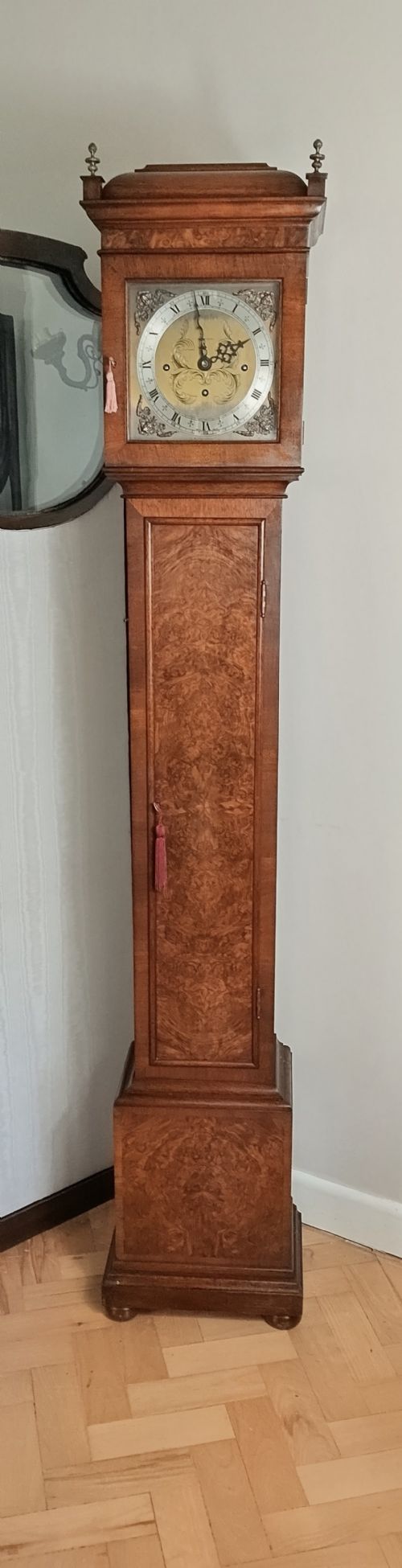


Queen Anne Grandfather Clock
A queen anne grandfather clock brings the rich tone of walnut and the measured tick of the early eighteenth century into a room.
Queen Anne Grandfather Clock
A queen anne grandfather clock spans tall longcase timepieces from the early eighteenth century alongside later revival interpretations from the twentieth century. These vertical floor clocks house pendulum movements within timber cases designed to stand in hallways or principal reception rooms.
The pieces on this page include genuine period examples from the seventeen hundreds alongside later twentieth century iterations from makers such as Elliott. Buyers encounter forms ranging from full height longcase clocks to smaller grandmother and granddaughter variants.
Period examples bear the hallmarks of the eighteenth century with walnut or lacquered wood finishes, while revival pieces bring similar traditional proportions into nineteen-ten, nineteen-twenty, and nineteen-fifty contexts.
Materials and construction
Cases utilise timber construction featuring walnut and burr walnut veneers, alongside dark green chinoiserie lacquered wood and ebonised details. Brass dial work, steel motion components, and glass hood panels complete the primary structural elements.
Movements incorporate brass dials and mechanical gear trains, with certain twentieth century examples employing tubular bell or quarter chiming mechanisms. Surface finishes rely on traditional polishing and lacquer work to highlight the grain and decorative pigments.
Queen Anne Grandfather Clock Retail Price Guide 2026
Typical asking prices for queen anne grandfather clock among the pieces listed under this phrase on Sellingantiques today, from the lower quarter to the upper quarter. They describe what is for sale here now, not the wider market.
Listings feature longcase clocks spanning the eighteenth century alongside twentieth century revivals from nineteen-ten, nineteen-twenty, and nineteen-fifty.
Assessing quality and authenticity
The distinction between a top tier example and a standard piece rests in the depth of the burr walnut veneer and the originality of the dial. Finer longcases display careful timber selection where grain patterns match symmetrically across the door and trunk.
Signed movements by known makers elevate a piece above unsigned equivalents, reflecting the skill of the original London or provincial workshop. The integration of the movement within the case, alongside the crispness of brass mountings and dial engraving, determines the overall standing of the clock.
Elliott·Henry Massy·Langley Bradley·Joseph Jackeman·Thomas Deykin
The Queen Anne Grandfather Clock Glossary
- Longcase clock
- A tall pendulum clock enclosed in a wooden case that stands directly on the floor. These timepieces are commonly known by collectors as grandfather, grandmother, or granddaughter clocks depending on their height.
- Burr walnut
- A wood veneer taken from the warted growths of walnut trees, yielding complex swirling grain patterns. Cabinetmakers prize this material for creating highly decorative cabinet fronts on early eighteenth century furniture.
- Chinoiserie
- European decorative style inspired by Chinese artistic traditions, featuring hand painted motifs on lacquered wood surfaces. This technique appears on green and dark ground clock cases from the early eighteenth century.
- Grandmother clock
- A smaller version of the longcase clock, typically standing under six feet tall. These scaled down timepieces offer the presence of a traditional grandfather clock in more compact domestic spaces.
- Quarter chiming
- A movement complication that sounds the quarter hours on a set of bells or gongs. This feature requires additional gear trains and hammers within the clock hood.
Queen Anne Grandfather Clock: Frequently Asked Questions
What is a grandmother clock?
A grandmother clock is a scaled down version of the traditional longcase clock, typically standing under six feet in height. These smaller timepieces were produced in various periods to offer traditional proportions in rooms with lower ceilings.
They house functional pendulum movements just like their taller counterparts but occupy less floor space in a hallway or landing.
How do I care for a walnut longcase?
Keep the clock away from direct sunlight and heat sources to prevent the walnut veneers from drying out or splitting over time. Maintain a stable indoor temperature and humidity level to protect both the wooden case and the brass mechanism.
Wind the clock carefully according to its specific movement type and have the mechanical gear train serviced periodically by a professional horologist.
How do I identify a period piece?
Examine the construction methods of the case, the patination of the walnut timber, and the style of the brass dial. Eighteenth century examples show specific cabinetmaking techniques and wear patterns consistent with age.
Signed dials bearing the name of makers from London or provincial centres provide clear indicators of origin when matched with period movement characteristics.
Where should I place a longcase clock?
Position the clock against a sturdy interior wall where it will not be disturbed by passing foot traffic or vibrations from heavy doors. A stable foundation ensures the pendulum swings evenly and the movement keeps accurate time.
Select a dry location away from exterior walls and damp areas to preserve the polished wood case and delicate interior metalwork.