


Early Georgian Longcase Clock
When sourcing an early georgian longcase clock, you invest in a towering mechanical timepiece that anchors a room with period proportion and craftsmanship.
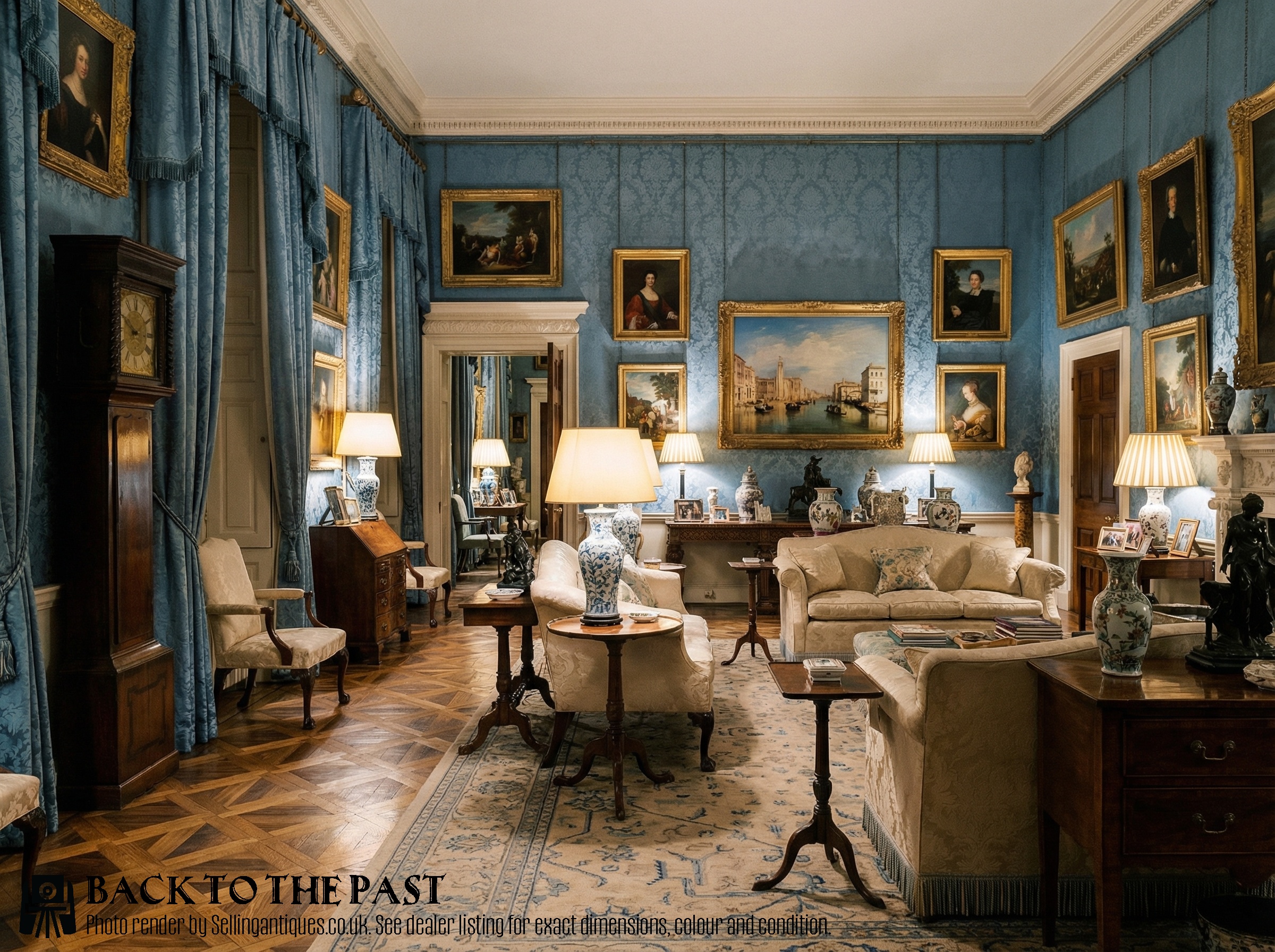
Early Georgian Longcase Clock
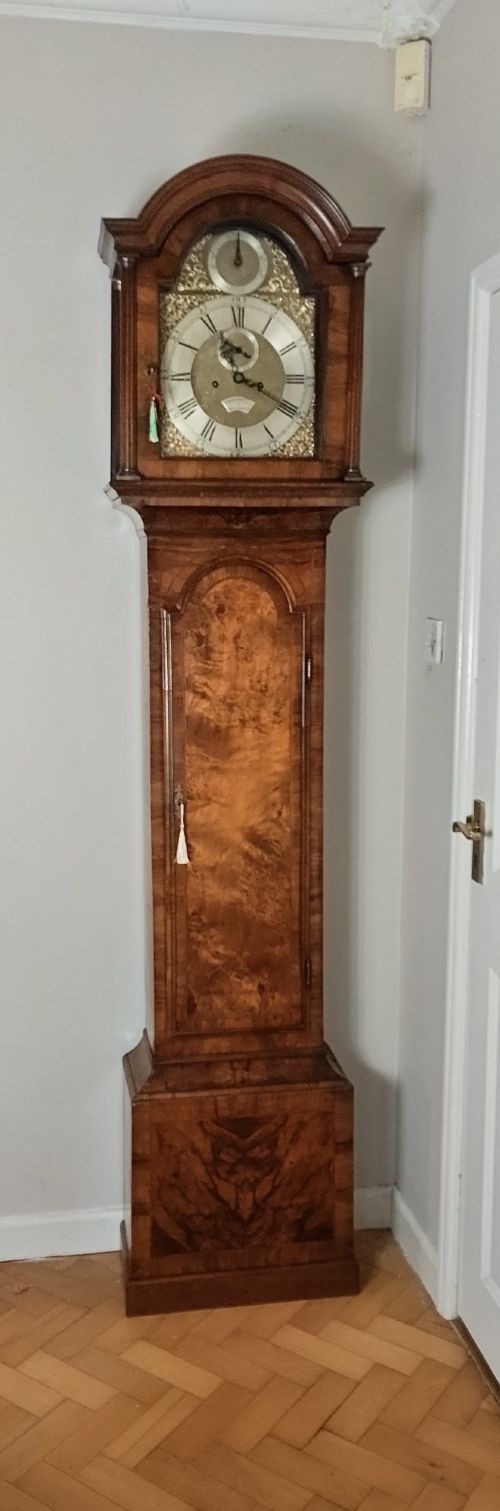
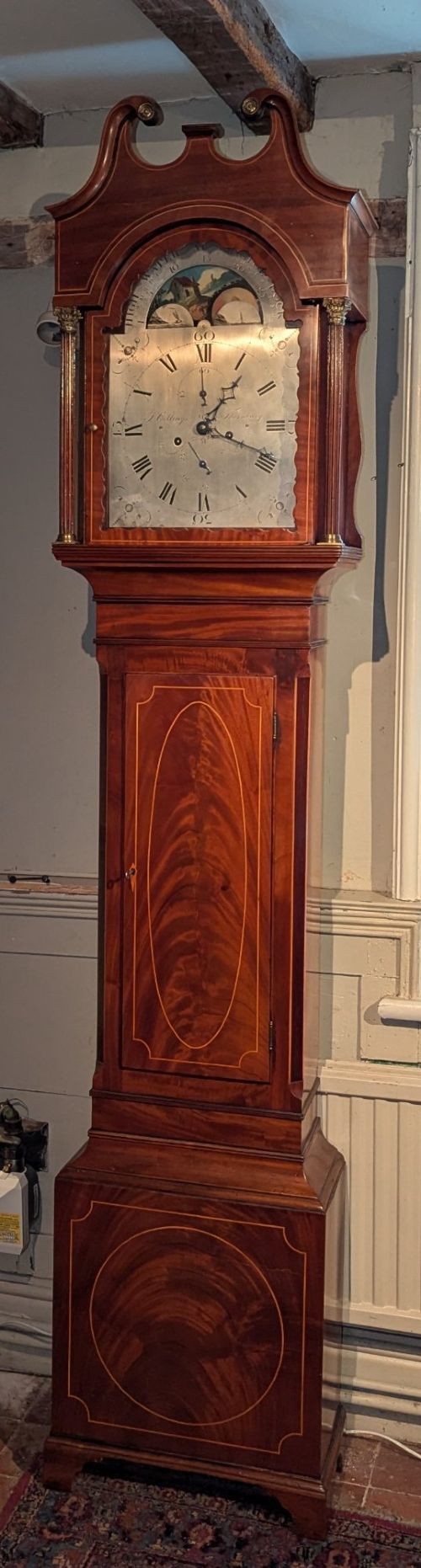
An early georgian longcase clock represents tall standing timepieces produced during the eighteenth century, frequently referred to as grandfather clocks. These tall vertical wooden housings protect internal brass or painted dials and weight-driven mechanisms designed to measure hours and minutes.
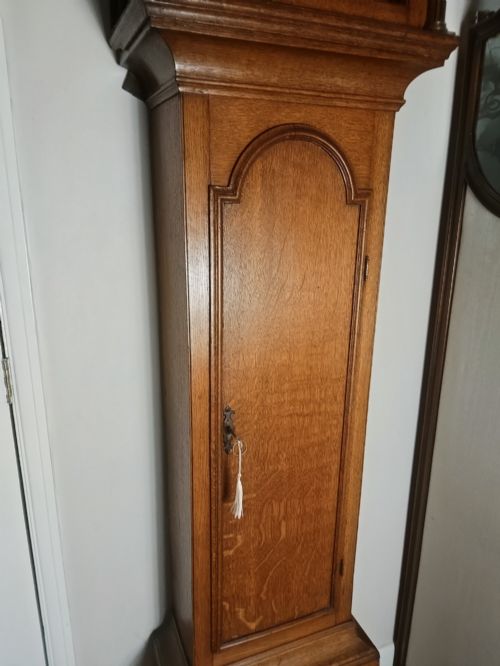
Examples on this page span styles from plain provincial oak cottages to urban walnut and mahogany models. Buyers encounter regional variations from English, Welsh, and Scottish makers, encompassing both single-handed 30-hour movements and complex eight-day strike variants.
Materials and construction
Cabinetmakers constructed the tall floor cases primarily using solid timber frames of oak, walnut, and mahogany, occasionally embellishing surfaces with burr veneers, marquetry, or dark green chinoiserie paint. These woods were joined to house the heavy moving parts securely while allowing wood to breathe through seasonal humidity shifts.
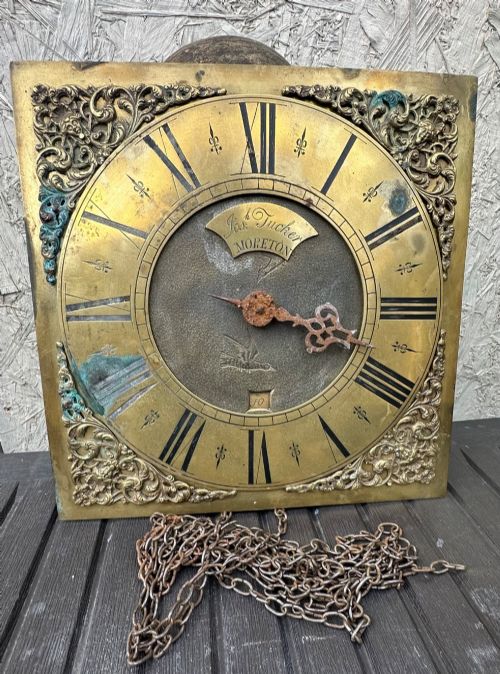
Dial assemblies combine brass plates with silvered chapter rings, cast brass spandrels, and steel hands, while later iterations introduce painted iron dials. Movements rely on brass gears, iron arbors, and lead or cast iron weights suspended by cords or lines.
One persistent cottage clock hides its ticking inside a painted pine body decorated like a cheerful rustic dollhouse.
Judging quality
Quality rests heavily on the integrity of the cabinet work and the untouched state of the dial and movement. Superior examples retain their original proportions, patination, and matching maker signatures on both the brass dial plate and the internal movement.
The sophistication of the mechanism dictates distinction, separating simpler single-hand cottage clocks from multi-pillar eight-day movements featuring moon phases, strike-silent functions, or intricate bell striking arrangements.
John Harrington·George Adams·David Morice·William Smith·Ganthony Of London·Hampston Prince And Cattles·John Bishop·George Tyler·John Hancock·E Sanders·Henry Smith·Blakeway Of Albrighton·Kirk Of Kibworth·Ebenezer Handscomb·Peter Bower·Pat Cock·John Stancliffe·Thomas Hampson
The Early Georgian Longcase Clock Glossary
- Spandrel
- The decorative corner piece applied to the dial angles outside the chapter ring. These cast brass ornaments evolved in style from floral cherub motifs to rococo scrolls.
- Chapter ring
- The circular ring fixed to the dial face that displays the numerals for hours and minutes. They are commonly fashioned from silvered brass.
- Count wheel
- An external locking plate mounted on the movement that controls the number of strikes the clock executes on the hour. This older mechanical layout precedes rack-striking systems.
- Chinoiserie
- European decorative lacquerwork imitating East Asian designs. Makers applied these raised metallic motifs onto dark painted cabinet grounds.
Early Georgian Longcase Clock: Frequently Asked Questions
How do I wind an eight day longcase clock?
You insert the winding key into the small holes on the dial face and turn it clockwise until the weight reaches the top of the case.
Take care not to overwind the movement, supporting the weight slightly if necessary to ease tension during the process.
Why does my clock have only one hand?
Single-handed movements were standard on early eighteenth-century clocks before minute tracking became universally demanded in households.
These simpler 30-hour clocks allowed owners to tell time adequately to the nearest quarter hour using subdivisions on the chapter ring.
Where should I place a longcase clock in my home?
Position your clock against an interior wall away from direct sunlight, heating vents, and damp exterior stone surfaces to protect the wood and movement.
Ensure the floor is level so the pendulum swings symmetrically and the escapement maintains an even tick.
How can I tell if the dial is original to the case?
Examine the shadow lines, fixing holes, and mounting blocks inside the hood to see if the dial fits the space without modern alterations.
Original marriages of dial and movement display consistent wear and matching signature details belonging to the recorded maker.