
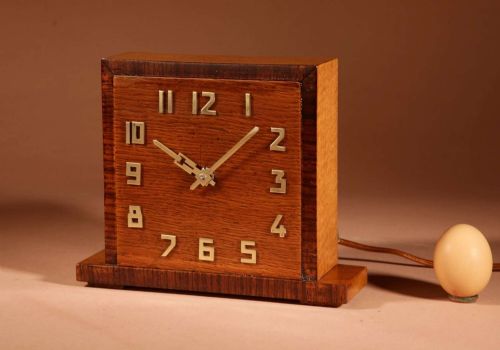
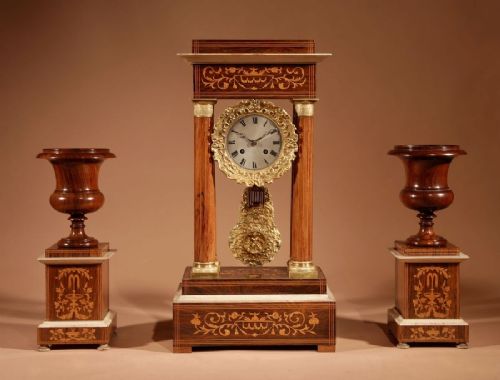
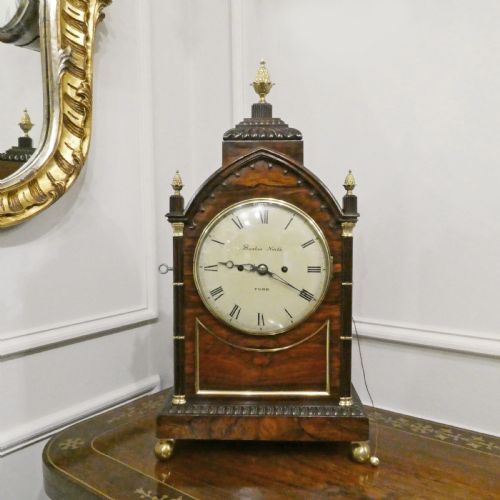
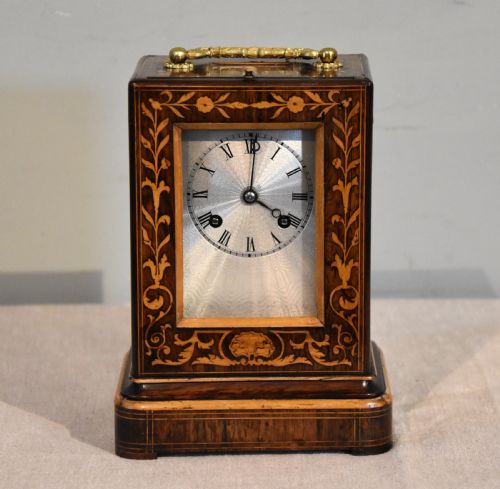




Antique Rosewood Clock
These antique rosewood clock examples bring deep timber grain and precise brass mechanics into a room, offering both reliable timekeeping and period elegance.
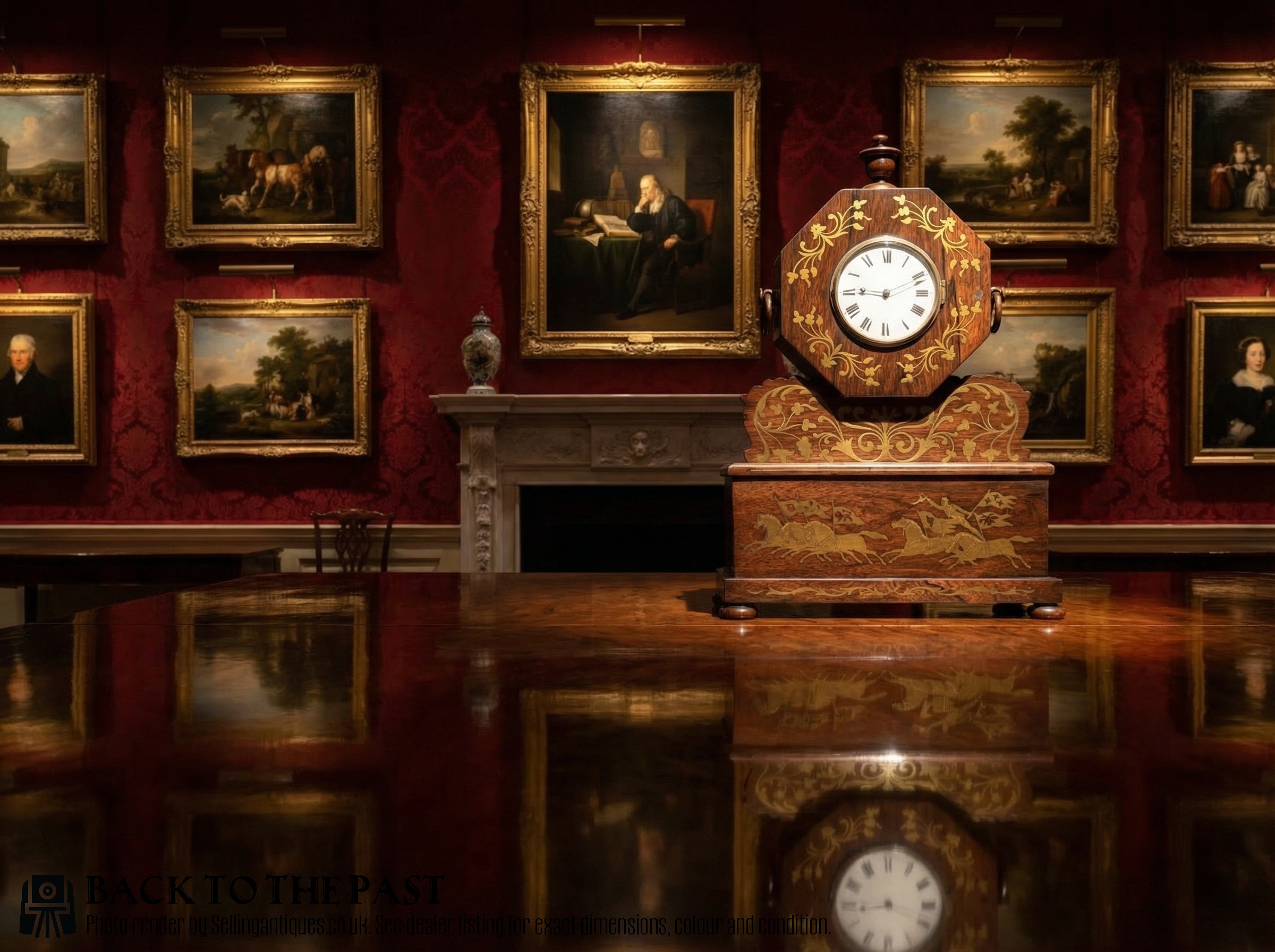
What an antique rosewood clock is
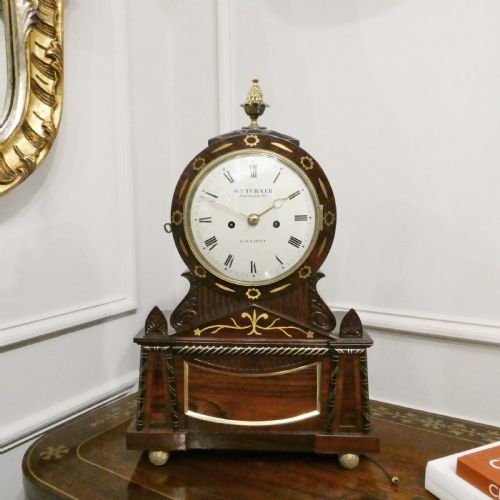
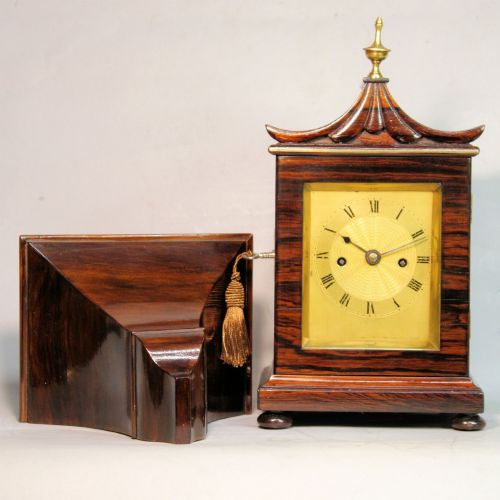
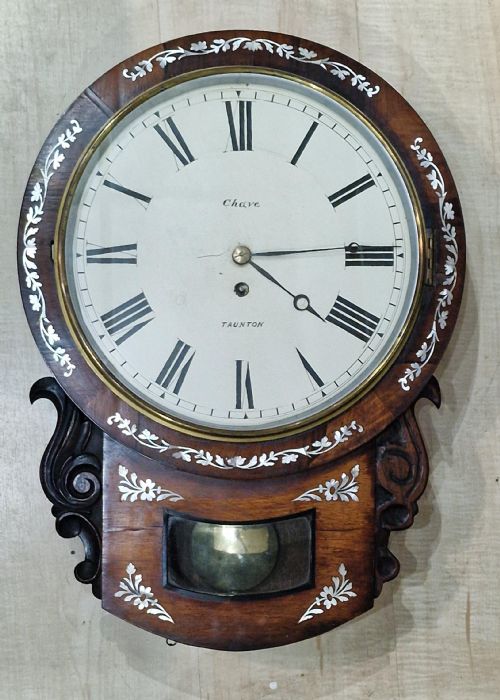
An antique rosewood clock brings rich, dark timber grain to interior spaces, functioning primarily as a portable mantel timepiece, a bracket clock, or a wall-hung dial. These pieces range from compact library designs to large double weight wall versions.
The selection encompasses English, French, and American origins across the Georgian, Regency, Victorian, and wider nineteenth-century periods. Buyers will frequently encounter bracket clocks, library clocks, and mantel formats with diverse dial configurations.
How they were made
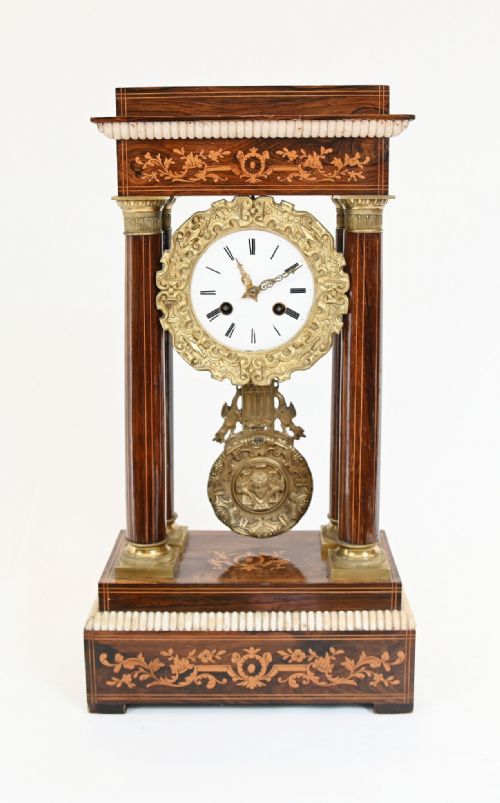
Cabinetmakers constructed the housing using dense rosewood timber, often shaping cases into domes, serpentines, or architectural porticos. They enhanced the rich surfaces with brass inlay, mother-of-pearl, bovine bone, and delicate marquetry.
Internal movements relied on brass wheel trains, fusee mechanisms, and platform escapements to drive silvered metal, enamel, or painted dials protected behind glass panels.
Retail Price Guide 2026
Typical UK retail prices for rosewood clock, calculated from the Sellingantiques database of over a million retail prices indexed since 2003. This retail price guide relies exclusively on Sellingantiques data; no external sources or auction records are used, so the figures do not describe the wider market.
Listings feature rosewood combined with brass, glass, silvered metal, enamel, mother-of-pearl, and bone across the nineteenth century, Regency, and Georgian periods.
What varies in quality
The refinement of the cabinetwork and the intricacy of the inlay separate standard pieces from exceptional examples, alongside the precision and reputation of the maker's movement. Sharpness in the carved details and the preservation of the original timber finish dictate the standing of the piece.
Complexity in function, such as single chain fusee setups, striking trains, or integrated thermometers, distinguishes high-tier library and bracket clocks from simpler domestic timepieces.
Turner of London·Savory & Fils A Paris·Dumont·Archibald Haswell London·Fisher Old Bond Street Bath·J.T. Bell·Thomas Cox London·Arnold & Lewis Manchester·Lenzkirch
The Antique Rosewood Clock Glossary
- Bracket clock
- A portable timekeeper originally designed to sit on a wall bracket or table surface. These sturdy housing units often feature substantial carrying handles.
- Fusee
- A conical pulley mechanism designed to maintain even power as the mainspring unwinds. This device ensures consistent timekeeping accuracy across the duration of the wind.
- Platform escapement
- A self-contained regulating assembly fitted to carriage and library clocks. It allows precise timekeeping without requiring the clock to sit strictly level.
- Marquetry
- The art of applying decorative veneer pieces to a timber surface to form geometric or pictorial designs. Makers utilised contrasting materials like brass and lighter woods for visual depth.
- Silvered metal
- A brass or copper dial treated with a silver finish to provide a contrasting ground for engraved numerals. This technique prevents glare and maintains legibility under low light.
Frequently Asked Questions
How do I wind an antique rosewood clock?
Use the designated winding key carefully on the dial arbors, turning gently until you feel resistance. Avoid over-winding to protect the historical mainspring inside.
Ensure you support the heavy case if you need to adjust its position after winding. Regular, gentle maintenance keeps the brass train functioning smoothly.
Where should I place a library clock?
Position your clock on a stable mantelpiece, desk, or dedicated wall bracket away from direct sunlight and damp conditions. Rosewood timber reacts poorly to extreme temperature fluctuations.
Keep the piece clear of exterior doors where vibrations might disturb the pendulum or platform escapement. A level surface ensures the beat remains even.
How do I tell a Regency clock from a Victorian one?
Regency pieces often display restrained geometric brass inlay and classical architectural proportions inspired by earlier Georgian designs. Timber selection tends to emphasise the natural grain.
Victorian examples frequently introduce heavier carving, marquetry, or bulkier dome-topped silhouettes. Check the dial style and internal movement signature for further period clues.
Why do some clocks have glass panels?
Glass panels on library and bracket clocks allowed owners to view the delicate swing of the pendulum or the motion of the escapement. They also protected silvered and enamel dials from dust.
French and English makers utilised multiple glass apertures to let light illuminate the brass movement plates. This transparency highlights the mechanical complexity within.