
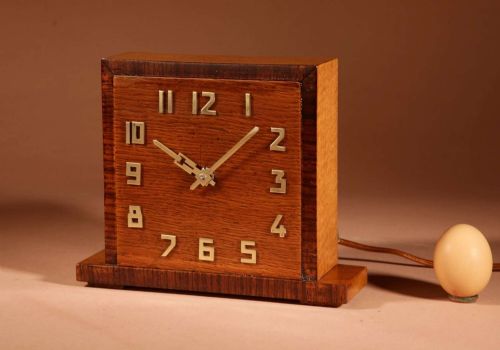
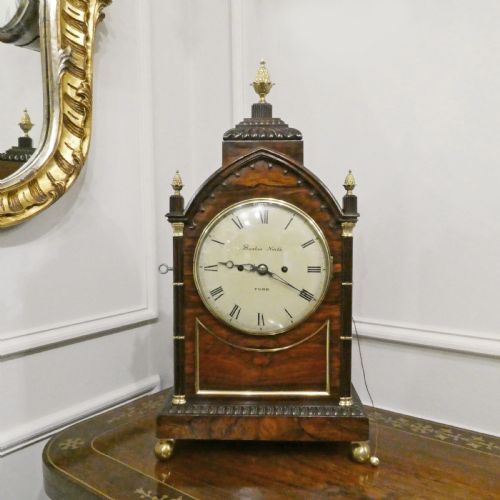
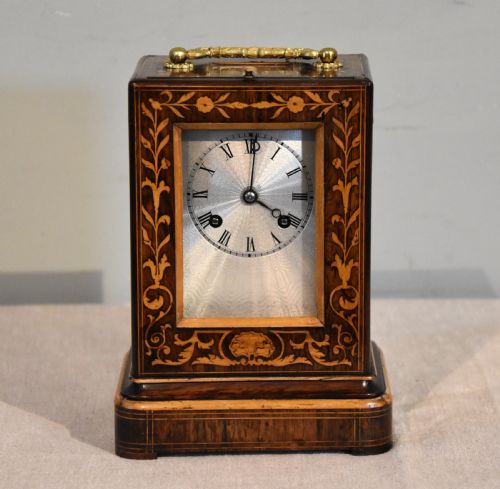
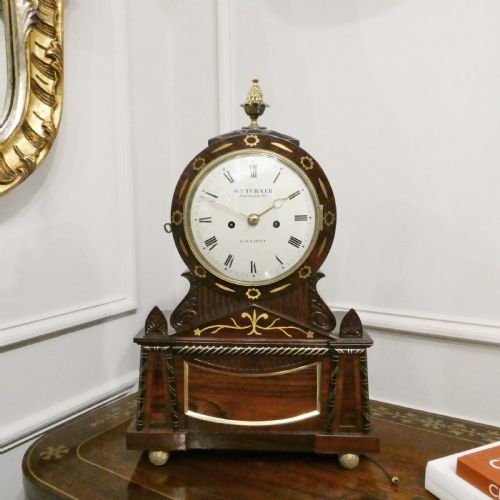
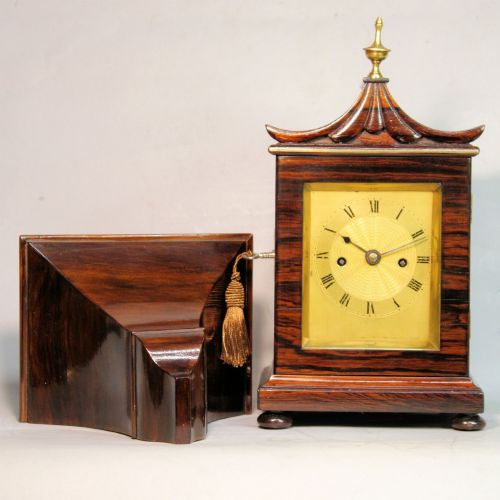


Rosewood Table Clock
A rosewood table clock brings rich timber grain and precise mechanical movement to a mantel or desk.
What these clocks are
A rosewood table clock is a timepiece designed for domestic interiors, appearing in forms such as bracket clocks, mantel clocks, and library clocks. These pieces span the Regency, Victorian, and Edwardian eras, as well as nineteenth-century French production.
The most common versions met on this page are housed in wooden cases that feature inlaid brass, satinwood, or bone detailing. London makers frequently produced architectural bracket and library clocks, while continental workshops supplied alternative mantel variations.
Buyers seeking a rosewood table clock will encounter examples with varying mechanical complications, ranging from standard time-only fusee movements to chiming and year-going mechanisms. Each specimen reflects the prevailing design idioms of its respective period, from strict Regency restraint to ornate Edwardian decoration.

How they were made
Cases of a rosewood table clock are built from dense tropical timber, often contrasted with bright metals like brass and silvered dial plates. Inlayers utilised satinwood and bone to create decorative stringing and figurative motifs across the wooden surfaces.
Movements rely on intricate brass gear trains powered by weight drops, mainsprings, or fusee cones that equalise the pull of the spring. Glass panels protect the silvered or enamelled metal dials, allowing a clear view of the hands while enclosing the delicate escapement.
Retail Price Guide 2026
Typical UK retail prices for rosewood table clock, calculated from the Sellingantiques database of over a million retail prices indexed since 2003. This retail price guide relies exclusively on Sellingantiques data; no external sources or auction records are used, so the figures do not describe the wider market.
Some nineteenth-century French mantel clocks feature subtle bovine cherub inlay peeking out from the rich rosewood grain.
What varies in quality
The distinction between ordinary and exceptional examples rests upon the sophistication of the movement and the crispness of the case joinery. A fusee movement or a year-going mechanism represents a higher level of horological ambition than a standard eight-day spring-driven calibre.
Case ornamentation also dictates standing, with fine brass-bound break-arch designs and detailed bovine cherub inlay demonstrating superior craftsmanship. The depth of colour in the rosewood grain and the precise execution of stringing elevate the visual authority of the piece.
Thomas Gammage London·Brockbank Atkins London
The Rosewood Table Clock Glossary
- Fusee
- A conical pulley used in mechanical clocks to maintain an even pull as the mainspring unwinds. This device ensures more consistent timekeeping throughout the power reserve.
- Bracket clock
- A portable timepiece originally designed to sit on a wall bracket or a table. These cases often feature architectural arches and carrying handles.
- Break-arch case
- A wooden clock case topped with an arched pediment that breaks upward from the rectangular body. This architectural silhouette is typical of Regency and nineteenth-century design.
- Silvered metal
- A brass or copper dial plate treated with a silver compound to create a matte, reflective surface. Numerals and maker signatures are typically engraved and filled with dark wax for legibility.
- Inlay
- A technique where contrasting materials such as brass, satinwood, or bone are inserted into recessed cavities in the rosewood surface. This creates flat, decorative patterns across the case.
Frequently Asked Questions
What is a fusee movement?
A fusee is a conical pulley connected to the mainspring by a cord or chain, designed to equalise the declining power of the spring as it unwinds.
This mechanism helps the clock maintain a steady rate of timekeeping from the moment it is fully wound until it needs attention again.
How do I identify a Regency clock?
Regency pieces typically feature clean architectural lines, dark rosewood veneers, and restrained brass mounts or inlay rather than heavy carving.
Makers from this period often housed their movements in break-arch or arched cases with classical proportions.
Where should I place a table clock?
These clocks are designed for stable surfaces such as mantelpieces, library desks, or dedicated wall brackets.
Keep them away from direct sunlight, excessive moisture, and draughts to protect the wooden case and delicate internal brass work.
What is an eight day movement?
An eight day movement requires winding approximately once a week to keep the pendulum swinging and the gear train turning.
This convenience became standard in many nineteenth-century domestic clocks, reducing the frequency of maintenance for the owner.