


London Maker Bracket Clock
A london maker bracket clock brings precision engineering and striking cabinetwork into any room.

London Maker Bracket Clock
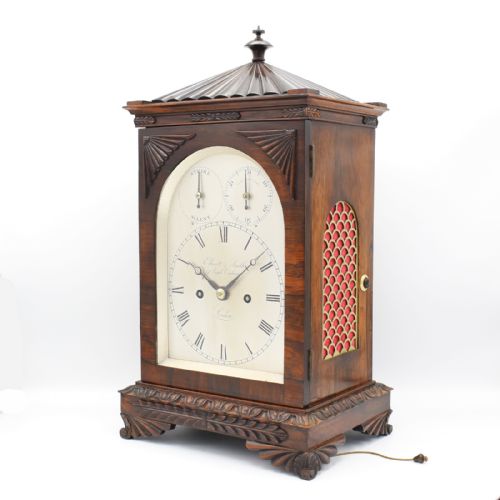
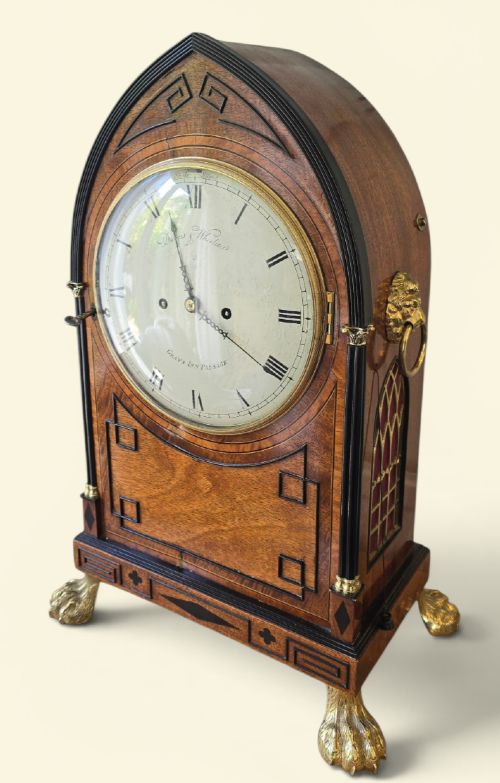
A london maker bracket clock represents centuries of horological skill, appearing across Victorian, Regency, and Georgian periods. These pieces take the form of bracket clocks, mantel clocks, library clocks, and wall clocks.
The most common examples on this page date through the eighteenth and nineteenth centuries, signed by noted London names on silvered metal dials behind glass doors.
How they were made
Cabinetmakers constructed the housing from dense hardwoods such as mahogany and rosewood, sometimes applying ebonised finishes or red and gold lacquer. Specialised workshops then fitted complex fusee movements driven by brass gears.
Dials typically feature silvered metal plates with finely engraved numerals and maker signatures. Protective glazed bezels and brass carrying handles finished the portable design for use across different rooms.
London Maker Bracket Clock Retail Price Guide 2026
Typical asking prices for london maker bracket clock among the pieces listed under this phrase on Sellingantiques today, from the lower quarter to the upper quarter. They describe what is for sale here now, not the wider market.
Some night watchman clocks quietly kept the household accountable while everyone else slept.
What varies in quality
Quality rests upon the crispness of the cabinet carving and the original integrity of the fusee movement. Finer timber selection, such as figured pollard oak or rich mahogany, elevates the cabinet's presence.
Renowned London makers achieved superior precision in their gear trains and engraving. The clarity of the silvered dial and the preservation of original lacquer or polish distinguish high-tier examples.
Ellicott and Smith·Desbois and Wheeler·Webster Cornhill London·Frodsham and Baker London·Berguer of the Strand·James Smith London·J W Benson·James Maitland London·Barraud and Lunds·Payne and Co of London
The London Maker Bracket Clock Glossary
- Bracket clock
- A portable timekeeper designed to sit on a bracket or table. Early versions stood on wall brackets to allow weight-driven mechanisms to drop.
- Fusee
- A conical pulley used in mechanical clocks to maintain even power as the mainspring unwinds. This mechanism ensures consistent timekeeping.
- Silvered metal
- A brass or copper dial plate treated with a silver finish and engraved with numerals. The engraved lines are usually filled with black wax for readability.
- Chinoiserie
- European decorative art imitating Chinese styles, often using lacquer and gilt motifs. This style appears on select eighteenth-century clock cases.
London Maker Bracket Clock: Frequently Asked Questions
What is a fusee bracket clock?
A fusee bracket clock uses a conical pulley system to regulate the pull of the mainspring. This device ensures steady tension on the gear train as the spring runs down.
Cabinetmakers housed these movements in portable wooden cases designed for tabletops. London makers frequently employed this mechanism in nineteenth-century designs.
How do I wind a bracket clock?
Winding requires a matching key inserted into the winding holes on the silvered dial. Turn the key gently until you feel resistance, taking care not to overwind the mainspring.
Most fusee movements require attention every week or eight days. Consult the specific movement type before attempting to adjust the hands or strike train.
Where were these clocks placed?
Owners originally placed these timepieces on wooden wall brackets to allow hanging weights to descend safely. Later designs shifted to tabletops, mantelpieces, and library desks.
Their portable nature meant staff could move them between rooms as needed. Brass carrying handles on the top of the case facilitated this movement.
How do I identify a Georgian clock?
Georgian examples often feature lancet-top wooden cases and brass dial fittings. Makers from this era typically signed the silvered metal dial face directly.
Cabinet timbers from the period lean toward solid mahogany with minimal exterior ornament. Proportions tend to be smaller and more restrained than later Victorian interpretations.