


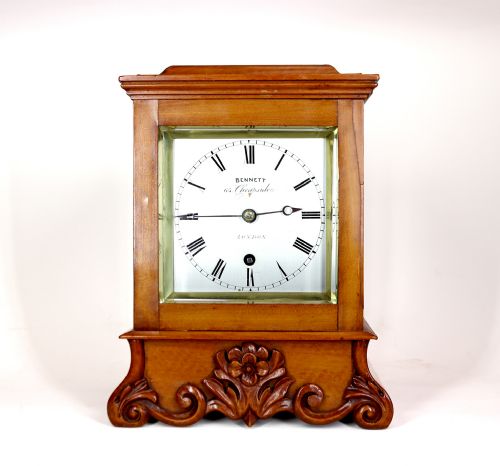


Antique Library Clock
These antique library clock pieces are dependable timekeepers housed in refined wood and brass cases, built to sit quietly upon a desk or shelf.
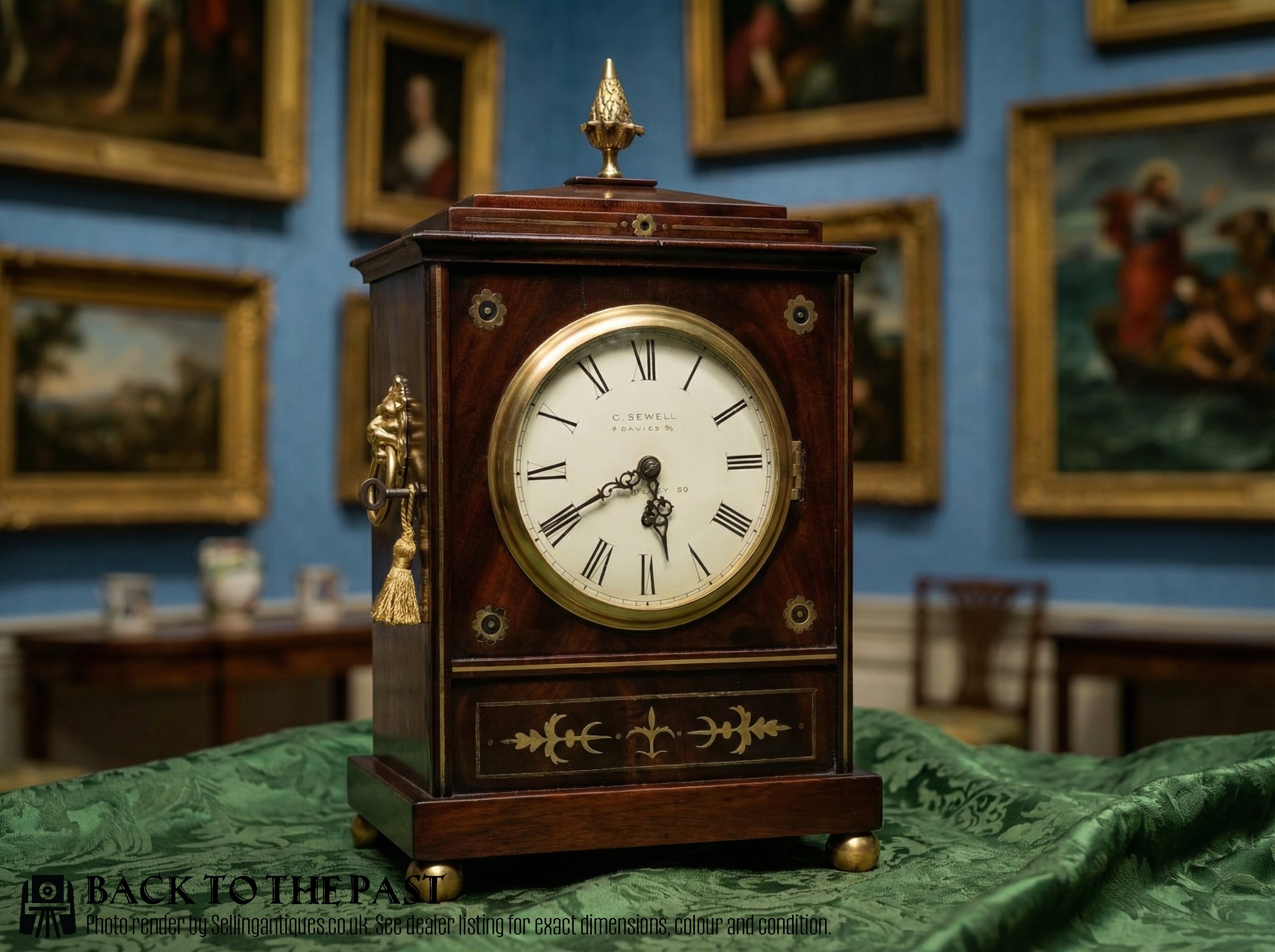
Understanding the antique library clock
An antique library clock is a dependable timepiece designed for study spaces and private rooms, appearing across this page in periods such as the Regency and Victorian eras. These items function primarily as mantel clocks or table clocks, though wall-mounted variants also appear in the record.
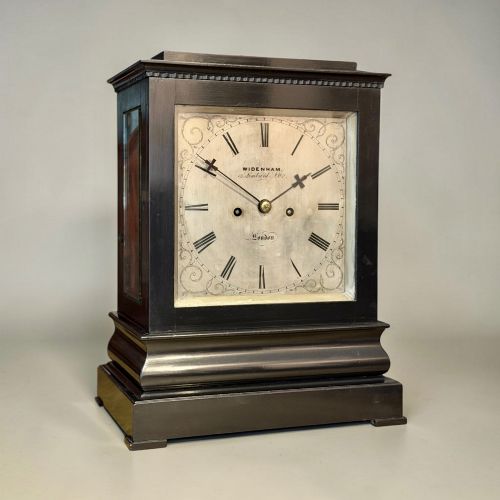
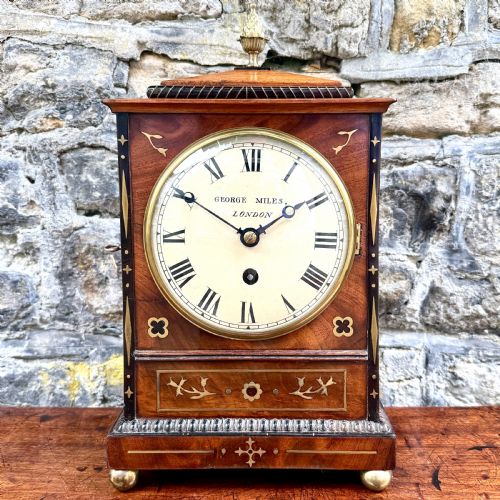
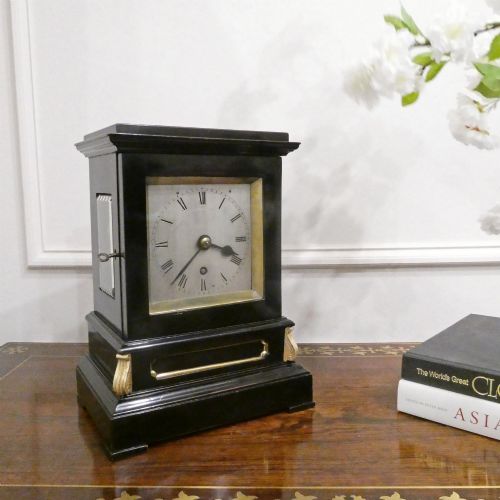
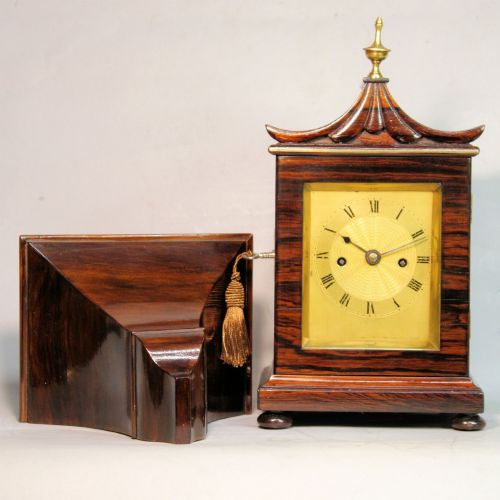
The prevailing form on this page is the four-glass or five-glass library mantel clock, which allows a clear view of the mechanical movement within. Cases are constructed from dense timbers like mahogany, rosewood, and ebonised wood, often enhanced with brass details.
Originating predominantly from English workshops, these pieces span from the early nineteenth century through to the later Victorian period. They combine functional timekeeping with the serious cabinet-making standards of their respective decades.
Materials and construction
Cabinet makers utilised choice hardwoods such as mahogany, rosewood, and satinwood to build the housings, frequently incorporating ebonised finishes for a severe, formal appearance. Brass mounts, carrying handles, and bezels provide structural support and visual contrast to the timber bodies.
Movements rely on mechanical ingenuity, most notably single fusee and chain fusee mechanisms that regulate the pull of the mainspring for consistent timekeeping. Dial faces feature silvered metal or enamel, protected behind bevelled or flat glass panels.
Retail Price Guide 2026
Typical UK retail prices for library clock, calculated from the Sellingantiques database of over a million retail prices indexed since 2003. This retail price guide relies exclusively on Sellingantiques data; no external sources or auction records are used, so the figures do not describe the wider market.
Listings on this site feature nineteenth-century library clocks housed in rosewood, mahogany, and ebonised wood cases with glass panels.
Assessing quality and craftsmanship
Quality reveals itself in the precision of the timber selection and the crispness of any brass inlay or carved detail. Finer examples display meticulous grain matching and substantial brass cases that feel heavy and rigid in the hand.
The internal movement dictates the standard of the piece, with complex mechanisms such as year-going trains or platform escapements marking out superior workshop output. Original components and signed dial plates by noted makers elevate the mechanical integrity of the clock.
Widenham of London·John Massey·Webster London·Archibald Haswell London·Barwise London·John Walker London
The Antique Library Clock Glossary
- Fusee
- A conical pulley used in spring-driven clocks to equalise the torque of the mainspring as it unwinds. This device ensures the driving force remains steady throughout the running cycle.
- Platform escapement
- An independent escapement unit fitted directly to the balance wheel assembly. It allows portable clocks to keep accurate time without needing to remain strictly level.
- Four glass clock
- A style of mantel clock where the front, back, and sides are glazed with bevelled glass panels. This design exposes the internal movement to light from multiple angles.
- Single fusee
- A movement driven by one mainspring regulated through a single fusee cone and chain. It represents a standard, reliable configuration for nineteenth-century table timepieces.
- Silvered metal dial
- A brass dial face treated with a silver compound to produce a matte white finish upon which numbers are engraved. This treatment reduces glare under artificial light.
Frequently Asked Questions
How do I wind an antique library clock?
Wind the movement using the appropriate key inserted into the dial aperture, turning it gently until resistance meets you. Care must be taken not to overwind the mainspring.
Consult the specific instructions for fusee movements to ensure the chain or cord remains properly seated on the cone during the winding process.
Where should I place a library clock?
Position the clock on a stable, level surface such as a mantelpiece, heavy desk, or bookcase away from direct heat sources and dampness. Stability ensures the pendulum or platform escapement maintains an even beat.
Avoid locations exposed to heavy vibrations, which can disrupt the delicate balance of the mechanical movement over extended periods.
How do I date a library clock?
Examine the timber used in the case, the style of the brass feet or handles, and any signature engraved upon the dial plate. Regency and early Victorian models often feature specific wood choices like rosewood or inlaid satinwood.
Internal construction methods and the presence of fusee chains rather than cords also provide reliable clues to the decade of manufacture.
What is a single fusee movement?
A single fusee movement uses a conical pulley connected to the mainspring by a fine chain or cord to maintain even power delivery. As the spring unwinds, the chain moves to a wider part of the cone.
This clever mechanical arrangement prevents the clock from losing or gaining time as the driving power diminishes between windings.