



Black Wooden Clock
These black wooden clock pieces bring striking dark wood cases and intricate carving into a room, offering both reliable timekeeping and period character.
Black Wooden Clock
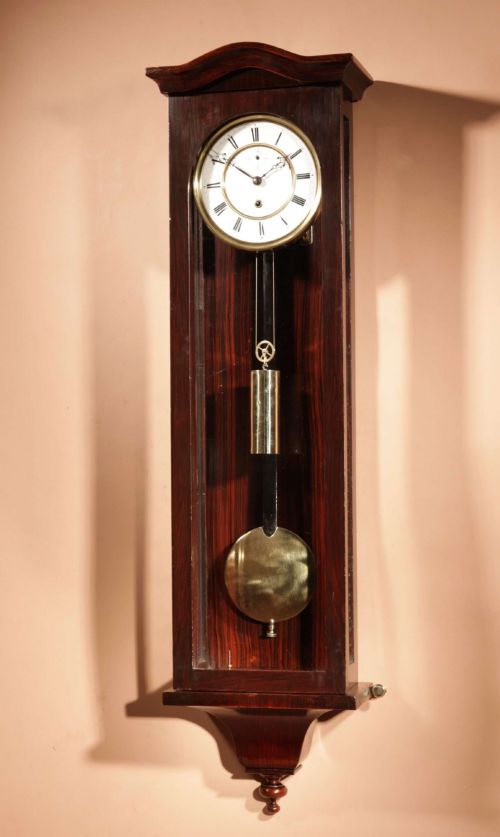
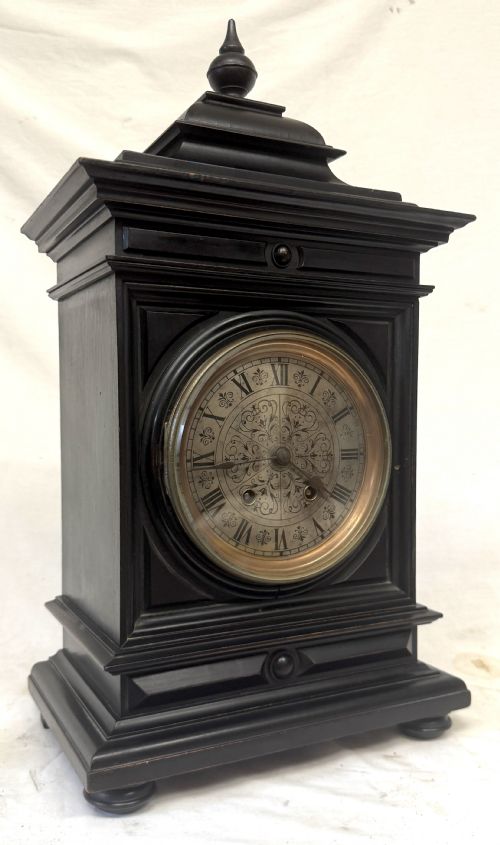
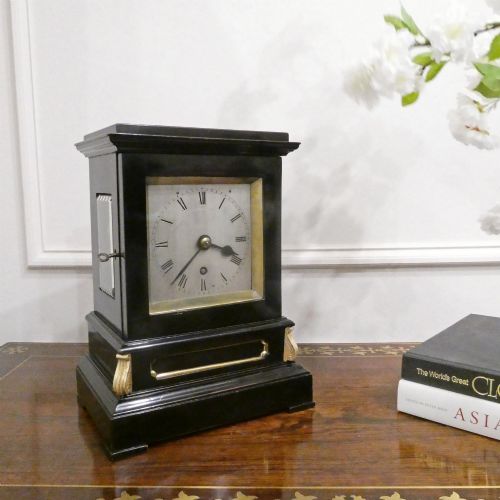
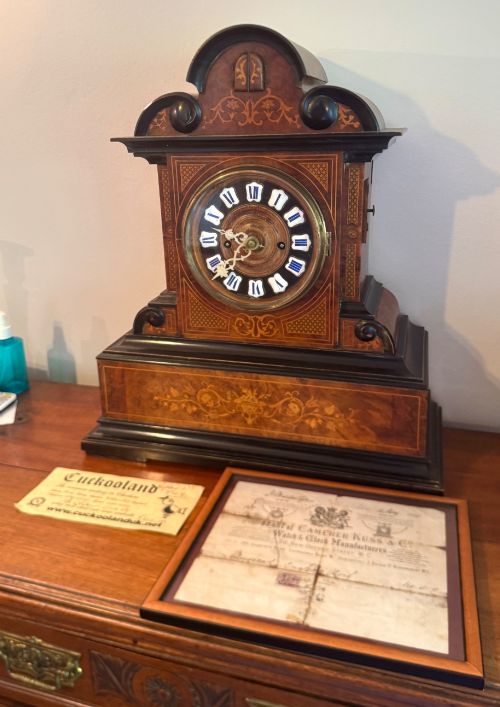
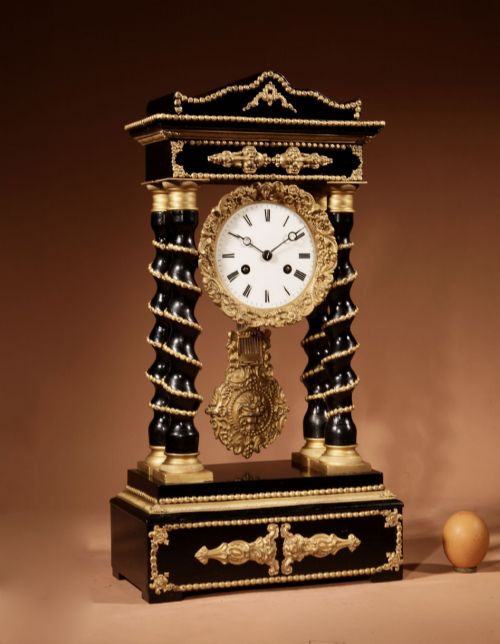
A black wooden clock unites dark timber cases with traditional dial work, appearing across mantel, bracket, wall and longcase formats. Buyers searching for a black wooden clock frequently encounter ebonised finishes, carved walnut, and architectural portico designs from the eighteenth and nineteenth centuries.
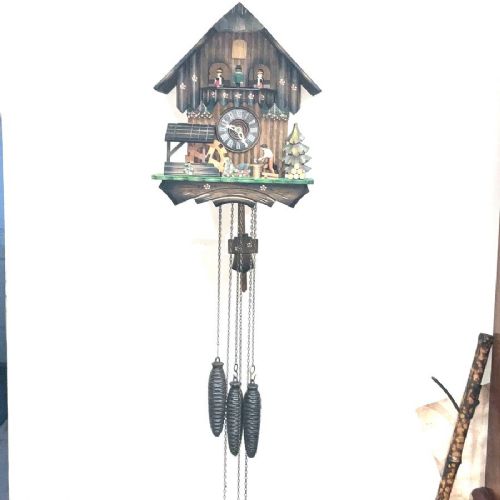
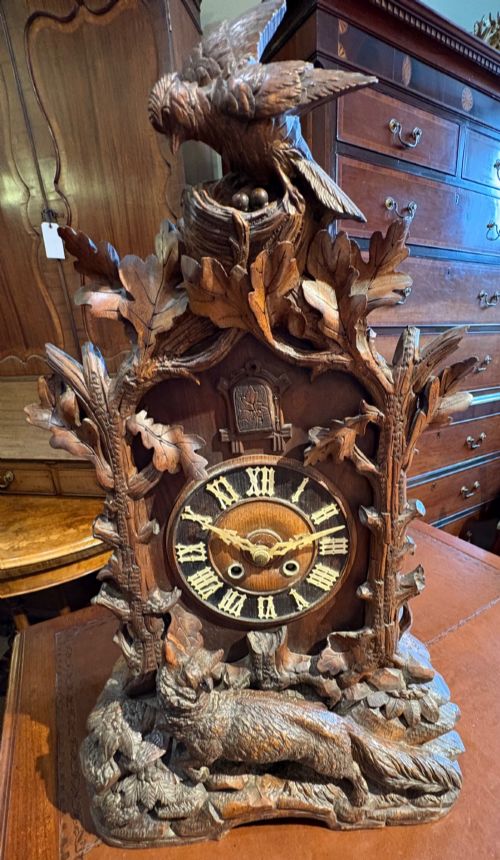
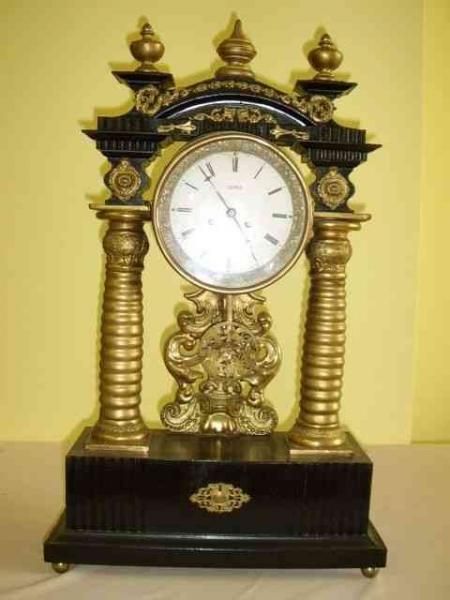
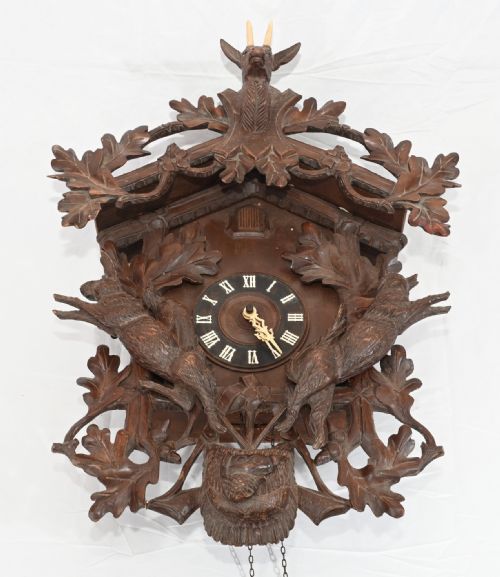
The selection spans substantial Victorian bracket clocks housed in ebonised cases alongside Black Forest wall models carved from linden wood and walnut. Regional British fusee dial clocks sit alongside elaborate French portico examples and musical automaton pieces.
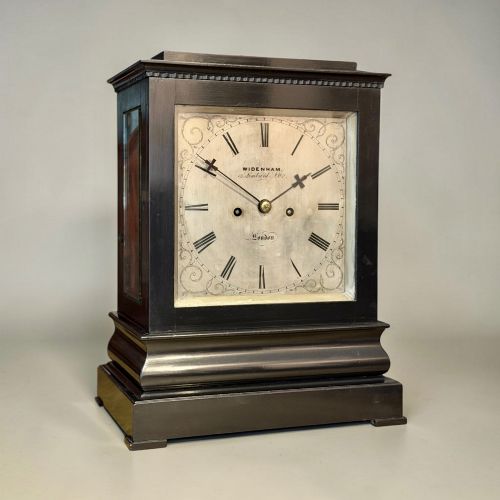
Makers ranged from London watchmakers housing movements in break-arch ebonised cases to German workshops producing mechanical cuckoo and regulator movements. These pieces served both domestic utility and formal parlour decoration in period interiors.
How they were made
Cases utilise solid walnut, linden wood, and secondary timbers treated with ebonising stains to achieve a deep black finish. Gilding, marquetry inlay, and carved foliage details decorate the exterior housing.
Movements incorporate brass plates, steel wheels, fusee chains or cords, and enamel or silvered dials protected by glass doors and bezels. Carved Black Forest models employ shaped wooden plates and hand-carved animal or botanical motifs.
Swinging maiden pendulums and mechanical musical automatons bring unexpected movement to static wooden chalet cases.
What varies in quality
The refinement of the carving distinguishes standard production from superior examples, particularly in Black Forest linden wood and walnut cases where depth and undercut detail demonstrate the carver's skill. Movement complexity also sets pieces apart, moving from simple time-only mechanisms to triple fusee musical arrangements playing on multiple bells.
Case construction integrity and the crispness of ebonised surfaces dictate overall standing. Original dials, matching pendulum components, and signed movement backplates elevate the historical standing of bracket and mantel clocks.
Widenham of London·Lenzkirch·Philipp Haas·Bergen & Co·Des Granges of London·Johann Baptist Beha·Andrew Marchant·Barraud & Lunds·Joseph Lum·John Leroux
The Black Wooden Clock Glossary
- Ebonised
- Timber treated with a chemical stain or black finish to imitate ebony. This technique gained popularity during the Victorian period for architectural and bracket clock cases.
- Fusee
- A conical pulley used in spring-driven clocks to equalise the torque of the mainspring as it unwinds. It ensures even power delivery to the gear train.
- Verge escapement
- An early escapement mechanism regulating the swing of the pendulum or balance in antique clocks. It is commonly found in eighteenth-century bracket and longcase movements.
- Portico clock
- A monumental clock design styled after classical porticos with supporting columns. They frequently feature ebonised wood and gilded bronze mounts.
- Silvered dial
- A brass or copper dial face treated with silver powder to create a matte metallic finish. Numerals and markings are typically engraved and blackened for legibility.
Black Wooden Clock: Frequently Asked Questions
Where should a black wooden clock be placed?
These clocks anchor mantelpieces, sideboards, and dedicated wall brackets where the dark wood case contrasts against lighter wall colours. Positioning them away from direct sunlight and dampness protects the timber and internal mechanical parts.
Larger bracket and longcase clocks require stable floor surfaces or secure wall fixings to maintain proper vertical alignment and ensure the pendulum swings freely.
How do I wind an antique clock?
Winding requires using the appropriate key on the winding arbors set into the dial face, turning gently until resistance increases. Care must be taken not to overwind the mainspring.
Many fusee and spring-driven models run for eight days, while others require daily or twenty-four-hour attention depending on the complexity of the train.
How do I date a black wooden clock?
Dating relies on examining case styles, such as Regency architectural forms, Victorian ebonised bracket cases, or Art Nouveau carved motifs. Movement signatures, dial materials, and escapement types also indicate the manufacturing era.
Makers' names inscribed on backplates provide precise chronological markers when cross-referenced against historical records of working London and continental workshops.
What is a fusee movement?
A fusee movement uses a conical pulley connected to the mainspring via a chain or gut line to maintain constant driving power. As the spring relaxes, the chain moves to a wider section of the cone.
This mechanical refinement prevents timekeeping variations as the clock runs down between windings, appearing frequently in better quality British bracket and wall clocks.