


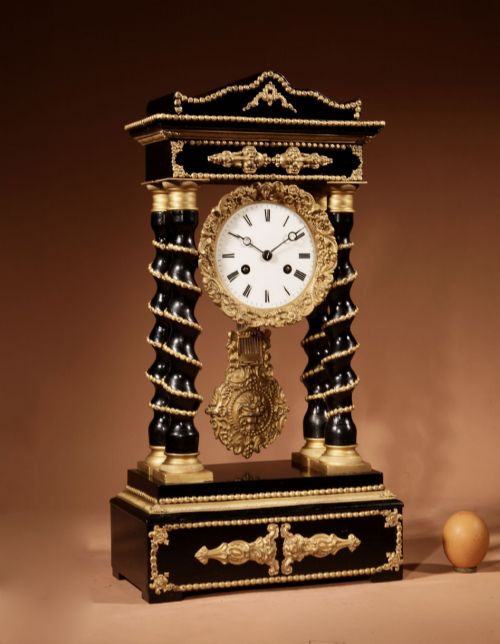


Ebonised Pendulum Clock
An ebonised pendulum clock brings deep, dark timber tones and rhythmic precision to a room, ranging from grand floor-standing designs to delicate wall regulators.
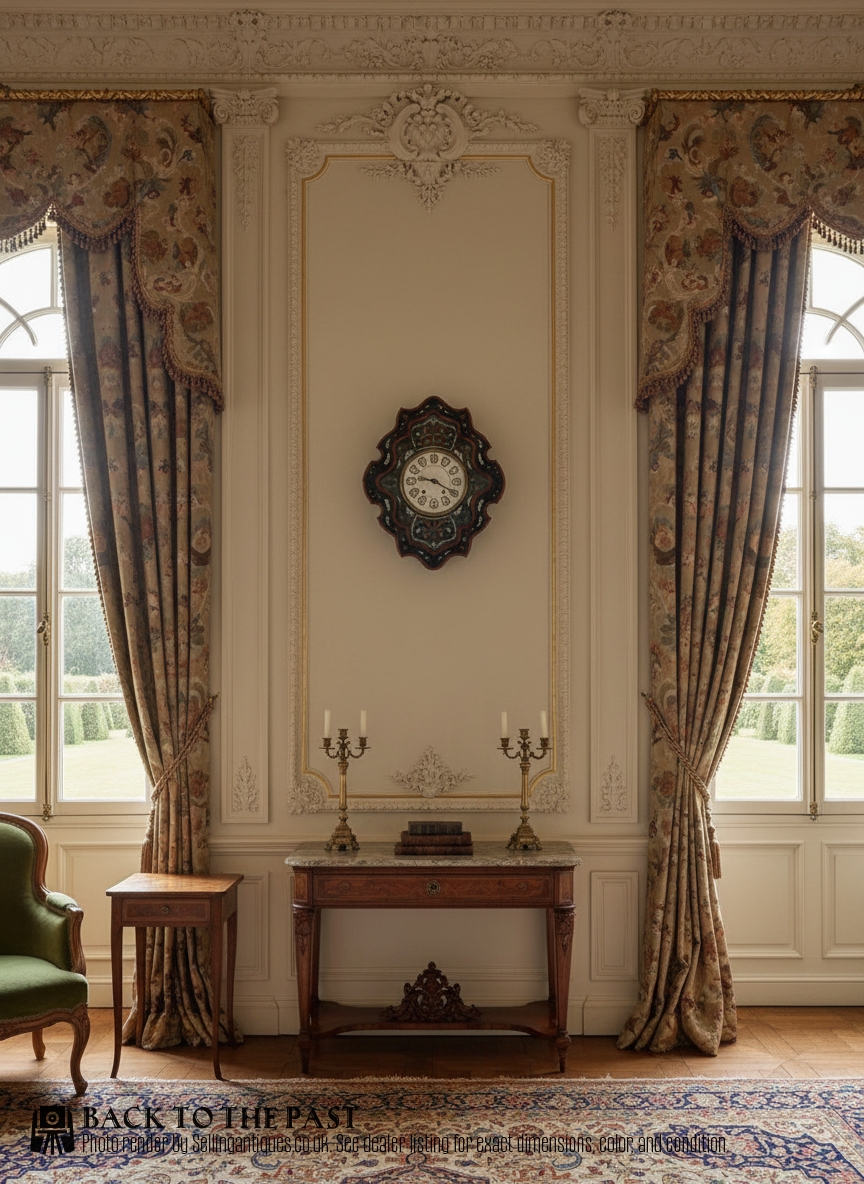
Ebonised Pendulum Clock
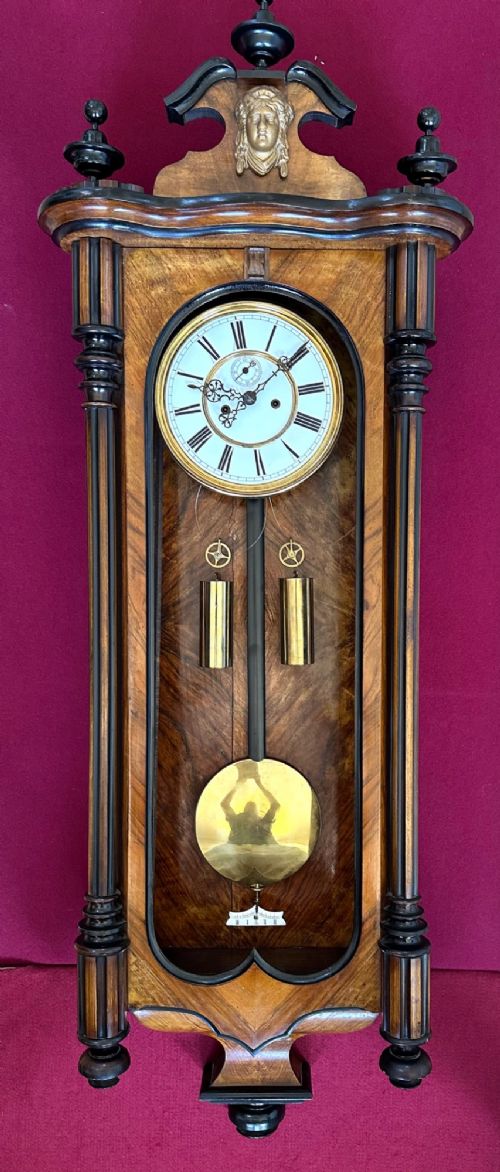
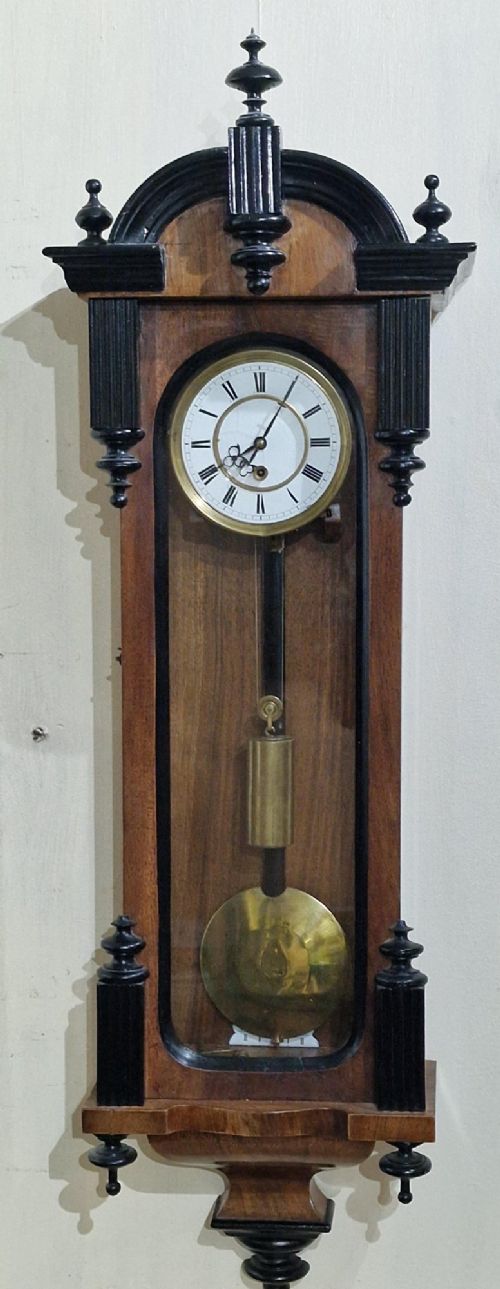
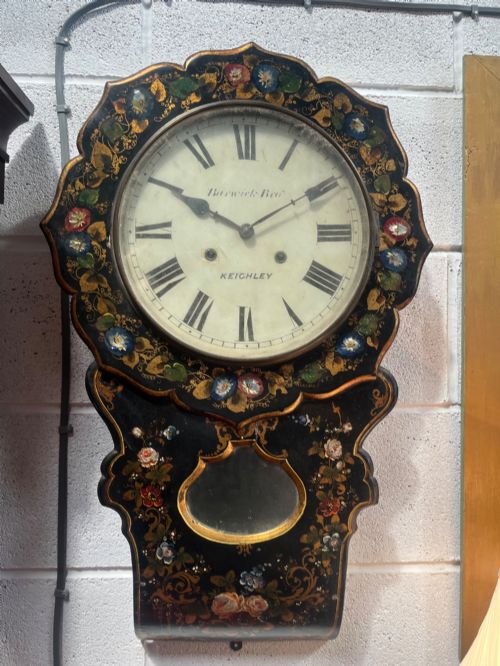
When you search for an ebonised pendulum clock, you encounter timepieces housed in dark timber cabinets finished to resemble ebony, spanning wall-hanging regulators, mantel pieces, and tall floor-standing longcase designs. These examples originate primarily from the eighteenth and nineteenth centuries, taking influences from English, French, and Austrian workshops.
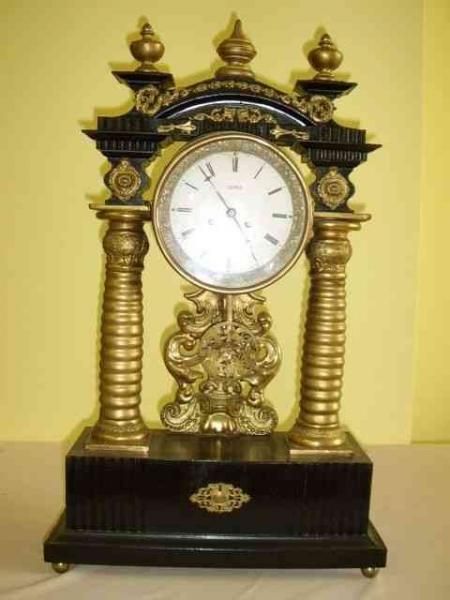
Wall-mounted Vienna regulators and French picture frame clocks dominate the available forms, alongside robust portico mantel clocks and towering Georgian longcase pieces. Cabinets utilise ebonised wood frequently paired with walnut, brass mounts, mother of pearl inlay, and gilt bronze details.
Victorian examples sit alongside earlier Georgian and period pieces, showing movements designed for eight-day strikes, month-long durations, or grand sonnerie functions. Dials feature enamel or painted decoration behind glass doors, often framed by architectural columns and marquetry inlay.
Assessing quality and craftsmanship
The division between standard production and exceptional work rests on the crispness of the ebonised finish, the precision of the cabinet joinery, and the complexity of the internal movement. Superior examples exhibit hand-cut marquetry, finely cast ormolu mounts, and intricate metal wire inlay that remains intact across the wooden case.
Movement sophistication also dictates standard, moving from simple time-only mechanisms up to month-duration Vienna regulators and grande sonnerie striking trains. The quality of the enamel dial, the legibility of the painted numerals, and the original integration of the glass and brass bezels elevate the piece further.
Some nineteenth-century French clockmakers cleverly hid their intricate musical movements inside architectural portico frames made to look like solid ebony.
Le Roy, Paris·Henri Marc of Paris·Thomas A Paris·William Tomlinson, London·John Drew, London·D Robertson of Perth·Gustof Becker
The Ebonised Pendulum Clock Glossary
- Ebonised wood
- Timber treated with stain or paint to achieve the dense black appearance of ebony. This finish gained popularity in nineteenth-century furniture and clock cases.
- Vienna regulator
- A precision wall clock developed in Austria, celebrated for its accurate movement and long glass-panelled door displaying the swinging pendulum. These clocks often feature walnut and ebonised cases.
- Portico clock
- A mantel clock designed with architectural columns supporting the movement housing, frequently produced in France during the nineteenth century. They often utilise ebonised wood alongside ormolu and gilt bronze.
- Grand sonnerie
- A complex striking mechanism that chimes the hours and quarters automatically on bells or gongs. This complication appears in higher-grade nineteenth-century movements.
- Longcase clock
- A tall floor-standing timekeeper enclosed in a wooden case, also known as a grandfather clock. Early examples feature ebonised panels and brass dials.
Ebonised Pendulum Clock: Frequently Asked Questions
Where should I place a wall-hanging pendulum clock?
Mount the clock securely onto a solid wall using appropriate fixings that can support the combined weight of the ebonised timber case and movement. A stable wall prevents vibrations from interfering with the delicate swing of the pendulum.
Keep the clock away from direct sunlight, heating vents, and damp areas to protect the ebonised finish and internal wooden components from warping or cracking. Ensure the position allows easy access for weekly or monthly winding.
How do I tell a Vienna regulator from a French wall clock?
Vienna regulators typically feature tall, elegant wooden cases with full-length glass side and front doors designed to showcase the weights and pendulum clearly. Their movements focus on high-precision timekeeping and often run for eight days or a month.
French wall clocks frequently showcase decorative elements such as mother of pearl inlay, metal wire work, or gilt bronze mounts in styles like Napoleon III or picture frame designs. Their cases tend to be more compact and ornamental rather than strictly engineered for regulator-level accuracy.
What maintenance do these antique movements require?
Antique mechanical movements benefit from professional cleaning and lubrication every few years to prevent wear on the brass gears and steel pivots. Dust accumulation inside the glass case should be gently removed with a soft brush.
Avoid applying household oils or lubricants to the mechanism, as incorrect substances attract dust and gum up the pivots. If the clock begins losing or gaining time, adjustments can be made via the regulation nut on the pendulum.