

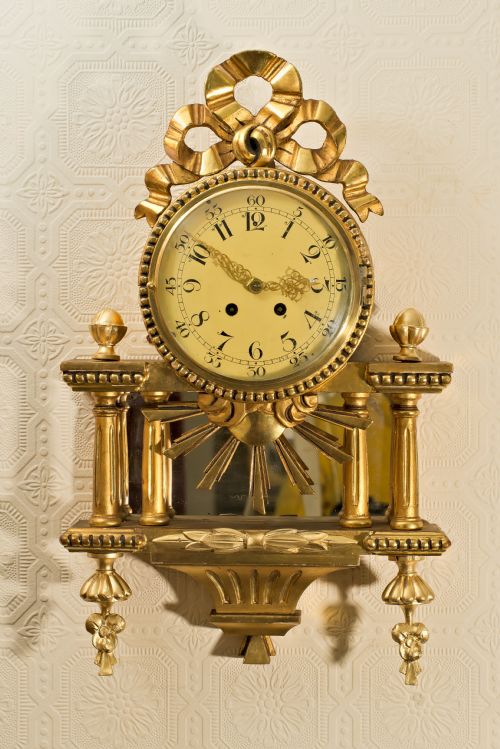


French Cartel Clock
A French cartel clock brings sculptural brass, gilt bronze and enamel dialwork to the wall, offering ornate timekeeping from past centuries.
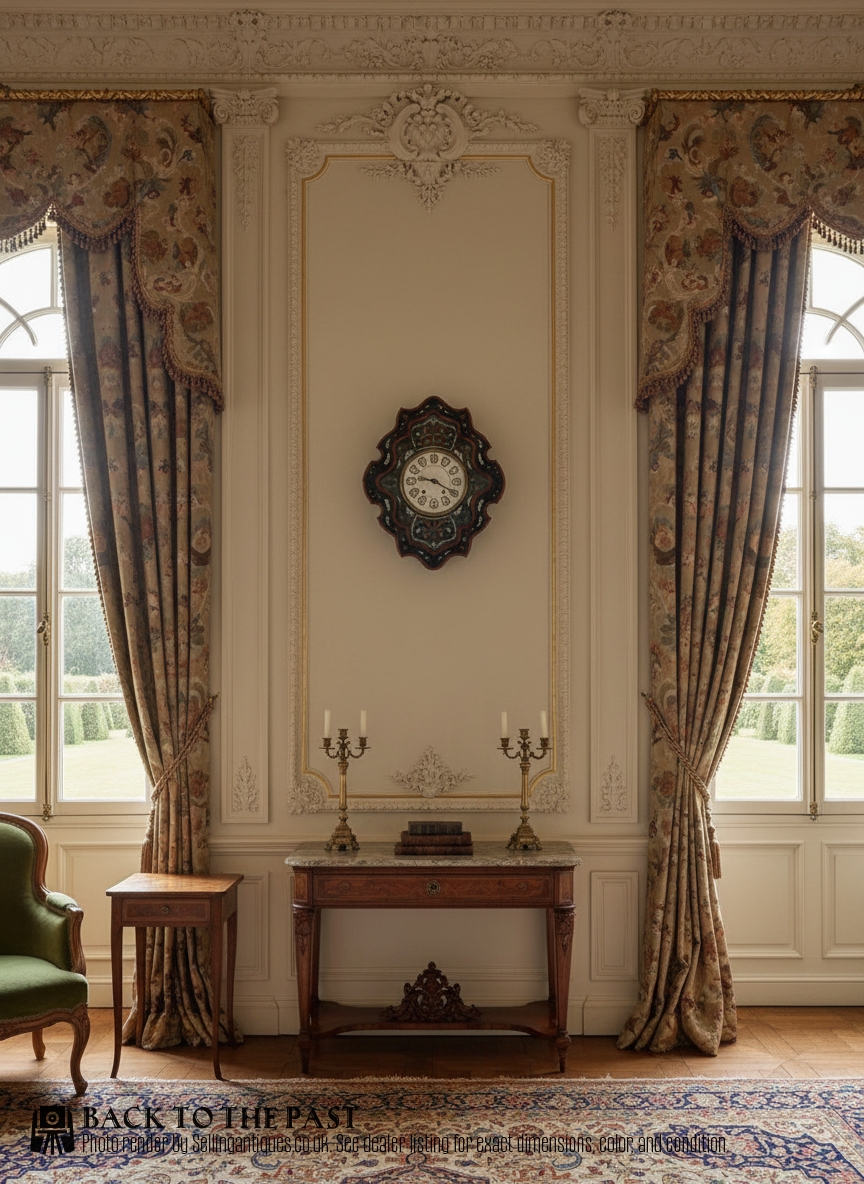
Understanding French cartel clock pieces
A French cartel clock is an ornamental wall timepiece designed to mount directly onto domestic interiors. The pieces appearing here span the nineteenth century, including Victorian examples alongside items dated around eighteen fifty, eighteen sixty and eighteen ninety.
Most examples adopt historical aesthetics, with Louis XVI and French Rococo Revival styles dominating the selection. Buyers frequently encounter wall clocks cast in gilt bronze, ormolu and standard brass, often paired with enamel dials.
Forms range from restrained Neoclassical architectural layouts to asymmetrical Rococo compositions featuring scrolls, foliage and animal motifs. Pieces occasionally utilise tortoiseshell or rosewood bodies to complement the metallic mounts.
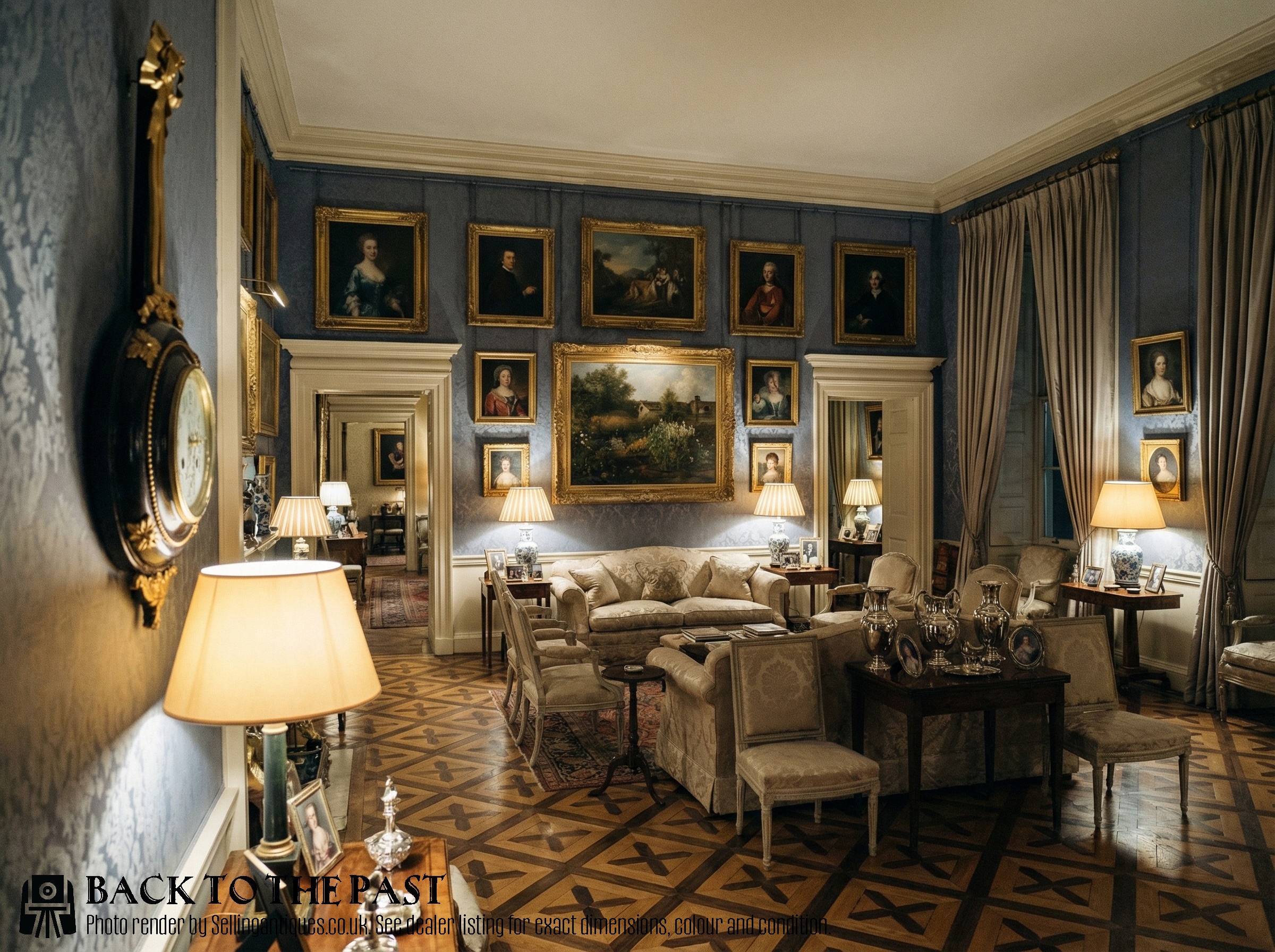
Materials and construction methods
Casings rely heavily on cast bronze, brass and ormolu, which are often gilded to achieve a bright surface sheen. Glass protects the enamel chapter rings and hands set into the dial face.
Woodwork variants incorporate rosewood or employ Boulle techniques utilising tortoiseshell alongside inlaid brass details. Metal components involve skilled casting and chasing to create sculptural relief work across the wall clock body.
Retail Price Guide 2026
Typical UK retail prices for french cartel clock, calculated from the Sellingantiques database of over a million retail prices indexed since 2003. This retail price guide relies exclusively on Sellingantiques data; no external sources or auction records are used, so the figures do not describe the wider market.
Several clocks wear marine disguises, featuring sculpted dolphins or dragon motifs writhing across the gilded bronze frames.
Distinctions in craftsmanship
Quality rests in the crispness of the bronze chasing and the depth of the gilding across the asymmetrical scrollwork or neoclassical urns. Superior examples maintain sharp relief in the cast ornament rather than softening into blurred edges.
The integration of the movement with named makers elevates the standing of an individual piece. Finer items balance substantial scale with delicate dial enamel and well-preserved glass bezels.
HENRI MARC OF PARIS·Charles Vincent·Vincenti·Baillon·Japy Freres·Raingo Freres·Samuel Marti·Maison Bagues Paris
The French Cartel Clock Glossary
- Cartel clock
- A wall-mounted clock featuring an ornate frame typically made of gilt bronze, brass or wood. These pieces were designed for salons and formal rooms.
- Ormolu
- Finely ground high-carat gold applied to a bronze base using a mercury amalgamation technique, creating a durable golden finish. This surface treatment defines the appearance of numerous nineteenth-century models.
- Boulle
- A form of marquetry employing tortoiseshell and brass inlay, named after cabinetmaker André-Charles Boulle. It appears on select wooden clock bodies.
- Enamel
- A fused glassy substance applied to copper dial plates to form the white background for clock numerals. It provides a smooth, wipe-clean surface for painted numbers.
- Rococo Revival
- A nineteenth-century design movement mimicking the asymmetrical C-scrolls and naturalistic motifs of the French eighteenth century. This style shapes many of the decorative wall clocks in the collection.
Frequently Asked Questions
How do I hang a French cartel clock safely?
These wall clocks require secure mounting directly into wall studs or solid masonry using fixings rated for substantial metal and wood weight. Because the casings combine heavy gilt bronze with internal brass movements, stable support prevents structural strain on the hanging bracket.
Position the clock at eye level where the dial remains legible and the decorative pendulum or lower pendant hangs free from obstruction. Ensure the wall surface is flat so the backplate sits flush without tilting the mechanism.
What periods do these wall clocks represent?
The pieces span the nineteenth century, encompassing Victorian productions and specific dated items from eighteen fifty, eighteen sixty and eighteen ninety. Stylistically, they draw heavily on Louis XVI and Rococo Revival aesthetics popular in France during those decades.
Older eighteenth-century survivals appear occasionally, though nineteenth-century interpretations of earlier monarchical styles constitute the majority of available wall clocks.
How do I clean gilt bronze and ormolu?
Dust surfaces gently using a soft, dry brush to remove particles settled in the recessed chasing of the bronze. Avoid chemical dips, abrasive polishes or water, which can strip the historic ormolu surface.
Professional care is recommended for both the exterior metalwork and the internal clock movement to preserve the original patina and mechanical integrity.
What is the difference between Louis XVI and Rococo styles?
Louis XVI style pieces feature symmetrical lines, straight columns, neoclassical urns, swags and geometric balance. The ornamentation reflects an archaeological interest in classical antiquity.
In contrast, Rococo style pieces embrace asymmetry, flowing C-scrolls, naturalistic foliage and organic forms. This creates a more dynamic, theatrical silhouette on the wall.