
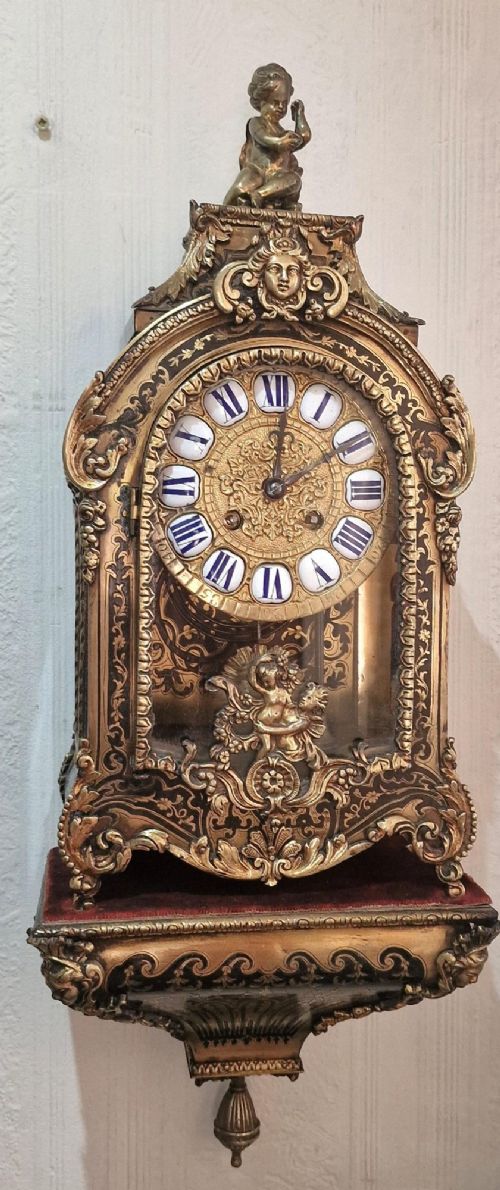


Ormolu Wall Clock
An ormolu wall clock brings warmth and architectural presence to a room, combining cast gilt metal with mechanical timekeeping.
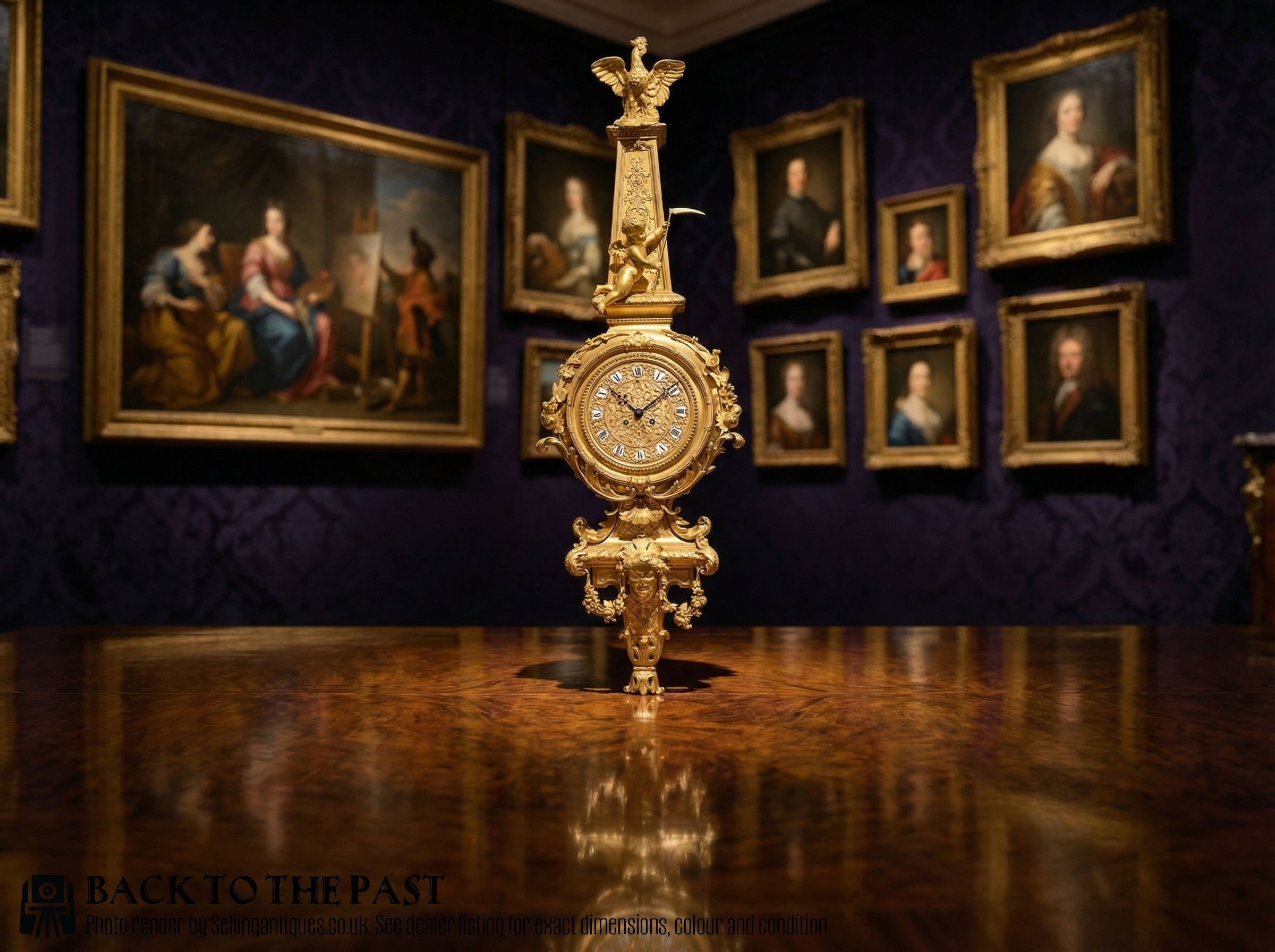
Ormolu Wall Clock
When you search for an ormolu wall clock, you encounter domestic timepieces predominantly shaped by nineteenth-century French tastes. These examples span cartel formats, lyre designs, and mantel clocks complete with matching wall brackets.
The aesthetic vocabulary draws heavily from French Rococo, Louis XVI Neoclassical, and Napoleon III revivals. Many survivors retain their original companion brackets, designed to display the gilt metalwork securely against a panelled wall.
Materials and construction methods
The distinct golden finish of an ormolu wall clock relies on mercury gilding or electroplating applied to cast bronze, brass, or gilt metal bases. This metalwork is frequently paired with contrasting materials such as tortoiseshell, walnut, ebonised wood, and enamel dials.
Movements and cases required collaborative craftsmanship between bronze-founders, cabinetmakers, and horologists. Enamel cartouches on the dial indicate individual hours, framed by ornate asymmetrical Rococo scrollwork or strict Neoclassical symmetry.
Ormolu Wall Clock Retail Price Guide 2026
Typical asking prices for ormolu wall clock among the pieces listed under this phrase on Sellingantiques today, from the lower quarter to the upper quarter. They describe what is for sale here now, not the wider market.
Listings demonstrate that nineteenth-century French models dominate the selection, utilising ormolu, gilt bronze, enamel, and tortoiseshell.
Distinguishing quality across examples
The sharpness of the cast bronze ornament dictates the primary tier of quality. Superior items display deep, crisp chasing in the ormolu foliage and figures, whereas lesser versions show softened surface details from worn moulds.
Integration between the clock case and its original wall bracket demonstrates superior workshop origin. Cohesive design, substantial weight in the gilt bronze, and signed movements elevate a piece above standard production models.
Henri Marc of Paris·Vincenti and Cie·Maison Bagues·Japy Freres·Charles Hour·Henri Dasson·Lenzkirch
The Ormolu Wall Clock Glossary
- Ormolu
- Gilt bronze produced by applying a gold amalgam to a bronze base. This technique creates a durable, warm metallic lustre characteristic of nineteenth-century decorative arts.
- Cartel clock
- A wall-mounted clock housed in an ornate frame made of gilt bronze, brass, or carved wood. These pieces often feature elaborate scrolls and architectural motifs.
- Boulle
- A form of marquetry employing brass and tortoiseshell inlaid in counterpoint patterns. It is frequently seen on French bracket clocks from the nineteenth century.
- Lyre clock
- A timepiece shaped like the ancient musical instrument, typically constructed with ormolu mounts and a visible pendulum oscillating through a central opening.
- Bracket clock
- A portable clock designed to sit on a matching wall bracket or shelf. The bracket itself forms an architectural extension of the clock case.
Ormolu Wall Clock: Frequently Asked Questions
How do I hang an ormolu wall clock safely?
These clocks are exceptionally heavy due to the cast bronze cases and require secure fixings anchored directly into structural wall studs or masonry. Using the original wall bracket helps distribute the weight correctly.
Ensure the hanging point supports the total combined mass of both the clock and its bracket to prevent movement or structural failure over time.
Are original wall brackets common to find?
Many nineteenth-century cartel and bracket clocks survive alongside their matching wall supports, though some have been separated over generations. Finding a piece with its original bracket preserves the intended aesthetic balance.
Listings occasionally note whether the bracket is contemporary to the clock movement or a later matched addition.
How do I identify a nineteenth-century French piece?
Nineteenth-century French examples typically display cast ormolu mounts, enamel dial chapters, and movement signatures corresponding to Parisian or provincial workshops. Stylistic cues draw on Louis XV, Louis XVI, and Napoleon III revivals.
Detailed chasing on the bronze and traditional bell-strike movements further confirm the period of manufacture.