


Rococo Wall Clock
A rococo wall clock brings asymmetrical charm and gilt splendour to a room, driven by flowing scrollwork and organic forms.
Rococo Wall Clock
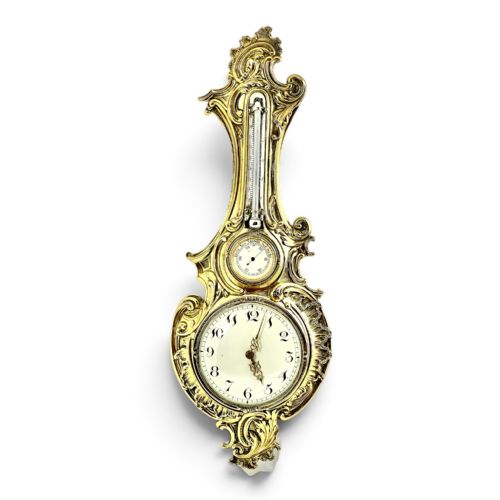
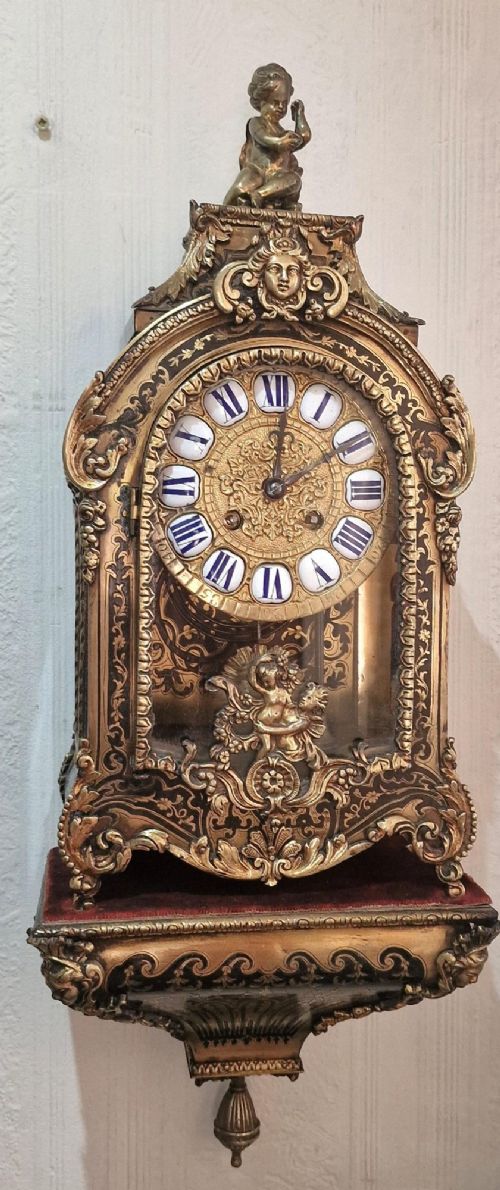
A rococo wall clock search reveals ornate timepieces spanning the eighteenth and nineteenth centuries, taking the form of cartel clocks mounted directly to the wall or bracket clocks paired with matching shelves.
The version most commonly encountered on this page is the French cartel clock, cast in gilt bronze or ormolu and shaped with characteristic rocaille curves and asymmetrical shell motifs.
Examples also emerge from Victorian and Georgian periods, alongside pieces utilising tortoiseshell, giltwood and carved wood.
Makers such as Japy Freres and Henri Marc appear among these French and English designs, alongside Swiss Neuchatel pieces and London workshop productions.
Materials and construction
Makers shaped the cases of these clocks using cast ormolu, gilt bronze, and brass, applying fire gilding to achieve a deep, enduring lustre on the metal surfaces.
Wooden alternatives employ carved giltwood, walnut, and tortoiseshell over a structural carcase, often decorated with Boulle marquetry work.
Enamel dials with delicate painted numerals sit behind glass bezels, housing brass movement mechanisms designed to keep time and strike the quarters.
Listings feature items from the eighteenth and nineteenth centuries, including Victorian and Georgian periods.
Assessing the craftsmanship
Quality rests in the crispness of the chasing on the gilt bronze or ormolu, where sharp leaf scrolls and defined asymmetrical contours separate superior casting from softer, flatter work.
The depth and consistency of the gilding dictate visual richness, alongside the complexity of the movement and the integration of enamel face details.
Carved wooden examples rely on the depth of the undercut foliage and the preservation of the original gilt surface against the underlying timber.
Henri Marc of Paris·William Webster London·Japy Freres·Vincenti·Raingo Freres·Fritz Marti·Samuel Marti·Connell of London
The Rococo Wall Clock Glossary
- Cartel clock
- A wall-mounted clock housed in an ornate frame made of metal or carved wood. These pieces became popular during the eighteenth century across France.
- Ormolu
- Gilded bronze produced by applying a mixture of mercury and gold to a bronze base and heating it. This technique creates a rich, lasting metallic finish.
- Boulle
- A form of marquetry using brass and tortoiseshell inlaid in intricate patterns. Named after a French cabinetmaker, it frequently decorates nineteenth century clocks.
- Rocaille
- A shell and rock-work ornament characteristic of the style. It forms the basis of the flowing, asymmetrical motifs seen on these clock cases.
- Bracket clock
- A portable clock designed to sit on a matching wall bracket or shelf. Many examples include carrying handles on top.
Rococo Wall Clock: Frequently Asked Questions
How do I hang a rococo wall clock safely?
These wall-mounted pieces require a secure screw or fixing placed directly into a wall stud or masonry anchor, matching the weight of the metal or wooden case. The hanging bracket on the back of the clock must engage firmly with this support to prevent any movement.
Once hung, the clock needs levelling on the wall so the pendulum swings evenly. Adjusting the case position ensures the escapement ticks in a steady, uniform rhythm.
Were these clocks made for domestic use?
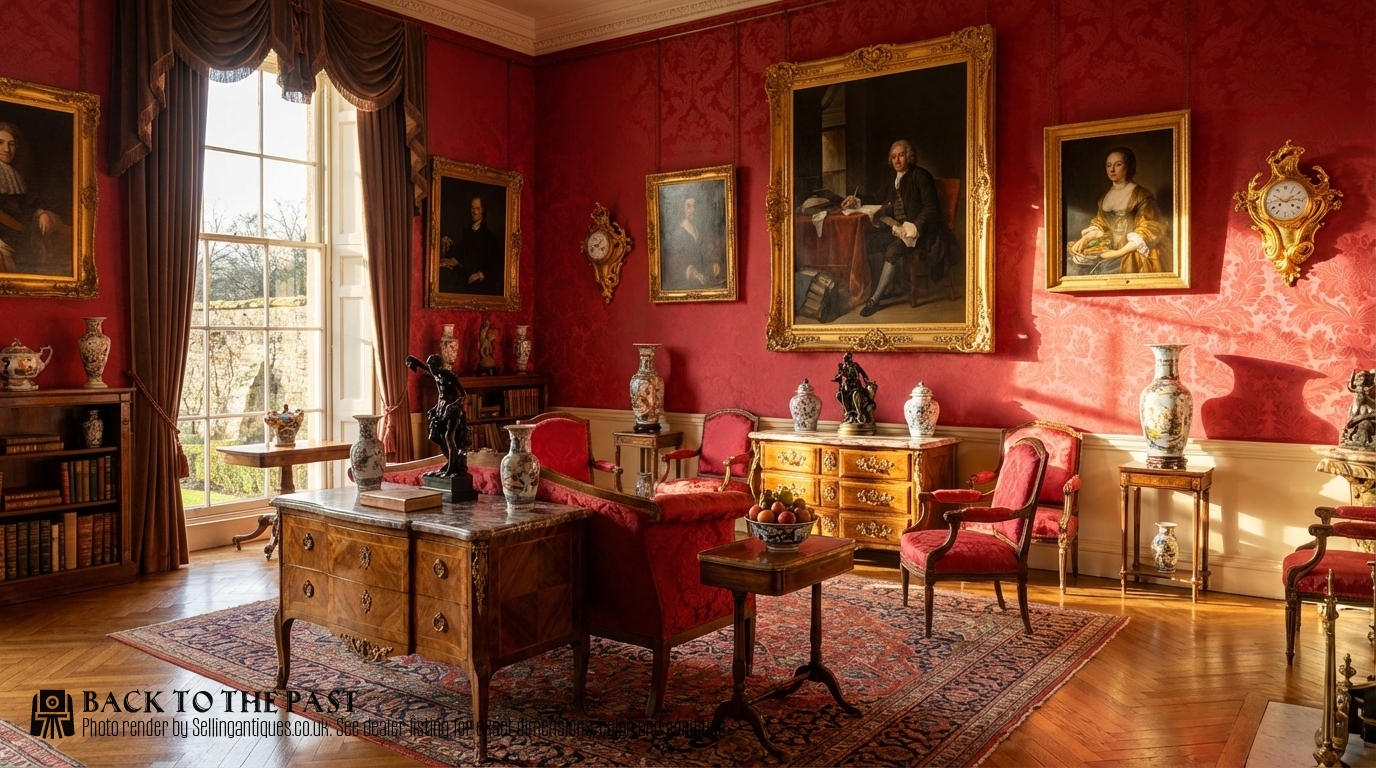
Gilt bronze and ormolu cartel clocks served as principal decorative timekeepers in formal drawing rooms and salons during the eighteenth and nineteenth centuries. Wealthy households displayed them prominently on salon walls to indicate status and taste.
By the Victorian era, similar revival styles decorated domestic hallways and parlours. Their striking mechanisms also provided audible timekeeping for the household throughout the day and night.
How do I tell an 18th century clock from a 19th century revival piece?
Eighteenth-century originals display hand-chased metalwork with distinct wear patterns and simpler, heavier movement plates characteristic of the period. The dial construction and signature style of the maker often point directly to an earlier London or Parisian workshop.
Nineteenth-century revival pieces, including those from the Victorian period, often utilise factory-produced movements stamped by volume makers like Japy Freres. The casting styles tend toward heavier proportions and shinier gilt finishes associated with later industrial methods.
How should I clean the gilt bronze case?
Dusting the surface gently with a soft, dry brush prevents dirt from settling into the deep crevices of the scrollwork and rocaille mounts. Avoiding chemical polishes is essential, as abrasive liquids strip away original fire gilding or ormolu.
Professional conservation is recommended for deeper cleaning or when handling tarnished metal areas. Preserving the integrity of the gilt surface maintains both the historical appearance and character of the clock.