
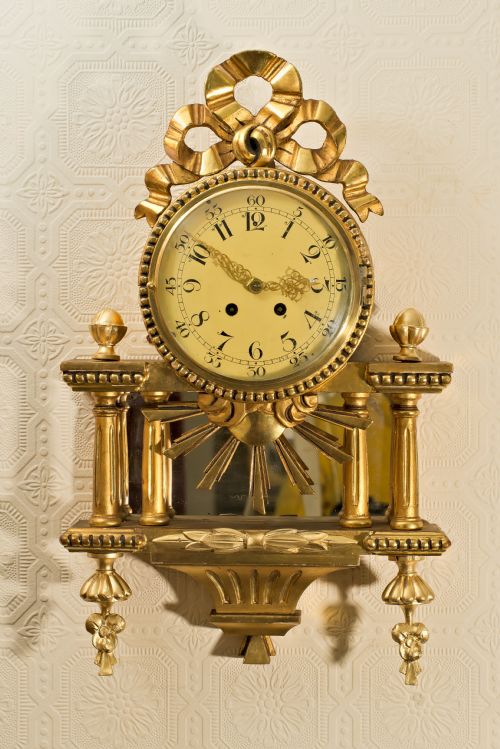


18th Century Cartel Clock
An 18th century cartel clock is a wall-hung timepiece that brings sculptural French and English design directly to your interior.
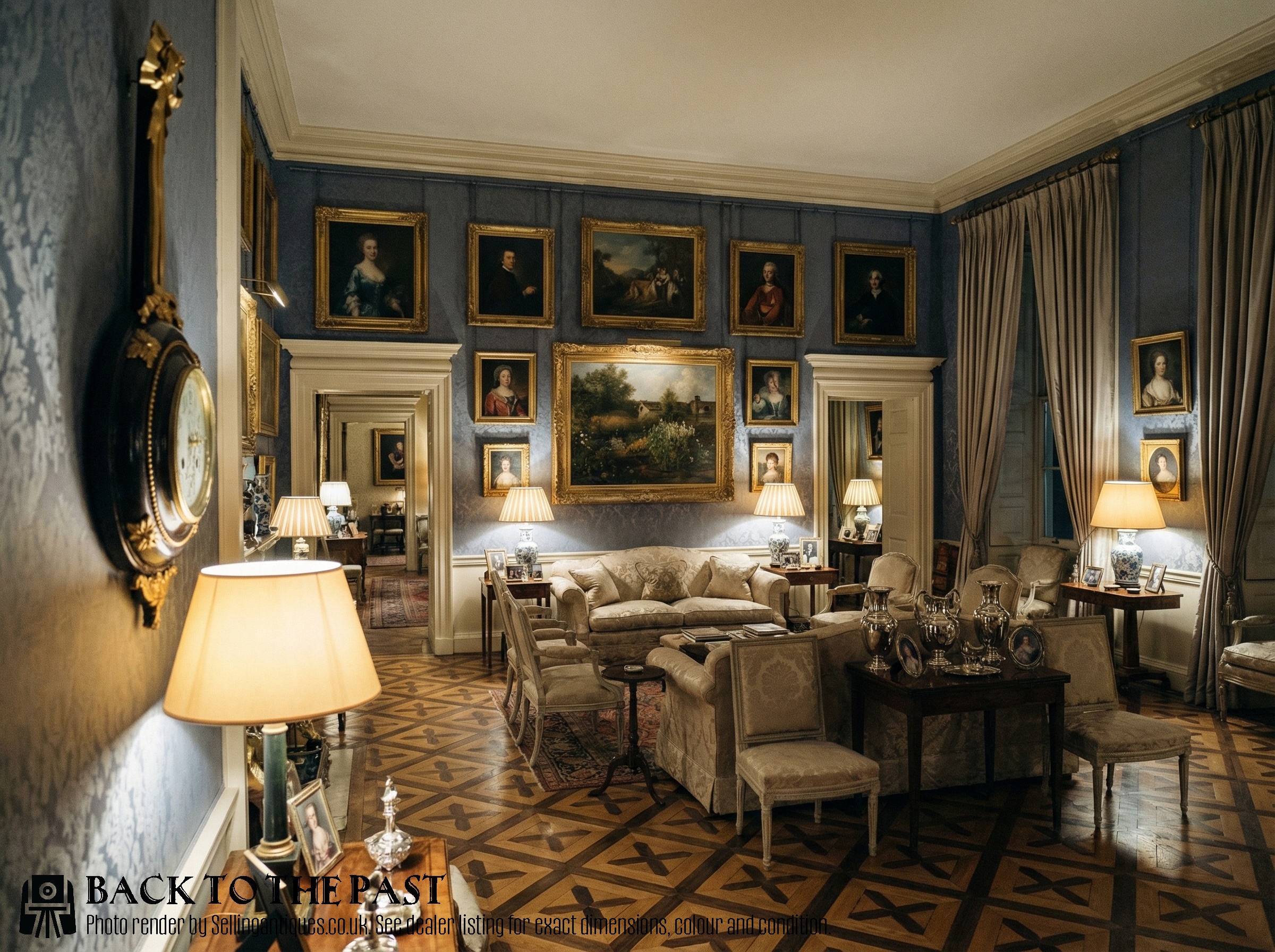
Identifying an 18th century cartel clock
When you search for an 18th century cartel clock, you are looking at wall-hung timepieces enclosed in ornate frames of wood, giltwood, or gilt bronze. These pieces combine horology with decorative wall sculpture, designed originally for the principal rooms of fine houses.
The versions you are most likely to meet on this page span the Georgian period in England and the French Rococo and Louis XVI styles from continental workshops. They appear as carved wood wall clocks, often featuring mirror glass or detailed patination.
Makers represented in the record include Wetterstrands, William Webster, Baillon, and Le Nepveu, showing both English and French origins. Forms range from large examples reaching three feet in height down to more intimate wall pieces.

Materials and construction
Makers constructed these clocks using timber frames carved from wood, finished in giltwood, or mounted with cast ormolu and gilt bronze. Enamel serves for the dial faces, protected behind curved glass plates.
Metalwork involved intricate casting and fire gilding to achieve the rich ormolu surfaces seen on French Rococo and Louis XVI examples. Carvers shaped the wooden frames into asymmetric scrolls or restrained neoclassical symmetry depending on the period.
Retail Price Guide 2026
Typical UK retail prices for 18th century cartel clock, calculated from the Sellingantiques database of over a million retail prices indexed since 2003. This retail price guide relies exclusively on Sellingantiques data; no external sources or auction records are used, so the figures do not describe the wider market.
One exceptional recorded clock reaches a height of three feet, ensuring it dominated whichever wall it commanded.
Judging quality and execution
Quality separates in the crispness of the gilt bronze or ormolu chasing and the depth of the wood carving. Top-tier pieces exhibit sharply defined acanthus leaves, scrollwork, and figures that retain their original fire gilding.
The integration between the movement, the dial, and the outer case dictates the overall success of the piece. Signed dials and movements by noted makers elevate the horological significance alongside the decorative merit of the housing.
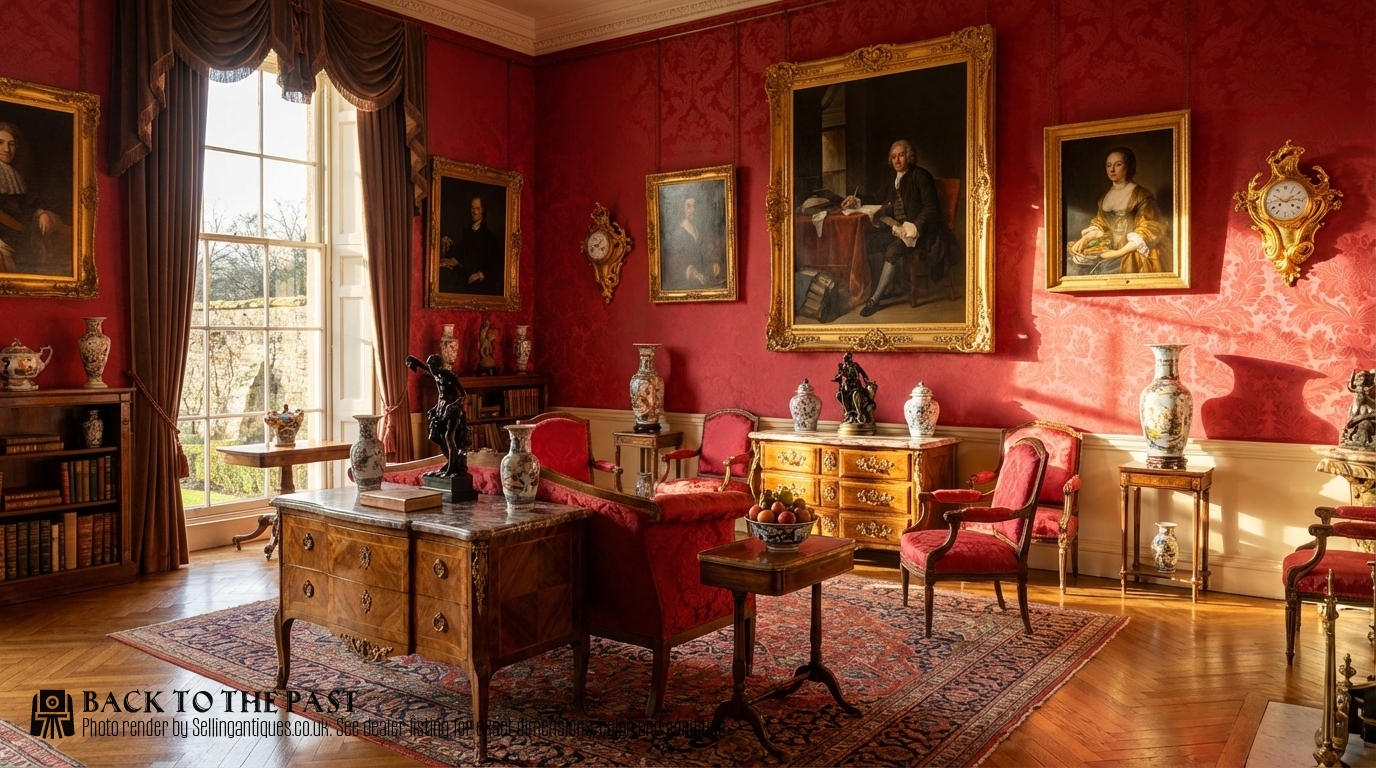
Wetterstrands·William Webster·Baillon·Le Nepveu
The 18th Century Cartel Clock Glossary
- Cartel clock
- A wall-mounted clock enclosed in an ornamental frame made of metal, wood, or giltwood. This form originated in France during the early eighteenth century before spreading to English workshops.
- Ormolu
- Finely ground high-carat gold mercury-gilded onto a bronze base. This technique produces a warm, durable metallic finish typical of French decorative arts.
- Giltwood
- Wood that has been coated with a thin layer of gold leaf or powder. It provides a luminous surface for carved frames.
- Rococo
- An exuberant decorative style characterised by asymmetric scrolls, shell motifs, and naturalistic curves. It dominates many mid-eighteenth-century French clock designs.
Frequently Asked Questions
Where were these clocks hung?
These clocks were designed to hang directly on the walls of principal rooms, drawing-rooms, and galleries in grand townhouses and country estates.
Because they lacked the traditional freestanding case of a grandfather clock, they saved floor space while serving as prominent decorative focal points.
How do I tell French from English examples?
French examples typically feature ormolu, gilt bronze, and Rococo or Louis XVI styling with asymmetric curves and organic motifs.
English variants more often employ carved wood, giltwood, or restrained Georgian proportions suited to British interiors.
What materials make up the dial?
The visible dials commonly use white enamel painted with Roman or Arabic numerals to mark the hours clearly.
A curved pane of glass protects the face and the delicate hands from dust and accidental contact.
How large do these wall clocks get?
Sizes range from compact wall pieces up to substantial examples reaching three feet in height.
Larger versions usually incorporate heavier bronze mounts or extended carved wooden frames that demand secure wall fixings.