



Ebonised Wall Clock
An ebonised wall clock brings dark timber cases and enamel dials into a room, combining precise timekeeping with striking interior presence.
Ebonised Wall Clock
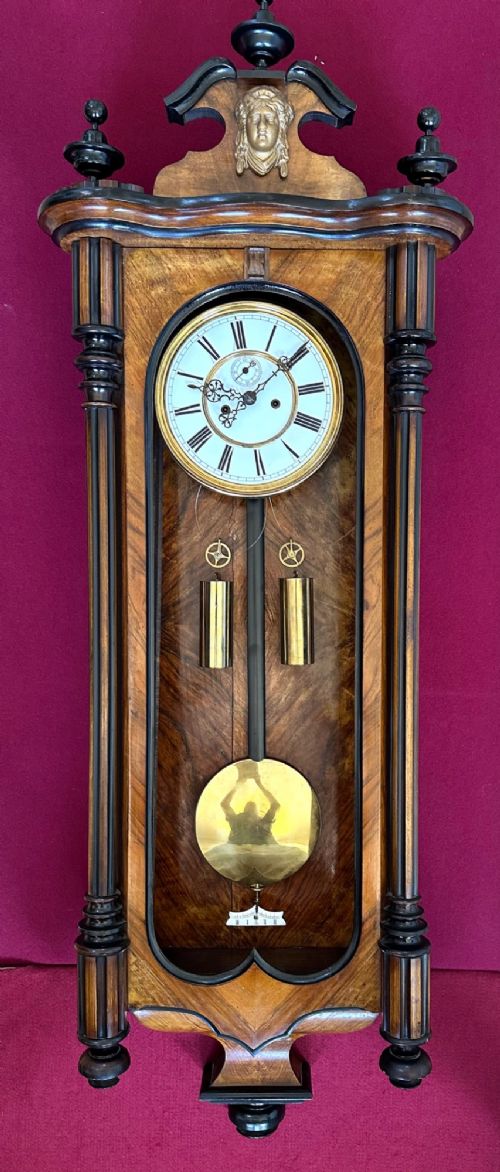
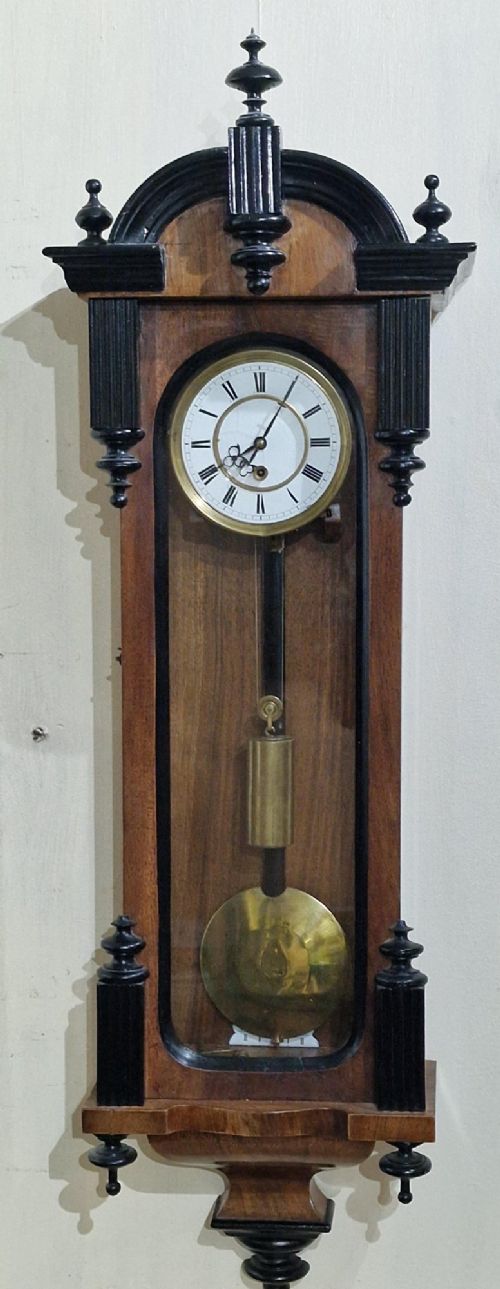
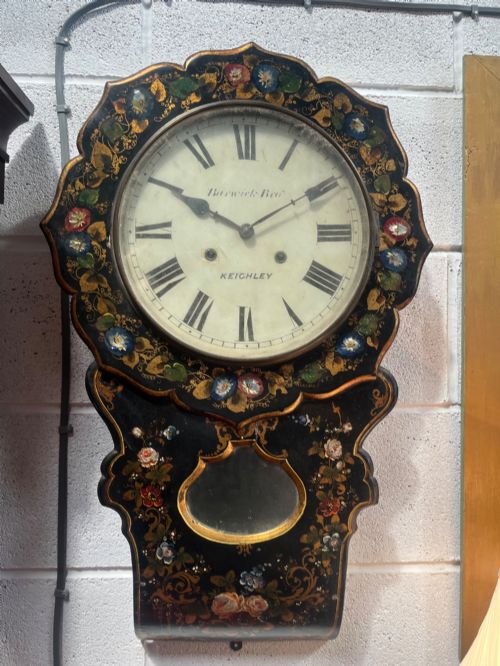
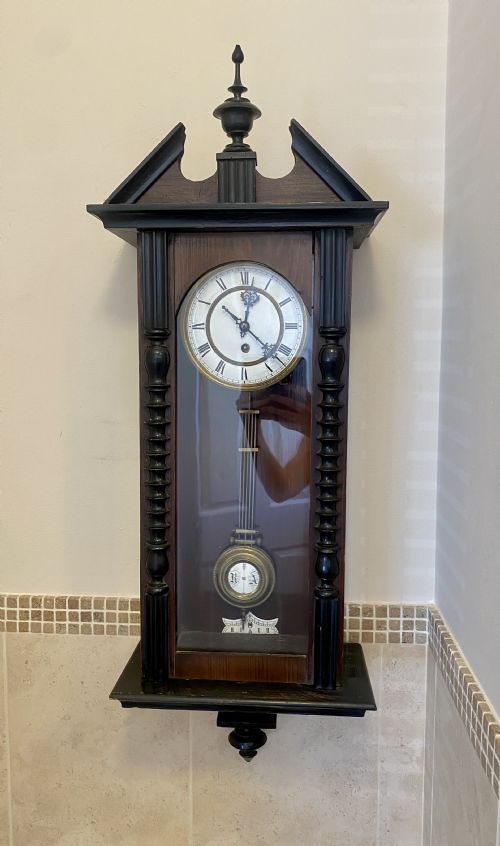
When searching for an ebonised wall clock, buyers encounter pieces primarily from the nineteenth century, including Victorian examples, French designs, and Austrian Vienna regulators. These items range from wall-mounted bracket clocks with matching shelves to picture frame models, drop dials, and serpentine Vienna wall clocks.
The domestic interior gains a strong focal point through these dark-cased timepieces. Vienna regulators appear frequently, offering either single or double weight driving mechanisms housed in tall, slim-line wooden cases.
Materials and construction
Cases are constructed from timber, predominantly walnut and wood treated with a dark ebonised finish, sometimes detailed with ormolu, brass inlay, mother of pearl, or metal wire. Glazed doors protect the interior movements and enamel dials, while brass components drive the striking trains and escapements.
Ebonised Wall Clock Retail Price Guide 2026
Typical asking prices for ebonised wall clock among the pieces listed under this phrase on Sellingantiques today, from the lower quarter to the upper quarter. They describe what is for sale here now, not the wider market.
Some clocks feature mother of pearl and metal wire inlaid into the dark wood, catching the dim evening candlelight.
Indicators of standard
Differentiation across the range rests on the complexity of the movement and the intricacy of the case decoration. Month duration movements, grand sonnerie striking capabilities, and fine Boulle marquetry or ormolu mounts elevate certain pieces above standard eight-day timepieces.
John Seddon of London·Henri Marc of Paris·Gustof Becker·Gebruder Resch·Camerer Cuss of London
The Ebonised Wall Clock Glossary
- Vienna Regulator
- A precision timekeeper developed in Austria, housed in a long glass-panelled case designed to display the pendulum.
- Fusee
- A conical pulley used in clock movements to maintain even driving force as the mainspring unwinds.
- Ebonised
- Timber treated with a dark finish to imitate expensive ebony wood.
- Boulle
- Marquetry technique utilising brass and tortoiseshell, named after French cabinetmaker Andre-Charles Boulle.
- Grand Sonnerie
- A striking mechanism that chimes the hours and quarters automatically on every quarter hour.
Ebonised Wall Clock: Frequently Asked Questions
How do Vienna regulators work?
Vienna regulators operate using precise weight-driven or spring-driven movements suspended inside tall glass-fronted cases. These mechanisms are engineered for high accuracy.
The visible pendulum swings behind glass, allowing the owner to observe the mechanical action while keeping time.
Where should I hang a wall clock?
Mount these clocks on solid interior walls at eye level to ensure proper viewing of the dial and safe weight support. Avoid damp locations.
Sufficient clearance is required below models with hanging weights or long pendulums so the movement functions without obstruction.
What is a fusee movement?
A fusee is a conical pulley connected to the mainspring by a cord or chain. It regulates power delivery.
As the spring loses tension, the chain moves to a wider part of the cone, maintaining constant torque for accurate timekeeping.
How do I identify a Victorian piece?
Victorian clocks display stylistic traits from the nineteenth century, including dark ebonised finishes, walnut veneers, and detailed brass or enamel work.
Maker signatures on dials or backplates and specific construction methods often confirm this period of manufacture.