



Austrian Wall Clock
An austrian wall clock brings precision timekeeping and architectural presence to a room, spanning styles from Biedermeier simplicity to ornate Vienna regulators.
Austrian Wall Clock
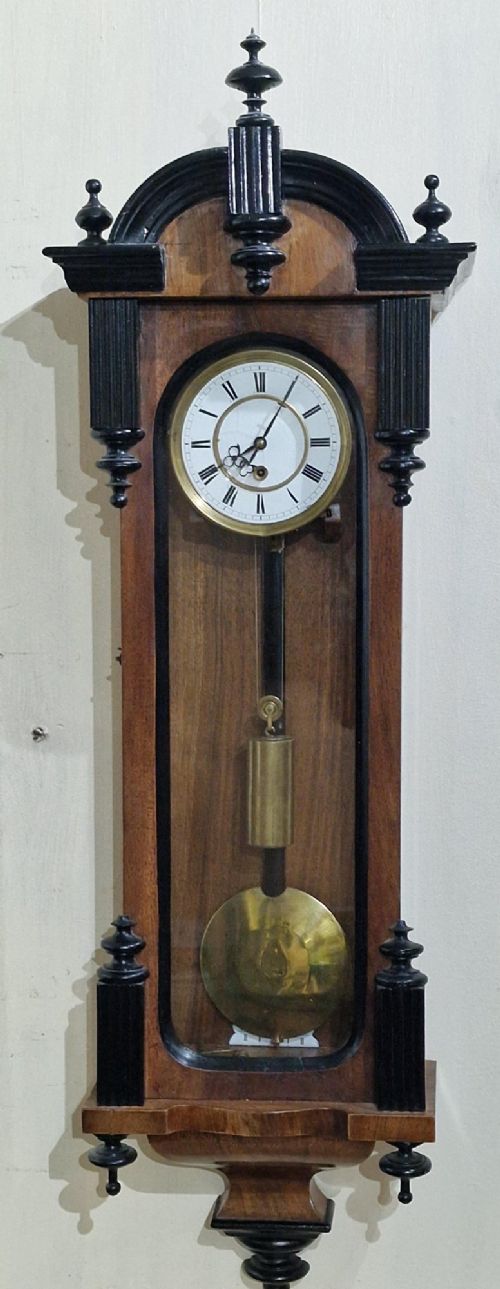
When searching for an austrian wall clock, collectors encounter pieces primarily originating from the nineteenth century, including Victorian examples and the iconic Vienna regulator. These timepieces range from miniature eight-day wall clocks and simple timepieces to grander month-duration models.
The aesthetic leans heavily toward classic nineteenth-century design idioms, with styles crossing between Biedermeier restraint, Gothic influences, and Victorian ornamentation. The listings frequently feature Vienna regulators alongside distinct Biedermeier wall clocks dating from around eighteen-fifty and earlier.
Forms vary from compact hanging timepieces to massive triple weight floor-standing wall clocks that command attention. Most encountered pieces date securely within the Victorian era and the broader nineteenth century, reflecting a rich period of Central European horology.
Materials and Construction
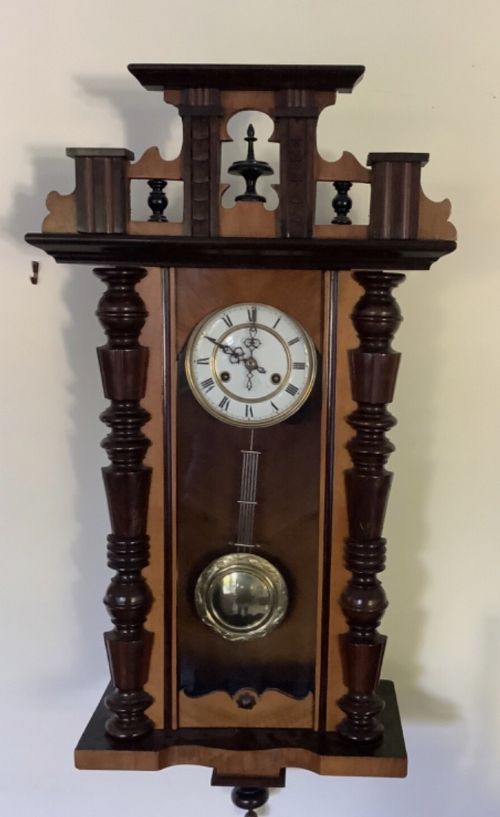
Cases utilise rich timbers such as walnut, mahogany, and ebonised wood to house the delicate movements. These warm wood surfaces often display prominent grain patterns that define the visual character of Biedermeier and Victorian pieces.
Movements incorporate brass components visible through bevelled glass panels, while dials typically feature crisp enamel faceplates. Pendulums swing steadily within these glazed wooden enclosures, combining mechanical complexity with fine cabinetmaking.
The inventory bridges multiple Victorian aesthetic movements, from stark Biedermeier forms to elaborate grande sonnerie complications.
Assessing Quality and Merit
The hierarchy among these timepieces rests on the complexity of the movement and the finesse of the case construction. Month-duration movements and grande sonnerie striking complications sit at the upper echelon of mechanical achievement.
Cabinetry detail also dictates standing, where clean Biedermeier veneering or precise architectural mouldings elevate a piece above standard Victorian production. The integration of high-grade brass work and clear enamel dials further separates ordinary timepieces from superior examples.
Gustav Becker
The Austrian Wall Clock Glossary
- Vienna Regulator
- A precise weight-driven wall clock developed in Vienna during the nineteenth century. These clocks are celebrated for their accurate movements and elegant glass-fronted cases.
- Biedermeier
- A style of Central European furniture design spanning the early to mid-nineteenth century. It prioritises clean lines, utility, and minimal ornamentation over heavy historicism.
- Grande Sonnerie
- A complex striking train on a clock movement that chimes both the hours and the quarters automatically. It represents a high standard of horological craftsmanship.
- Dachluhr
- An early form of Austrian wall clock featuring a rectangular trunk case reminiscent of a grandfather clock trunk mounted on a wall. The name translates roughly to roof clock.
- Enamel
- A glassy substance fused to a metal dial face to provide a durable, crisp white background for numerals. It gives the dial a classic, glossy finish.
Austrian Wall Clock: Frequently Asked Questions
What is a Vienna regulator clock?
A Vienna regulator is a high-precision weight-driven wall clock developed in Austria during the nineteenth century. They were engineered for exceptional timekeeping accuracy rather than simple domestic utility.
The cases feature extensive glass panels designed to showcase the pendulum and hanging weights in motion. Collectors prize them for their mechanical ingenuity and refined architectural proportions.
How long do these clocks run for?
Most standard models operate on an eight-day movement requiring a weekly wind. Some finer examples are constructed to run for a full month on a single wind.
The duration depends entirely on the complexity of the internal train and the weight drop configuration. Month-duration pieces represent a more demanding level of horological engineering.
Where should an austrian wall clock be hung?
These clocks require a sturdy interior wall capable of supporting the weight of wooden cases, brass movements, and hanging iron weights. A stable surface prevents vibrations that can interfere with the delicate pendulum beat.
Placement away from direct sunlight and dampness protects the polished walnut or mahogany veneer and the enamel dial face. Proper levelling during installation is essential for accurate timekeeping.
How do you date an antique wall clock?
Dating relies on examining the casework style, such as the austere geometry of Biedermeier pieces versus the heavier ornamentation of Victorian and Gothic revivals. Movement signatures, serial numbers, and material choices also provide chronological clues.
Changes in dial construction and glass manufacturing techniques further help narrow down the period of manufacture. Most examples found today sit firmly within the nineteenth century.