




Glazed Case Wall Clock
A glazed case wall clock brings architectural precision and mechanical rhythm into a room, framed by glass and timber.
Glazed Case Wall Clock
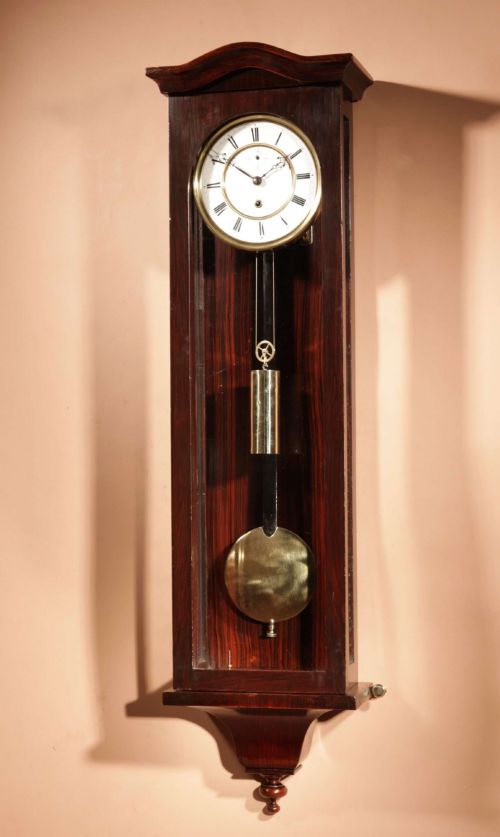
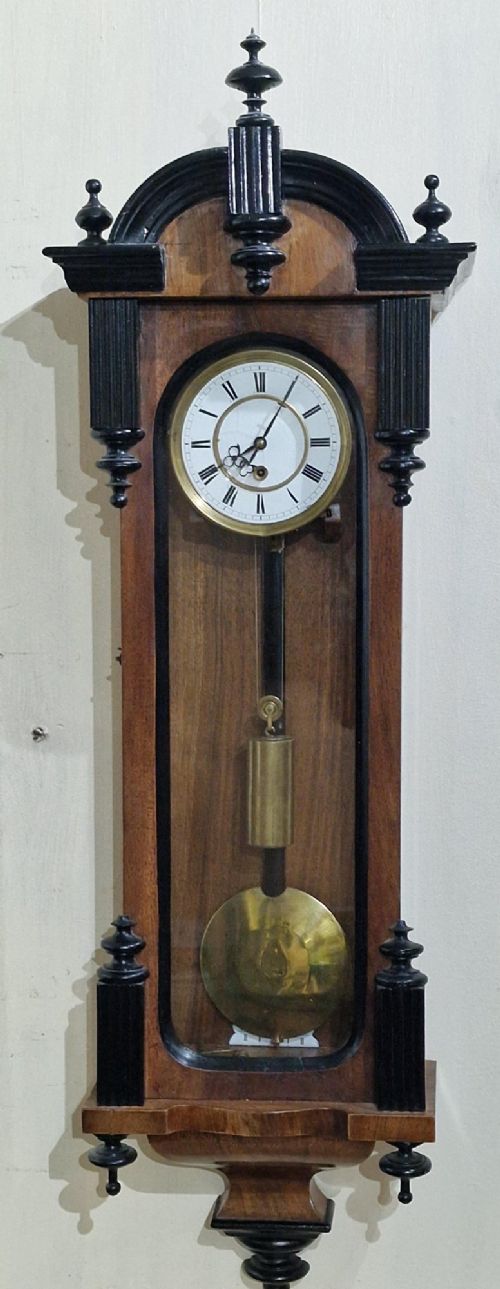
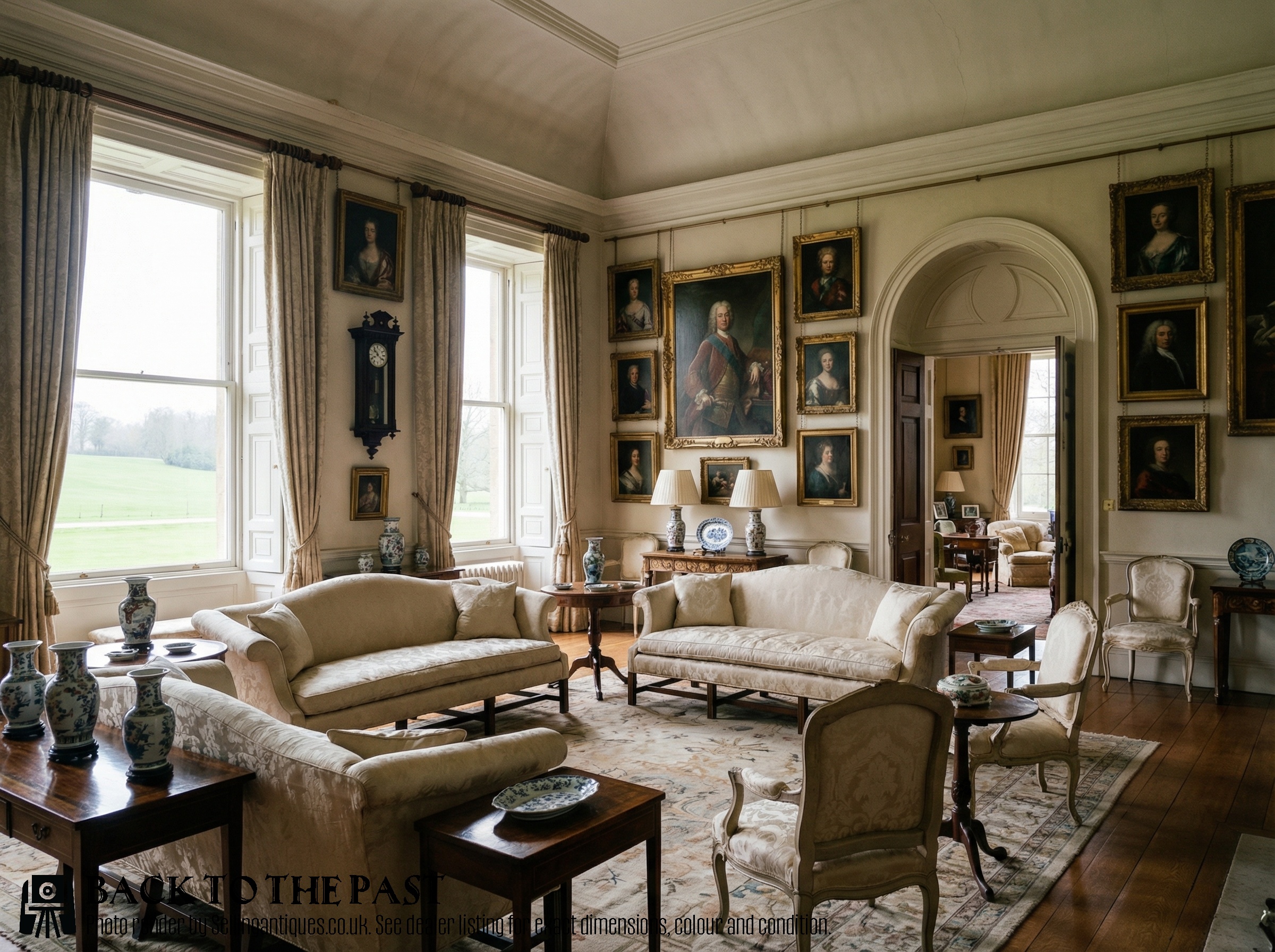
A glazed case wall clock combines a visible timekeeping mechanism with protective timber housing and glass panels. When you search for a glazed case wall clock, you encounter pieces spanning the Victorian era, the mid-nineteenth century, and the Art Deco period. Walnut and mahogany form the primary cabinetry for these domestic timepieces.
Vienna regulators and Biedermeier wall clocks dominate the selection, alongside Black Forest regulators and electric master clocks. Most examples date from the middle to the late nineteenth century, reflecting the high point of domestic clockmaking. The glazed door protects the dial and pendulum while allowing an unobstructed view of the movement in motion.
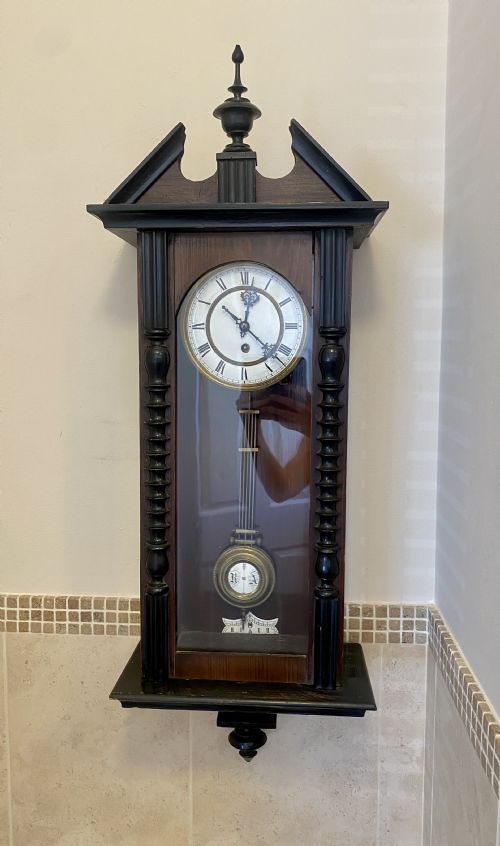
Cabinet styles range from carved walnut cases to ebonised wood and oak frames. The dial is typically enamel, protected behind glass, with brass or steel components driving the mechanism. These wall clocks serve both a functional timekeeping purpose and a decorative role within domestic interiors.
Materials and construction methods
Cabinetmakers utilised walnut and mahogany for the structural cases, often incorporating carved wooden details or smooth veneers. Ebonised wood and oak also appear among the timber choices, providing alternative finishes for the housing. Glass panels are fitted into the front doors to enclose the dial and swing space for the pendulum.
The mechanical interiors rely on brass and steel for gear trains, springs, and weights. Vienna regulators frequently employ double brass weights to drive the month-duration or standard movements. Enamel faces provide a durable, legible surface for the numerals, mounted securely within the wooden case.
Glazed Case Wall Clock Retail Price Guide 2026
Typical asking prices for glazed case wall clock among the pieces listed under this phrase on Sellingantiques today, from the lower quarter to the upper quarter. They describe what is for sale here now, not the wider market.
Some Vienna regulators run for a full month on a single wind, requiring serious dedication from whoever holds the key.
Assessing craftsmanship and execution
The sophistication of the timber cabinetry sets different examples apart, particularly the depth of carving and the selection of walnut veneer. Cases featuring detailed architectural moulding and well-figured wood represent a higher standard of production than plain housings.
Movement complexity also dictates the tier of the piece. Clocks housing month-duration mechanisms, double weight systems, or grande sonnerie striking trains demonstrate advanced horological skill compared to standard time-only movements.
AG Lenzkirch·Charvet
The Glazed Case Wall Clock Glossary
- Vienna Regulator
- A high-precision pendulum clock developed in Austria, noted for its accurate movement and clear glass viewing door. These pieces often feature weight-driven mechanisms.
- Biedermeier
- A central European style of furniture design from the nineteenth century prioritising clean lines and utility over excessive ornamentation. It frequently appears in walnut wall clock cases.
- Double Fusee
- A mechanical system using a conical pulley and chain to ensure even force from the driving weights as they unwind. This mechanism improves timekeeping consistency.
- Grande Sonnerie
- A striking train complication that chimes both the hours and the quarters on every quarter-hour. It represents a more complex level of clockwork engineering.
- Enamel Dial
- A fused glass-on-metal clock face providing a smooth, wipe-clean surface. These faces maintain their white ground and painted numerals over decades of use.
Glazed Case Wall Clock: Frequently Asked Questions
How do I wind a weight-driven wall clock?
Weight-driven wall clocks require you to pull the chains or wind the barrels using a specialised key, lifting the weights back to the top of the case. Care must be taken not to over-wind the mechanism or damage the suspension spring.
Consult the specific movement type before attempting maintenance, as month-duration clocks and standard eight-day clocks have different winding requirements and drop distances.
Where should I hang a heavy timber wall clock?
Mount your wall clock directly into a solid wall stud or use heavy-duty fixings suited to the weight of walnut and mahogany cabinetry. The hanging point must bear the load securely without shifting.
Ensure the location is away from direct heat sources and damp environments to protect the antique wood and delicate internal brass components from warping or corrosion.
How do I tell a Vienna regulator from other wall clocks?
Vienna regulators feature long glazed doors that showcase the pendulum and weights, paired with clean dial faces and precise weight-driven movements. Their architectural cases often draw inspiration from Biedermeier or later Victorian aesthetics.
Unlike simpler wall clocks, these pieces were designed specifically for high accuracy and display a clear hierarchy of movement quality and cabinetry finish.
What maintenance does an antique movement need?
Antique clock movements benefit from professional cleaning and lubrication every few years to prevent wear on the brass pivots and steel teeth. Dust accumulation inside the glazed case should be kept to a minimum.
Keep the clock level on the wall to ensure the pendulum swings evenly and the escapement beats with a steady, regular rhythm.