






Antique Vienna Regulator
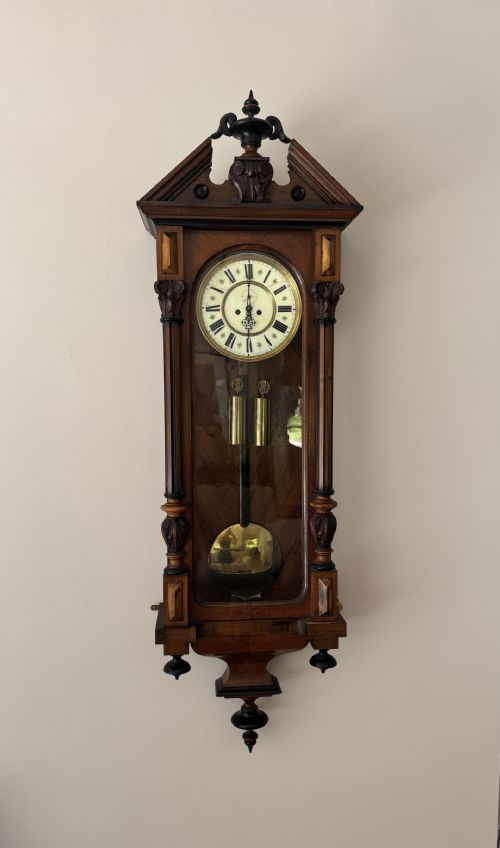
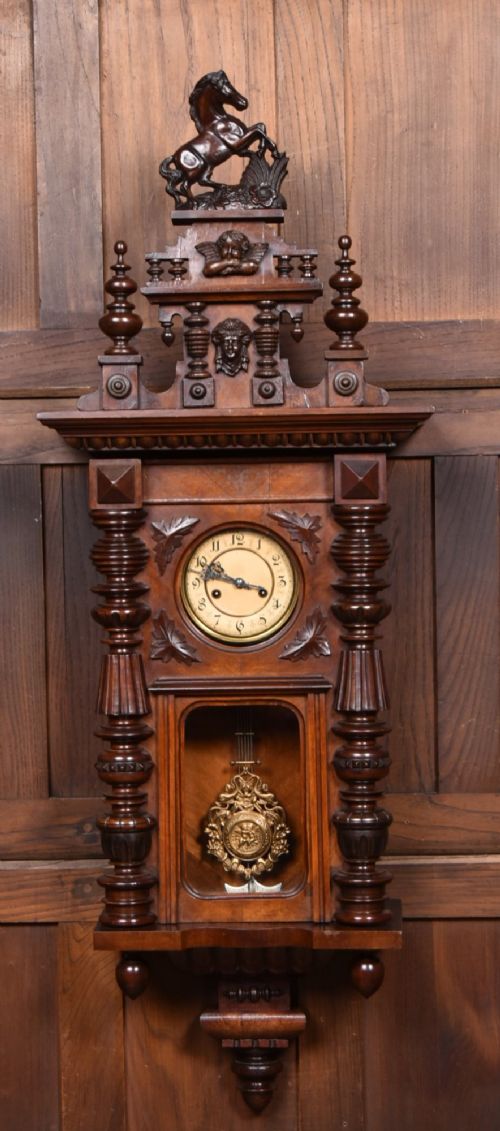
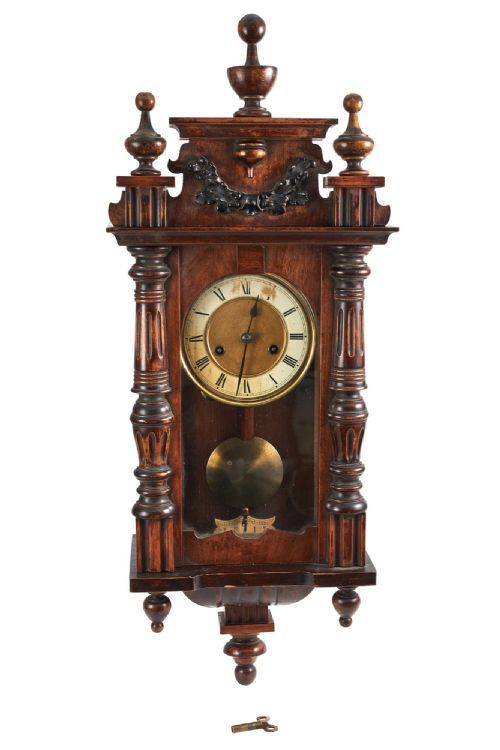
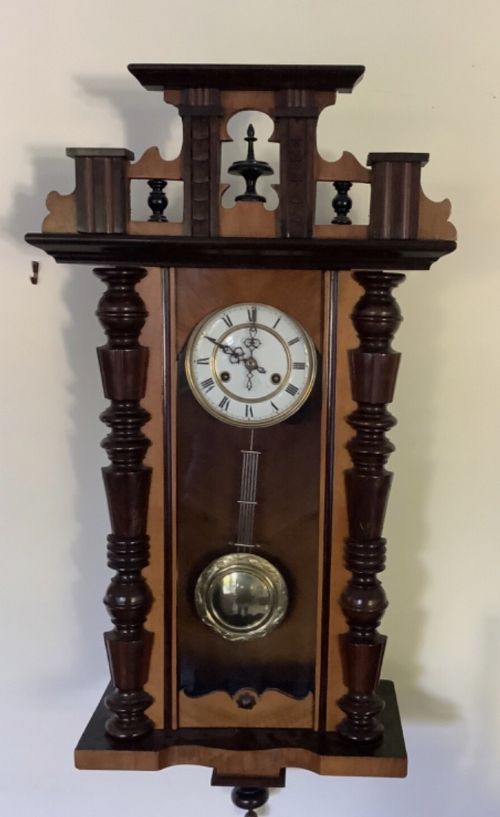
These antique vienna regulator wall clocks combine precision timekeeping with striking architectural walnut and mahogany cases.

The Nature of Antique Vienna Regulators
When you search for an antique vienna regulator, you are looking at precise weight or spring-driven wall clocks originating from Central Europe. The pieces catalogued here span the Victorian era, the nineteenth century, and around nineteen hundred, alongside Biedermeier and Victorian and Gothic styles.
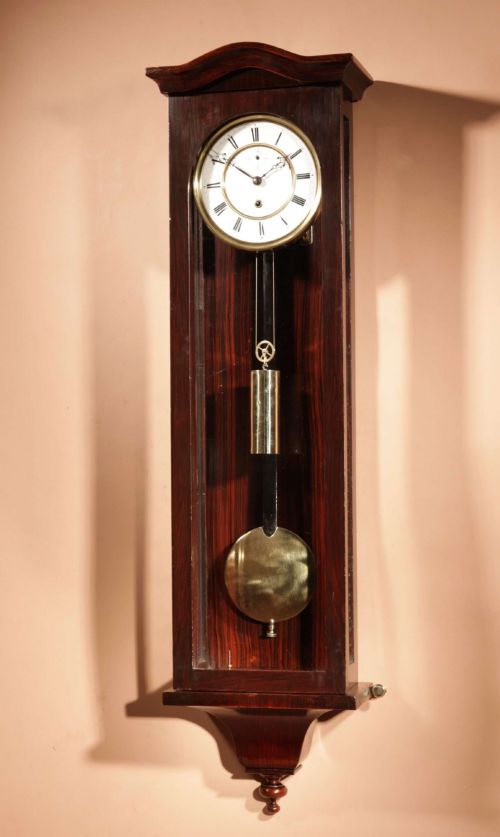
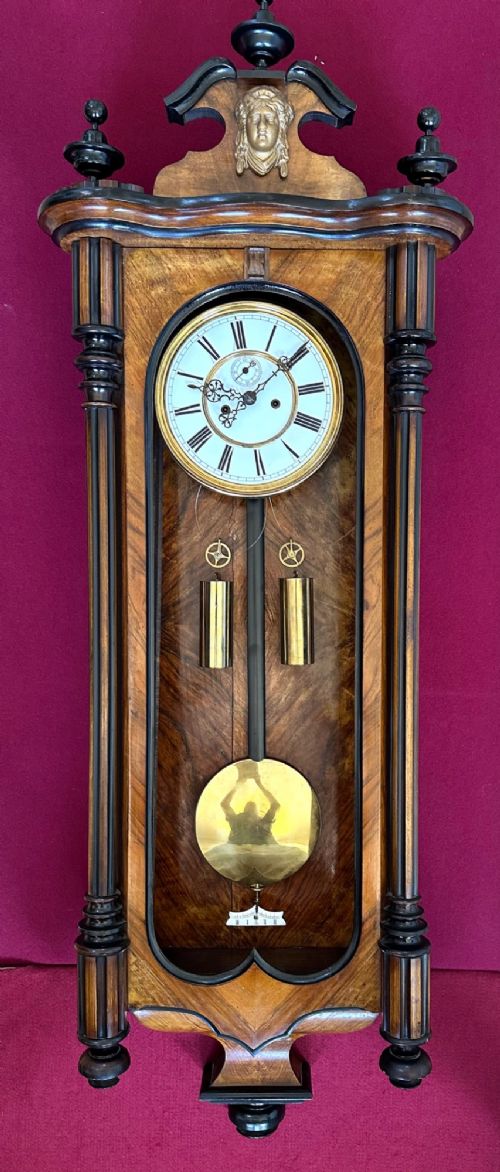
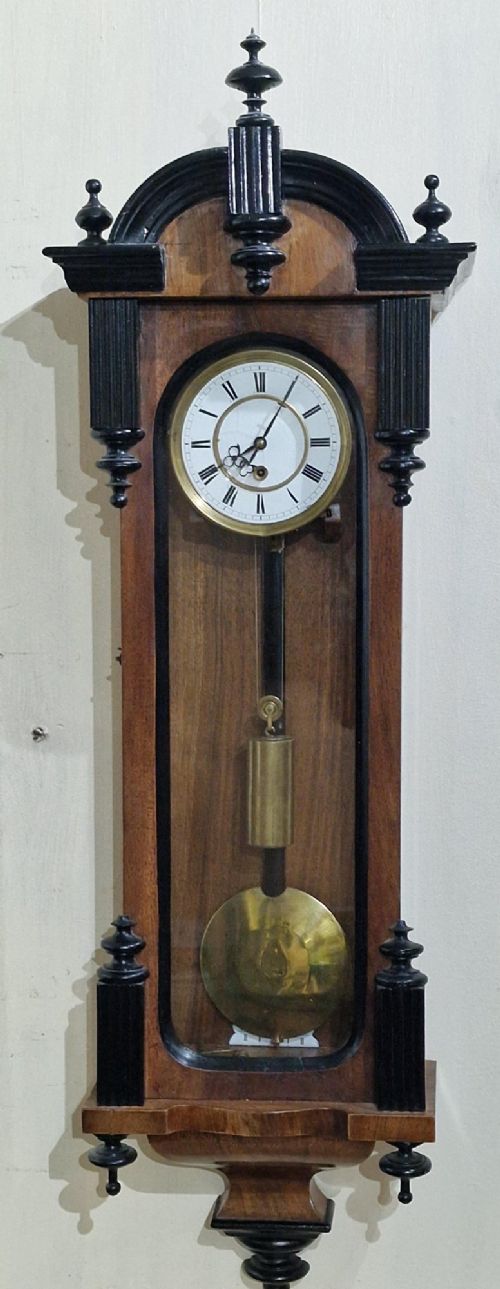
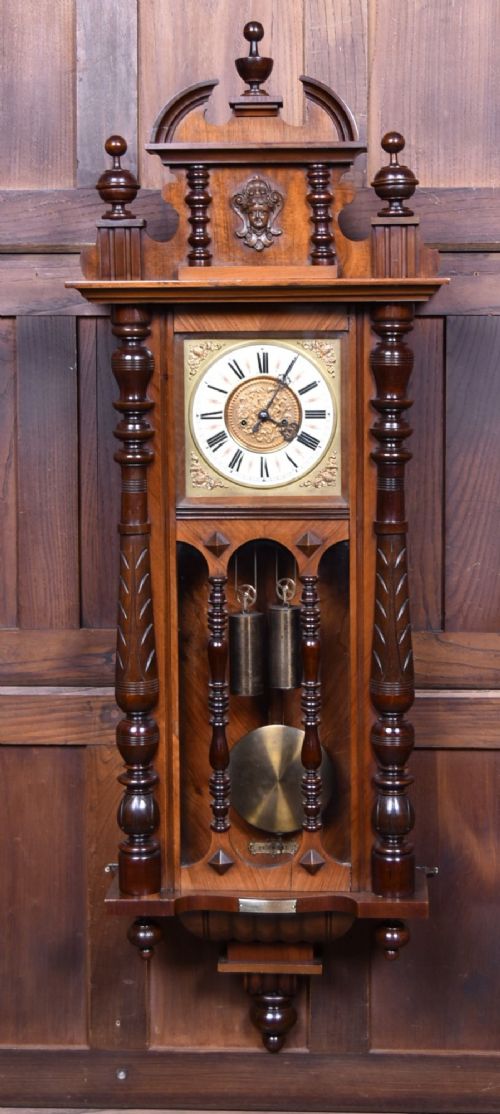
Most examples you meet on this page take the form of tall wall clocks with glazed wooden doors designed to display the swinging pendulum and movement. They appear in walnut, mahogany, and ebonised wood, often fitted with brass hardware and enamel dials.
Materials and Construction
Cabinetmakers constructed the cases primarily from walnut and mahogany timbers, sometimes applying ebonised finishes for contrast. Glass panels are fitted into the front doors to protect the dial and pendulum while allowing visibility.
Internal movements incorporate brass gears and components, paired with metal pendulums and white enamel dials. Month duration and eight day striking mechanisms represent the mechanical complexity found in these wall clocks.
Retail Price Guide 2026
Typical UK retail prices for vienna regulator, calculated from the Sellingantiques database of over a million retail prices indexed since 2003. This retail price guide relies exclusively on Sellingantiques data; no external sources or auction records are used, so the figures do not describe the wider market.
Listening to thirty days of ticks build up across a quiet hallway provides an unmistakable domestic rhythm.
Judging Quality and Craftsmanship
Quality rests in the precision of the movement and the architectural ambition of the wooden case. Finer examples display superior timber selection, such as figured walnut, alongside crisp brass casting on the dial bezels and pendulum bobs.
The refinement of the dial lettering and the complexity of the striking train differentiate standard production from exceptional pieces. Attention to the joinery and proportion within the wall-hung case further separates the better examples.
The Antique Vienna Regulator Glossary
- Vienna Regulator
- A high-precision wall clock developed in Central Europe during the nineteenth century, known for accurate timekeeping and visible pendulums. These clocks often feature walnut or mahogany cases with glazed doors.
- Biedermeier
- An influential Central European style spanning the nineteenth century, characterised by utilitarian comfort and clean lines. Furniture and clock cases from this period favour warm wood tones over excessive ornamentation.
- Month Duration
- A mechanical movement capability allowing the clock to run for thirty days on a single winding. This feature requires heavier weights or sophisticated spring arrangements.
- Ebonised Wood
- Timber treated with a dark stain or finish to imitate ebony. This technique provides a sharp visual contrast against brass bezels and white enamel dials.
Frequently Asked Questions
How do I wind an antique vienna regulator?
Most models require a specialised winding key inserted into holes on the enamel dial to tension the springs or lift the weights.
Care must be taken not to over-wind the mechanism, ensuring the clock maintains steady motion without straining the internal brass gears.
Where should I hang a vienna regulator?
These wall clocks need a stable, plumb vertical surface to ensure the pendulum swings evenly and the escapement ticks correctly.
Mounting them directly into wall studs using appropriate fixings supports the substantial weight of the walnut or mahogany cases.
What is the difference between a Biedermeier and Victorian vienna regulator?
Biedermeier examples lean towards restrained, clean architectural lines from the mid-nineteenth century, highlighting natural walnut or mahogany grain.
Victorian pieces often incorporate more elaborate carvings and Gothic influences, reflecting later nineteenth-century tastes in domestic decoration.
How do eight day movements work?
An eight day striking movement requires winding approximately once a week to power both the timekeeping train and the hourly strike.
These systems utilise brass gear trains driven by suspended weights or internal springs housed within the wooden wall case.