



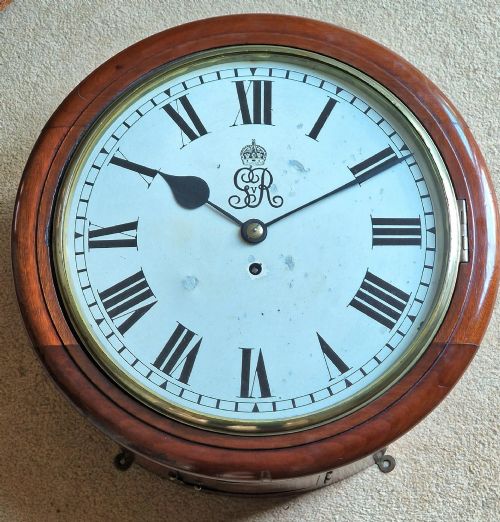
Antique Wall Timepiece
When you search for an antique wall timepiece, you are looking at pendulum and spring-driven clocks designed to mount directly onto domestic, railway, or institutional walls.
Antique Wall Timepiece
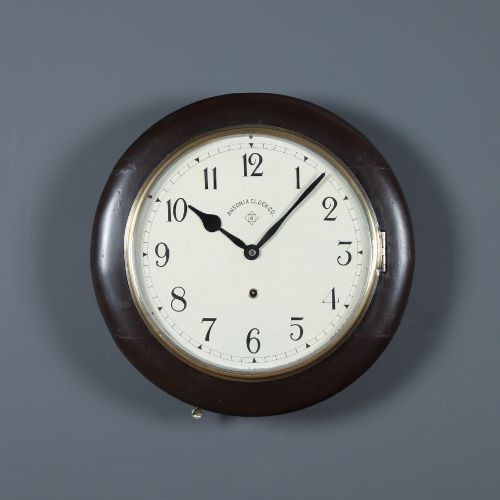
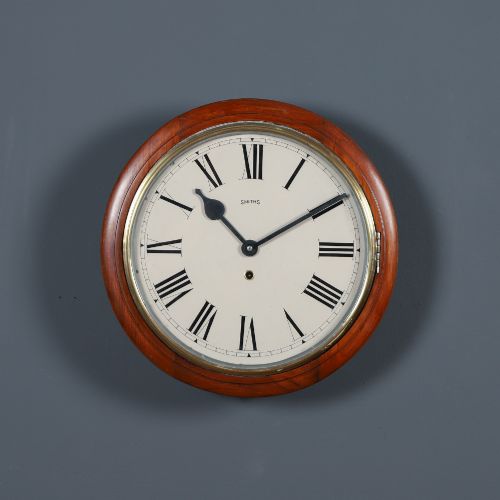
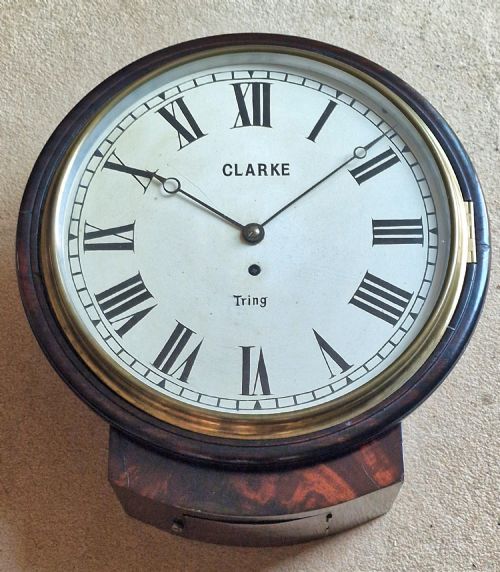
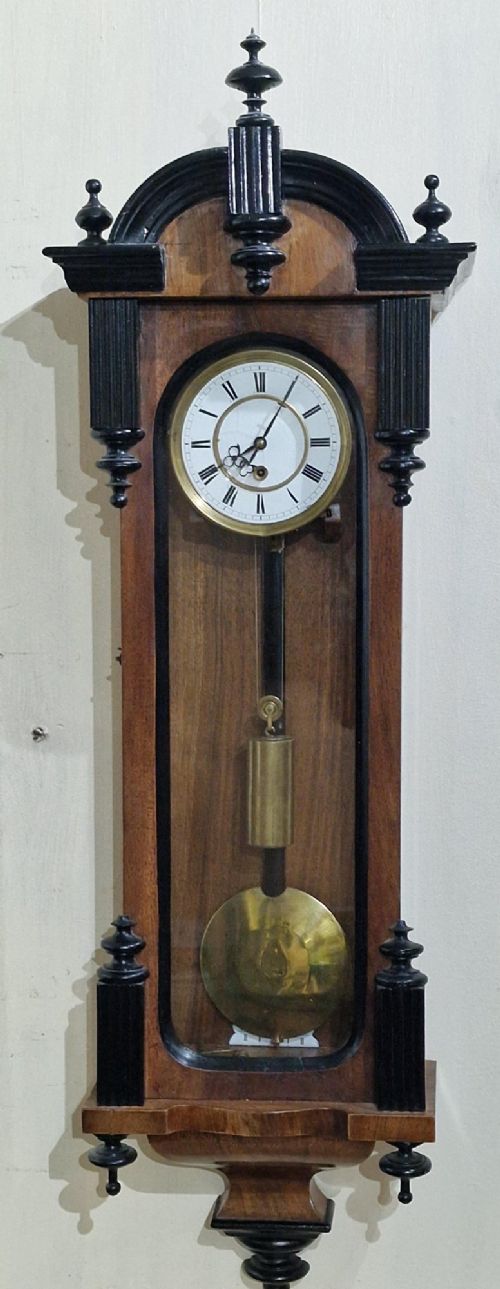
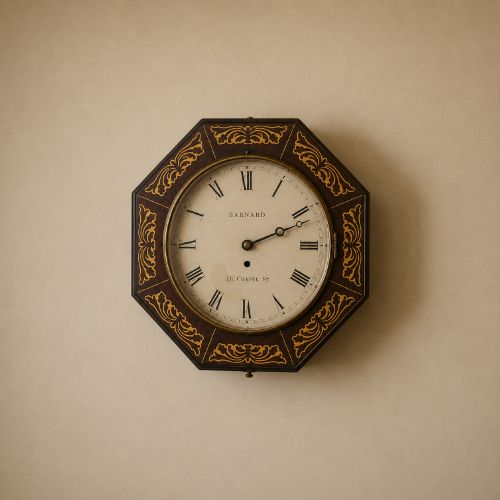
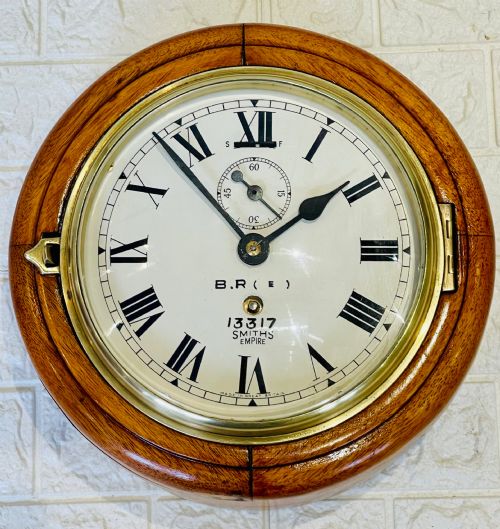
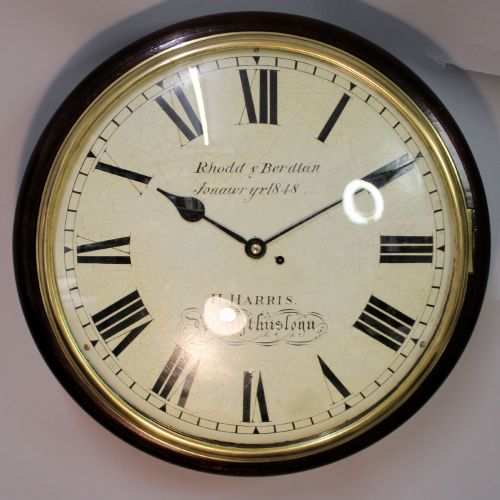
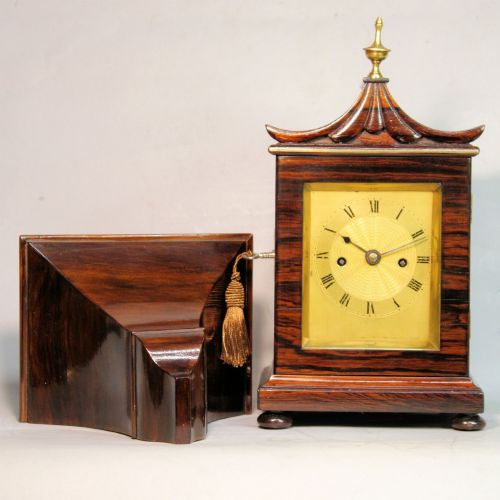
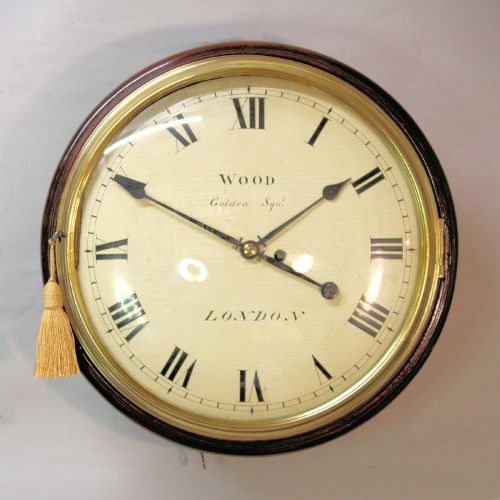
An antique wall timepiece is typically housed in a circular or drop-dial wooden case, designed to hang securely from a single mounting point. These objects include plain mahogany dial clocks from railway stations, walnut Vienna wall regulators, and brass-inlaid octagonal models from the Regency period.
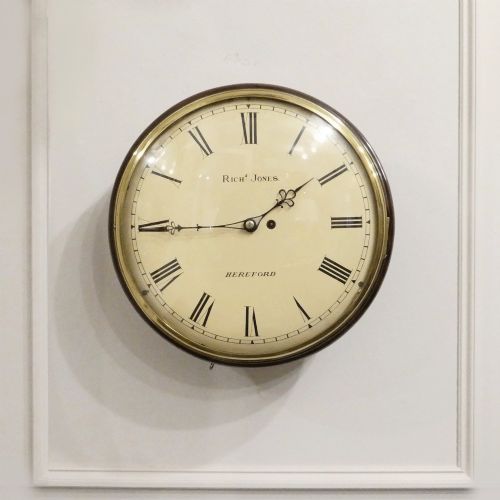
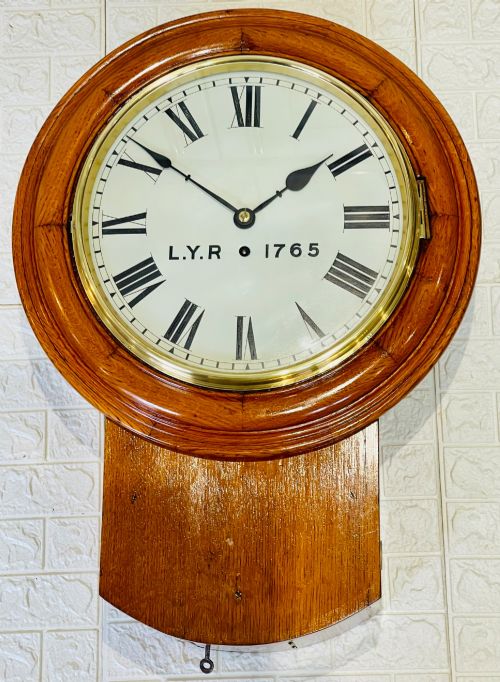
The simplest examples operate as a pure timepiece without striking trains, whilst others incorporate fusee movements or anchor escapements. The version most commonly encountered on this page is the round dial mahogany fusee clock associated with nineteenth-century offices and railway networks.
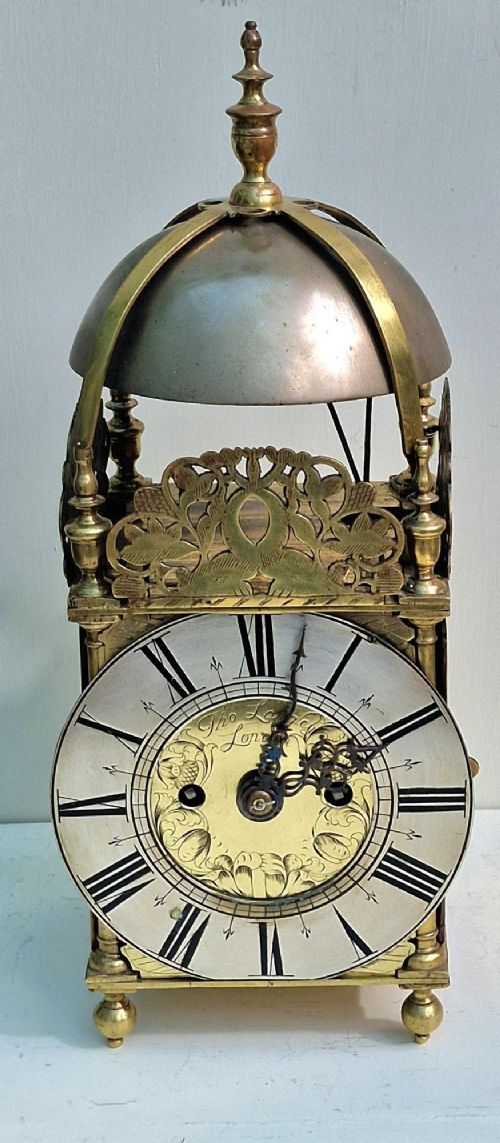
Originating largely from British workshops, these timepieces also span French cartel designs, Austrian wall clocks, and early seventeenth-century brass lantern clocks. Each regional variant employs specific mounting brackets, pendulum lengths, and dial configurations suited to its original environment.
Materials and construction
Casework relies heavily on dense timbers such as mahogany, oak, walnut, and rosewood, which provide the structural stability required to maintain gear alignment under tension. Brass and iron form the internal wheel trains, plates, and escapements, while glass protects the white enamel or painted dials.
Movements frequently utilise a fusee - a conical pulley paired with a chain or gut line - to equalise the diminishing power of the driving spring as it unwinds. Dials are constructed from painted wood, convex iron, or enamel over copper, fitted with hand-cut brass or steel hands.
Early clockmakers occasionally utilised hook-and-spike wall fixings, allowing a heavy brass lantern clock to hang directly from a forged iron wall hook.
Factors of quality
The standard of an antique wall timepiece rests on the crispness of the movement's wheel-cutting, the solidity of the brass plates, and the precision of the fusee cone. Finer pieces display hand-engraved backplates, substantial mahogany or walnut cases with neat grain matching, and original cast brass bezels rather than later replacements.
Richard Jones of Hereford·Thomas Langley·George Clarke·Henry Harris·John Spershott·Benj Reeves Lamberhurst·Dent of London·Wetterstrands·Ansonia·Smiths·Zenith
The Antique Wall Timepiece Glossary
- Fusee
- A conical pulley used in spring-driven clocks to maintain even power to the escapement as the mainspring unwinds. This mechanism ensures more consistent timekeeping throughout the duration of the wind.
- Drop dial
- A clock case featuring a round dial top above an extended wooden box that houses a swinging pendulum. This form became standard for nineteenth-century office and railway wall clocks.
- Cartel clock
- A wall clock housed within an ornate, decorative frame made from giltwood, brass, or carved timber. These French and English styles often feature asymmetric scrollwork and elaborate foliage.
- Lantern clock
- An early brass chamber clock driven by weights, featuring corner pillars and prominent bell mounts on top. They represent some of the earliest domestic clocks adapted for wall suspension.
- Escapement
- The internal mechanism that converts rotational force into controlled impulses to drive the pendulum. Common variants include anchor and deadbeat designs.
Antique Wall Timepiece: Frequently Asked Questions
How do I wind an antique wall timepiece?
Most fusee wall timepieces require a matching winding key inserted into the dial aperture once a week. Turn the key gently clockwise until resistance indicates the mainspring is fully wound.
Avoid over-winding, as this strains the chain and spring mechanism. Ensure the pendulum hangs freely and evenly after winding to prevent the clock from stopping.
Why does my wall clock keep losing time?
Timekeeping discrepancies often stem from an unlevel wall mounting or temperature fluctuations that affect the pendulum rod. Adjusting the small regulating nut beneath the pendulum bob can correct minor gains or losses.
If the movement is dirty or dry, a professional service is necessary to clean the pivots and train wheels. Avoid applying household lubricants to the delicate brass components.
What is the difference between a timepiece and a clock?
In horological terms, a timepiece is a device that measures and displays the time without incorporating a striking or chiming mechanism. A clock traditionally includes gears and hammers to strike the hours or quarters.
Many railway and office wall pieces were built strictly as timepieces for precise scheduling rather than acoustic notification.