


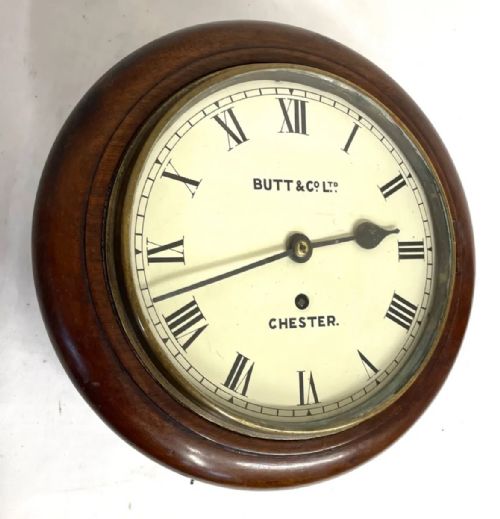


8 Inch Dial Clock
An 8 inch dial clock delivers the straightforward utility and proportion of a traditional timepiece designed to hang cleanly against a wall.

Form and Period
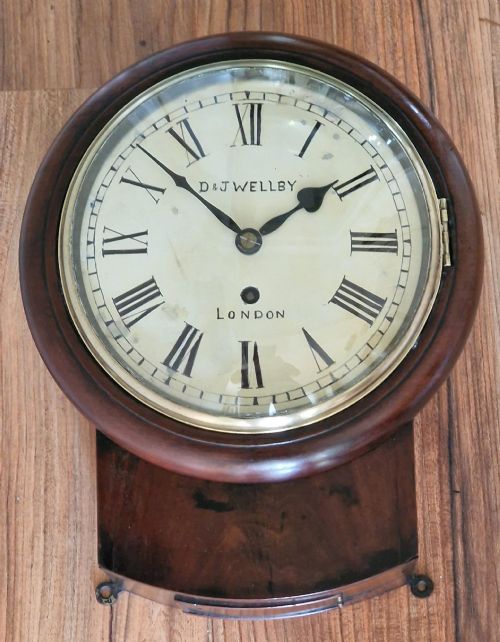
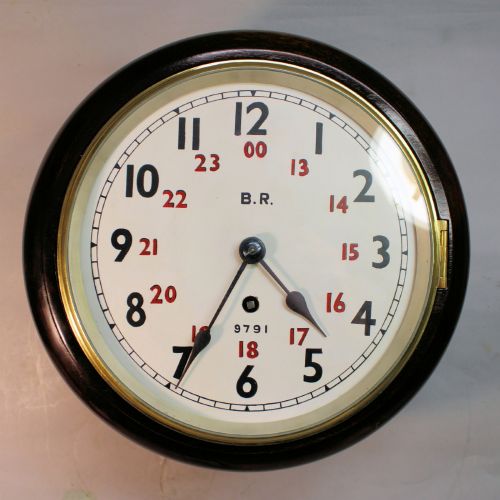
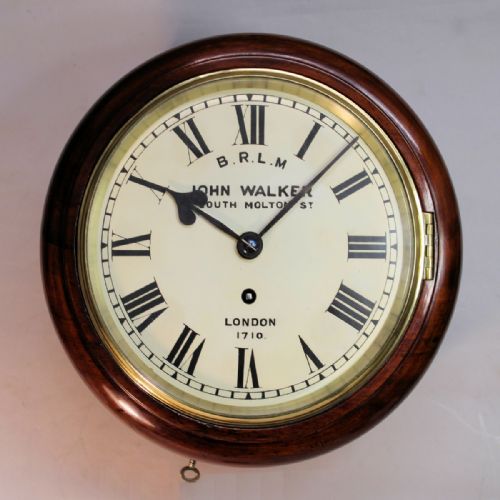
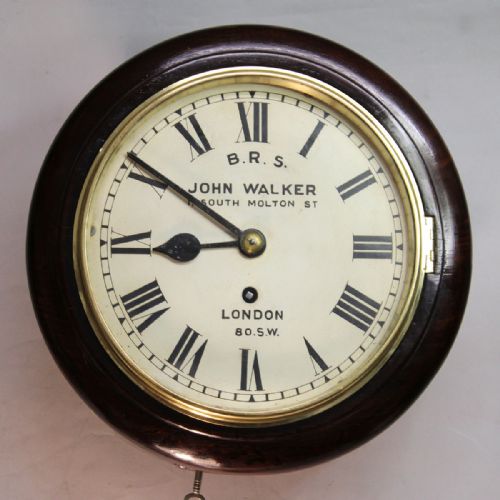
The 8 inch dial clock is a compact wall-mounted timepiece most frequently encountered as a Victorian fusee clock housed in mahogany, oak or walnut. These pieces originate primarily from the nineteenth century, including examples dated around eighteen-eighty and associated with railway networks.
Beyond standard wall clocks, variations include drop-dial cases featuring a chisel bottom and bracket wall clock formats. The dial diameter remains small, typically measuring eight inches across, making these timepieces suitable for domestic rooms as well as station offices.
Victorian makers produced these wall clocks in considerable numbers, using sturdy timber cases to protect the precision movement within. The enduring appeal lies in this functional combination of clear dial work and solid timber construction.
Materials and Technique
Makers constructed the cases using dense hardwoods such as mahogany, oak and walnut, frequently housing the mechanism behind a glazed brass bezel. The timber is often carved or shaped simply to frame the circular dial.
The internal mechanism relies on a chain-driven fusee movement, which maintains steady power to the escapement as the mainspring unwinds. This mechanical arrangement represents standard British clockmaking practice of the nineteenth century.
Retail Price Guide 2026
Typical UK retail prices for 8 inch dial clock, calculated from the Sellingantiques database of over a million retail prices indexed since 2003. This retail price guide relies exclusively on Sellingantiques data; no external sources or auction records are used, so the figures do not describe the wider market.
Craftsmanship and Proportion
Quality separates along the precision of the dial lettering, the crispness of the timber carving, and the original condition of the fusee movement. A well-preserved mahogany or walnut case retains sharp lines and clean grain patterns without excessive restoration.
Signed dials bearing the names of established London or provincial makers add considerable distinction to a piece compared to anonymous examples. The proportion of the drop-dial or bracket case relative to the eight-inch face also dictates the visual balance of the clock.
D&J Wellby·John Walker·Balbiani Brookley
The 8 Inch Dial Clock Glossary
- Fusee
- A conical pulley used in a clock movement to equalize the torque of the mainspring as it runs down. This mechanism ensures consistent timekeeping from the fully wound state to the end of the power reserve.
- Drop-dial
- A wall clock case featuring an extended lower section below the circular dial. This drop often takes a chisel bottom or rounded box form to accommodate the pendulum swing.
- Bezel
- The metal rim, often made of brass, that holds the protective glass pane in front of the clock face. It typically hinges open to allow hand-setting and winding.
- Convex dial
- A clock face that curves outward toward the viewer rather than sitting completely flat. This shape reduces glare from surrounding light sources.
Frequently Asked Questions
How do fusee clocks work?
A fusee clock uses a special conical pulley connected to the mainspring via a chain or cord. As the spring unwinds, the chain moves to a wider part of the cone, compensating for the declining tension.
This clever mechanical design ensures the force delivered to the gear train remains constant. It results in much more accurate timekeeping than a standard spring-driven movement.
Where were these clocks used?
Many of these compact timepieces served in railway stations, offices and public buildings during the nineteenth century. Their clear dials and reliable movements made them ideal for keeping strict schedules.
Over time, many of these utility clocks migrated into domestic interiors. Their understated proportions suit modern hallways and kitchens just as well as period studies.
How do I wind a fusee wall clock?
Winding requires a dedicated key inserted into the winding hole on the dial face. You turn the key carefully until you feel resistance, indicating the mainspring is fully tensioned.
Because these are fusee movements, you should avoid over-winding. Regular gentle maintenance keeps the chain and gears operating smoothly for years.
What is a drop-dial clock?
A drop-dial clock is a wall timepiece where the wooden case extends downward beneath the circular dial. This lower box houses the pendulum and often finishes in a chisel bottom.
This design allowed makers to fit a standard movement into a compact wall format. The extended timber case also provides better acoustic resonance for the ticking sound.