



Dark Oak Wall Clock
A dark oak wall clock brings substance and reliable movement to an interior, combining deep timber tones with practical timekeeping.
Dark Oak Wall Clock
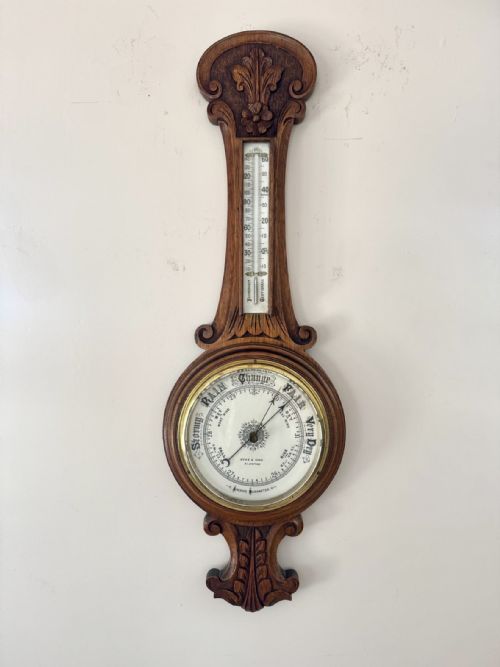
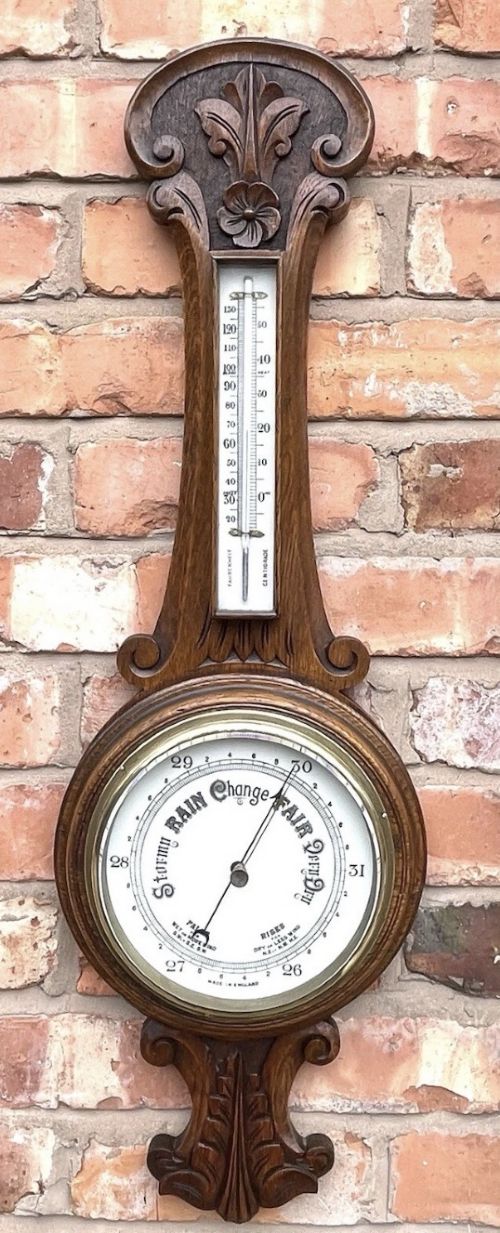
When you search for a dark oak wall clock, you encounter a selection spanning the nineteenth and twentieth centuries, incorporating Victorian, Edwardian, and Arts and Crafts examples alongside dial clocks and banjo barometers.
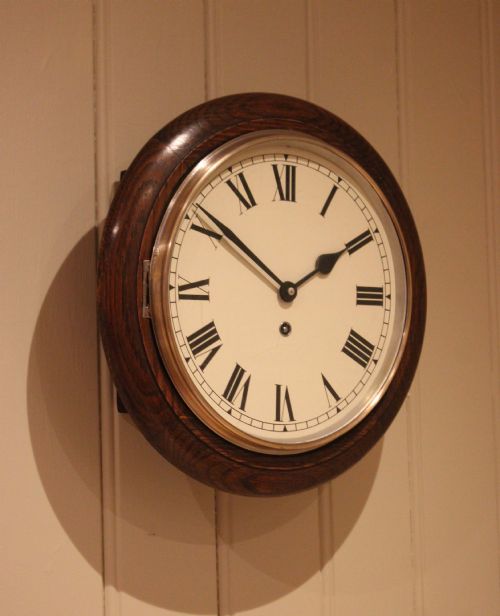
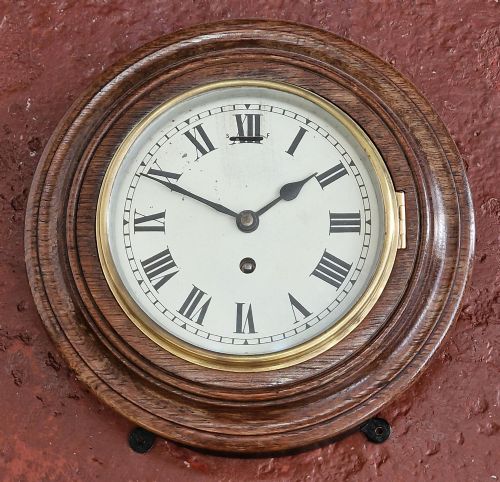
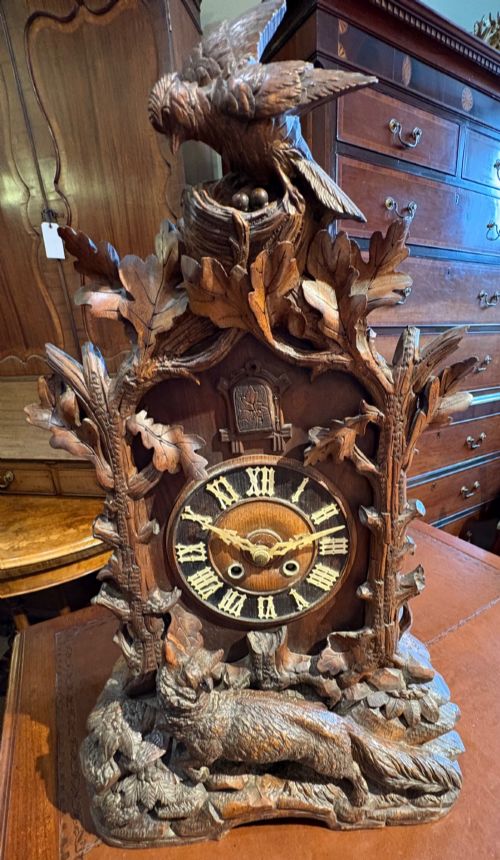
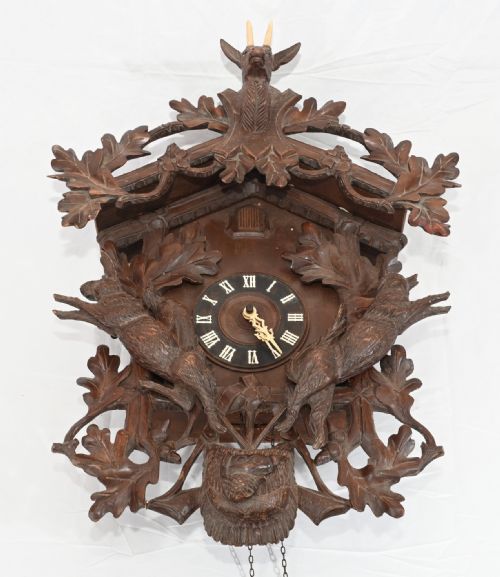
The pieces on this page range from robust railway signal box clocks and school dial clocks to elaborately carved Vienna wall clocks and aneroid barometers housed in rich timber cases.
Most items rely on oak as their primary material, sometimes paired with glass, brass dials, and enamel numerals to create functional wall pieces suited for domestic and public spaces.
Materials and construction
Cabinetmakers and clockmakers utilised solid oak and carved wood for the cases, often shaping the timber into circular dials, banjo profiles, or rectangular Vienna frames.
Interior mechanisms incorporated brass for movements, chain fusee setups, and striking trains, while dials utilised white enamel, metal, ceramic, or bone for legible numerals.
Dark Oak Wall Clock Retail Price Guide 2026
Typical asking prices for dark oak wall clock among the pieces listed under this phrase on Sellingantiques today, from the lower quarter to the upper quarter. They describe what is for sale here now, not the wider market.
One extraordinary nineteenth-century piece arrives as a hand-carved clock of the universe originating from a French château.
What separates the best pieces
Quality rests in the crispness of the hand-carved ornamentation on the oak case and the precision of the underlying fusee or eight-day striking movement.
Better examples maintain original components such as matching brass bezels, clear enamel dials, and authentic maker signatures on the face or movement.
Hyde & Sons Sleaford·Dent of London·Gledhill Brook·Negretti & Zambra
The Dark Oak Wall Clock Glossary
- Fusee
- A conical pulley used in spring-driven clocks to equalise the torque of the mainspring as it unwinds. This mechanism helps the clock maintain consistent timekeeping throughout its running period.
- Dial clock
- A wall-mounted timepiece featuring a prominent circular face, often housed in a wooden surround with a bottom access door. These were widely utilised in offices, railway stations, and schools.
- Aneroid barometer
- An instrument that measures atmospheric pressure using a flexible metal box rather than liquid mercury. They frequently share wall space or case designs with clocks.
- Vienna wall clock
- A weight-driven precision timepiece developed in Austria, featuring a long glass-fronted wooden case designed to showcase the pendulum and movement.
- Banjo barometer
- A wall barometer shaped like a musical banjo, combining a thermometer, hygrometer, and dial into an elongated wooden body.
Dark Oak Wall Clock: Frequently Asked Questions
How do fusee wall clocks work?
A fusee movement uses a spiral-grooved cone to regulate the pull of the mainspring, ensuring even power delivery to the gear train as the spring loses tension.
This mechanical refinement allows the clock to keep accurate time across its entire eight-day run without losing momentum.
Where were dial clocks originally used?
Dial clocks were built primarily for commercial, institutional, and transport environments where clear legibility and dependable timekeeping mattered most.
Their straightforward oak cases and bold enamel faces suited railway signal boxes, offices, and public institutions.
What is a banjo clock barometer?
A banjo clock barometer combines a time-telling dial with atmospheric measuring instruments inside an elongated wooden case shaped like a musical instrument.
Victorian makers carved these oak and mahogany frames with intricate detail to serve both decorative and practical domestic functions.
How do I wind an eight-day clock?
An eight-day clock requires a winding key inserted into the dial holes to lift the internal weights or tension the spring.
Care should be taken not to overwind the movement, ensuring the pendulum remains undisturbed during the process.