
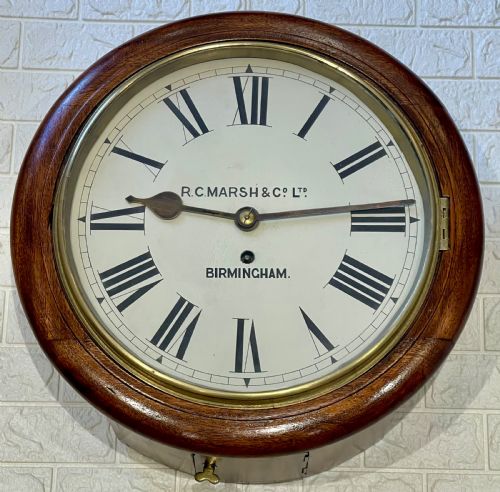
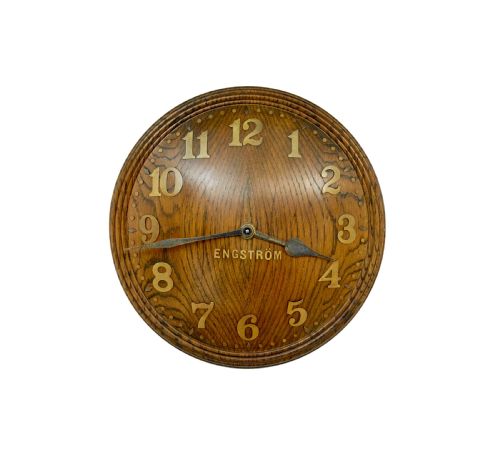


Circular Oak Wall Clock
A circular oak wall clock brings honest timber and dependable timekeeping into a room, uniting everyday utility with enduring craftsmanship.
Circular Oak Wall Clock
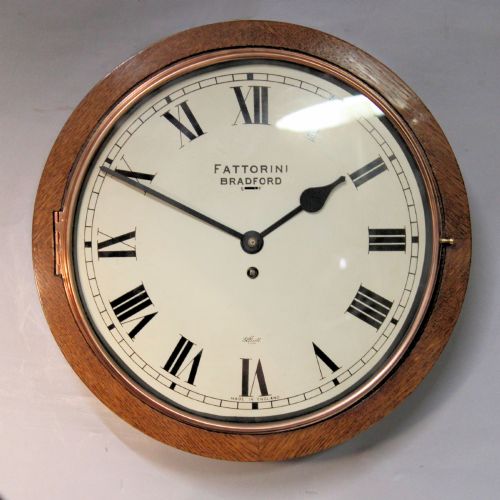
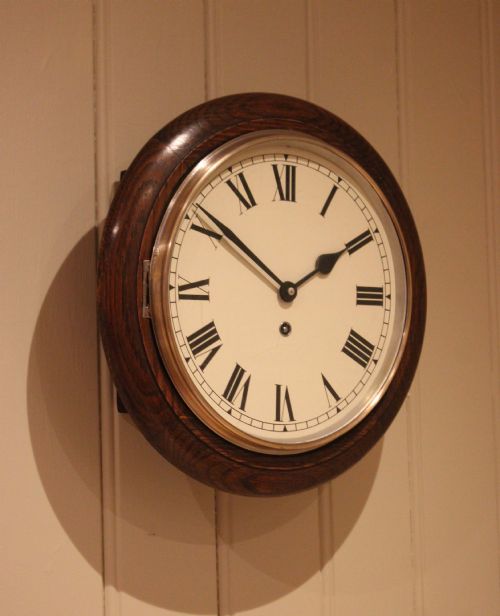
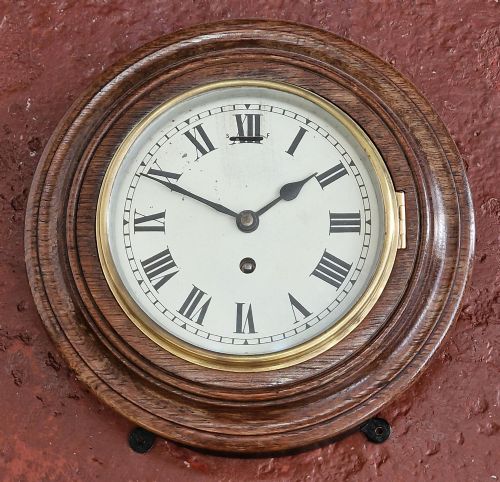
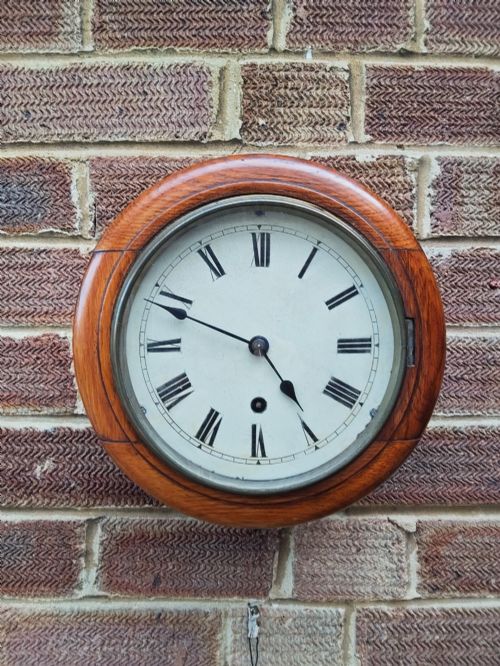
A circular oak wall clock is a timepiece housed in a round wooden frame, designed to be mounted securely upon a wall. When searching for a circular oak wall clock, a buyer encounters forms ranging from nineteenth-century fusee movements to mid-twentieth-century industrial designs.
The pieces appearing in these listings span from the Victorian and Edwardian eras through the Art Deco period and into the mid-twentieth century. Styles include Victorian, Edwardian, Art Deco, and Industrial Transport, with the dial acting as the visual centre of each piece.
Materials and construction methods
The construction relies heavily on solid oak timber cases, shaped to form robust circular housings that protect the delicate mechanisms within. Brass and iron components support the mechanical movements, while glass faces protect the paper, enamel, or metal dials.
One robust railway piece carries the affectionate moniker pork pie, immortalising railway vernacular in solid oak.
Distinguishing quality in these clocks
The standard of a circular oak wall clock rests on the precision of its movement, whether it employs a chain fusee or a lever escapement. Finer examples display meticulous attention to the grain of the golden oak case and the crisp legibility of the dial markings.
Signatures from notable makers or railway companies elevate a piece, reflecting specialised production for institutional or transport use. The integrity of the original glass, bezel, and brass fittings further separates utilitarian timepieces from exceptional examples.
Elliott·W&H Sch·Zenith·Dent of London·Smith·R C Marsh & Co Ltd Birmingham
The Circular Oak Wall Clock Glossary
- Fusee
- A conical pulley used in clock movements to maintain equal force on the gear train as the mainspring unwinds. This mechanism ensures consistent timekeeping accuracy throughout the running period.
- Dial
- The visible face of the clock where the numbers and hands are displayed. Dials on these pieces are frequently framed by brass bezels and protected by glass.
- Escapement
- The mechanical linkage that controls the rotation of the gear train by releasing the wheel in measured steps. Lever escapements are common variants found in these wall clocks.
- Chain fusee
- A specific drive system utilising a fine chain instead of a cord to connect the fusee to the barrel. It represents a robust method of power transmission in nineteenth-century timepieces.
Circular Oak Wall Clock: Frequently Asked Questions
How do fusee movements work?
A fusee movement uses a conical pulley paired with a chain or cord to equalise the power delivered by the mainspring as it loses tension. This clever mechanical design ensures the clock maintains a steady and accurate rate over its entire running duration.
Collectors prize fusee movements for their intricate engineering and reliability. They represent a traditional standard of British horological craftsmanship.
Where were these wall clocks used?
Many of these timepieces served practical roles in railway signal boxes, schools, and offices where reliable timekeeping was essential for daily operations. Railway examples, such as those from the Great Western Railway, were built to withstand demanding industrial environments.
Domestic spaces also accommodated them, particularly in kitchens, hallways, and studies where a clear circular dial could be read easily from across the room.
How do I date an oak wall clock?
Dating relies on examining the style of the numerals, the shape of the hands, the type of wood finish, and the construction of the case. Victorian and Edwardian examples often feature substantial golden oak cases, while Art Deco and mid-century pieces display cleaner, more streamlined silhouettes.
Signatures on the dial or maker's marks inscribed on the movement plates provide definitive clues to the period of origin. Comparing the escapement type also helps narrow down the decade of manufacture.
How should I care for an antique wall clock?
Mount the clock securely to a sturdy wall using appropriate fixings to ensure the case hangs plumb and the pendulum or movement operates without friction. Regular professional servicing by a horologist keeps the mechanical parts clean and properly lubricated.
Avoid placing the clock in areas subject to extreme temperature fluctuations or direct sunlight, as this protects the oak timber and the delicate paper or enamel dials from deteriorating.