


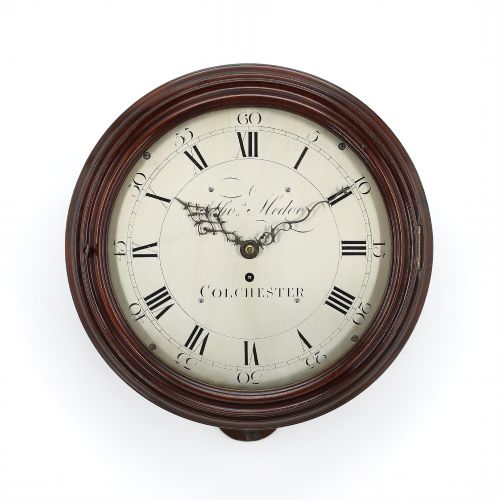


Traditional English Wall Clock
A traditional English wall clock brings mechanical precision and honest timber into a room, offering the steady rhythm of a pendulum alongside architectural presence.
Identifying a Traditional English Wall Clock
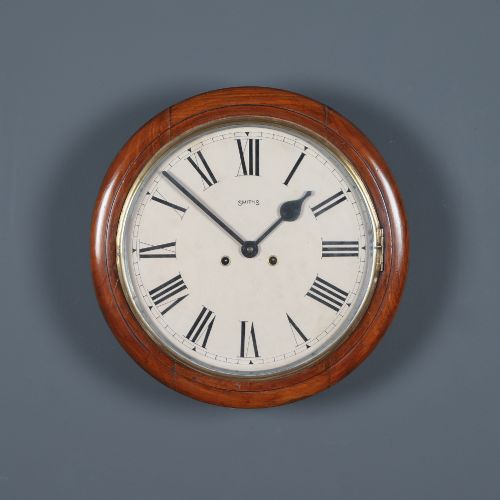
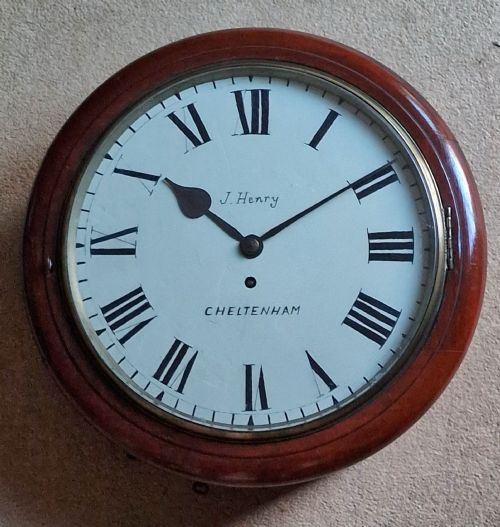
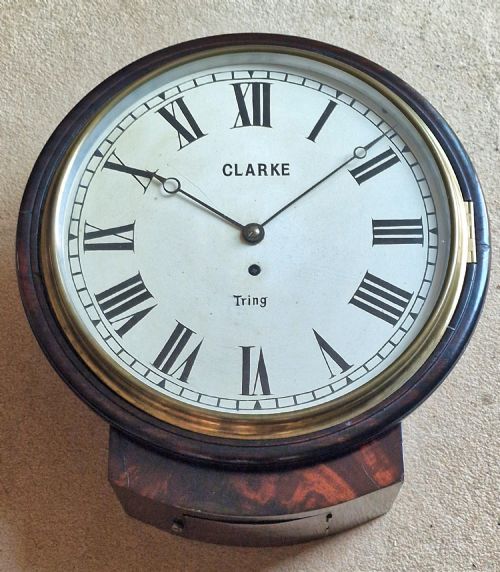
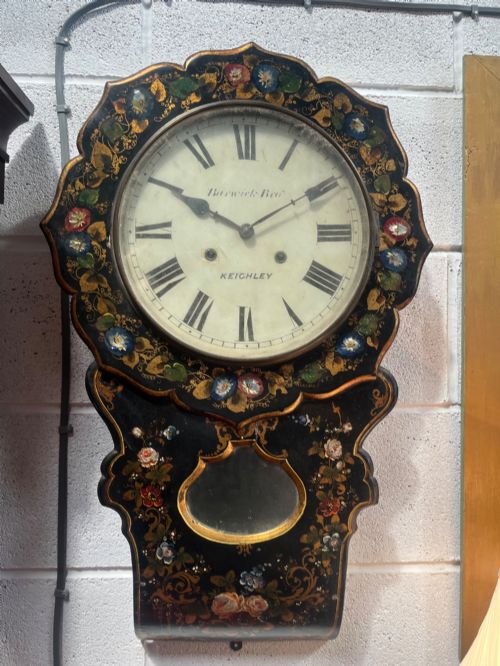
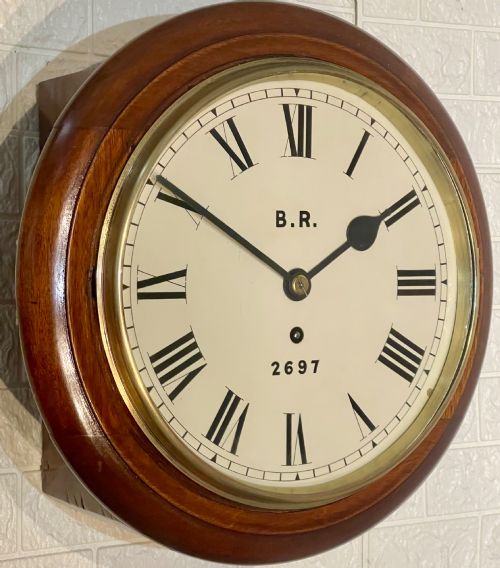
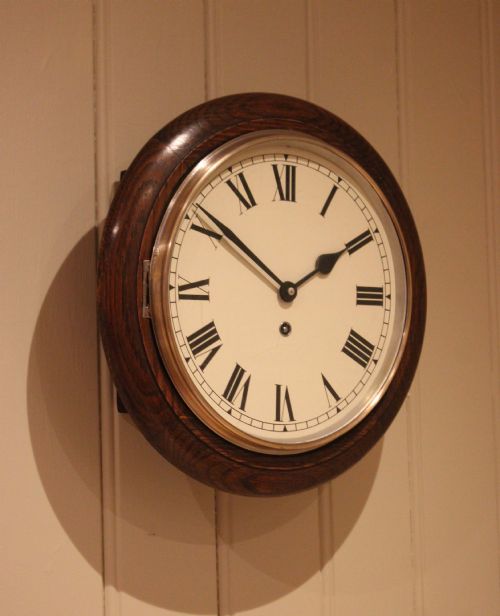
A traditional English wall clock combines dial legibility with sturdy wall-hung cabinetry, spanning forms from simple school clocks to elaborate drop-dial variations. You will encounter round dials framed in rich woods like mahogany and oak, often designed for commercial, domestic, or transport use.
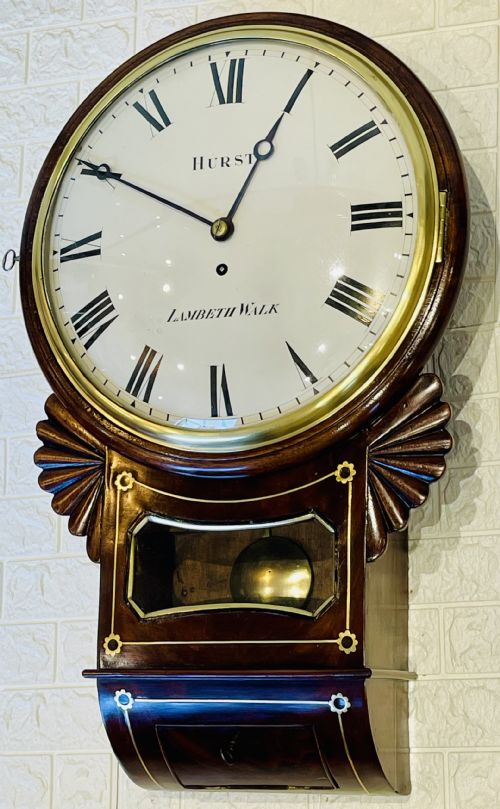
The pieces listed here range across several distinct eras, touching the Regency period, the Victorian age, and the early twentieth century. School clocks, railway timepieces, and drop-dial fusee models dominate the selection, each designed to hold a prominent place on the wall.
Makers and regional retailers left their marks on dials and movements, connecting these clocks to local commerce and railway networks. The variety includes striking mechanisms, bell chimes, and plain time-only movements housed in rosewood or oak cases.
Materials and Construction
Cabinet makers utilised dense hardwoods including mahogany, rosewood, and oak for the robust surrounds and trunk cases. Glass protects the painted or wooden dials, while brass components form the intricate internal gear trains and bezels.
Movements rely on fusee or chiming mechanisms designed to maintain steady power delivery as the mainspring unwinds. Iron and mother-of-pearl details sometimes accent the dial surrounds and case fittings, reflecting the decorative tastes of the period.
Retail Price Guide 2026
Typical UK retail prices for traditional english wall clock, calculated from the Sellingantiques database of over a million retail prices indexed since 2003. This retail price guide relies exclusively on Sellingantiques data; no external sources or auction records are used, so the figures do not describe the wider market.
Some school clocks spent decades listening to generations of restless pupils before finding a quieter retirement on a domestic wall.
Judging Quality and Execution
The refinement of the movement and the crispness of the dial markings dictate the standing of an individual piece. Clocks featuring twin fusee movements or signed dials by notable makers demonstrate higher mechanical ambition than standard time-only alternatives.
The selection of timber grain and the integrity of the wooden case influence visual appeal. Finely figured mahogany and well-preserved rosewood drop-dial cases retain greater architectural presence than plain utility variants.
The Traditional English Wall Clock Glossary
- Fusee
- A conical pulley used in a clock movement to equalize the torque of the mainspring as it runs down. This mechanism ensures consistent timekeeping across the duration of the wind.
- Drop-dial
- A clock case featuring an extended lower wooden trunk beneath the circular dial. This drop often accommodates the swing of a longer pendulum.
- Dial
- The face of the clock where the hours and minutes are displayed. On English wall clocks, these are traditionally painted on wood or metal and protected by a hinged glass bezel.
- Chiming
- An acoustic mechanism that strikes bells or gongs to signal the passage of hours or quarters. It adds an audible dimension to the visual presence of the clock.
Frequently Asked Questions
Where should I hang a wall clock?
Choose a wall with sufficient structural support to bear the weight of a hardwood and brass mechanism. Avoid damp areas and spaces with extreme temperature fluctuations to protect the timber case and internal steel components.
Ensure the clock hangs at a comfortable eye level for reading the dial and winding the movement. A location away from heavy vibrations helps maintain the steady beat of the pendulum.
How do I tell a Regency clock from a Victorian one?
Regency clocks often display restrained classical proportions and distinct timber choices like figured mahogany or specialist wooden dials. Maker signatures from this era, such as John Thwaites around eighteen hundred, point to early precision engineering.
Victorian pieces frequently embrace bolder drop-dial formats and heavier brass bezels suited for public spaces, schools, and railways. The scale of the case and the complexity of the dial lettering usually reflect the later nineteenth-century expansion.
What is a school clock?
A school clock is a sturdy, legible wall timepiece designed for institutional use in classrooms, offices, and railway stations. They feature clear black numerals on a white or light dial for quick reading from a distance.
These pieces prioritise functional reliability over decorative carving, housed in straightforward oak or mahogany surrounds. Their robust movements were built to withstand continuous daily operation.