

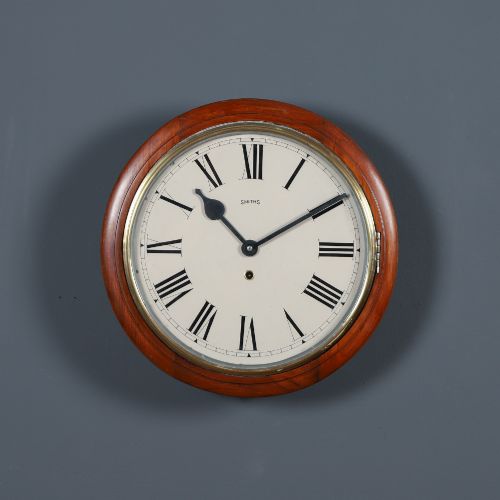
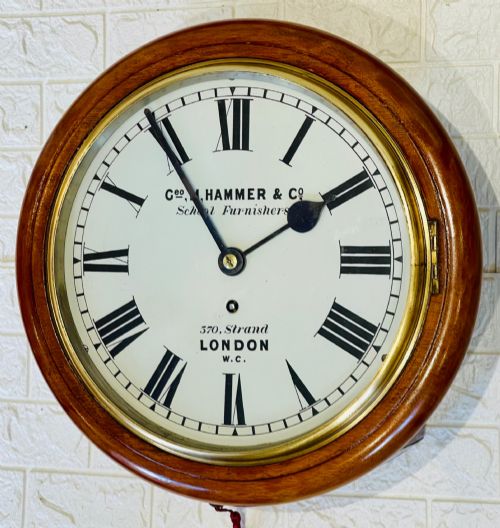
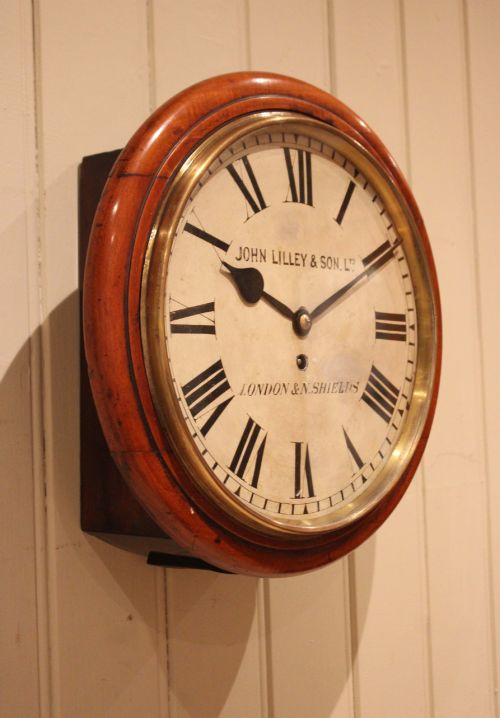
Antique Dial Wall Clock
An antique dial wall clock brings architectural presence and reliable timekeeping to a room, drawing the eye with a clear, readable face.
Understanding the antique dial wall clock
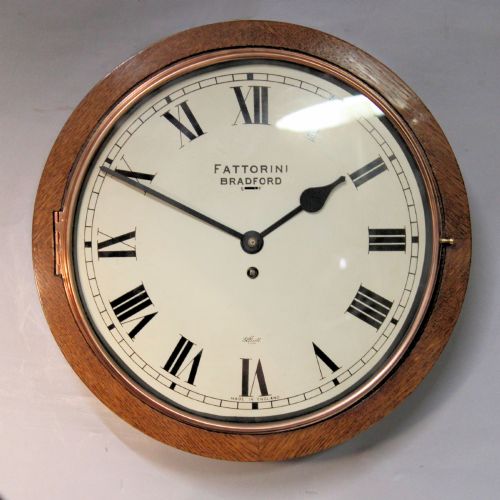
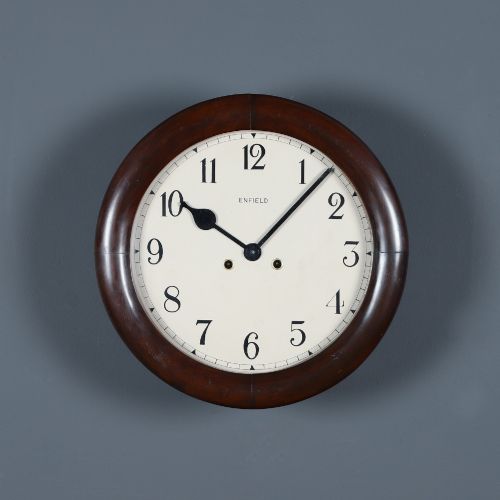
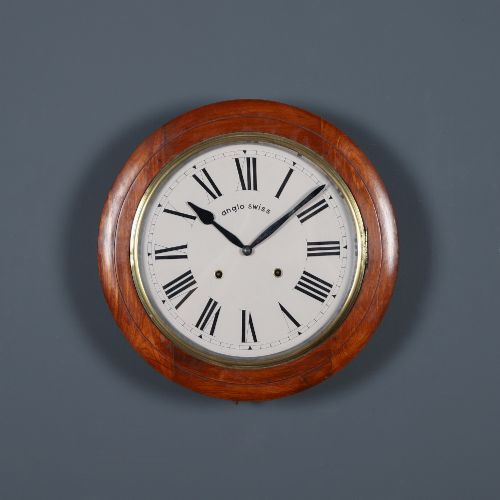
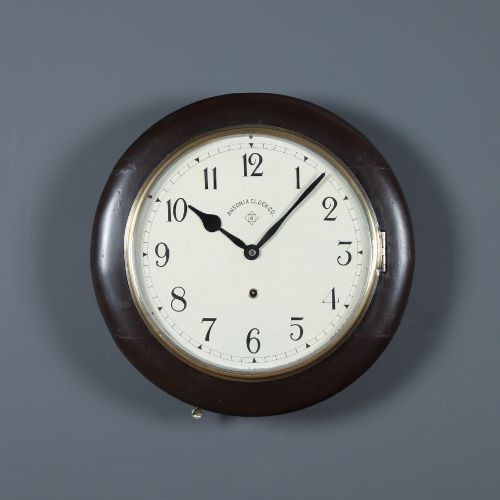
The search for an antique dial wall clock leads directly to sturdy timepieces designed for public spaces, railways, and domestic hallways alike. These clocks combine robust movements with clear painted or brass faces intended to be read from a distance.
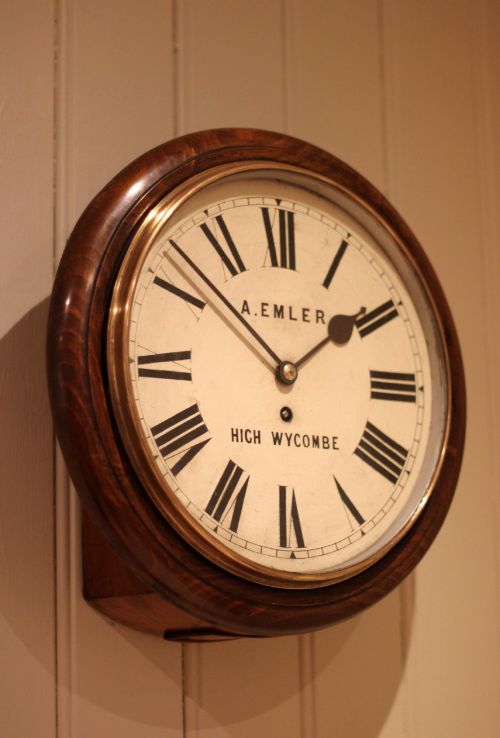
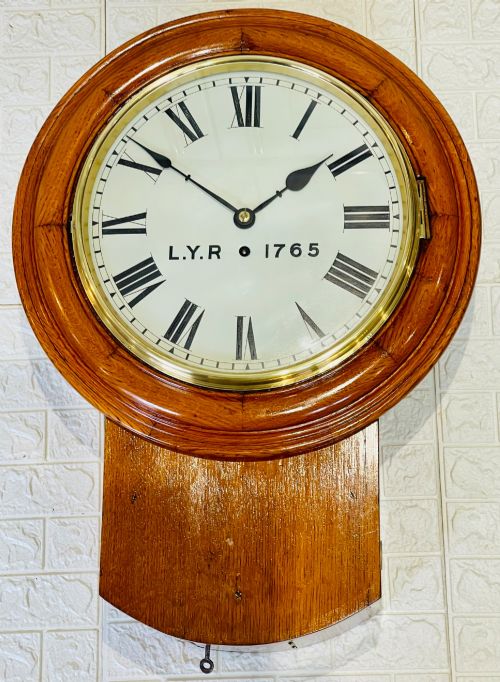
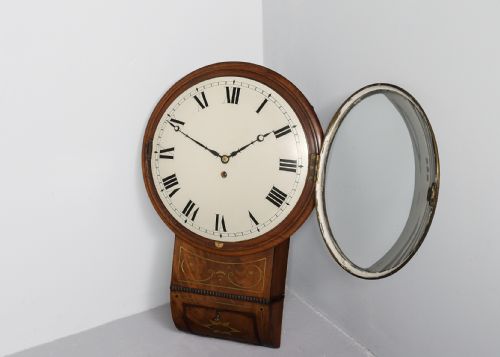
Most examples seen here take the form of drop dial wall clocks, featuring an extended lower wooden case that houses a swinging pendulum. Victorian and Georgian periods dominate the selection, offering mahogany, oak, and walnut timber cases.
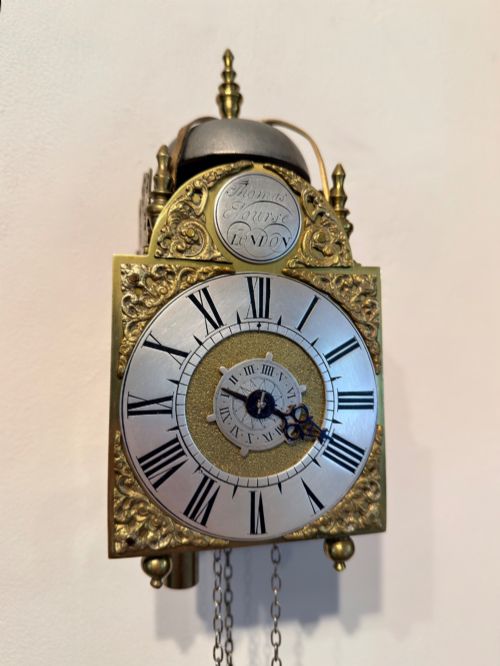
Originating largely from English workshops, these pieces range from simple station clocks to sophisticated fusee timepieces bearing the signatures of provincial and London makers.
Materials and construction
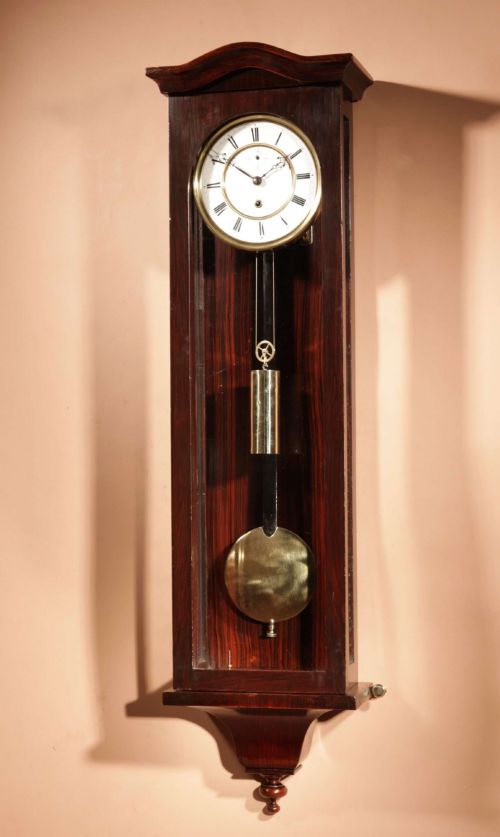
Cases rely on dense hardwoods like mahogany, oak, walnut, and rosewood, often shaped into solid circular bezels and trunk boxes. Selected models incorporate marquetry, inlay, or brass casing.
Internal mechanisms depend on fusee movements designed to maintain even tension as the mainspring unwinds, driving the hands across glass-fronted convex or flat painted wood and metal dials.
Retail Price Guide 2026
Typical UK retail prices for dial wall clock, calculated from the Sellingantiques database of over a million retail prices indexed since 2003. This retail price guide relies exclusively on Sellingantiques data; no external sources or auction records are used, so the figures do not describe the wider market.
Current listings feature timber cases in mahogany, oak, and walnut, alongside painted wood and brass dials.
What separates the finest examples
Quality rests upon the crispness of the movement and the integrity of the timber case, where careful cabinetmaking and well-figured grain elevate a piece. The legibility and original condition of the painted dial also dictate the standing of a clock.
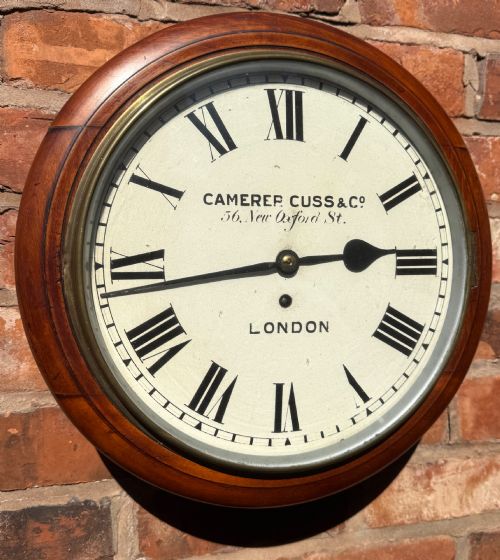
Henry Lamb·Osborn of Kingsbridge·John Thwaites·Camerer Kuss W&H
The Antique Dial Wall Clock Glossary
- Fusee
- A conical pulley connected to the mainspring by a chain or cord, designed to equalise the power delivered to the gear train as the spring unwinds. This mechanism improves the timekeeping accuracy of the clock throughout its running cycle.
- Drop dial
- A clock case featuring a rounded dial top and an elongated lower trunk that encloses the pendulum. This form became standard for domestic and commercial wall timepieces during the nineteenth century.
- Convex dial
- A dial curved outward toward the viewer to reduce glare from interior lighting and improve legibility from various angles.
- Timepiece
- A clock that indicates the time of day but does not strike the hours or quarters. Most railway and wall dial clocks operate as simple timepieces.
- Chisel bottom
- A specific architectural base shape found on certain drop dial cases, tapering sharply at the lowest point of the trunk.
Frequently Asked Questions
How do I wind a fusee wall clock?
Use the designated winding key on the dial face to turn the mechanism slowly until resistance is felt. Care must be taken not to overwind the spring.
Ensure the pendulum is securely hung and swinging freely before setting the hands to the correct time.
Where were these clocks originally used?
Many dial clocks served in railway stations, offices, and schools where reliable timekeeping was essential for the public.
Others hung in domestic hallways and parlours, valued for their sober dignity and ease of reading.
How do I distinguish Victorian from Georgian clocks?
Georgian models often display restrained timber cases and distinct maker signatures associated with eighteenth or early nineteenth-century workshops.
Victorian variants frequently embrace the drop dial form and railway station aesthetics, sometimes incorporating walnut veneer or inlaid decoration.
Do wall clocks require professional maintenance?
Periodic cleaning and oiling by a qualified horologist ensure the brass gears and fusee chain function correctly over decades.
Mounting the clock firmly to a solid wall also prevents vibrations from interfering with the pendulum beat.