




Antique Drop Trunk Clock
These antique drop trunk clock pieces are wall timepieces valued for their distinctive lower cases, offering traditional timekeeping alongside robust British and continental craft.
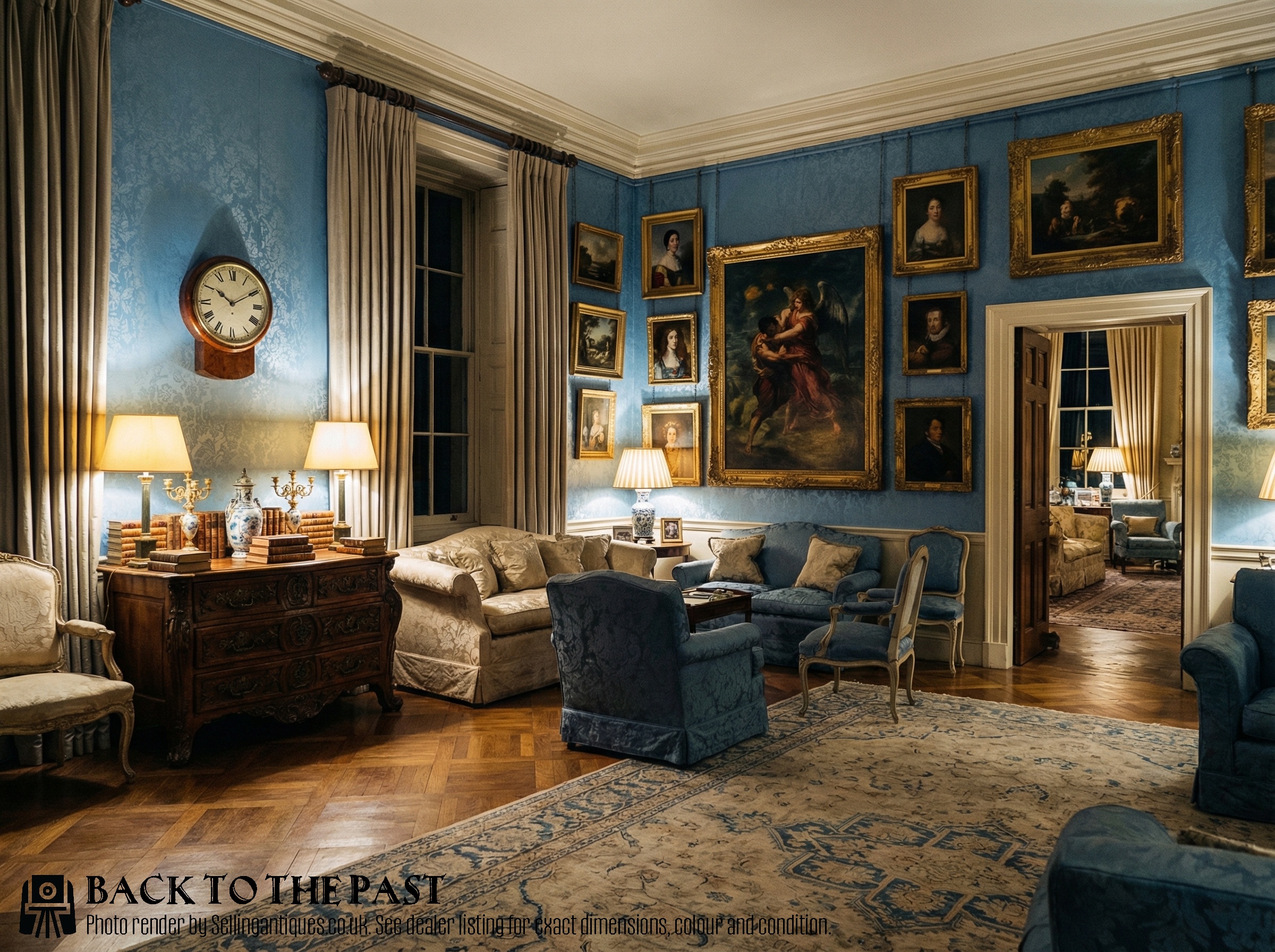
What an antique drop trunk clock is
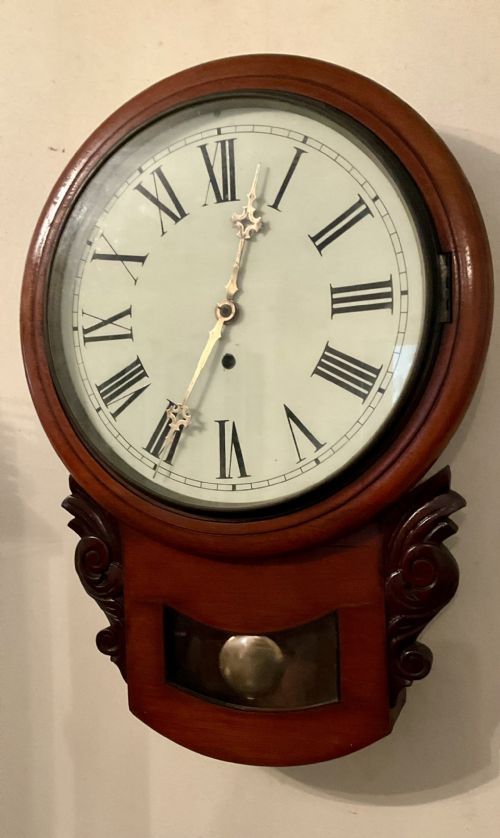
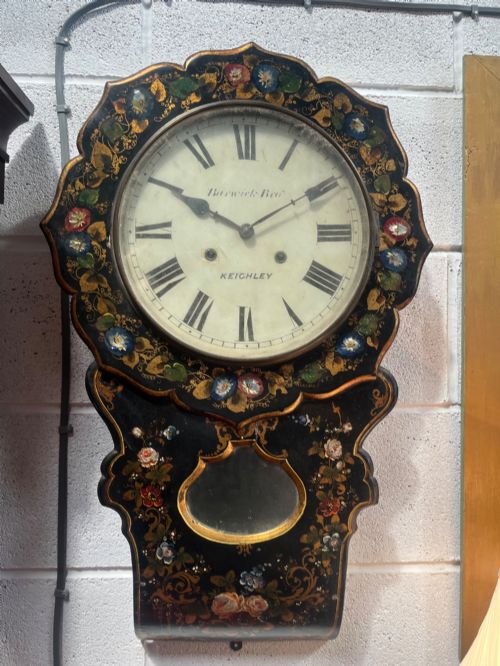
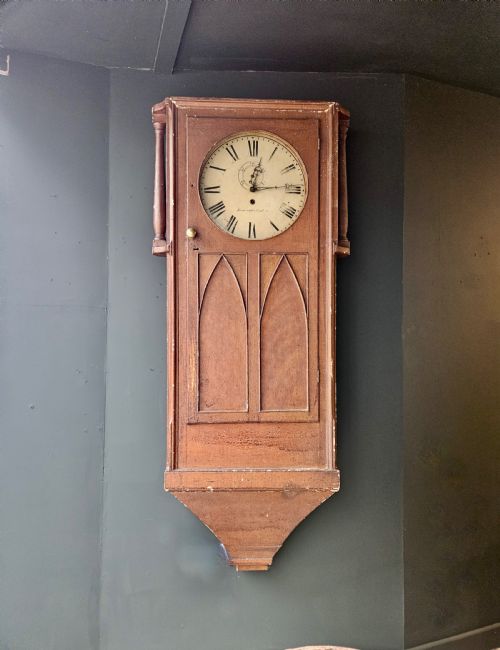
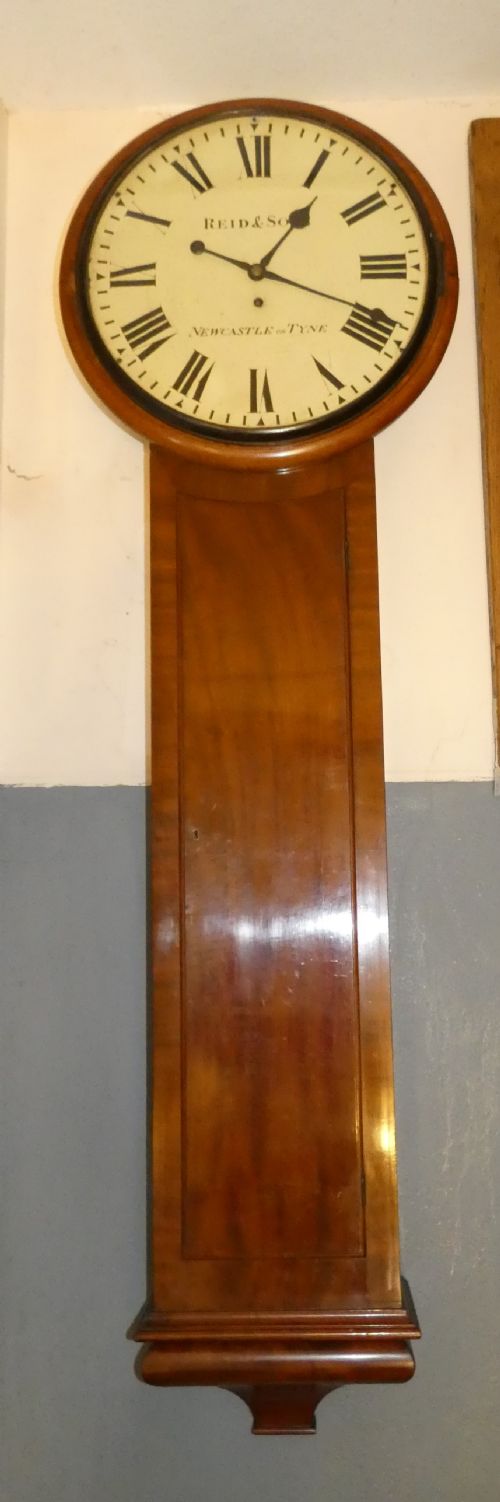
When you search for an antique drop trunk clock, you are looking at wall-mounted timepieces featuring an extended lower wooden case hanging below the dial. These items originate across the nineteenth century, encompassing Victorian, Georgian, and Regency periods.
The versions you are most likely to meet on this page take the form of wall clocks housed in timber frames with glass-fronted trunk sections. They combine circular dials above with drop cases designed to accommodate long pendulums.
Makers recorded in the evidence range from provincial English workshops in Bridgwater and Bristol to London specialists and German makers. Their designs encompass fusee wall clocks alongside striking wall clocks.
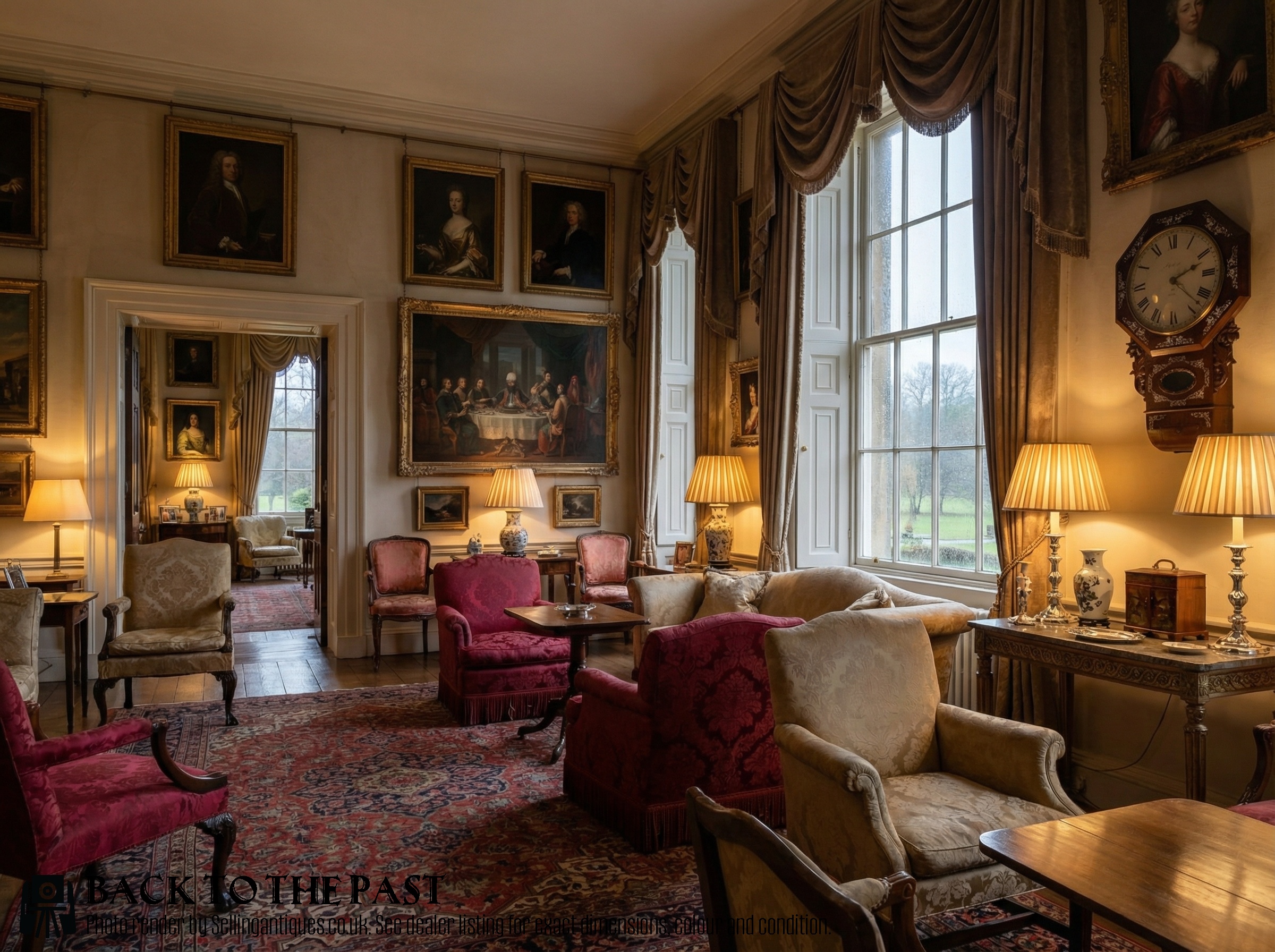
Materials and construction
The structural housings rely on solid hardwoods including mahogany, rosewood, and walnut, frequently complemented by decorative wooden inlays. Certain examples incorporate mother-of-pearl details alongside brass components and glazed doors.
Dial faces utilise materials such as enamel and wood, paired with protective glass covers. The internal movements drive fusee and striking mechanisms developed during the nineteenth century.
Retail Price Guide 2026
Typical UK retail prices for drop trunk clock, calculated from the Sellingantiques database of over a million retail prices indexed since 2003. This retail price guide relies exclusively on Sellingantiques data; no external sources or auction records are used, so the figures do not describe the wider market.
Listings feature wall clocks spanning the nineteenth century, including Victorian, Georgian, and Regency periods.
Distinctions in quality
Quality reveals itself in the selection of cabinet timbers, where rich grains of rosewood, walnut, and mahogany elevate the visual weight of the drop case. Finely executed wooden dials and inlaid details distinguish higher-tier examples from plain utility pieces.
The execution of the movement marks another clear distinction, with precision fusee mechanisms representing superior technical standards compared to standard striking configurations. Signed dials bearing named makers from locations like London or Bristol add historic substance.
Halliday & Rich Bridgwater·John Thwaites·Mark Bartley Bristol·J Fisher Esq
The Antique Drop Trunk Clock Glossary
- Fusee
- A conical pulley used in clock movements to maintain even force on the gear train as the mainspring unwinds. This mechanism helps ensure steady timekeeping throughout the power reserve.
- Drop dial
- A clock face mounted on a wooden surround that extends downward into a trunk case. This configuration accommodates the pendulum drop while creating a balanced wall display.
- Enamel
- A fused glass coating applied to metal dial faces to provide a smooth, white background for painted numerals. It creates a durable and legible surface for the hands.
- Mother-of-pearl
- An iridescent inner shell layer utilised for decorative inlay work on select clock cases. It catches the light against dark woods like rosewood and walnut.
Frequently Asked Questions
Where were drop trunk clocks hung?
These wall clocks typically hung in domestic hallways, offices, and public spaces where reliable timekeeping was essential for daily routines.
Their elongated cases allowed the pendulum to swing freely within a compact wall footprint.
How do fusee movements work?
A fusee mechanism uses a spiral-grooved cone to equalise the declining power of the mainspring as it unwinds.
This clever arrangement ensures consistent force reaches the escapement from a fully wound state down to the last hour.
What woods were used for cases?
Cabinet makers utilised dense hardwoods including mahogany, rosewood, and walnut to build the structural trunk housings.
These timbers provided both the structural stability needed for heavy movements and rich decorative surfaces.
How to date these clocks?
Dating relies on examining the casework style, dial materials, and the presence of maker signatures or regional hallmarks.
Nineteenth-century examples show shifts from Georgian proportions through Regency refinement to late Victorian manufacturing.