
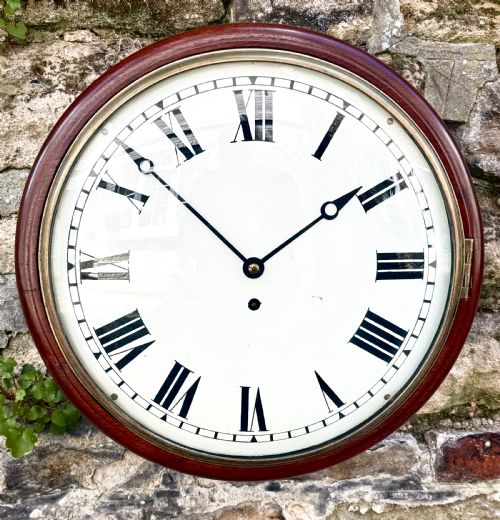
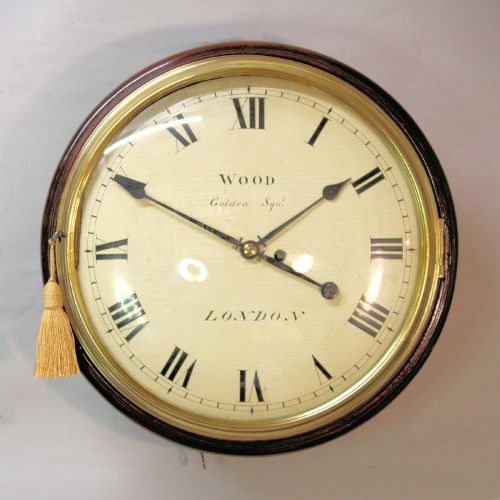


Nineteenth Century Wall Clock
A nineteenth century wall clock keeps steady time while bringing rich timber and brass into a room.
Nineteenth Century Wall Clock
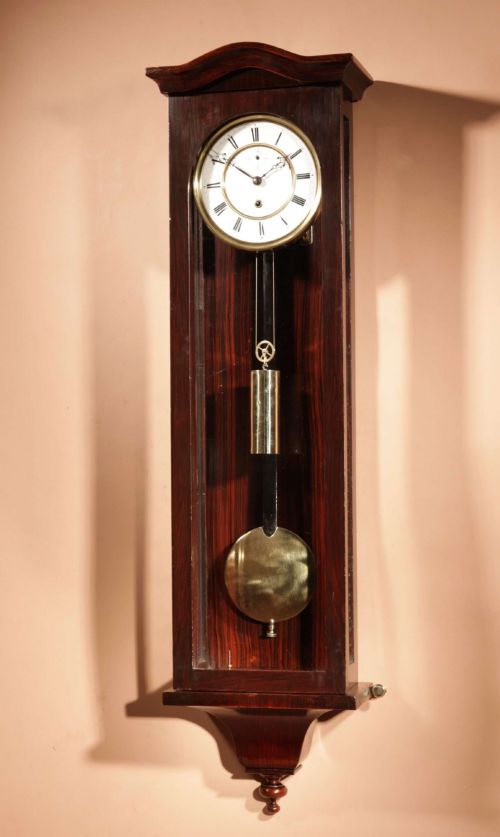
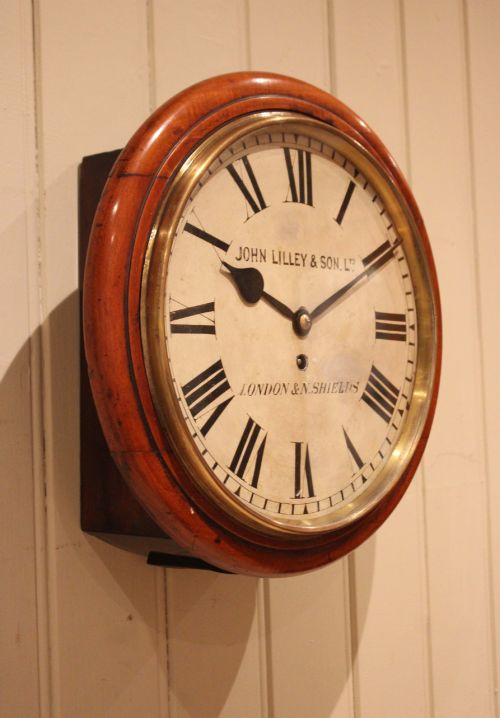
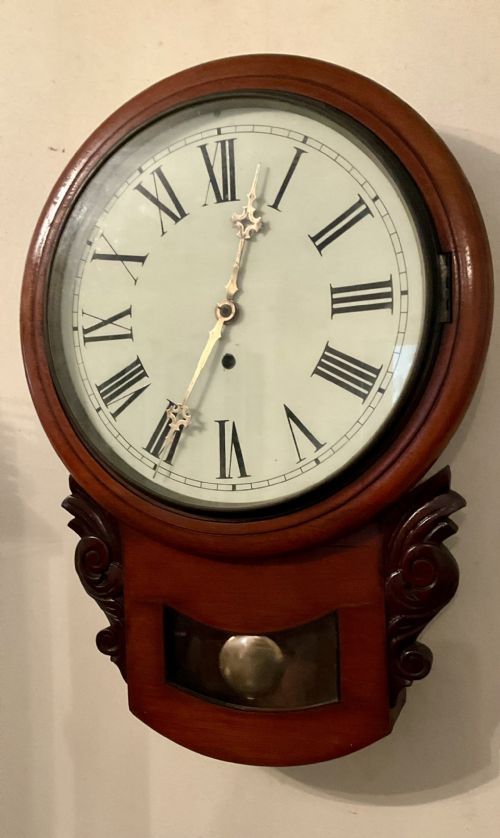
A nineteenth century wall clock serves as both a practical timekeeper and a striking architectural element in a room. Buyers searching for a nineteenth century wall clock frequently encounter robust mahogany drop-dial designs alongside ornate Vienna regulators and French cases.
The selection ranges from early examples dating from the beginning of the eighteen hundreds to later Victorian pieces from the eighteen nineties. Regional variations appear clearly, including English railway dials, American drop-dial clocks, and German movements.
Materials and Construction
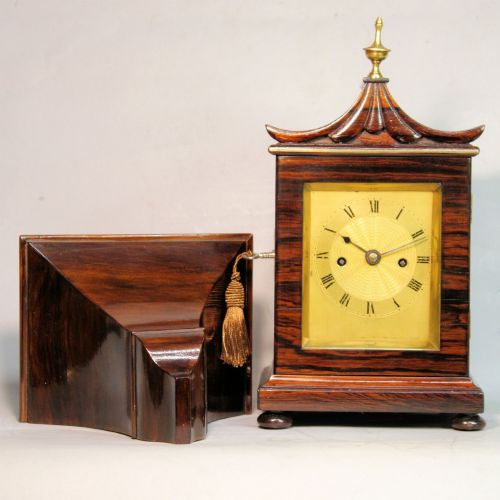
Cases rely heavily on dense hardwoods such as mahogany, walnut, and rosewood, often shaped into circular bezels or rectangular trunk bodies. Oak and French carved wood also appear in continental and provincial examples.
Dials are constructed from wood, metal, or enamel, protected by flat or convex glass lenses. Brass components form the internal fusee and weight-driven mechanisms, while mother-of-pearl occasionally provides decorative inlay.
Nineteenth Century Wall Clock Retail Price Guide 2026
Typical asking prices for nineteenth century wall clock among the pieces listed under this phrase on Sellingantiques today, from the lower quarter to the upper quarter. They describe what is for sale here now, not the wider market.
Judging Quality
Quality rests upon the crispness of the timber case carving and the original integrity of the dial and movement. Finer examples display well-figured mahogany or rosewood veneers and clear maker signatures on the face.
The sophistication of the mechanical movement, whether an eight-day fusee or a double-weight Vienna regulator system, distinguishes standard timepieces from exceptional horological works.
Halliday & Rich·Joseph Mansfield·Edward Hannam·Thomas Gibbs·Gustav Becker
The Nineteenth Century Wall Clock Glossary
- Fusee
- A conical pulley used in mechanical clocks to maintain an even pull on the movement as the mainspring unwinds. This mechanism ensures consistent timekeeping accuracy throughout the running cycle.
- Drop Dial
- A clock face configuration where a circular dial sits atop a vertical wooden box that houses the pendulum. This form became standard for station and office timepieces.
- Vienna Regulator
- A precise wall clock style originating in Austria, typically featuring a large glass door and visible weights and pendulum. These pieces are known for fine woodwork and reliable movement.
- Bezel
- The metal or wooden ring that holds the glass door in front of the clock face. It often swings open on a hinge to allow hand adjustments.
- Comtoise
- A traditional French wall clock originating from the Jura region, characterised by a large stamped brass surround and weight-driven operation.
Nineteenth Century Wall Clock: Frequently Asked Questions
How do fusee movements work?
A fusee movement uses a conical gear to equalize the decreasing power of a running mainspring. This keeps the force driving the gears steady from full wind to empty.
Such mechanisms were favoured in better quality English clocks to ensure precise daily timekeeping.
Where were drop dial clocks used?
Drop dial clocks were designed for public spaces, offices, and railway stations where clarity and reliability mattered most. Their prominent circular faces could be read from a distance across a busy room.
Domestic hallways also accommodated them due to their neat wall-hanging profile.
What is a Vienna regulator?
A Vienna regulator is a precision wall clock featuring a tall glazed case that displays the swinging pendulum and weights. Originating in nineteenth-century Austria, they were prized for exceptional timekeeping.
Cabinetmakers housed these movements in elegant walnut or mahogany frames.
How do I identify a Victorian clock?
Victorian clocks often feature robust mahogany or walnut cases with standard drop-dial or double-weight Vienna configurations. The dating aligns with the nineteenth century British manufacturing period.
Maker signatures on the dial or movement plates frequently confirm the era.