
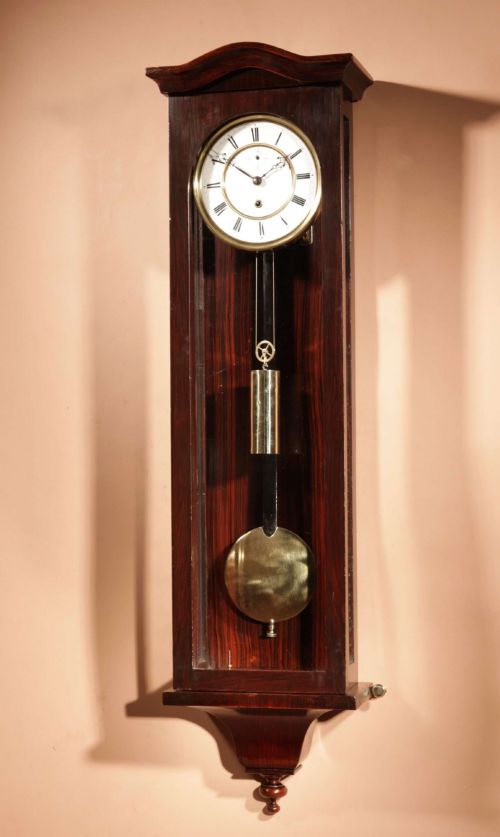
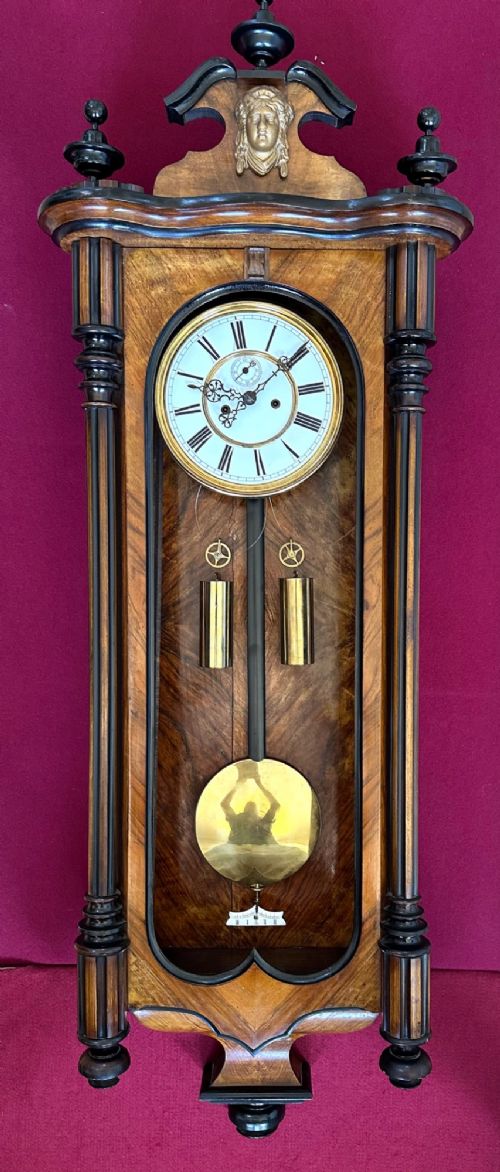
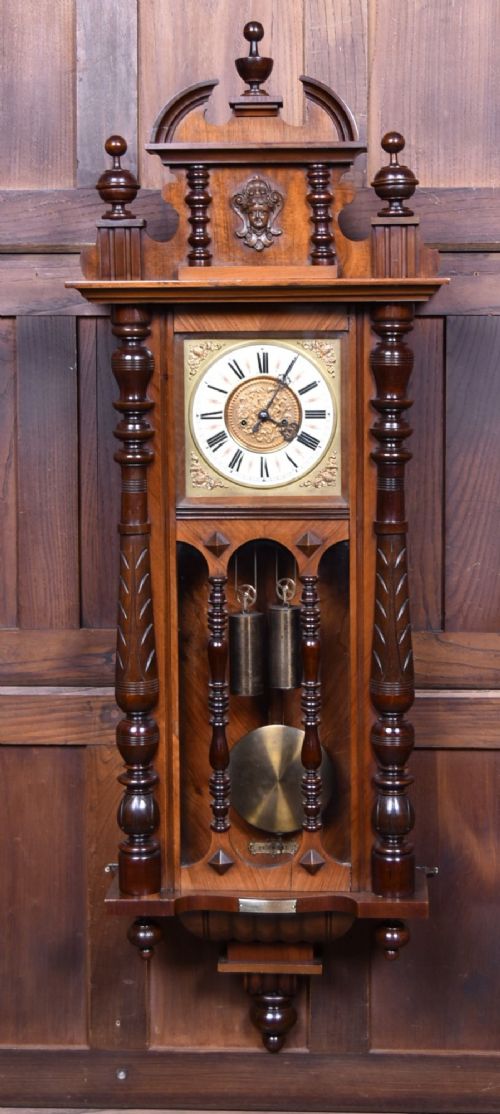
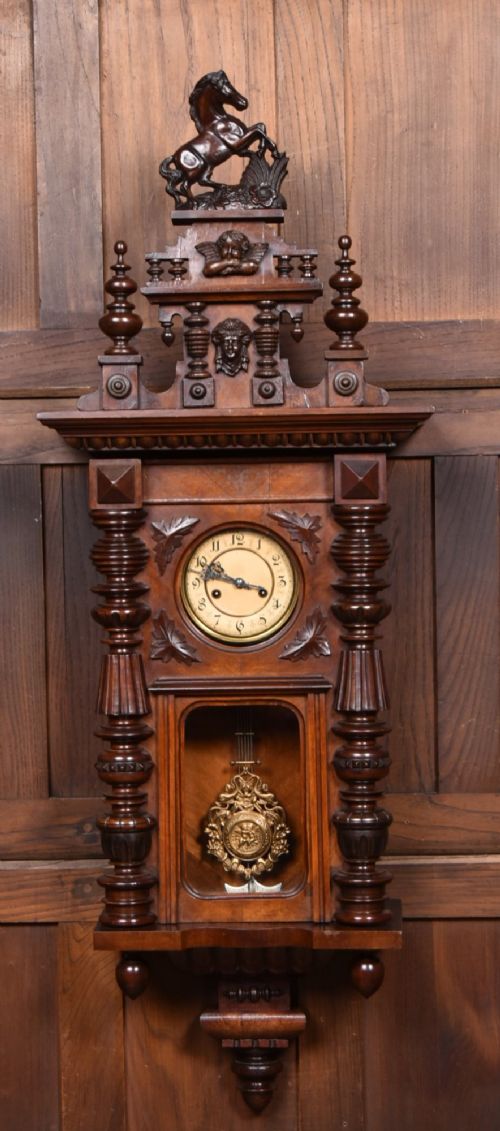
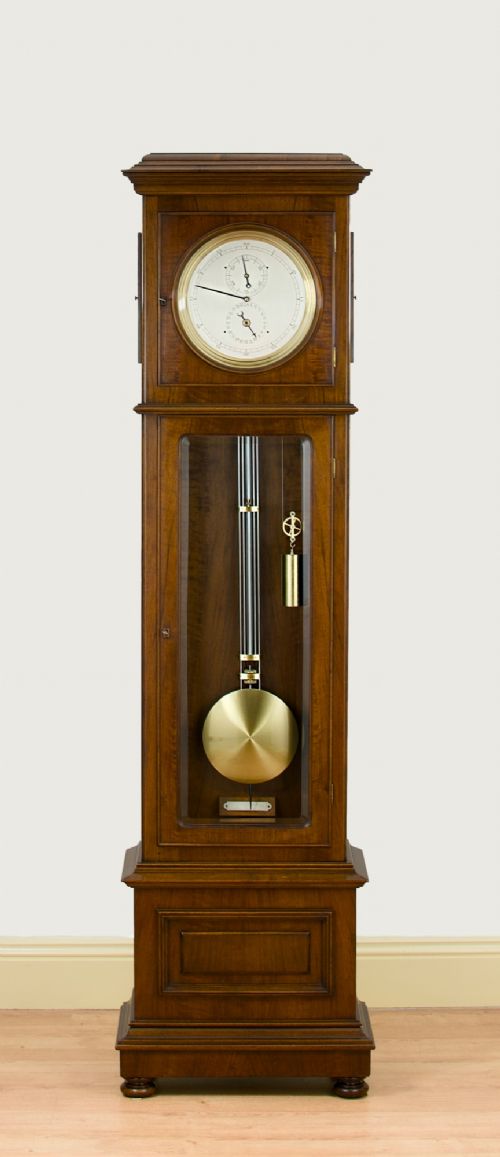

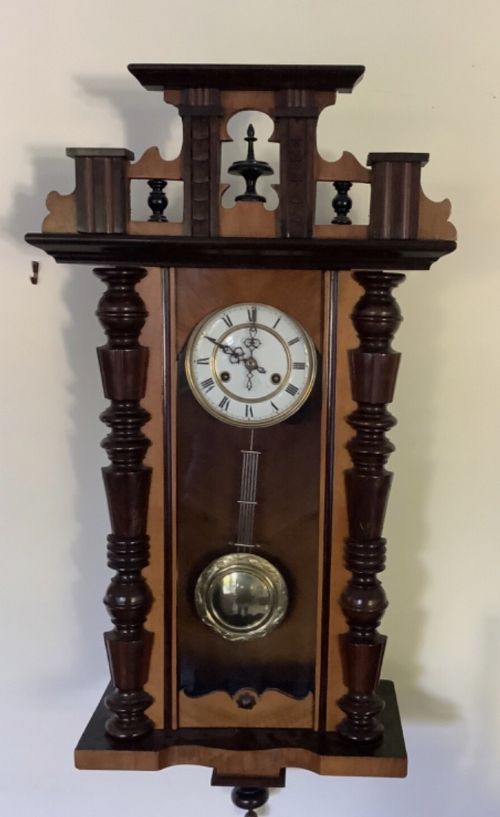


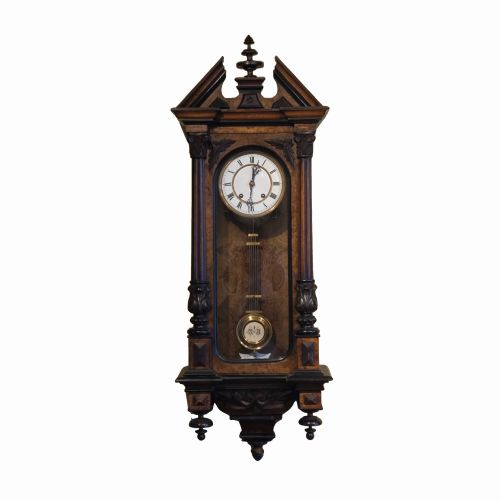


German Regulator Clock
A german regulator clock brings precision timekeeping and stately presence to a wall, combining careful engineering with rich cabinet timbers.
German Regulator Clock
A german regulator clock stands as a refined timekeeper, developed through the nineteenth century to deliver exceptional accuracy. When you examine the current selection, you find that walnut wall clocks dominate the offerings, alongside examples executed in mahogany, ebonised wood and brass.
These pieces primarily take the form of wall clocks built in the Vienna style, though longcase clocks also appear. The period coverage spans from the mid-nineteenth century through to the Edwardian era, with dates clustering tightly around 1860, 1880, 1890 and 1900.
Makers such as Lenzkirch and Gustav Becker anchor the higher end of the market, accompanied by Johann Baptist Beha and Black Forest workshops. Buyers most frequently encounter eight-day spring or double weight movements housed in architectural timber cases.
How they were made
Makers constructed the housings using select hardwoods, notably walnut and mahogany, often applying ebonised finishes to create striking visual contrast. Glass panels protect the delicate pendulum and dial while offering a clear view of the mechanical movement within.
The interior works rely heavily on brass for the gear trains and plates, paired with enamelled or porcelain dials featuring crisp numbering. Artisans incorporated precision engineering to drive striking mechanisms, ranging from standard eight-day strikes to triple weight grande sonnerie setups.
German Regulator Clock Retail Price Guide 2026
Typical asking prices for german regulator clock among the pieces listed under this phrase on Sellingantiques today, from the lower quarter to the upper quarter. They describe what is for sale here now, not the wider market.
Johann Baptist Beha started out carving cuckoo clocks in the Black Forest before stepping up to regulate the walls of Europe.
What varies in quality
The standard of a german regulator clock depends heavily on the maker's reputation and the sophistication of its movement. Pieces produced by distinguished houses like Lenzkirch or Gustav Becker demonstrate superior mechanical refinement compared to unmarked workshop productions.
Cabinet construction also dictates overall merit, separating simple pine-carcased ebonised models from finely figured walnut cases with architectural mouldings. Furthermore, the presence of complex weight-driven systems, such as double or triple weight configurations, elevates the piece above standard spring-driven alternatives.
Lenzkirch·Gustav Becker·Johann Baptist Beha
The German Regulator Clock Glossary
- Regulator clock
- A high-precision timekeeper designed for exceptional accuracy, originally used as a standard to set other clocks. These pieces feature clear dials and precise mechanical movements.
- Vienna style
- A design aesthetic originating in Austria and adopted by German makers, characterised by long glass-fronted doors and classical architectural case details. This style showcases the swinging pendulum.
- Grande sonnerie
- A complex striking train that chimes the hours and quarters automatically on every quarter-hour. This mechanism represents advanced horological skill.
- Ebonised wood
- Timber treated to imitate costly ebony, frequently utilised in nineteenth-century clock cases for a dramatic dark finish. It provides a sharp contrast against brass fittings and white dials.
- Precision regulator
- An advanced timekeeping instrument built with meticulous tolerances for scientific or domestic exactitude. These often appear in longcase or high-grade wall formats.
German Regulator Clock: Frequently Asked Questions
What is a german regulator clock?
A german regulator clock is a precision timekeeper built in Germany, typically during the nineteenth century, designed for high accuracy.
Most examples function as wall clocks featuring exposed pendulums and glass-fronted walnut cases inspired by Vienna styles.
How do double weight clocks work?
Double weight movements use two suspended weights to power the timekeeping and striking trains independently.
This setup removes the need for mainsprings, delivering a more uniform force to the gears for improved accuracy.
Where should I hang a wall clock?
Hang your german regulator clock on a sturdy interior wall away from direct sunlight, heavy vibrations and drafts.
Secure mounting is essential to support the weight of the timber case and ensure the pendulum swings freely.
How do I date a regulator clock?
Dating relies on examining the maker's mark on the movement backplate, case styling, and materials used.
Pieces from the 1860s often display different moulding details and dial designs compared to those produced around 1900.