






Walnut Vienna Regulator
A walnut vienna regulator offers precise timekeeping housed in handsome timber cases, making it a striking focal point for any room.
Walnut Vienna Regulator
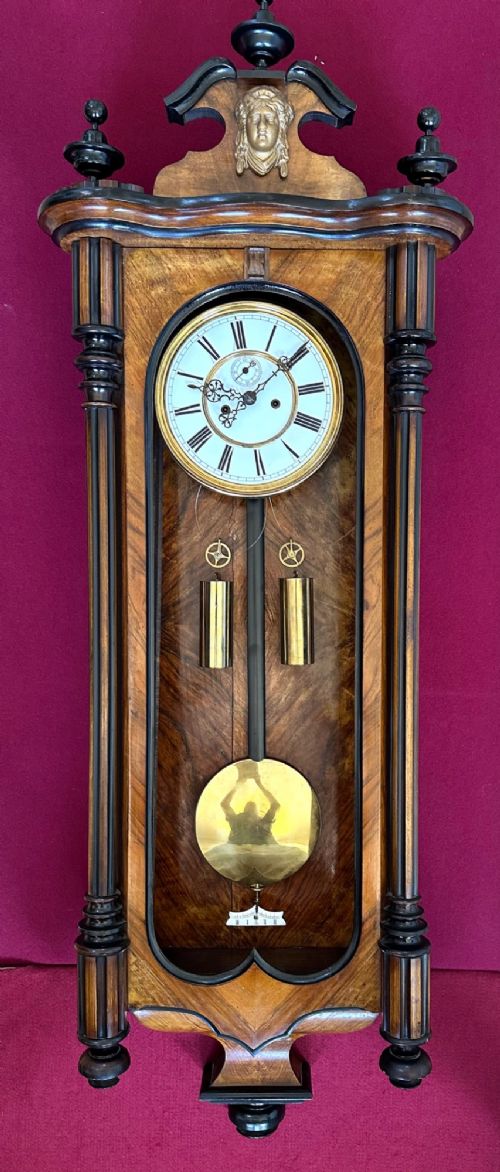
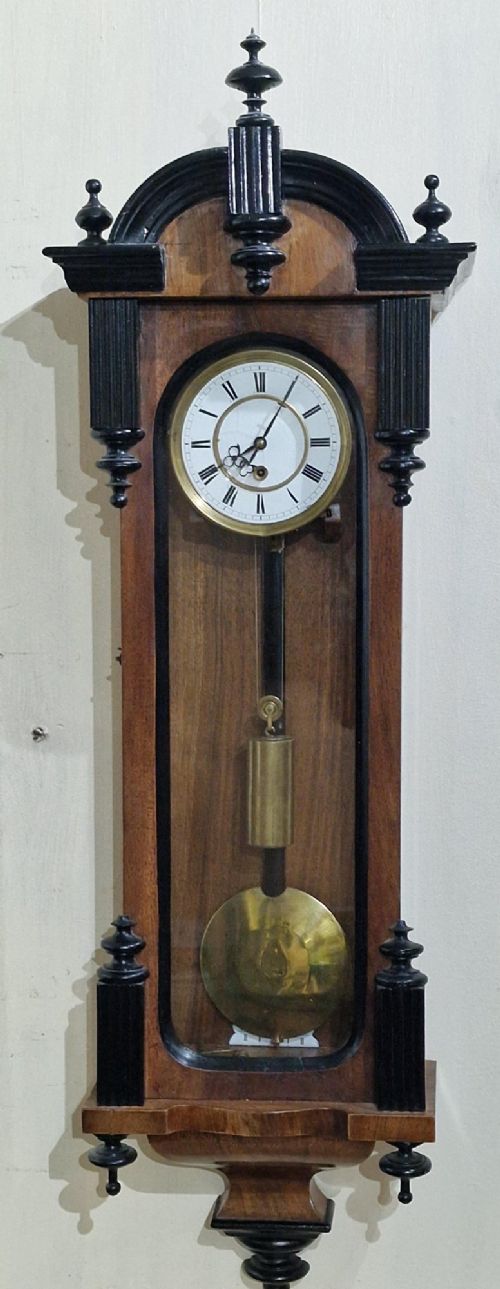
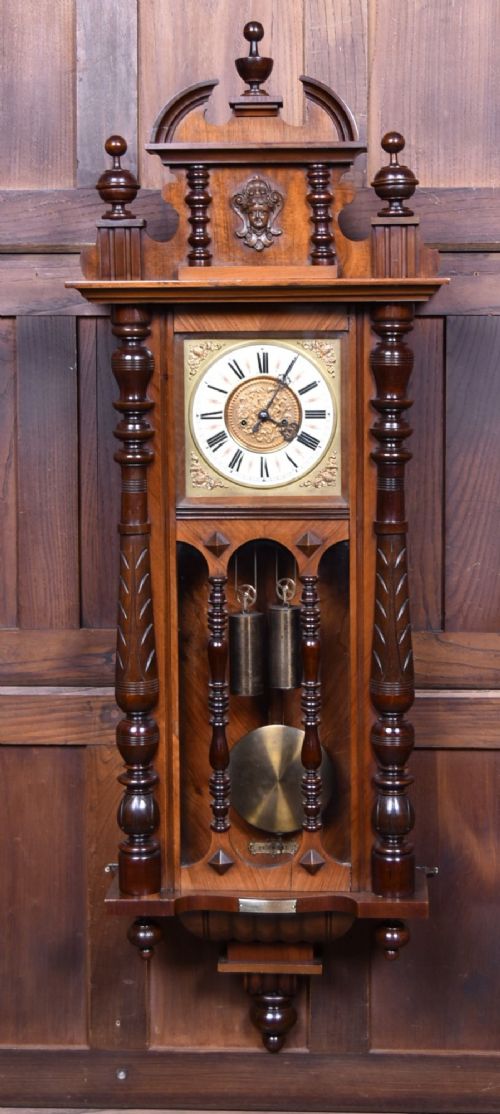
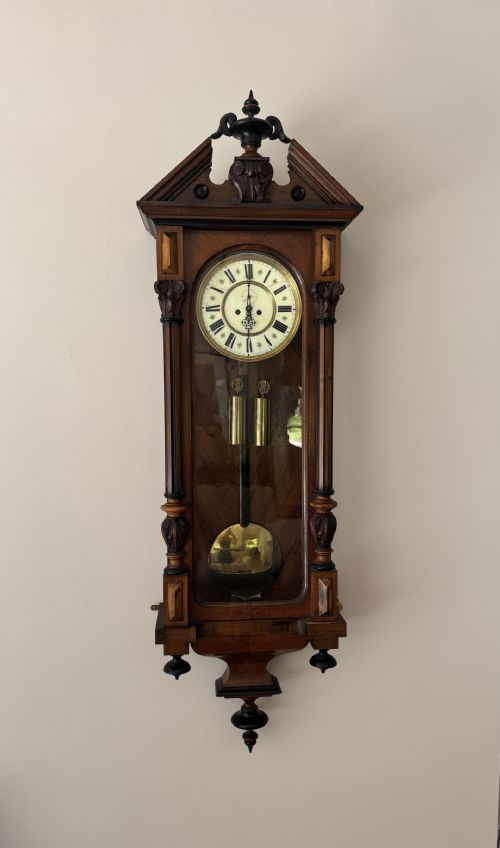
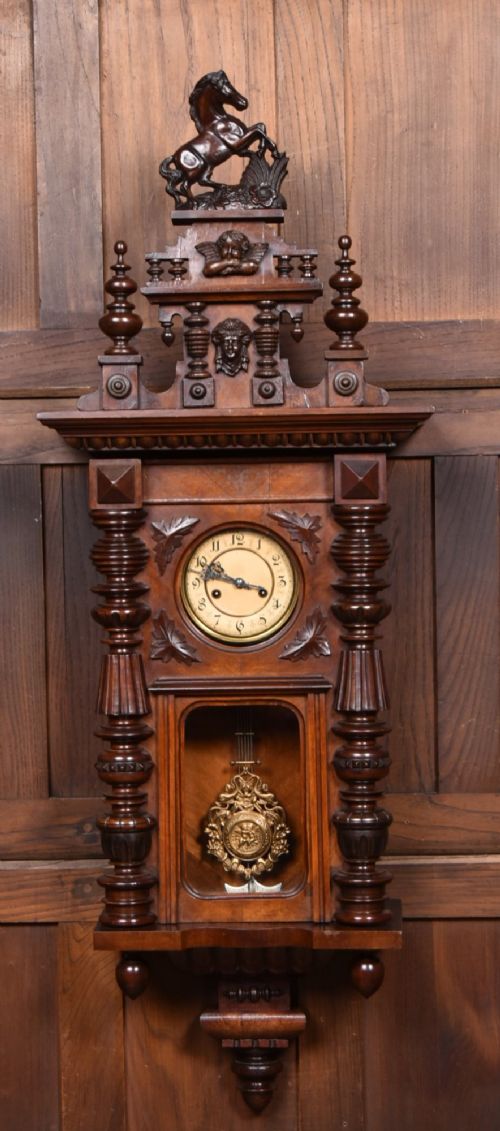
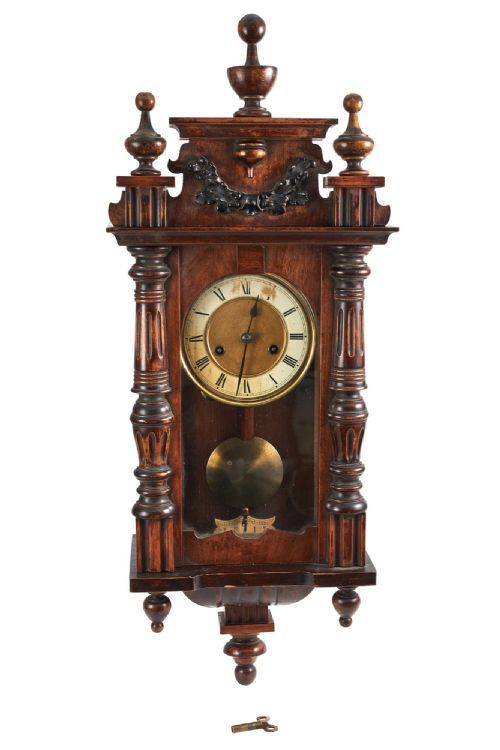
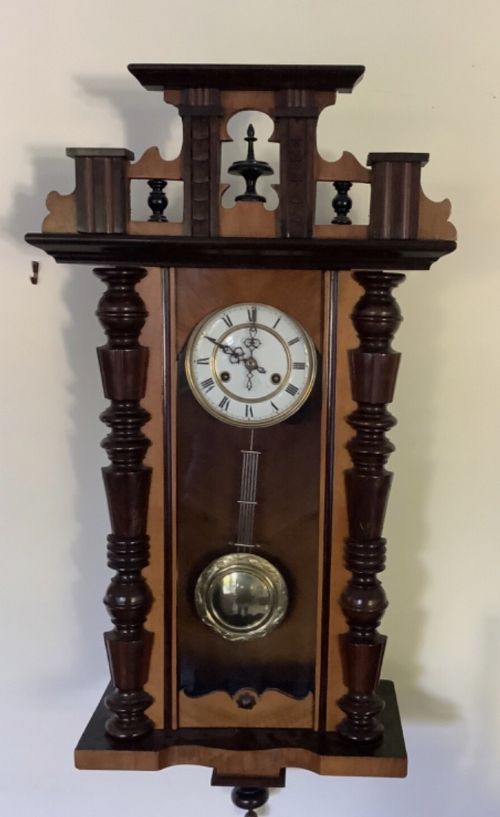
A walnut vienna regulator is a wall-mounted timepiece designed for precision and visual elegance. These clocks typically feature tall, glazed wooden cases that showcase the pendulum and weights inside.
The pieces available here span the Victorian era, specifically appearing across the late nineteenth century from 1860 to 1900. Styles range from standard Austrian and German wall clocks to specific Biedermeier and Gothic influences.
Buyers most commonly encounter eight-day striking models alongside month-duration pieces and smaller timepieces. Double and triple weight systems frequently appear in the selection alongside spring-driven alternatives.
Materials and construction
Cases rely heavily on walnut, often incorporating burr walnut veneers and ebonised wood for contrast and decorative depth. Glazed panels protect the dial and movement while allowing a clear view of the swinging pendulum.
Internal mechanisms feature brass components paired with enamel dials for clear legibility. Clocks utilise hanging weights made of brass or driven by internal springs to power the movement.
Carved details often enrich the walnut timber cases, particularly around the crests and base terminals. Dial surrounds may also incorporate porcelain elements alongside standard brass bezels.
Walnut Vienna Regulator Retail Price Guide 2026
Typical asking prices for walnut vienna regulator among the pieces listed under this phrase on Sellingantiques today, from the lower quarter to the upper quarter. They describe what is for sale here now, not the wider market.
Some models feature miniature proportions, packing a full striking movement into a surprisingly compact wall case.
Distinctions in quality
The refinement of the walnut case carving and the choice of figured wood veneers distinguish standard examples from finer specimens. Master makers incorporate precise decorative turnings and harmonious proportions that elevate the cabinet work.
Movement complexity separates basic timepieces from superior regulators offering month-duration runs, striking capabilities, or grand sonnerie functions. The robustness and finish of the internal brass train reflect the maker's workshop standards.
AG Lenzkirch·Gustav Becker·Johann Baptist Beha
The Walnut Vienna Regulator Glossary
- Vienna regulator
- A precision wall clock developed in Austria during the nineteenth century, known for accurate timekeeping and glazed pendulum chambers. These clocks were originally designed as reference timepieces.
- Double weight
- A movement powered by two suspended weights that typically drive both the timekeeping and striking trains. This system allows the clock to operate for extended periods before requiring winding.
- Ebonised wood
- Timber treated to resemble ebony, providing dark, contrasting trim against the lighter walnut case. This technique adds visual definition to architectural mouldings.
- Grand sonnerie
- A striking mechanism that chimes the hours and quarters automatically on every quarter hour. It represents a more complex internal arrangement than standard hourly striking clocks.
- Spring driven
- A movement powered by an internal coiled spring rather than hanging weights. This mechanism suits slimmer or smaller wall cases where dropping weights would not fit.
Walnut Vienna Regulator: Frequently Asked Questions
How do I wind a walnut vienna regulator?
Winding involves using a matching key to pull up the hanging weights or tension the internal springs. Care must be taken not to overwind the movement.
Most eight-day models require winding once a week, while month-duration variants need attention far less frequently. Keeping a consistent schedule helps maintain timekeeping accuracy.
Where should I hang a wall clock?
Select a sturdy interior wall free from dampness, direct sunlight, and excessive vibration. Plasterboard walls require proper fixings to support the weight of timber cases.
The clock must hang completely plumb so the pendulum swings evenly. A level surface ensures the escapement ticks with a regular, balanced beat.
What is the difference between single and multiple weights?
A single weight typically powers a basic timepiece movement without a striking train. This keeps the internal setup straightforward and often results in a slimmer case.
Double and triple weights drive additional trains for striking the hours or chiming quarters. These heavier configurations require robust walnut cases to house the extra machinery.
How do I date a 19th-century regulator?
Dating relies on examining case styles, wood types, dial construction, and movement signatures. Victorian pieces from the 1860s often feature different carving styles compared to later 1890s examples.
Maker stamps on the backplate provide the most reliable chronological markers. Comparing the movement serial numbers against maker records narrows down the exact production year.