
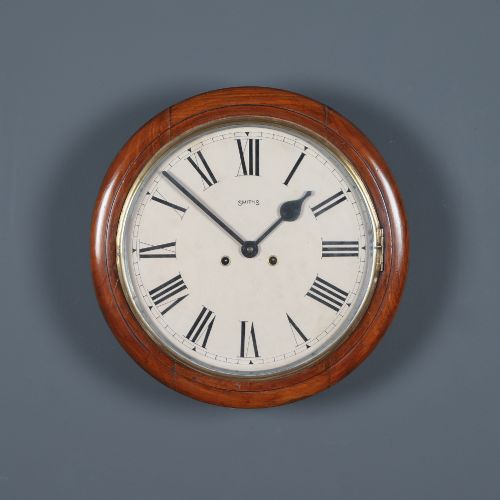
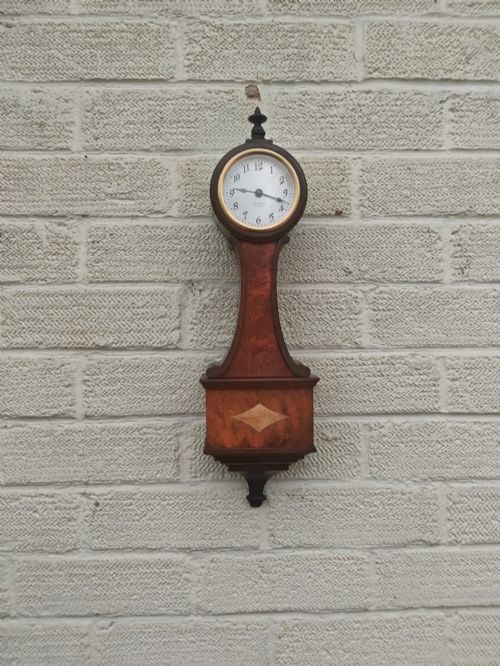
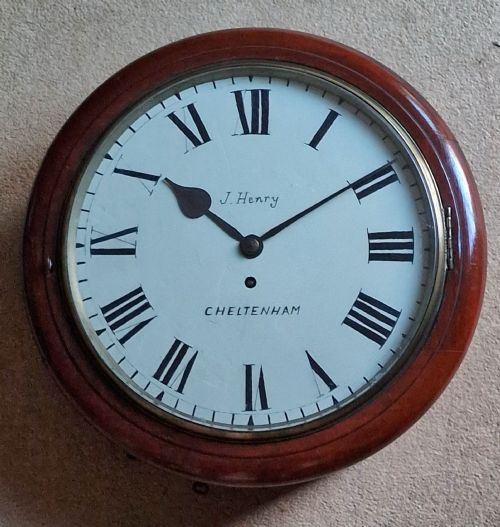
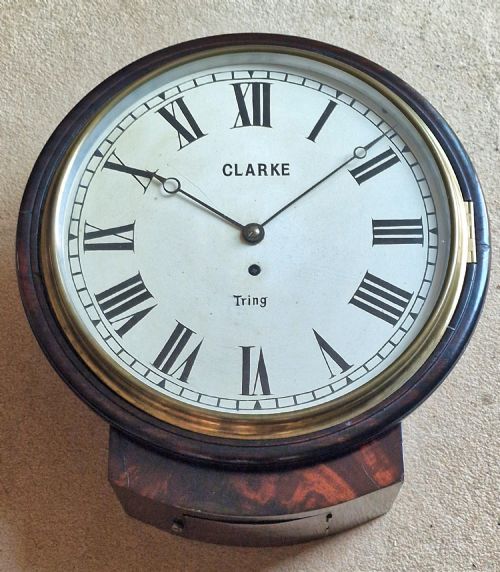

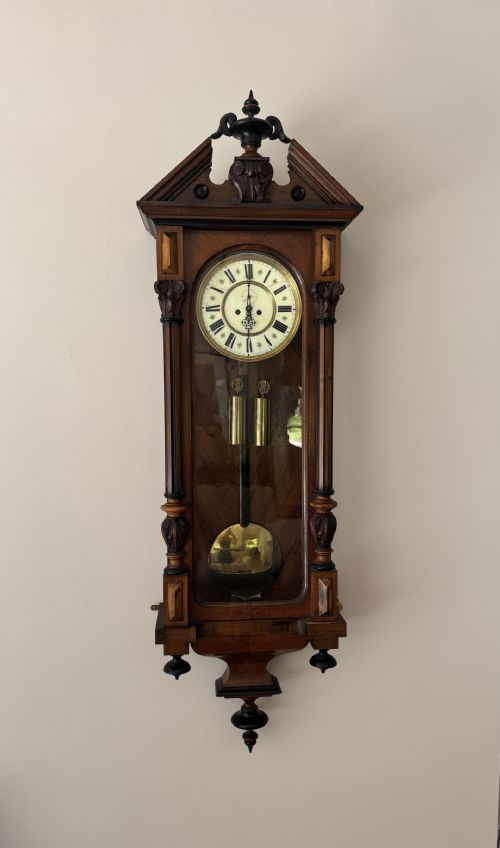
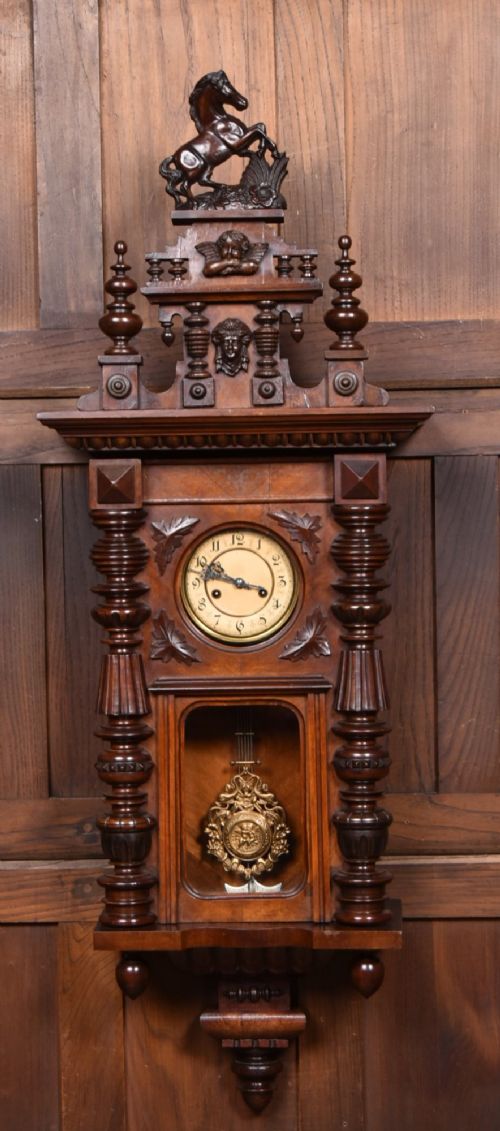
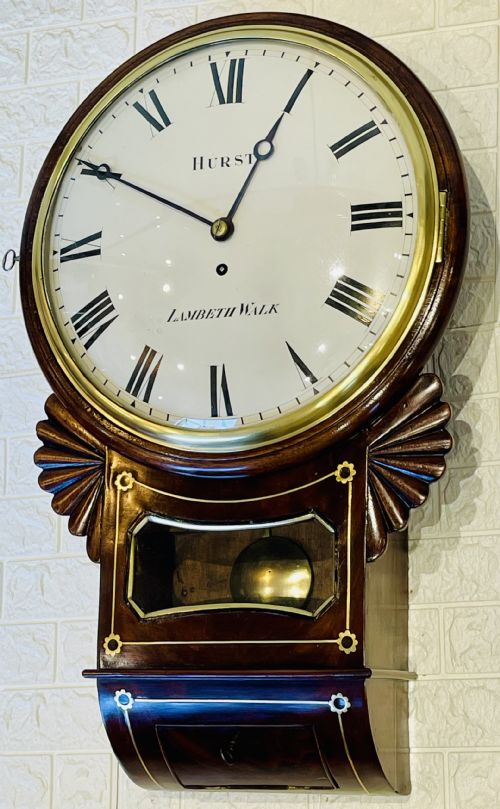


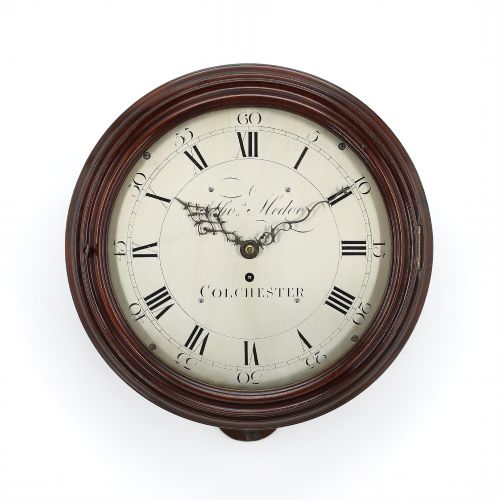

Traditional Pendulum Wall Clock
These traditional pendulum wall clock pieces bring mechanical movement and polished timber cases into domestic spaces.
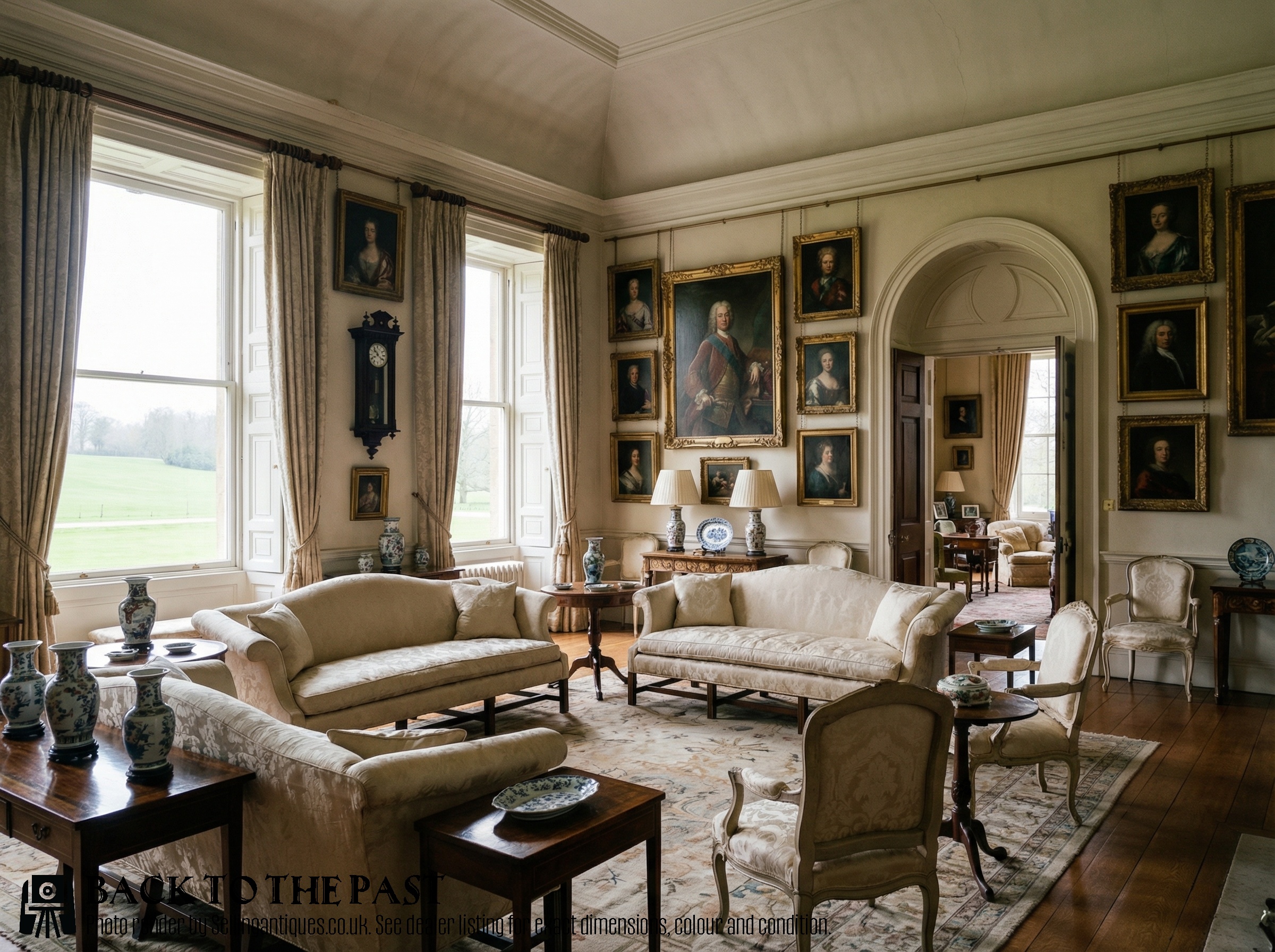
Traditional Pendulum Wall Clock
A traditional pendulum wall clock sits against a partition, marking hours through the swing of a weighted pendulum inside timber or glass housings. These pieces emerge across the Georgian, Victorian, and early twentieth-century eras, spanning British, German, Austrian, and Dutch origins.
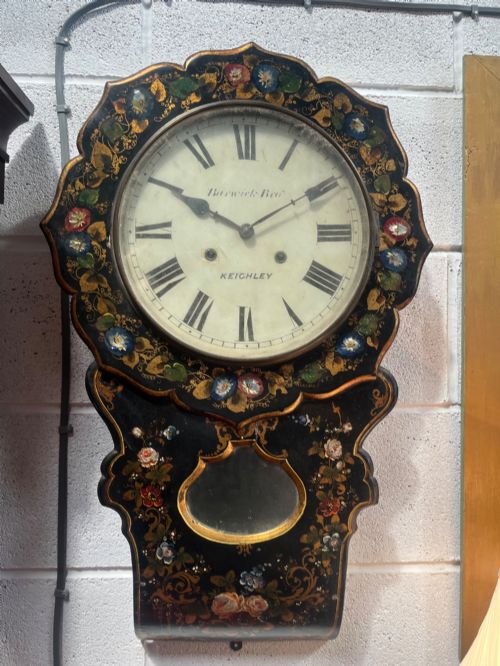
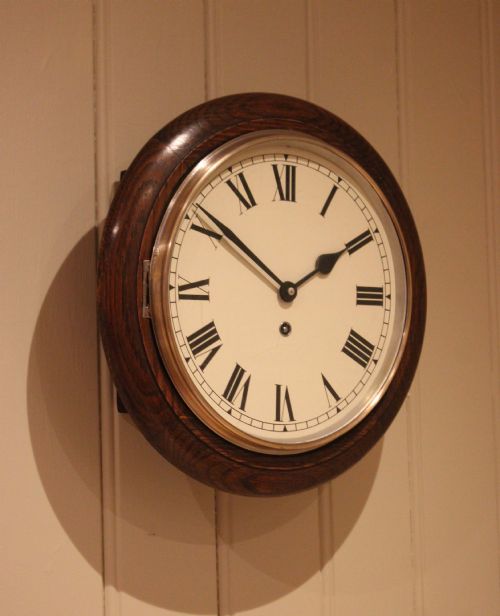
Dial clocks dominate the selection, often housed in round mahogany or oak frames designed for railway stations, schools, and domestic rooms. Drop-dial variants extend downward to accommodate the movement and pendulum swing, frequently paired with fusee mechanisms.
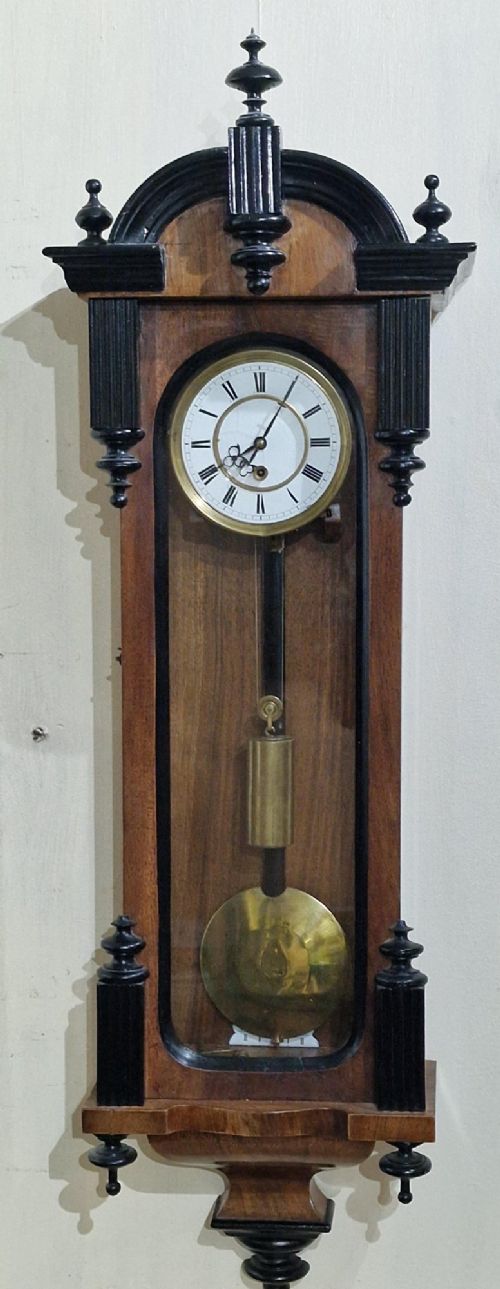
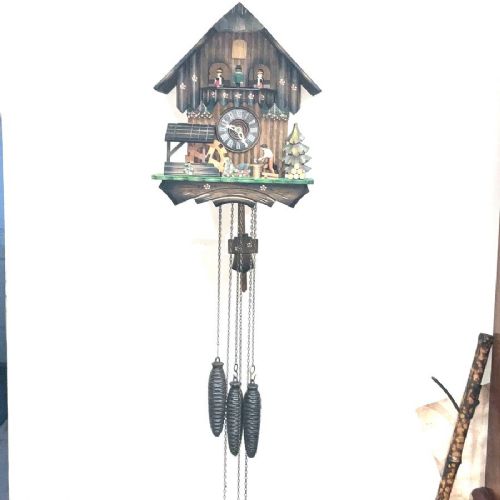
Vienna regulators and Black Forest cuckoo clocks represent more ornate forms within the selection. Walnut cases with double weights, carved wooden automata, and painted enamel dials appear alongside simpler school and station timepieces.
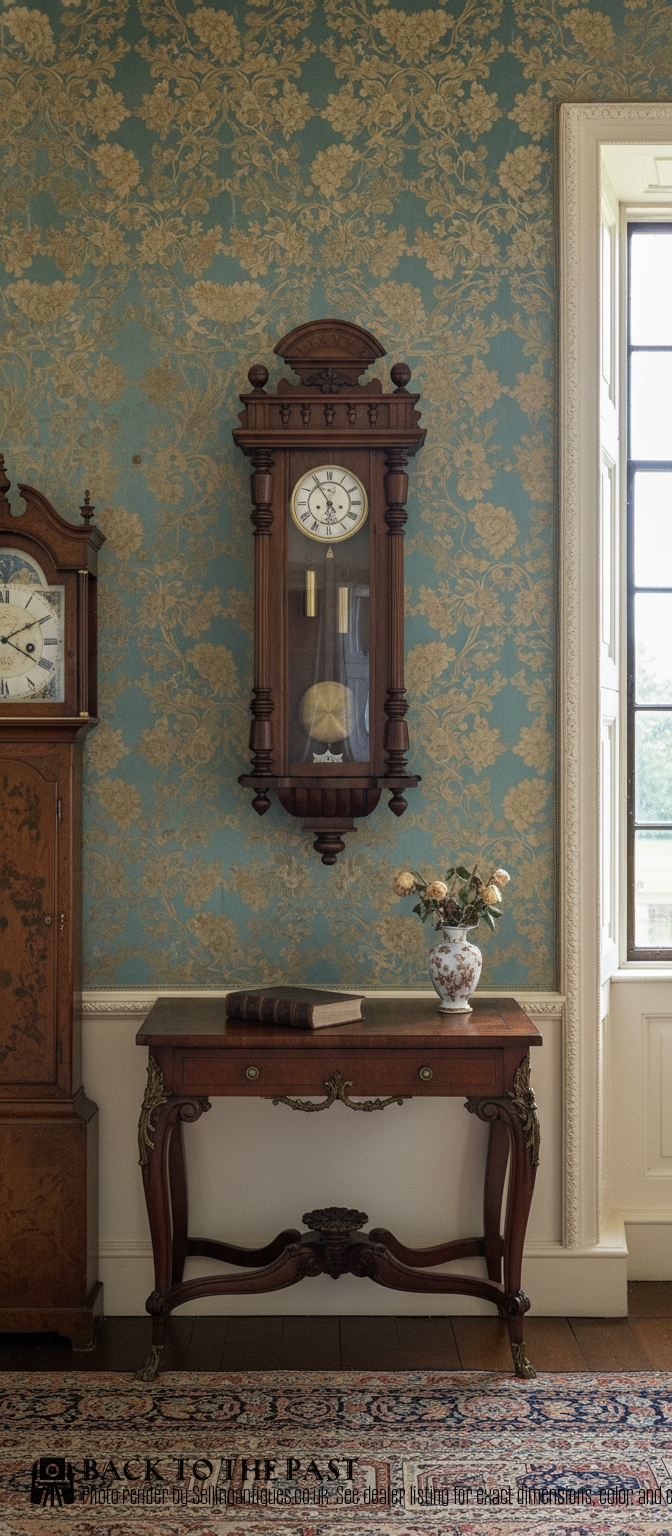
Materials and Construction
Cabinet makers utilised dense hardwoods including mahogany, walnut, oak, rosewood, and ebonised wood to build the structural cases. Glass panels protect the dial face and expose the swinging pendulum, while brass forms the wheels, plates, and weights.
Dial faces incorporate painted enamel, metal, or wood, sometimes featuring convex glass and Roman numerals. Mechanical assemblies rely on fusee movements or spring-driven mechanisms to regulate timekeeping through the pendulum.
Traditional Pendulum Wall Clock Retail Price Guide 2026
Typical asking prices for traditional pendulum wall clock among the pieces listed under this phrase on Sellingantiques today, from the lower quarter to the upper quarter. They describe what is for sale here now, not the wider market.
The selection includes railway station round dials, Black Forest carved cuckoo clocks, and Dutch staart clocks.
Distinctions in Standard
Quality separates through the crispness of timber carving, the selection of figured veneer grains on mahogany and walnut cases, and the precision of the brass movement inside. Maker signatures inscribed on dials or movements elevate individual examples.
Complex striking mechanisms, twin fusee setups, and intricate Black Forest wood carvings demand greater skill than standard single-fusee school clocks. Original components and well-preserved painted decoration hold distinct weight over later replacements.
J Henry Cheltenham·George Clarke Tring·Joseph Bird Stroud·Thomas Hedge Colchester·John Walker·Henry Lamb Windsor·Joseph Mansfield·Henry Deykin Worcester·Johann Baptist Beha·J A Wheatley Carlisle
The Traditional Pendulum Wall Clock Glossary
- Fusee
- A conical pulley used in spring-driven clocks to maintain equal force on the gear train as the mainspring unwinds. This mechanism ensures consistent timekeeping across the eight-day run.
- Drop-dial
- A wall clock design featuring an extended lower case beneath the main dial to enclose the pendulum swing. This form appears frequently in British Victorian and Regency examples.
- Regulator
- A precision pendulum clock designed for accurate timekeeping. Vienna regulators employ sophisticated weight-driven movements and long glass-fronted cases.
- Verge
- An early escapement type that controls the release of the gear train using a crown wheel and pallet. It precedes more modern anchor and deadbeat escapements.
- Stoelklok
- A traditional Dutch wall clock mounted on a small wooden chair or bracket. These regional pieces often feature lead figures and painted wooden dials.
Traditional Pendulum Wall Clock: Frequently Asked Questions
How do I wind a traditional pendulum wall clock?
Most eight-day models require a key inserted into the dial face to wind the spring or lift the weights back to the top. Care must be taken not to overwind the movement.
Swinging the pendulum gently after winding initiates the beat. Ensuring the clock hangs level on the wall keeps the tick even.
Where were these clocks originally used?
Railway stations, schools, and offices utilised sturdy dial clocks for public timekeeping. Homes adopted drop-dial, Vienna, and cuckoo variants in parlours and hallways.
Regional Dutch and Black Forest pieces served domestic spaces in continental Europe. Their distinctive chimes marked the passing hours for households and travellers alike.
How do I tell a Victorian wall clock from a Georgian one?
Georgian pieces often feature simple fusee movements and mahogany cases built with restraint. Cabinet work from this period prioritises clean proportions and understated brass bezels.
Victorian examples frequently introduce richer walnut veneers, more elaborate carving, and twin-weight Vienna regulator systems. Edwardian and later pieces continue these forms with simpler or stylised schoolhouse designs.
How should I care for a mechanical wall clock?
Hanging the clock securely to a solid wall prevents vibrations from altering the pendulum beat. Professional cleaning and lubrication every few years keeps the brass gears functioning smoothly.
Keeping the piece away from direct heat sources protects the timber case and veneer from warping. Regular winding maintains tension across the movement without straining the springs.