

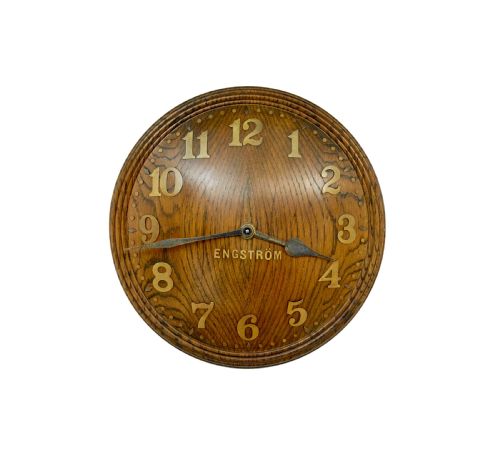

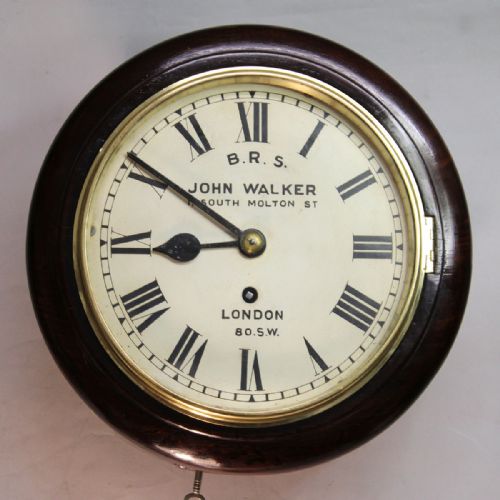
Circular Wooden Wall Clock
A circular wooden wall clock brings functional timekeeping and honest timber into a room, shaped by railway stations, offices, and schools.
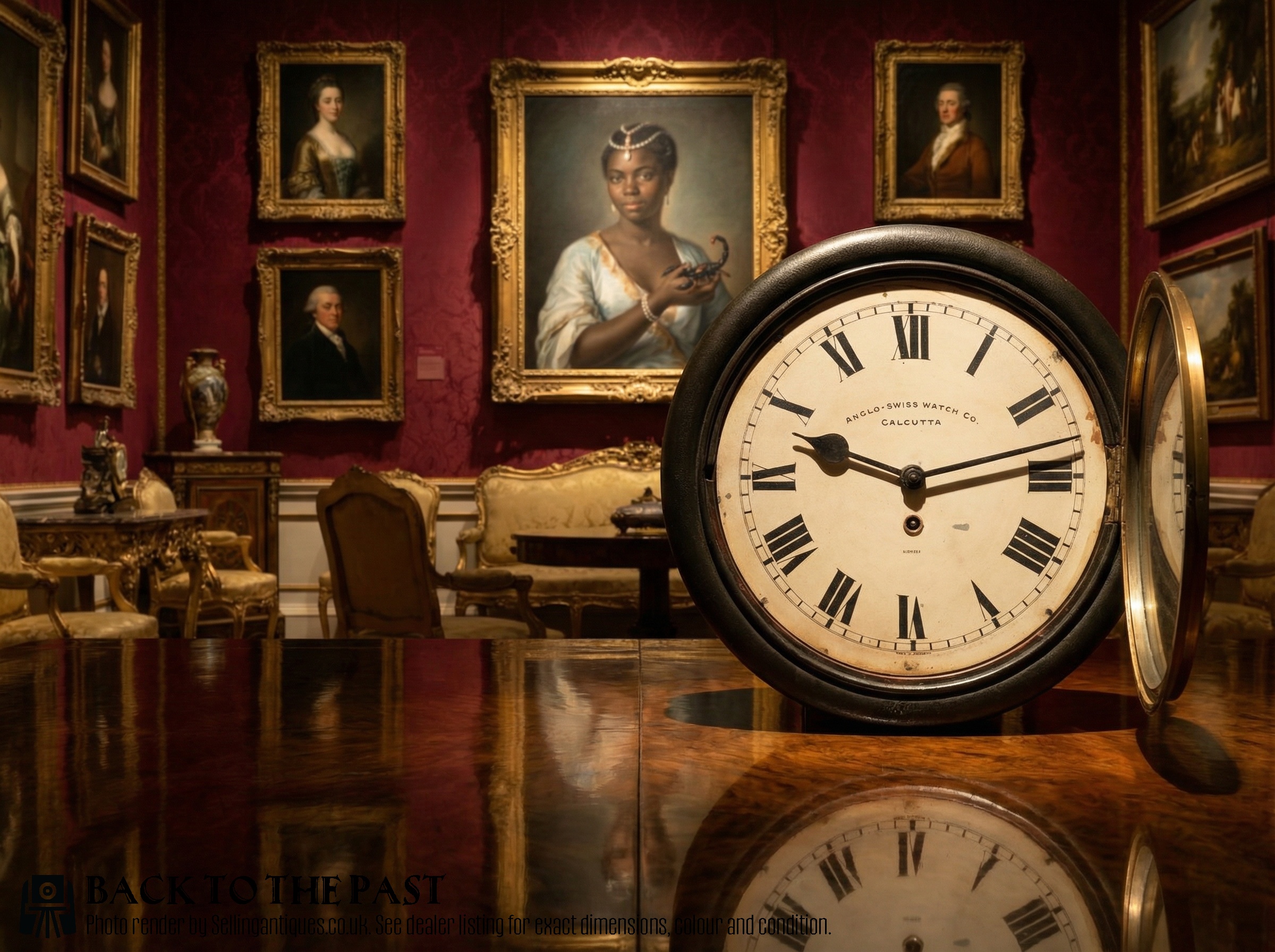
Circular Wooden Wall Clock
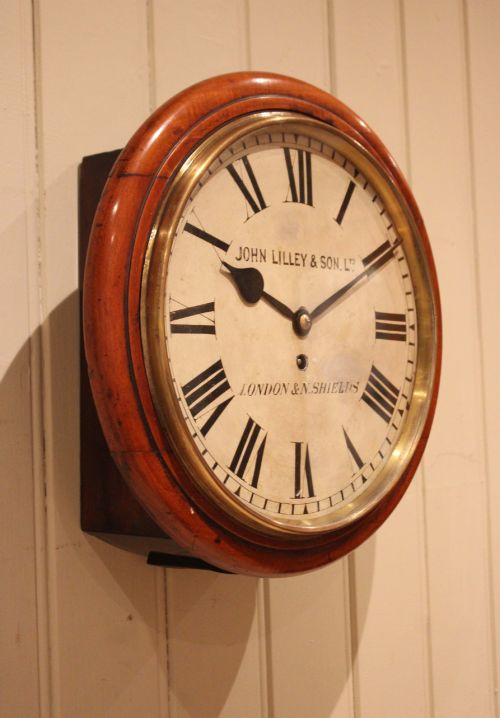
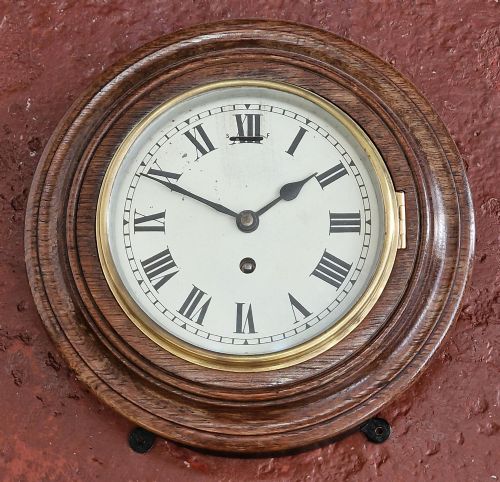
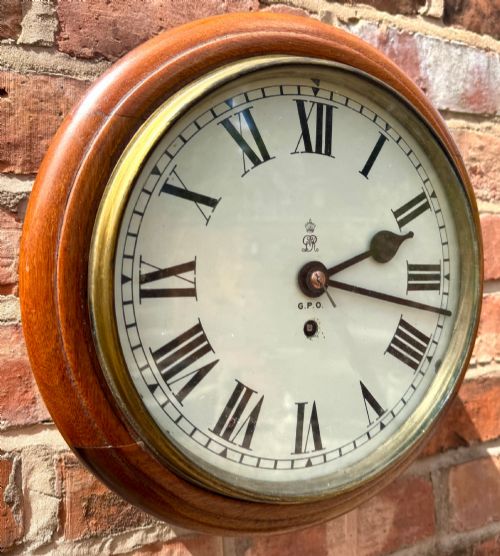
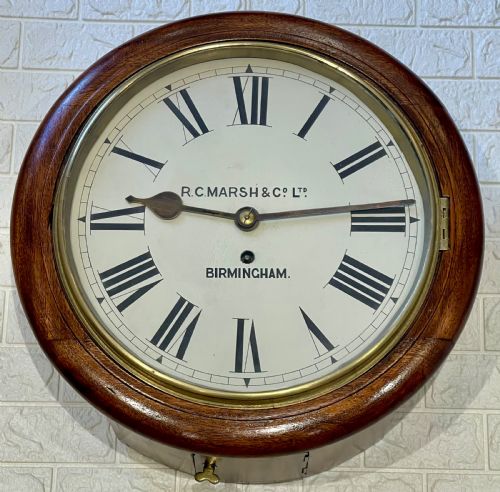
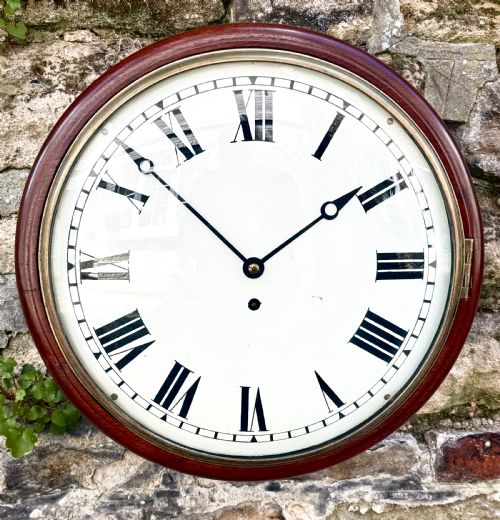
A circular wooden wall clock is a timepiece housed in a round timber frame designed to hang securely in public spaces or domestic halls. When searching for a circular wooden wall clock, a buyer encounters significant pieces spanning the Victorian era through the mid-twentieth century, including railway, postal, and school models.
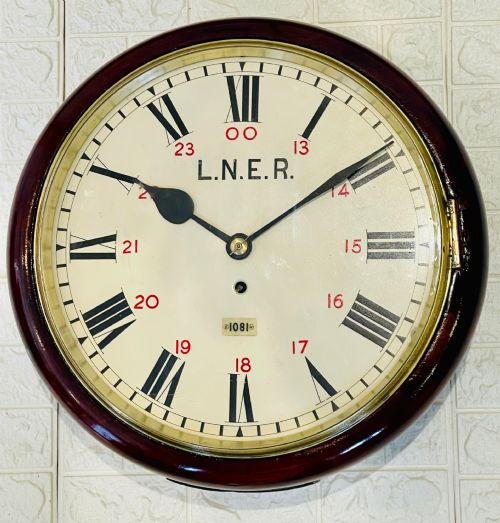
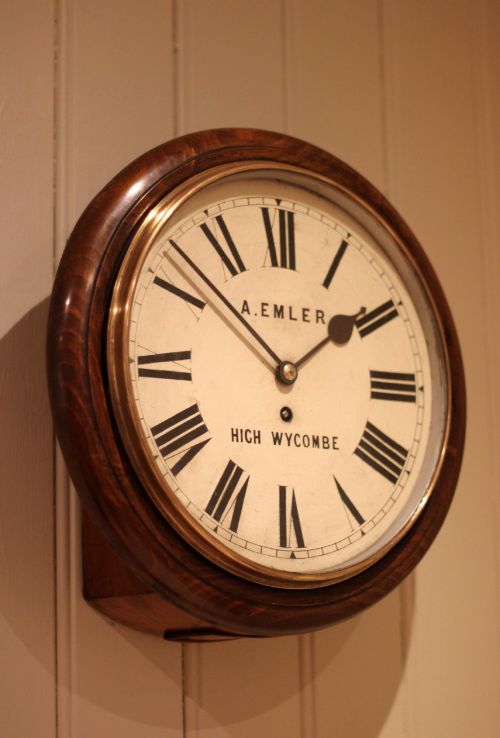
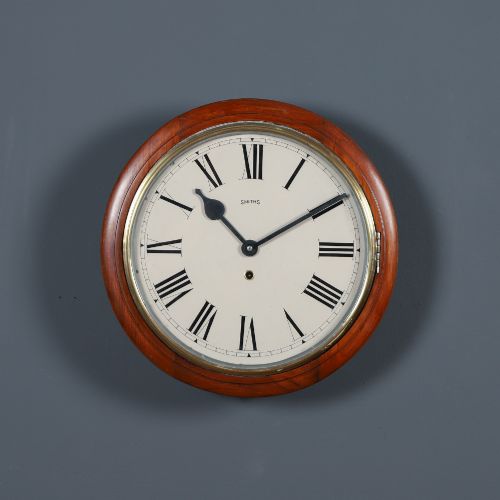
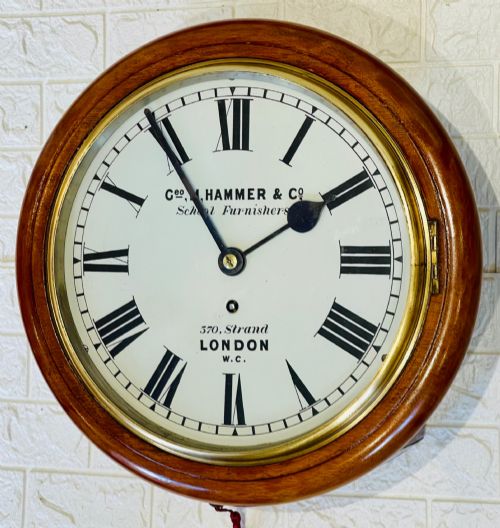
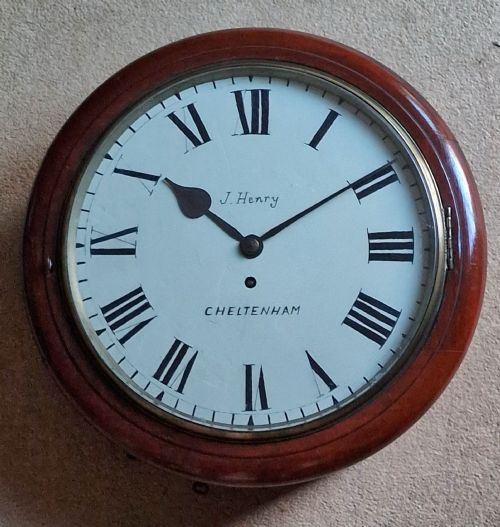
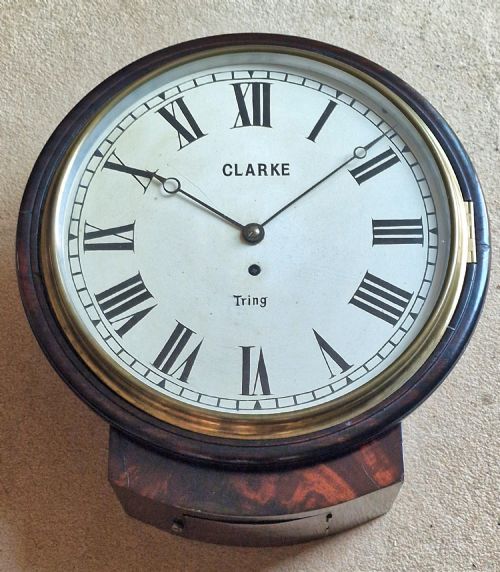
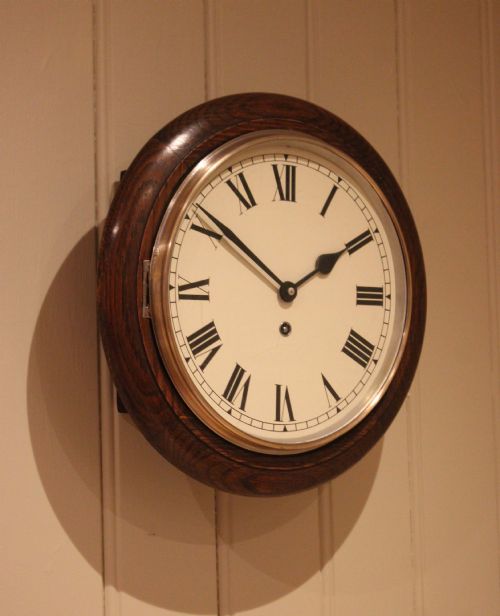
The most common examples on this page are fusee dial clocks built from mahogany or oak, often bearing the names of railway companies such as the GWR or LNER. These items combine robust timber surrounds with clear painted faces intended for quick reading from a distance.
Originating largely from English workshops and provincial makers, these clocks range from small six-inch domestic dials to substantial twenty-four-hour station timepieces. Their forms remain strictly utilitarian, prioritising legible faces and durable wooden housing over superfluous ornamentation.
How They Were Made
Makers constructed the circular frames of these clocks from solid timbers such as mahogany, oak, beech, elm, and walnut, often using steam-bent wood to achieve the characteristic round profile. These wooden surrounds protected the internal brass gear trains and glass-fronted bezels from dust and accidental knocks.
Movements relied predominantly on fusee mechanisms, which used a conical pulley and chain to maintain even tension on the gear train as the mainspring unwound. Dials were typically painted metal or wood, featuring bold Roman or Arabic numerals applied by hand to ensure maximum legibility.
Circular Wooden Wall Clock Retail Price Guide 2026
Typical asking prices for circular wooden wall clock among the pieces listed under this phrase on Sellingantiques today, from the lower quarter to the upper quarter. They describe what is for sale here now, not the wider market.
Station masters trusted these heavy wooden dials to keep trains running on time, though station tea breaks occasionally stretched a minute or two further.
What Varies in Quality
The distinction between standard utility timepieces and finer examples lies in the crispness of the timber joinery and the pedigree of the movement. High-grade models feature well-figured mahogany or walnut cases with dust-lipped bezels and precision fusee movements signed by reputable provincial or London makers.
Lesser examples display plain oak or beech casings with simpler time-only movements that lack the refined engineering of chain fusee mechanisms. Originality of the painted dial, intact maker signatures, and documented railway or institutional provenance elevate the standing of a piece considerably.
J Henry Cheltenham·George Clarke Tring·John Walker·Francis Perigal London·Payne of Tunbridge Wells·Engström by Zenith
The Circular Wooden Wall Clock Glossary
- Fusee
- A conical pulley connected to the mainspring by a chain or cord, designed to equalise the declining power of the spring as it unwinds. This mechanism ensures consistent timekeeping throughout the duration of the wind.
- Dial
- The face of the clock where the numbers and hands are displayed. On these pieces, dials are typically painted metal or wood protected by a brass bezel and glass door.
- Bezel
- The ring of brass or wood that holds the glass protecting the dial. Many hinge open to allow hand-setting and winding.
- Timepiece
- A clock that indicates the time of day without a striking mechanism for hours or quarters. Most railway and school wall clocks were built as simple timepieces.
- Railway Clock
- A robust timepiece commissioned by railway companies for use in stations, offices, and boardrooms. These often bear company initials and specific station locations on the dial.
Circular Wooden Wall Clock: Frequently Asked Questions
What is a fusee dial clock?
A fusee dial clock is a timepiece driven by a fusee movement, which uses a conical pulley and chain to regulate the power delivered from the mainspring. This system provides steady torque and more accurate timekeeping.
These clocks are housed in round wooden frames designed for wall mounting in offices, stations, and schools.
How do I wind a wall clock?
Winding requires inserting a specialised key into the winding hole on the dial face and turning it gently until resistance is met. Care should be taken not to over-wind the mainspring.
Most fusee wall clocks require winding once a week to maintain consistent operation.
Were all these clocks used on railways?
No, while a significant portion of circular wooden wall clocks originated on networks like the GWR, LNER, and British Railways, many served in post offices, schools, and domestic settings.
Station clocks usually feature company lettering painted directly onto the dial for easy identification.
How do I date a wooden wall clock?
Dating relies on examining the timber, construction methods of the case, the style of the numerals on the dial, and any maker inscriptions. Victorian and Edwardian examples often feature fusee movements in solid mahogany or oak.
Railways and government departments also stamped cases with inspection numbers or ownership marks that help narrow down the period of manufacture.