


Round Mahogany Clock
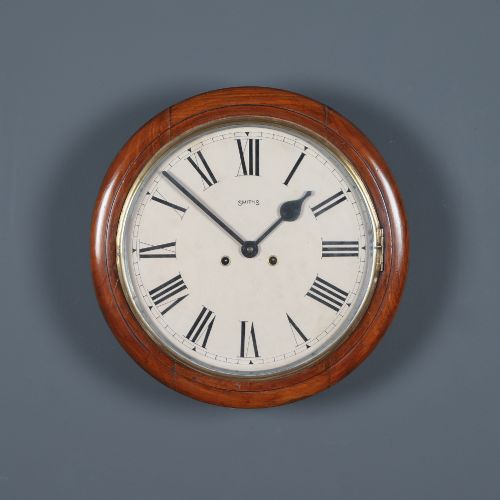
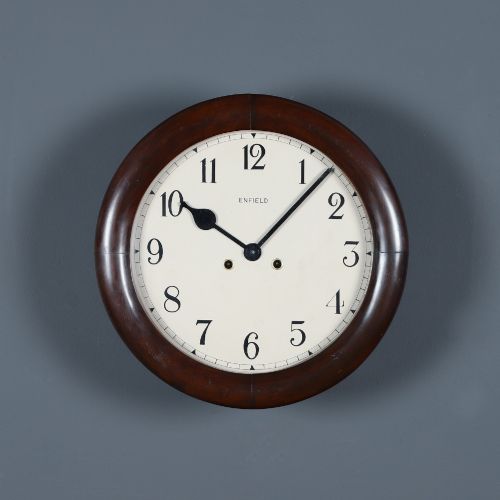
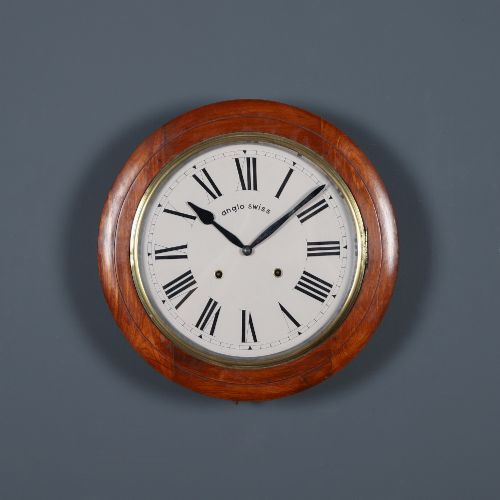
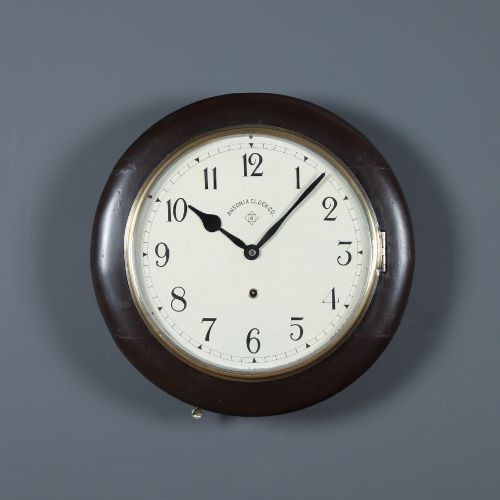
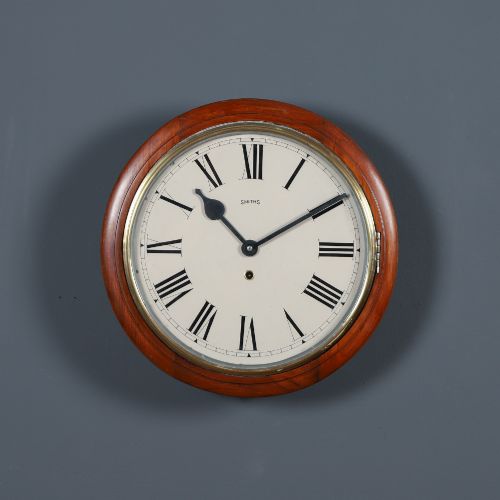
A round mahogany clock brings precise historical utility and quiet dignity to a room, offering the structured form of a station dial in deep timber.
Round Mahogany Clock
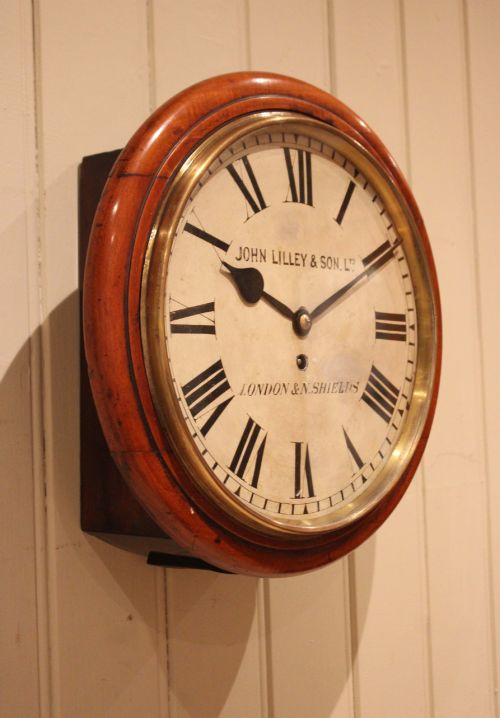
A round mahogany clock combines a circular painted or papered dial with a sturdy wooden surround, frequently taking the form of a railway station or school wall clock from the Victorian and later eras. These pieces originated primarily for public timekeeping in offices, platforms, and municipal buildings.
The version most commonly met on this page is the fusee wall clock encased in mahogany, often originating from the nineteenth century or the 1930s. Alongside these wall-mounted pieces, the evidence includes occasional longcase and bracket formats featuring the same characteristic circular face.
Materials and construction methods
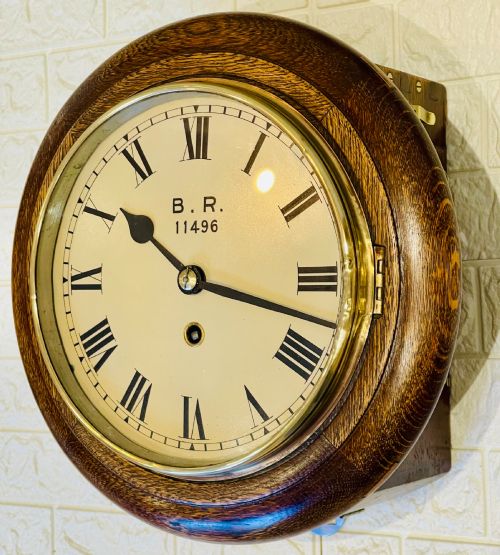
Cases are predominantly constructed from solid mahogany or flame mahogany, often paired with brass bezels that secure the protective glass over the dial. Oak and iron appear in select railway or utilitarian variants.
Movements rely on traditional fusee mechanisms or striking gear, designed to maintain even power delivery as the mainspring unwinds. Dials are typically painted, sometimes convex, and framed by substantial turned timber bezels.
Round Mahogany Clock Retail Price Guide 2026
Typical asking prices for round mahogany clock among the pieces listed under this phrase on Sellingantiques today, from the lower quarter to the upper quarter. They describe what is for sale here now, not the wider market.
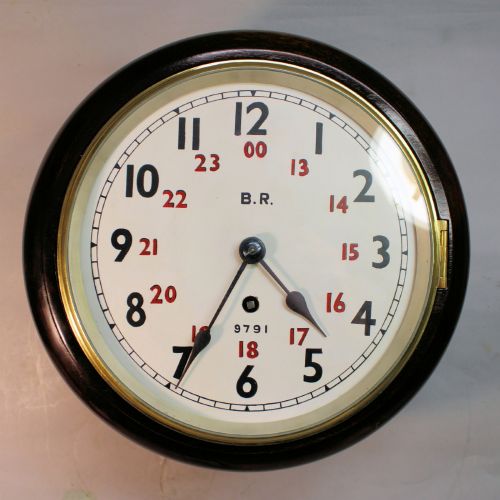
Listings feature mahogany cases alongside occasional oak and iron examples, spanning from the eighteenth-century Georgian period through to mid-twentieth-century military and railway service.
Distinctions in execution and build
Superior examples display crisp carving on the mahogany case and refined brasswork around the glass bezel, showing careful attention to proportion and joinery. Lesser pieces may feature simpler timber grain and heavier, less delicate dial lettering.
The complexity and original purpose of the movement dictate the grade, with specialised fusee or chiming mechanisms representing a higher standard of horological craftsmanship than standard commercial timepieces.
Benjamin Peers Chester·Whitelaw of Edinburgh·John Walker·William Long of Bristol
The Round Mahogany Clock Glossary
- Fusee
- A conical pulley used in mechanical clocks to equalize the driving force of the mainspring as it winds down. This mechanism ensures more consistent timekeeping throughout the duration of the wind.
- Dial
- The face of the clock where the hours and minutes are displayed. On these pieces, they are frequently painted and protected by a glass cover.
- Bezel
- The ring of brass, wood, or metal that holds the glass in place over the dial. It often hinges open to allow access for setting the time.
- Timepiece
- A clock that tells the time without any striking or chiming mechanism. These movements are simpler in construction than their striking counterparts.
- Longcase clock
- A tall pendulum clock enclosed in a wooden case resting on the floor. The evidence shows these utilising circular dials within traditional tall housings.
Round Mahogany Clock: Frequently Asked Questions
Where were these clocks originally used?
Many of these pieces served in railway stations, schools, and municipal offices where clear visibility and reliable timekeeping were essential for daily operations. Their robust construction suited high-traffic public spaces.
Over time, similar models found their way into domestic settings, transitioning from railway platforms and offices into hallways and living rooms.
How do fusee movements operate?
A fusee movement uses a conical pulley connected to the mainspring via a cord or chain. This clever device compensates for the dropping tension of the spring as it unwinds.
By regulating the torque supplied to the gear train, the clock maintains a steady and accurate rate until it requires winding again.
How should I hang a heavy wall clock?
Secure mounting requires fixing directly into solid wall studs or using heavy-duty wall anchors appropriate for the weight of the mahogany case. The clock must hang level to ensure the pendulum swings freely.
Checking the weight distribution and using the designated hanging bracket on the back of the case ensures the timepiece remains safely supported.
How do I wind the clock correctly?
Use the appropriate winding key to turn the arbor slowly until you feel firm resistance, taking care not to overwind the mechanism. Regular winding at consistent intervals helps maintain optimal performance.
Consulting the specific requirements of the fusee or timepiece movement ensures the mainspring remains in good condition over years of use.