

Victorian Dial Wall Clock
A victorian dial wall clock brings practical engineering and dependable timekeeping into domestic and public spaces through robust circular dials and timber surrounds.
Victorian Dial Wall Clock
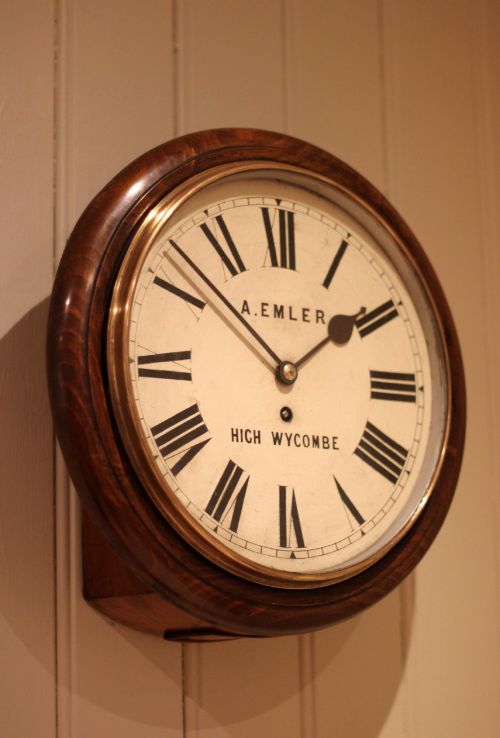
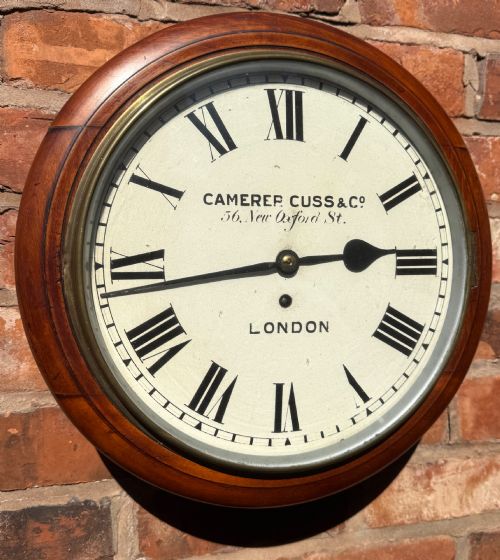
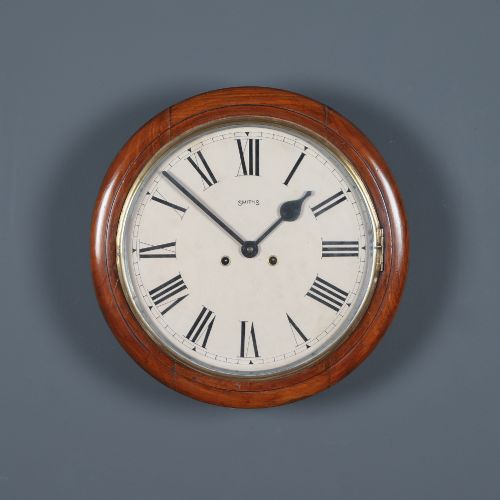
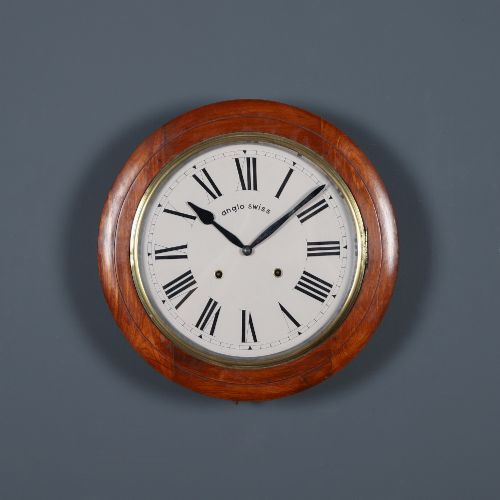
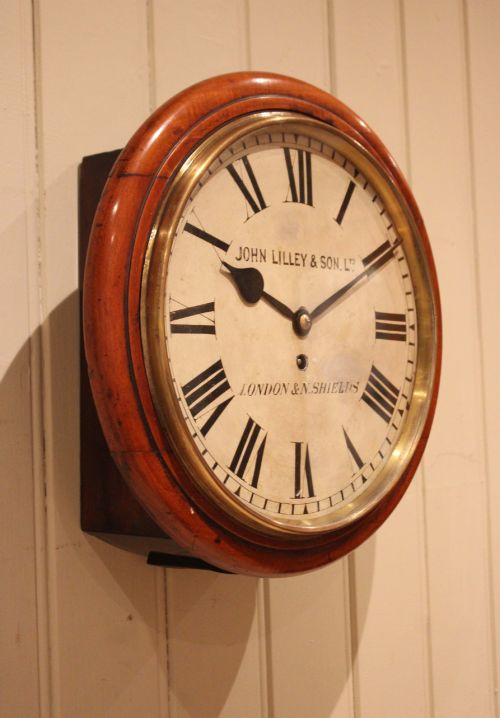
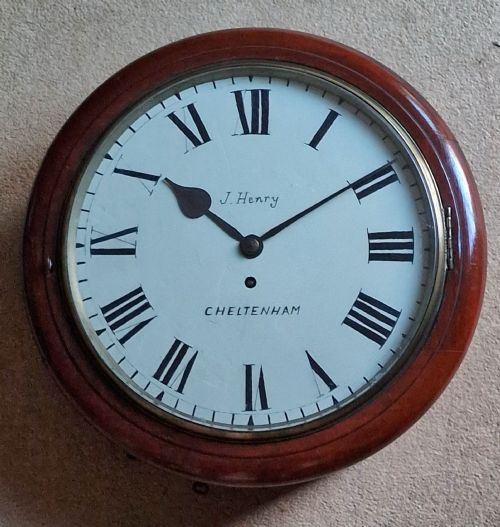
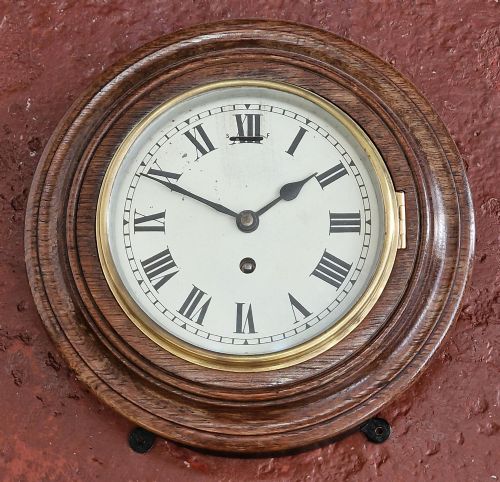
A victorian dial wall clock is primarily defined by a circular face designed for clear legibility in homes, offices and railway stations. The most frequent examples encountered on this page feature straightforward round wooden cases housing reliable 19th century movements.
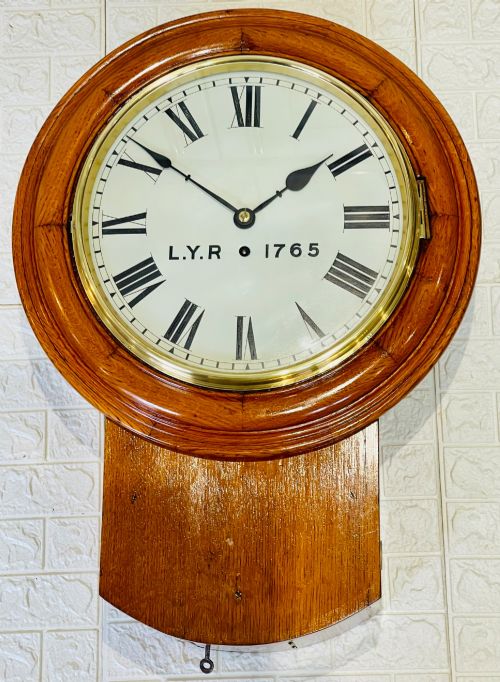
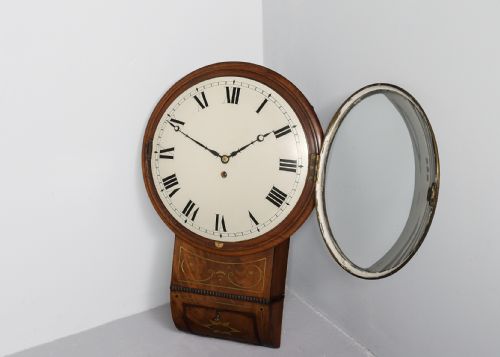
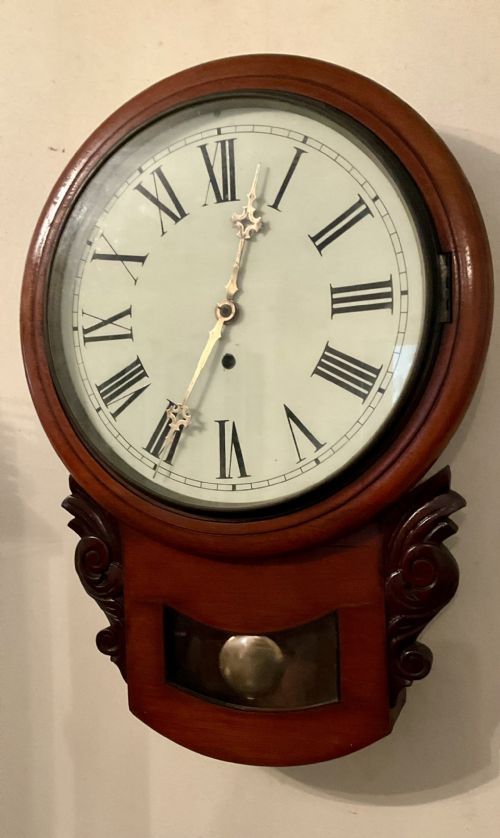
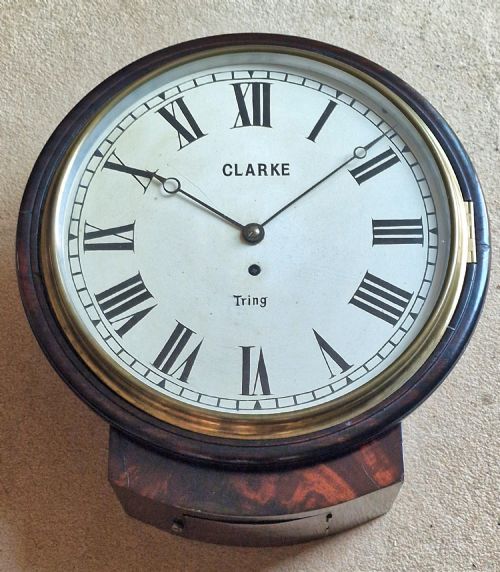
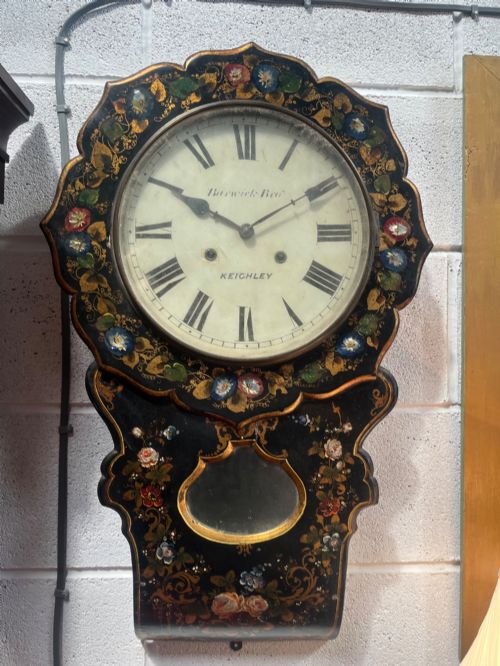
Many specimens record actual transport history, bearing inscriptions from railway companies such as the Great Western Railway or the London, Midland and Scottish Railway. Alongside these utility models, drop dial variants extend downward to accommodate a pendulum box, often executed in richer timbers.
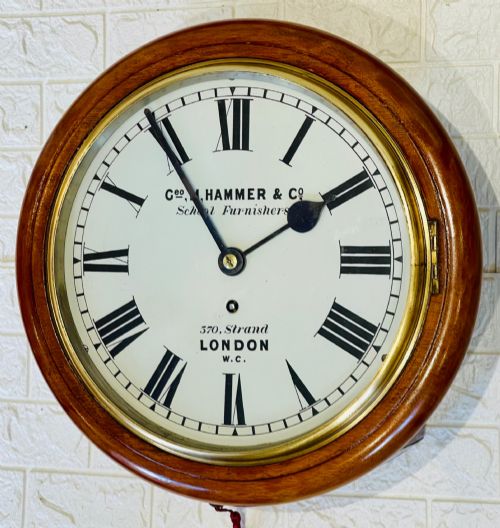
The scale ranges from compact eight-inch domestic pieces to substantial fifteen-inch station regulators designed to be read across a crowded platform. Regional makers frequently signed the painted iron or enamel faces, connecting individual provincial towns directly to London watchmaking traditions.
How They Were Made
Cases rely heavily on durable native and imported hardwoods like mahogany, oak, walnut and rosewood, sometimes shaped with brass inlay or carved details. These timbers provide the structural stability necessary to house heavy brass gear trains and protect the delicate escapement mechanism.
The fusee movement stands as the central mechanical technique, utilising a conical pulley and chain to equalise the declining power of the mainspring as it unwinds. This system ensures consistent torque and accurate timekeeping across the eight-day duration typical of these clocks.
Listings feature mahogany, oak, rosewood and walnut cases housing mechanical fusee movements across the Victorian period.
What Varies In Quality
The standard of timber selection and case construction sets individual examples apart, ranging from plain utilitarian pine and oak to highly figured rosewood and meticulously inlaid mahogany. Cabinetmakers applied varying degrees of hand-carving and decorative framing to distinguish domestic pieces from institutional ones.
Movement finishing and signature provenance also dictate distinction, with recognised makers delivering superior gear cutting, engraved backplates and finely painted convex dials. The crispness of the dial lettering and the integrity of the original brass bezel indicate the initial investment put into the piece.
Camerer Cuss And Co London·J Henry Cheltenham·George Clarke Tring·D And J Wellby London·Henry Harris Monythusloyn·Chave Taunton·Joseph Bird Stroud·Halliday And Rich Bridgwater·John Walker London·Dent·William Burch·Boyce Of Exmouth·Martin Of Swansea·Charles Frodsham·James McCabe Royal Exchange London
The Victorian Dial Wall Clock Glossary
- Fusee
- A conical pulley connected to the mainspring by a chain or cord, designed to maintain equal driving force on the clock movement as the spring unwinds. This mechanism is crucial for high precision in 19th-century timekeepers.
- Drop Dial
- A clock case featuring an extended lower section below the circular face to house the swinging pendulum. This form accommodates the weighted drop while offering decorative timber surfaces.
- Convex Dial
- A dial face that curves outward toward the viewer, commonly glazed to reduce glare and improve legibility from multiple angles in large rooms.
- Bezel
- The brass or wooden ring that holds the protective glass pane over the clock face, frequently hinged for easy access to the hands.
Victorian Dial Wall Clock: Frequently Asked Questions
What is a fusee dial clock?
A fusee dial clock utilises a special conical pulley and chain drive to regulate the power delivered from the mainspring to the gear train. This mechanical arrangement ensures steady force and reliable accuracy.
Such movements were standard in British timekeeping throughout the nineteenth century, particularly for railway stations and public offices where precision mattered.
How do I wind an eight day clock?
An eight day clock requires winding via the dial face using a dedicated key every week to maintain tension on the mainspring. Care must be taken not to overwind the movement.
Most examples on this page rely on this single chain or wire fusee setup for straightforward domestic maintenance.
Were railway clocks different from home clocks?
Railway clocks prioritised instant legibility, robust mahogany or oak cases, and strict mechanical reliability to coordinate train timetables across the network. They often bore company initials and station locations directly on the painted dial.
Domestic versions might employ finer rosewood veneers, brass inlay, or drop dial configurations suited to residential parlours.
What does drop dial mean?
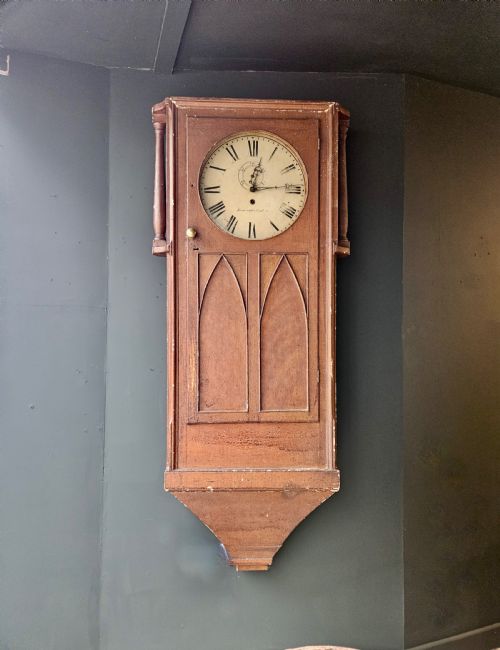
A drop dial describes a clock where the circular dial sits above an extended wooden trunk that encloses the swinging pendulum. This configuration balances the visual weight of the face.
Cabinetmakers utilised this layout extensively during the Victorian era for both wall-hung timepieces and striking variants.