



Black Wooden Wall Clock
These black wooden wall clock examples span Victorian houses and industrial offices, offering dark timber presence and mechanical timekeeping.
Black Wooden Wall Clock
A black wooden wall clock brings dark timber cases and dial surrounds into domestic or institutional rooms, taking primary form as wall-mounted timepieces rather than floor-standing furniture. Buyers investigating a black wooden wall clock encounter items originating across the nineteenth and twentieth centuries, spanning periods from the Victorian era through to the nineteen-twenties and nineteen-fifties.
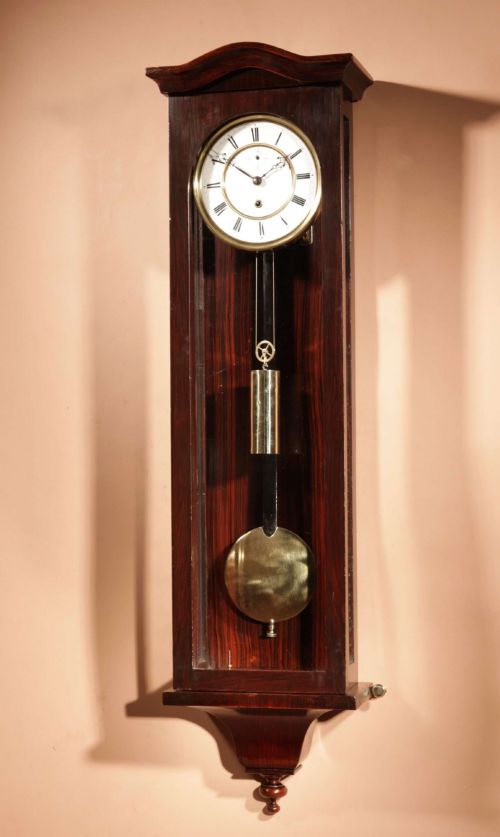
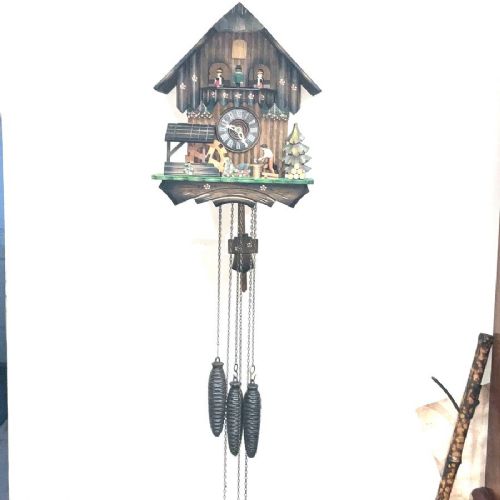
The selections predominantly showcase Black Forest traditions alongside British railway models and Vienna regulators, bringing carved walnut, oak, and painted wood into play. These pieces range from decorative domestic cuckoo clocks with mechanical musical automatons to robust fusee dial clocks designed for twenty-four-hour public and transport use.
Materials and construction
Makers utilised timber varieties such as walnut, oak, and carved wood to build robust structural cases, often finishing surfaces with paint or dark polish. Brass components and glazed glass doors protected the internal movements and white enamel or painted dials.
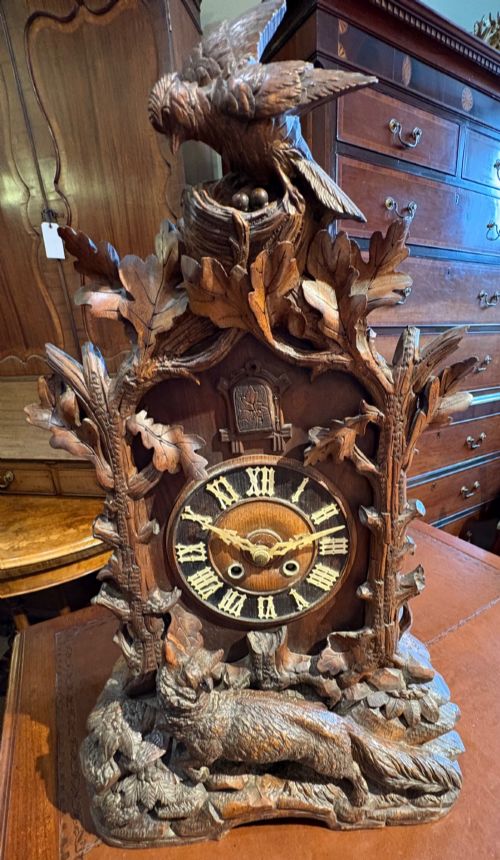
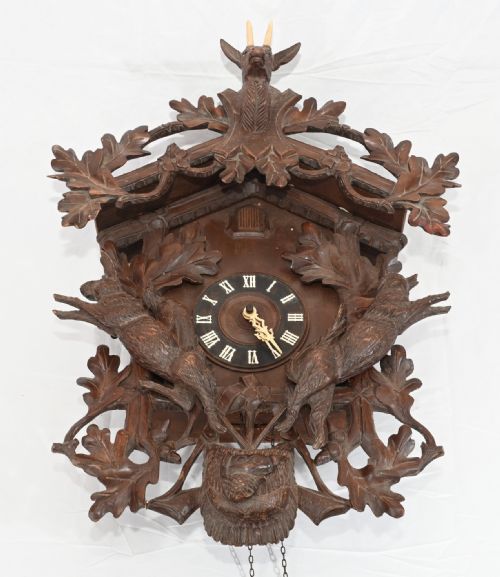
Carving techniques defined Black Forest production, applying detailed foliage and animal motifs directly into the wooden housings. Fusee movements and mechanical gear trains were fitted into heavy cases to ensure steady timekeeping across long operational hours.
Some clocks feature mechanical musical automatons designed to surprise listeners with sudden birdsong.
Assessing quality
Quality rests upon the depth of hand-carved detail in the wooden case and the precision of the integrated clockwork movement. Superior examples exhibit crisp carving without timber splitting, alongside clean enamel dials and well-preserved brass fittings.
Industrial fusee models achieve distinction through robust engineering and clear, legible painted clock face displays. Lesser examples show simpler case construction with minimal decorative carving and replacement parts within the mechanism.
Philipp Haas·Johann Baptist Beha
The Black Wooden Wall Clock Glossary
- Fusee
- A conical pulley used in clock movements to maintain even force on the gear train as the mainspring unwinds. This mechanism is typical in better quality nineteenth-century wall clocks.
- Vienna Regulator
- A high-precision pendulum clock originating in Austria, characterised by a long glass-fronted case and weight-driven movement. These pieces display refined dial work and formal timber framing.
- Cuckoo Clock
- A striking clock, traditionally from the Black Forest region, that uses pipes and bellows to imitate the call of a bird. They frequently feature elaborate carved wooden foliage and mechanical automatons.
- Enamel
- A glassy substance fused to metal dial plates to provide a durable, glossy white surface for clock numerals. It prevents the discoloration common on untreated metal faces.
- Automaton
- A mechanical figure or device that moves automatically, often integrated into musical cuckoo clocks to animate birds or figures on the case.
Black Wooden Wall Clock: Frequently Asked Questions
How do I wind a fusee wall clock?
Fusee wall clocks require a winding key inserted into the dial face to tension the mainspring via the internal chain or wire system. Care must be taken not to overwind the mechanism.
Most traditional movements run for eight or twenty-four hours depending on the specific fusee design, requiring regular attention to maintain accurate timekeeping.
Where should I hang a heavy wooden wall clock?
Heavy timber and brass clocks must be secured directly into wall studs or masonry using appropriate fixings to support the total weight. Hanging them securely prevents vibrations from disturbing the pendulum.
Placement should avoid areas subject to dampness or direct sunlight, which can dry out and crack antique wooden cases over time.
How do I identify a Black Forest clock?
Black Forest clocks are distinguished by hand-carved wooden cases featuring naturalistic motifs such as leaves, birds, and stags. The construction relies on traditional German woodworking techniques.
Many of these pieces incorporate mechanical cuckoo calls or musical movements housed behind dark carved walnut or oak facades.
What maintenance do antique clock movements need?
Antique mechanical clock movements benefit from professional cleaning and lubrication every few years to prevent wear on the brass gear teeth and pivots. Keeping the case level ensures the pendulum beats evenly.
Dust should be gently brushed from the carved wooden exterior using a soft, dry cloth without applying modern liquid polishes.