




Traditional Circular Wall Clock
Traditional circular wall clock examples combine utilitarian purpose with dependable engineering, offering a commanding presence for any room.
Traditional Circular Wall Clock
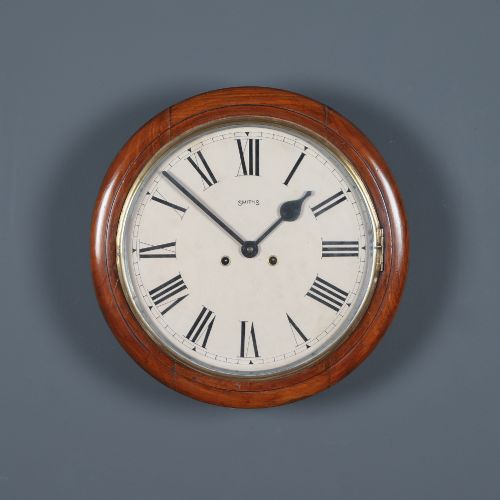
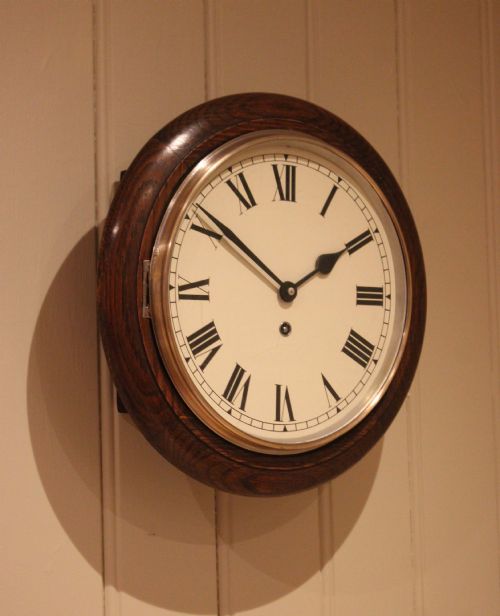
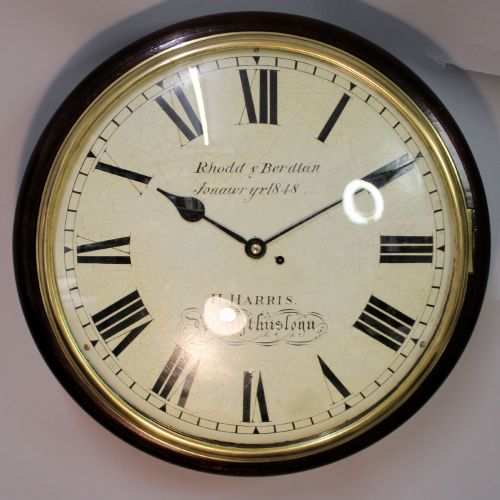
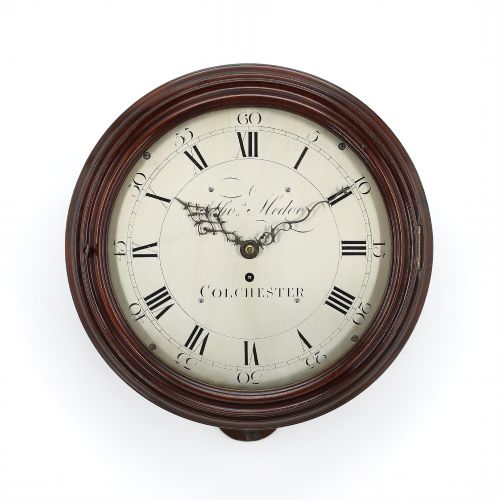
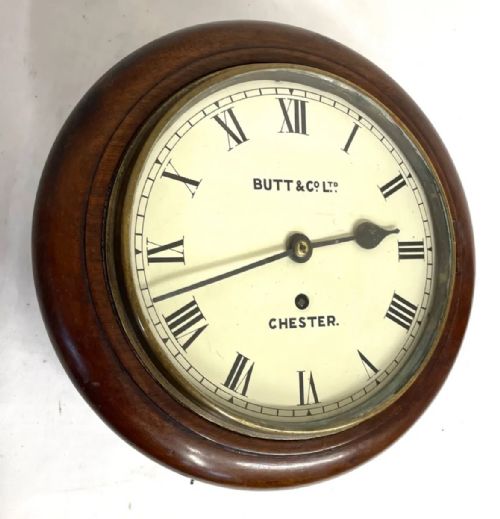
A traditional circular wall clock is primarily represented on this page by round dial timepieces originating from the Georgian, Victorian, and early twentieth-century periods. These timepieces take the form of dial clocks, railway clocks, and school clocks designed for both public spaces and domestic interiors.
The materials utilised in these pieces reflect durability and function, predominantly featuring mahogany and oak cases paired with brass fittings and glass-covered faces. Examples range from simple timepieces to striking models by notable makers.
Buyers will encounter variations spanning from eighteen-hundreds examples up to nineteen-thirty productions. The overarching aesthetic remains rooted in traditional British, Edwardian, and Regency styles.
Materials and Construction
Cases are predominantly constructed from dense timbers such as mahogany and oak, shaped into circular housings designed to protect the movement. Painted wood and iron also appear in utilitarian applications.
Dial faces are protected by curved or flat glass set within brassbezels. Metal components include steel and brass within the intricate gear trains that drive the hands.
Materials documented across the inventory include mahogany, oak, brass, iron, steel, and painted metal.
Assessing Quality in Circular Clocks
Quality diverges notably in the sophistication of the movement, particularly when comparing standard timepieces to fusee movements or chiming mechanisms. The precision of the maker's signature inscribed on the dial also indicates the tier of the piece.
Cabinetwork separates basic production from superior examples, visible in the selection of timber grain, the weight of the brass bezel, and the crispness of the painted metal or wooden dial.
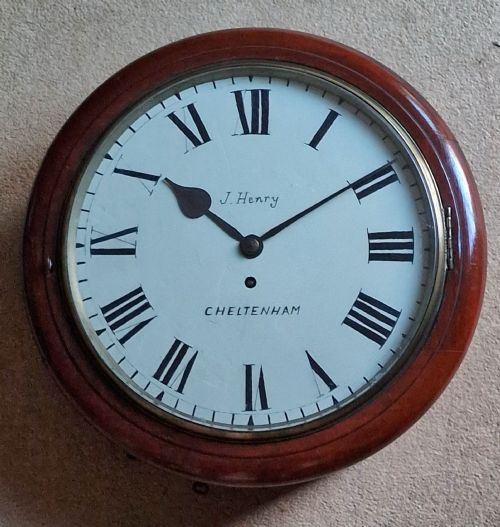
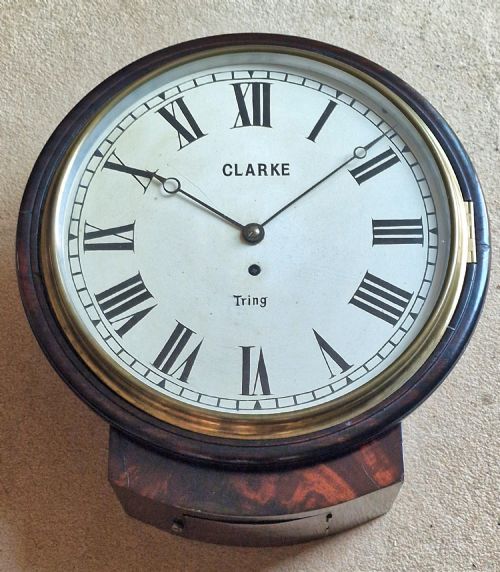
J Henry Cheltenham·George Clarke Tring·Henry Harris·Thomas Hedge·John Walker·J C Ralls·Butt Co Ltd·John Wilson·Palmer and Co·Sly Weymouth·J Beckett
The Traditional Circular Wall Clock Glossary
- Fusee
- A conical pulley used in mechanical clocks to maintain an even pull on the movement as the mainspring unwinds. This mechanism improves timekeeping accuracy across the power reserve.
- Dial Clock
- A wall clock featuring a prominent circular face and a short drop case or trunk. They were widely used in railway stations, schools, and offices.
- Verge escapement
- An early type of clock escapement mechanism that controls the release of power in the gear train. It is typically found in earlier Georgian timepieces.
- Convex dial
- A clock face that curves outward toward the viewer. This design reduces glare from windows and gas lighting.
- Railway clock
- A robust timepiece deployed by transport companies for strict scheduling. These clocks prioritize high legibility and dependable fusee movements.
Traditional Circular Wall Clock: Frequently Asked Questions
How do fusee movements work?
A fusee movement employs a conical drum and a cord or chain to equalise the diminishing power of the mainspring as it unwinds. This ensures consistent torque is delivered to the gear train.
Such mechanical refinement allows the clock to maintain steady timekeeping from a full wind down to the final hours.
Where were dial clocks used?
These round wall clocks served practical roles in railway stations, schools, offices, and domestic hallways where clear time visibility was essential. Municipal buildings and railway platforms relied heavily on their robust design.
Their straightforward circular format made them easy to read from a distance in busy environments.
How do I date a wall clock?
Dating relies on examining the timber of the case, the style of the dial lettering, and the mechanical configuration of the movement. Georgian and Victorian examples often display distinct hand-painted wooden or metal dials.
Maker signatures and regional attribution stamps inscribed on the dial or movement plates further narrow down the decade of production.
Are convex dials original?
Convex dials were utilised in nineteenth-century clocks to prevent glare from surrounding light sources, particularly gas lighting and large windows. Their outward curve is a period-correct feature.
Such dials are paired with matching curved glass bezels to fit the protruding painted metal surface.