M. C. Taylor has dated this Victorian Fusee Dial Clock to the 19th Century.
Also having a shaped pendulum rod and passing 'one-at-the-hour' striking on a top-mounted bell.
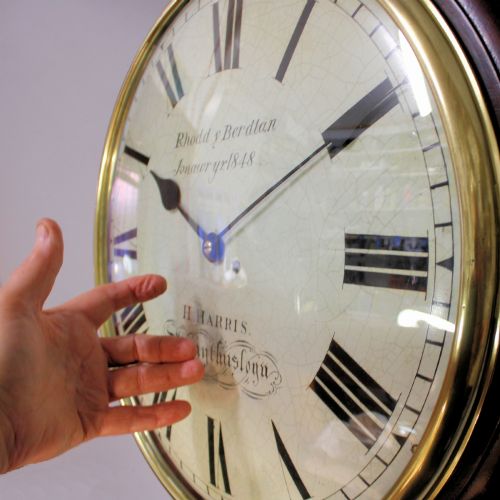
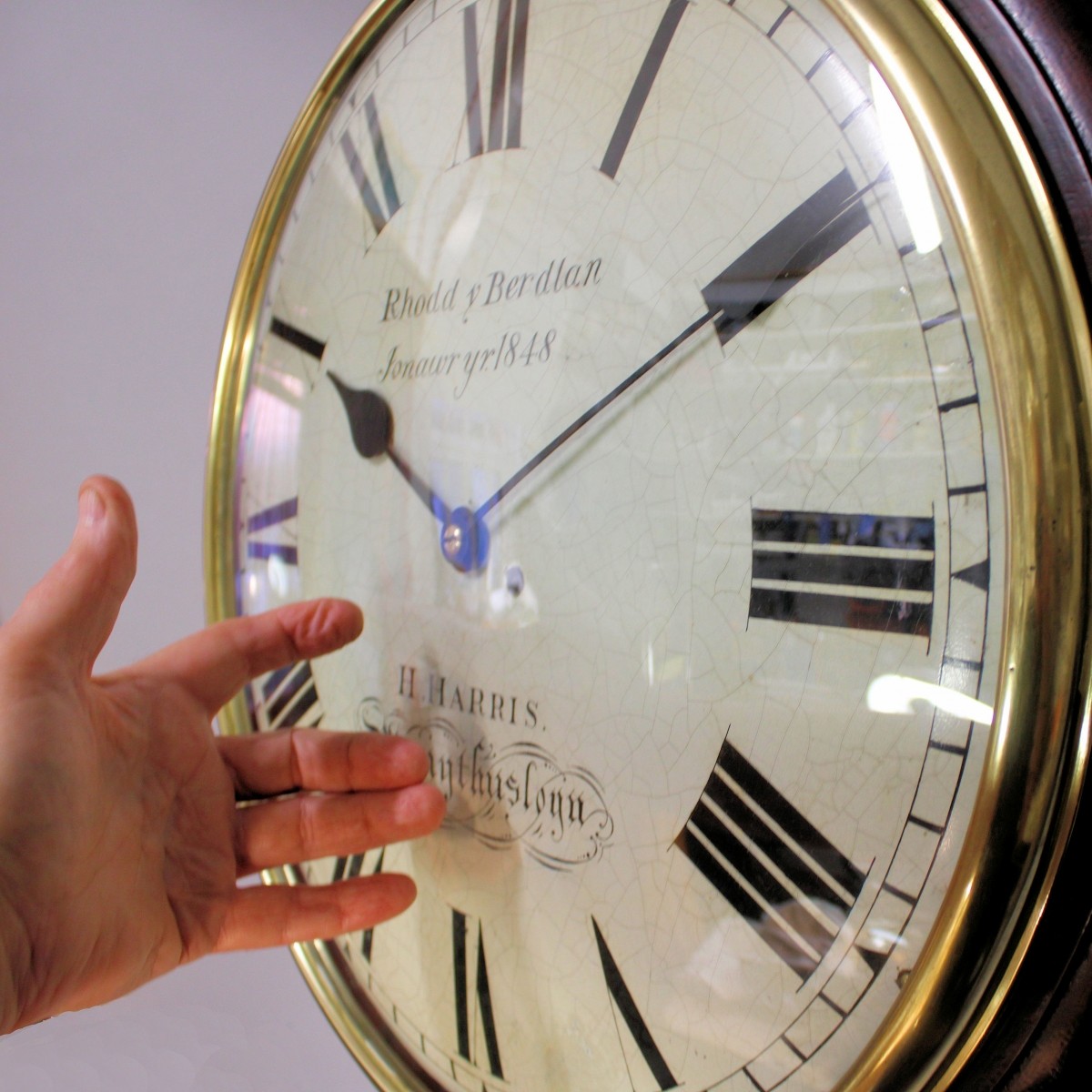
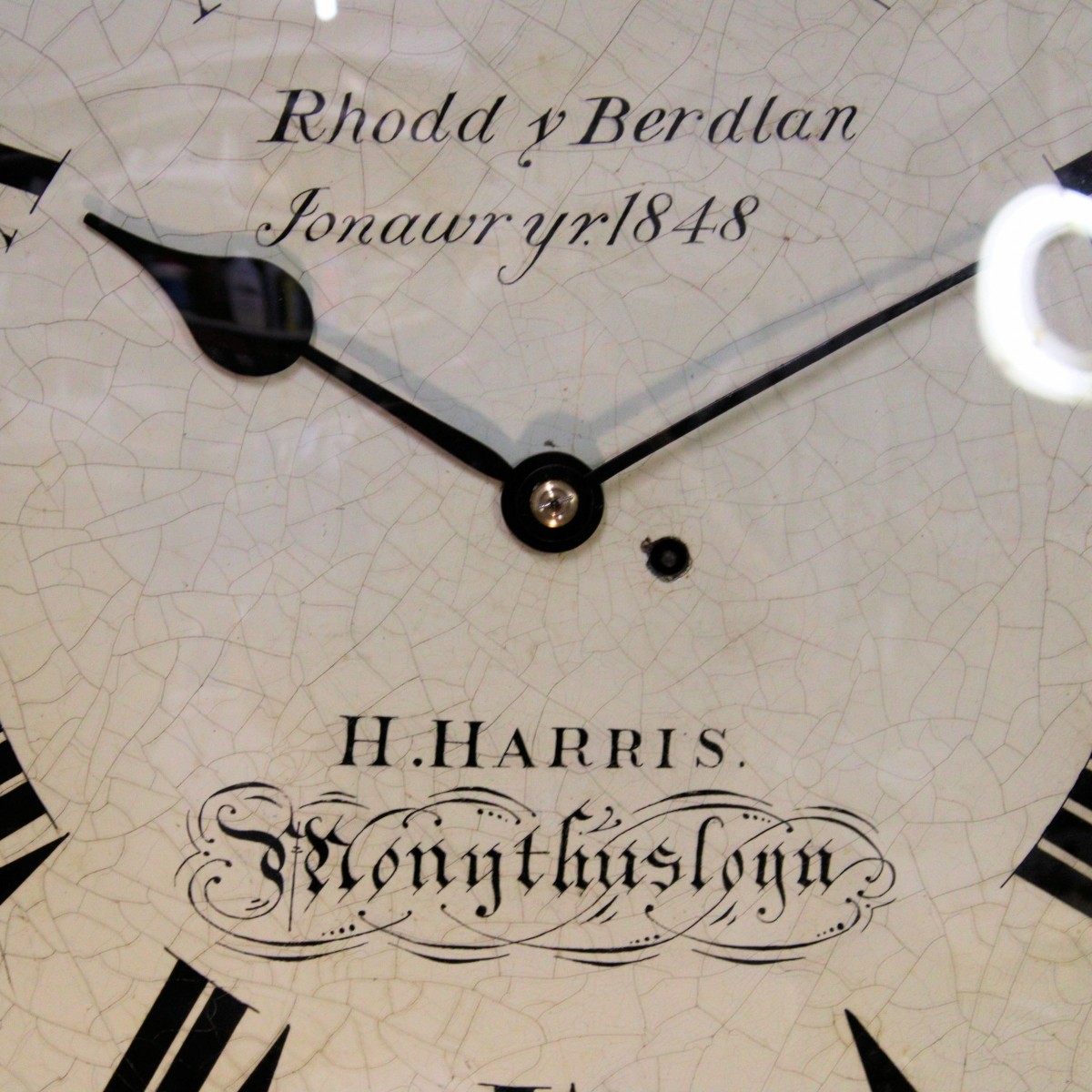
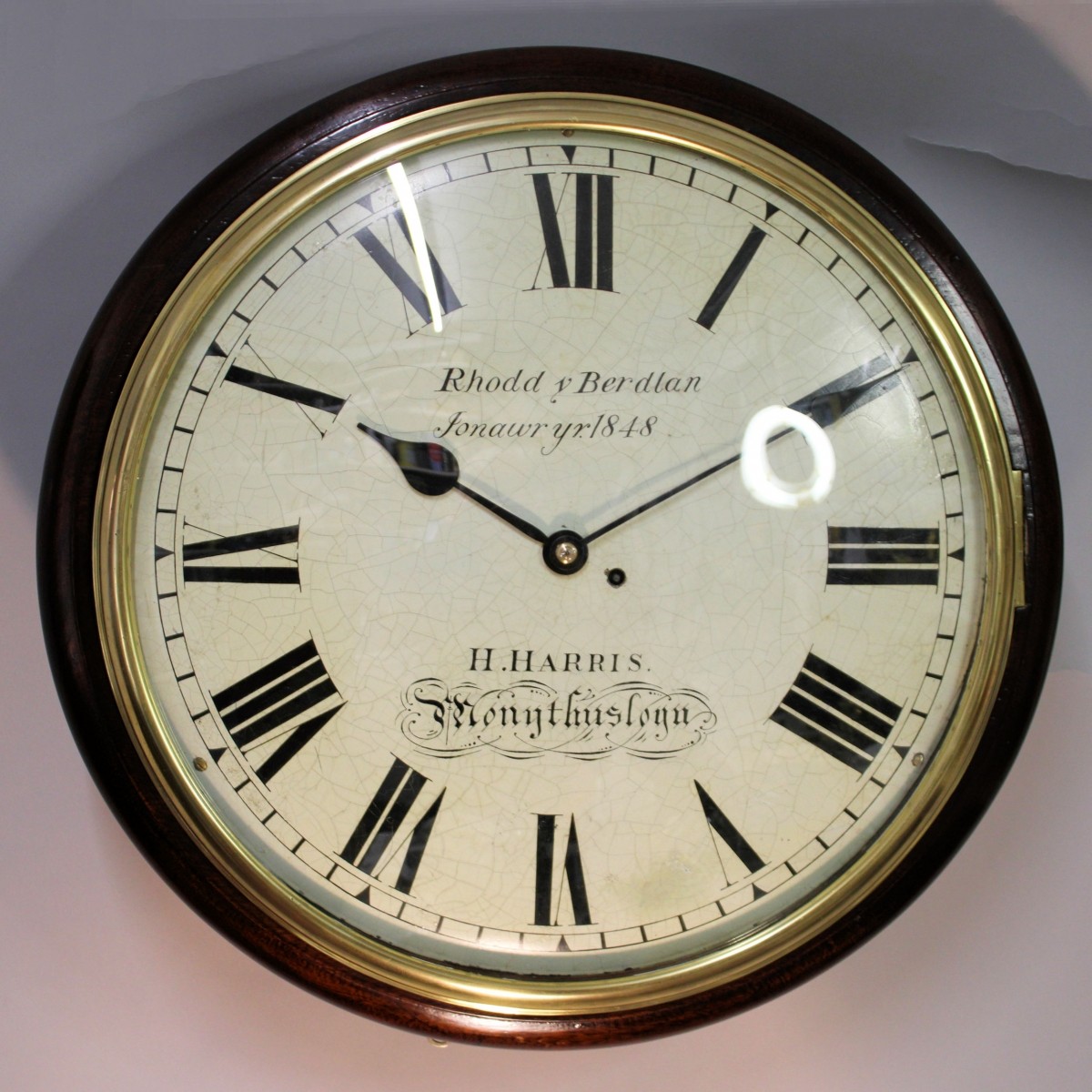
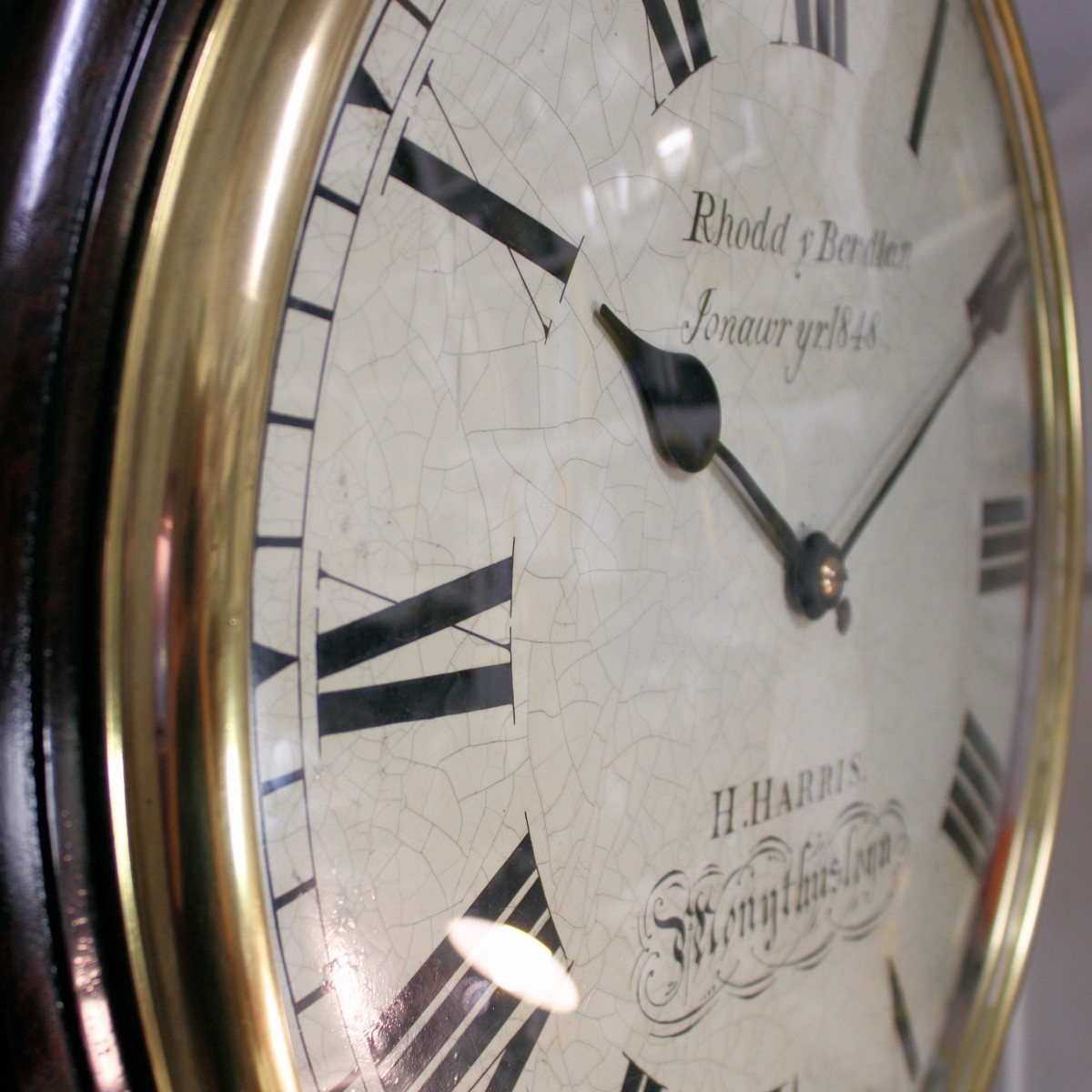
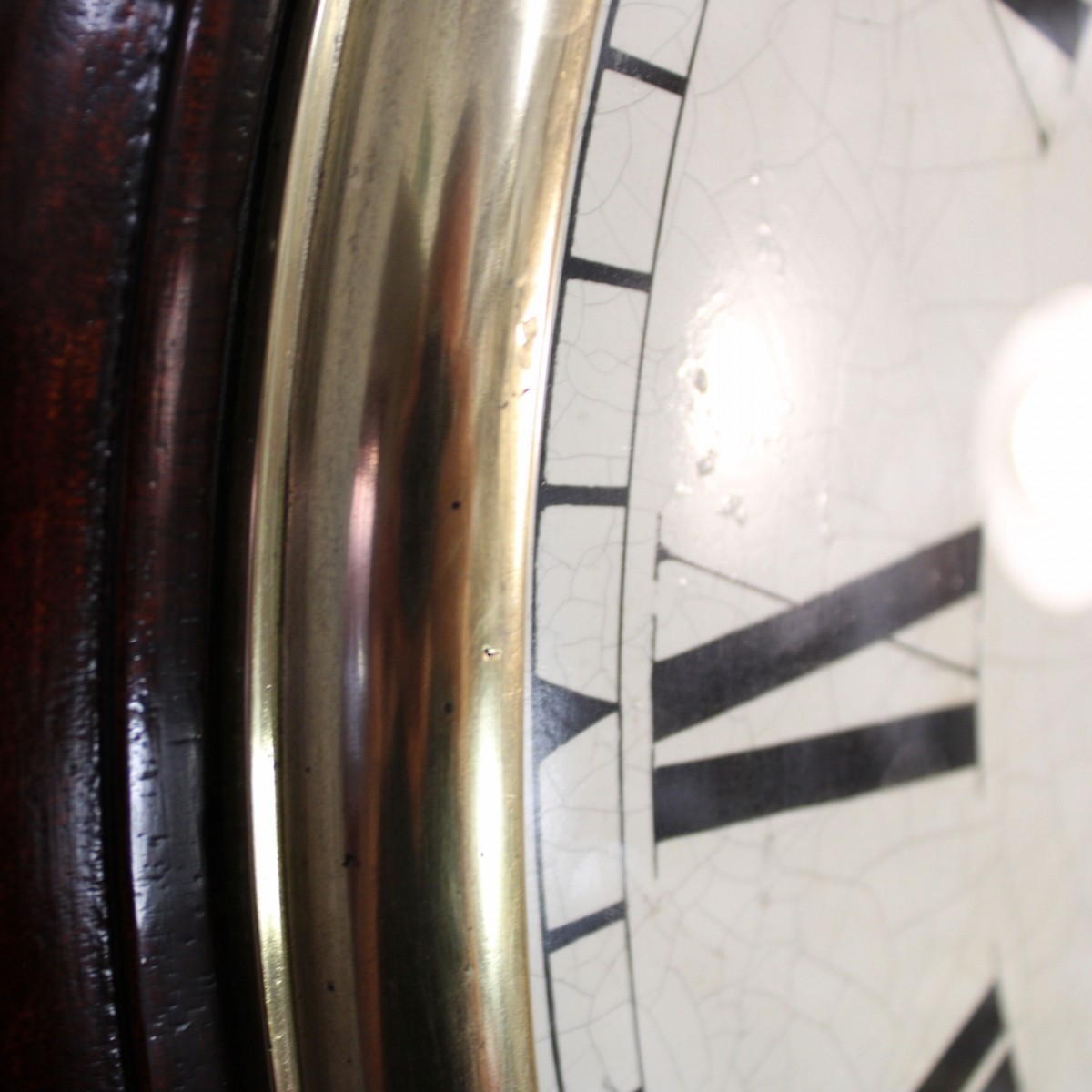
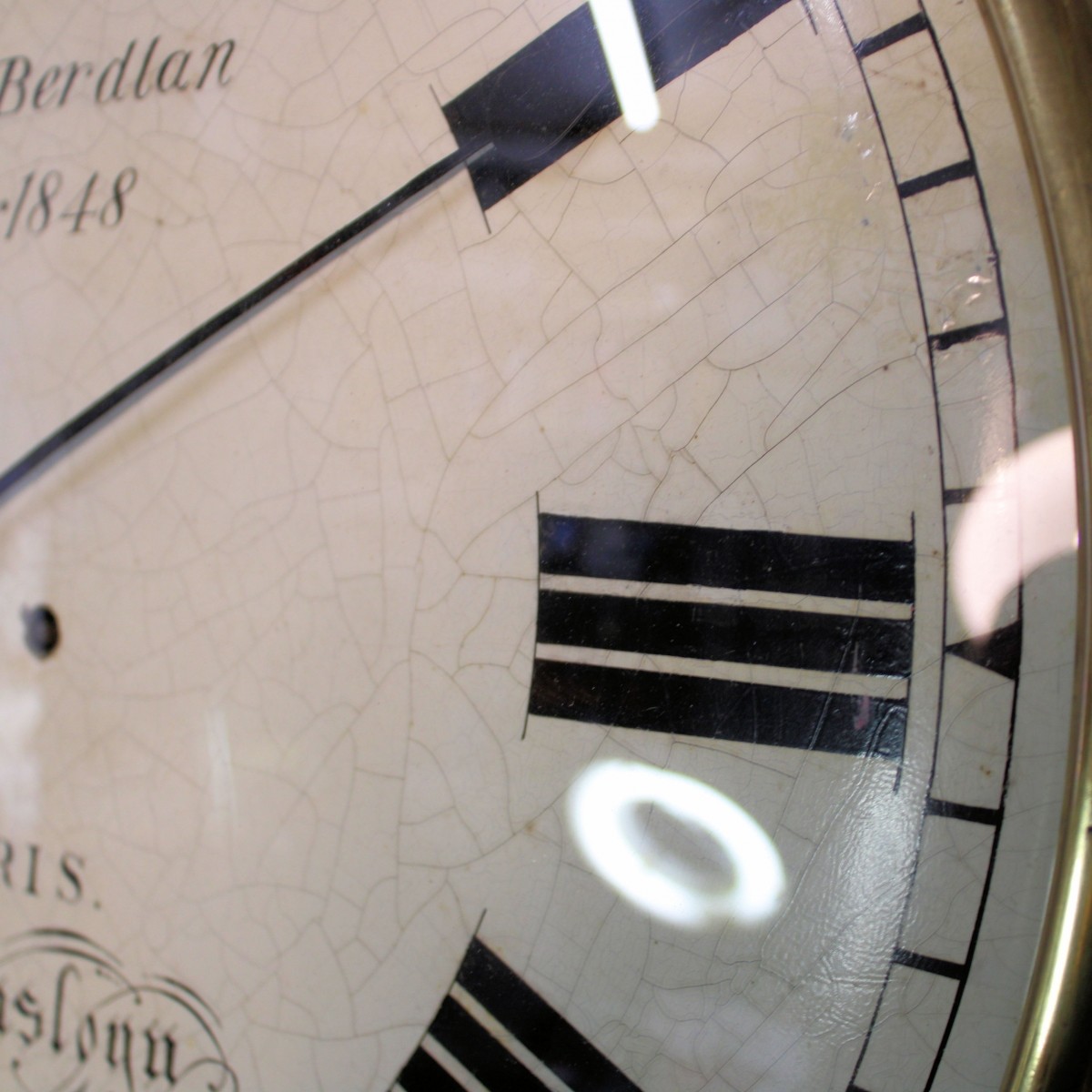
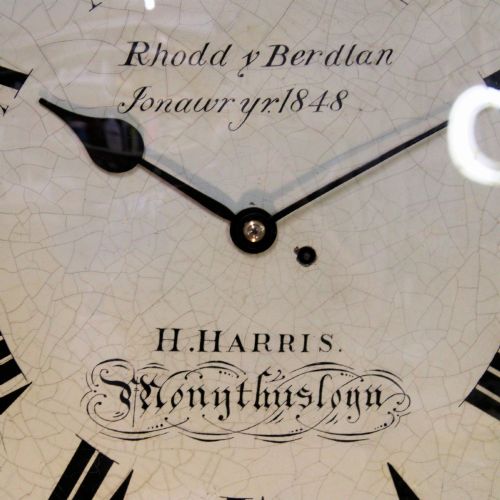
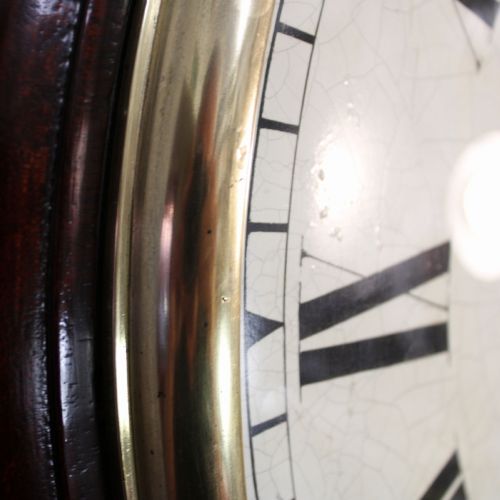
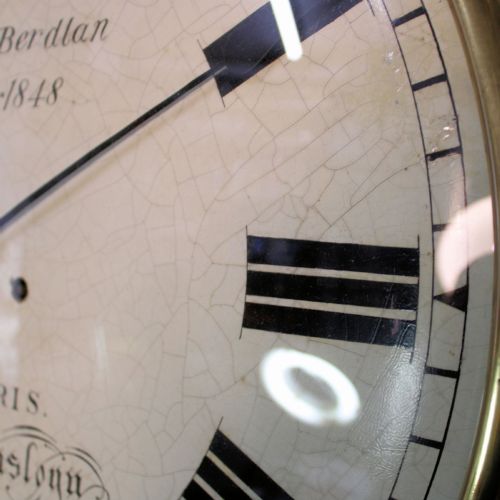
Behind an 18" diameter, convex painted iron dial with a cast iron 'false dial' stamped "FINNEMOORE & SON" (the dial makers). The dial retains its base paint and has an outer, divided minute track with triangular hour marks and tall Roman hour numerals. Above the centre is written in Welsh "Rhodd y Berdlan. Jonuwr yr 1848" Which translates to "The gift of The Orchard. January 1848". Below the centre is written with the maker's signature of "H. HARRIS (of) Monythusloyn". The blackened steel hands are of matching 'spade' style and the dial is behind an extremely substantial, polished and lacquered, cast brass, hinged bezel with a convex glass.
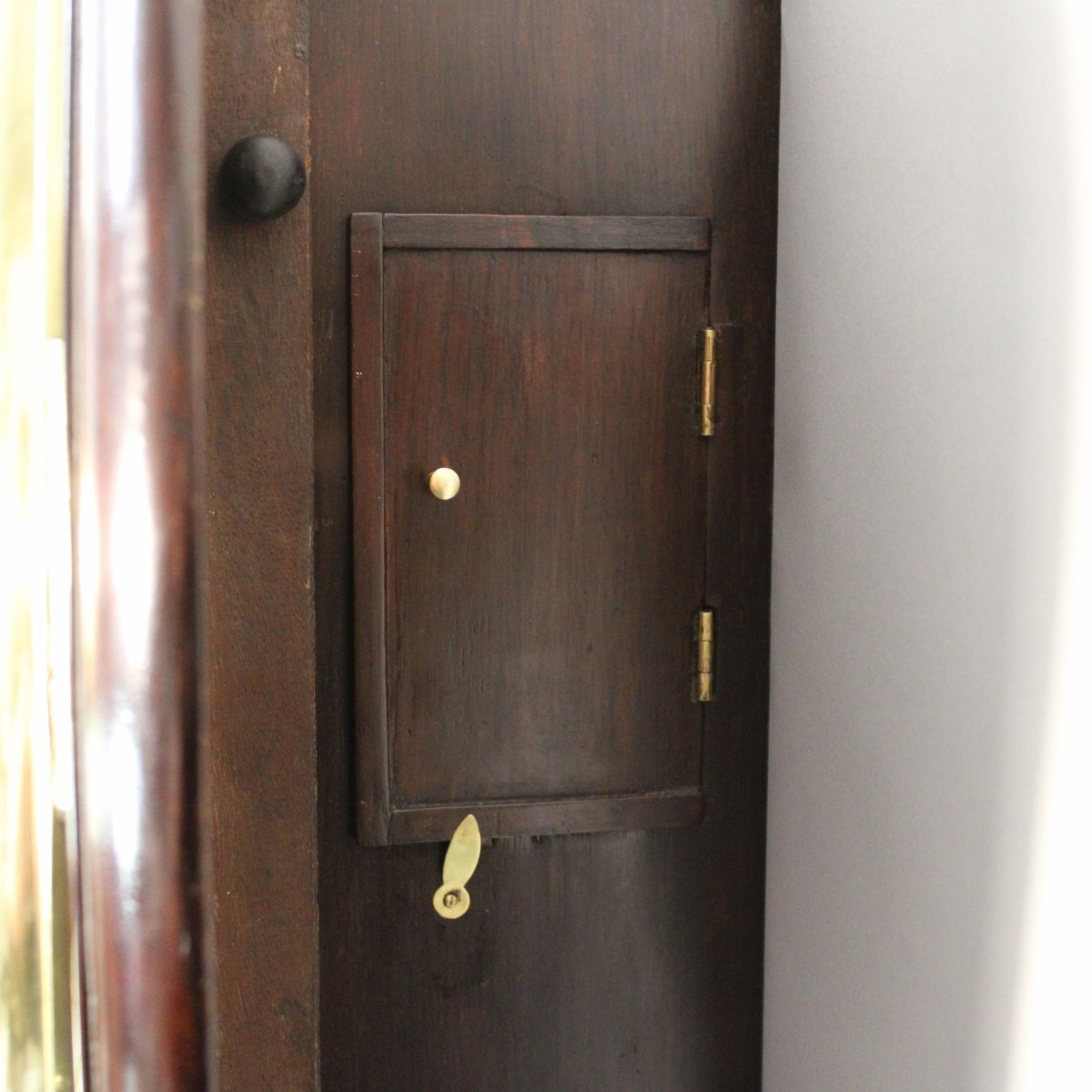
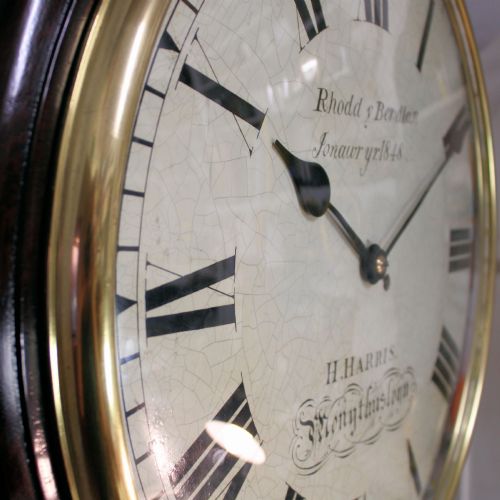
The mahogany case incredibly has a one-piece dial surround with turned seatings for the dial and bezel and a rounded edge. The pegged-on backbox has hinged access doors to both sides also, a curved bottom that has a conforming and cockbeaded, hinged and locking pendulum regulation door.
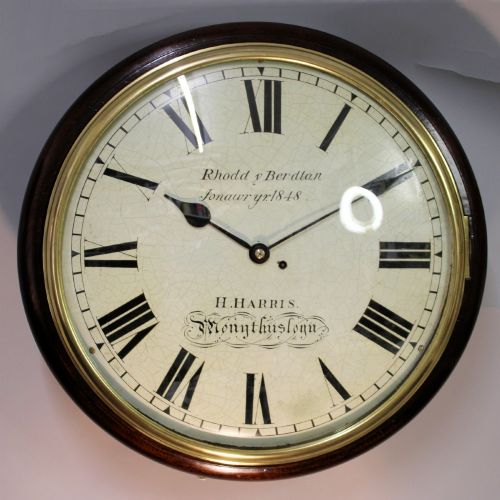
The dial writing likely refers to a specific local property or farmstead known as "Y Berllan" (The orchard). In the South Wales valleys, many significant gift commissions for Henry Harris clocks were named after the farm or family estate that provided the funds for the gift.
Why "Berdl" instead of "Berll"?
In the mid 1800's, the Welsh double "l" was sometimes written or transcribed phonetically by local painters. The sound can sometimes be interpreted as a sof "dl" or "tl" in specific regional accents of the Sirhowy Valley. "berllan" was a common name for a farmstead or house. It is highly probable that the clock was a gift from the residents of a local farm called Berllan (The Orchard) to commemorate a new year or a family milestone in January 1848.
The Clockmaker, Henry Harris:
Finding the above information on a clock signed "H. Harris Monythusloyn" is a rare piece of local history. It places the clock at the very start of Harris' career when he was serving the agricultural and early industrial families of the Mynyddislwyn parish. Though recorded, little is known of him. Upon looking through our shop window, this clock immediately jumps out at you above all others.
Dimensions: 22" in diameter x 8 1/2" deep to the glass high point.
Condition: The movement is totally original and in working order however, due to decades of having little or no maintenance, it requires a complete overhaul/restoration (this is included in the purchase price). The dial fortunately retains its original paintwork but shows signs of repair due to historcial corrosion to the iron plate - this would likely have been caused by a damp atmosphere over the years in somewhere such as the village hall or chapel. The base paint has the most wonderful crazing but is sound and there is a small chip caused by the winding key around the winding hole. There is repair discolouration between the numerals V and VI. The bottom door lock works perfectly and the bezel hinge is substantially secure which is so important with such a heavy casting and glass: the bezel and the case are already restored to a high degree and are in excellent condition. This is an excellent opportunity to purchase a real 'gem'.
Price: The price includes full overhaul/restoration and guarantee.
For further information please contact us at
info@bournemouthclocks.co.uk
M. C. Taylor has dated this Victorian Fusee Dial Clock to the 19th Century.
Clockmakers and restorers established 1987
You can view the stock and full dealer information on the M. C. Taylor Profile Page
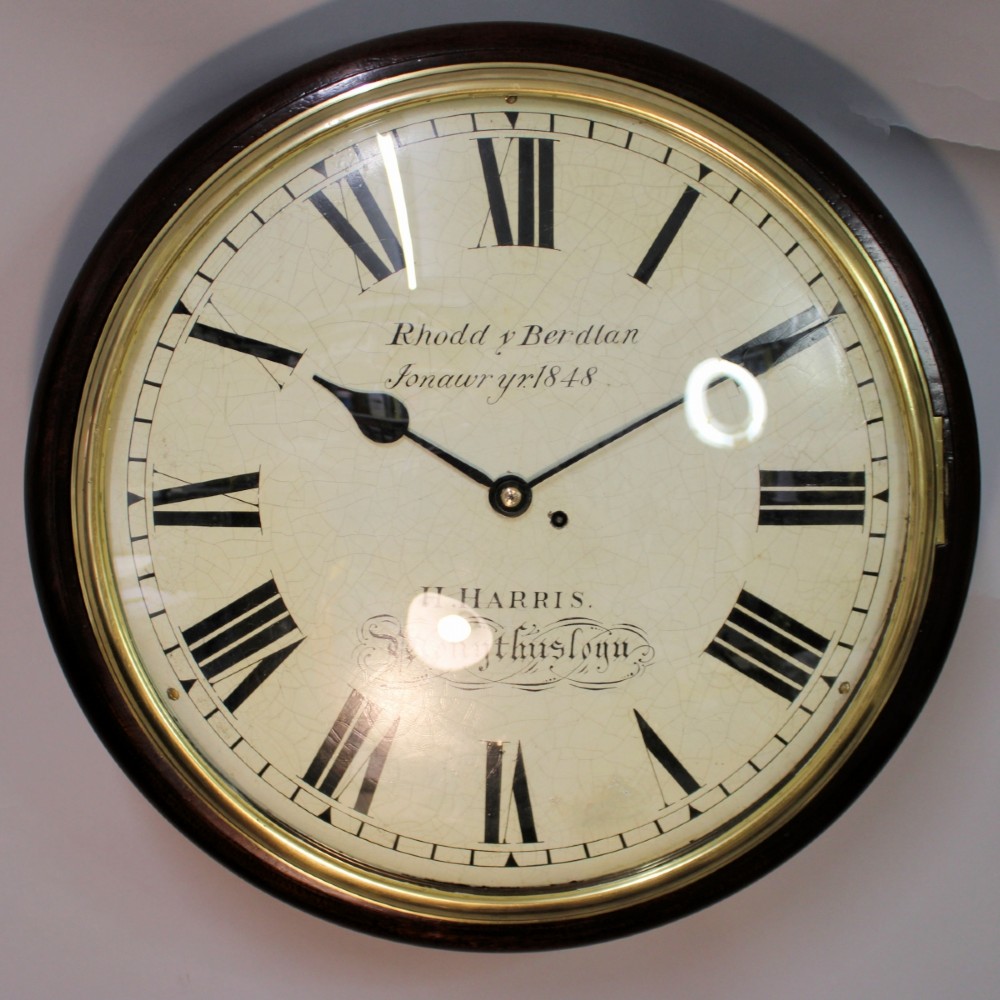
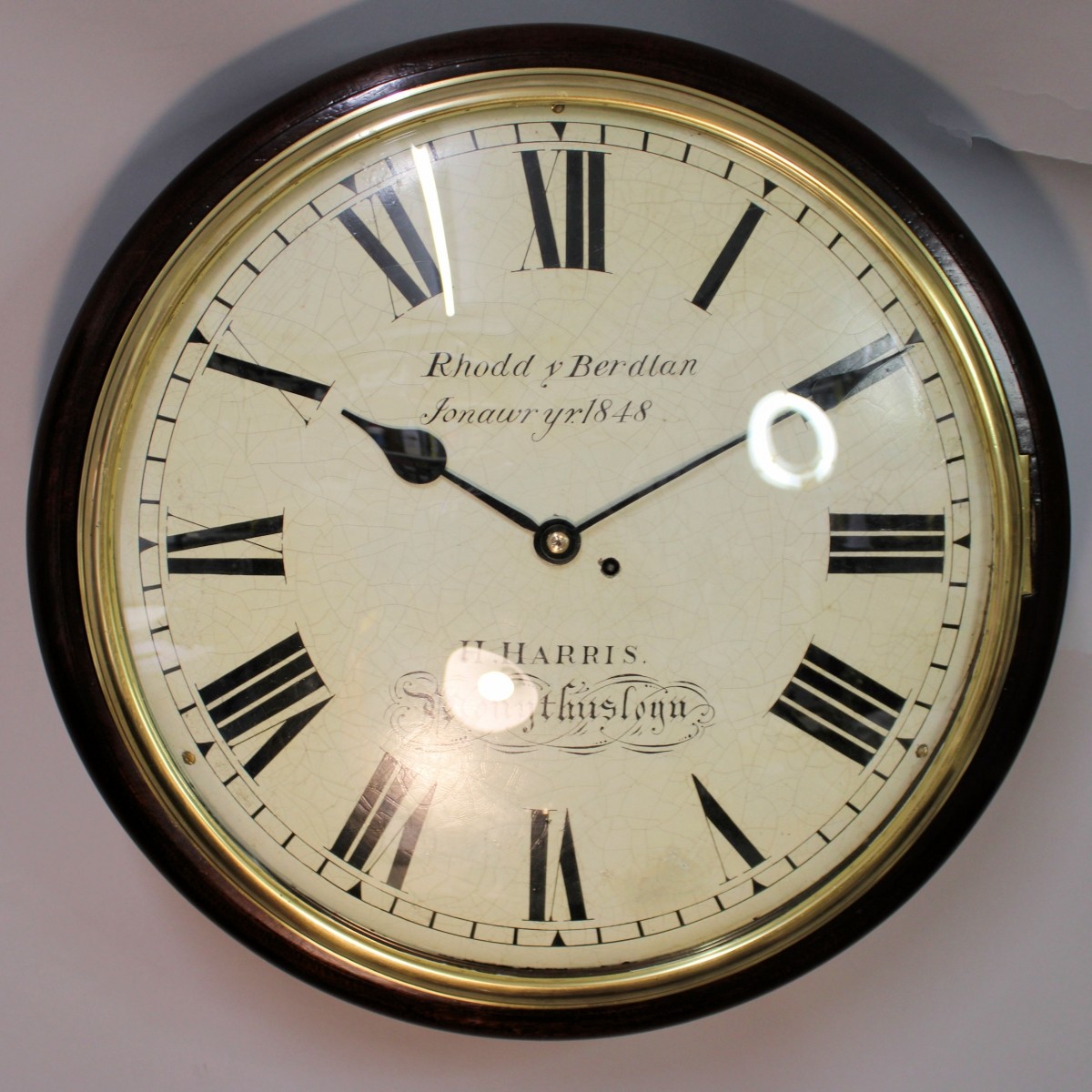
A Very Large and Magnificent, Fusee Wall, 'Dial Clock' by the Welsh Maker: Henry Harris of Monythusloyn. Circa 1848.