




Painted Dial Timepiece
A painted dial timepiece offers a distinct visual rhythm to a room, combining traditional craft with reliable domestic utility.
Painted Dial Timepiece
A painted dial timepiece brings together functional horology and decorative craft, appearing across wall-mounted, desk, and mantel formats in this selection. Buyers seeking a painted dial timepiece will encounter diverse interpretations ranging from early pocket watches to substantial wall-mounted school and railway clocks.
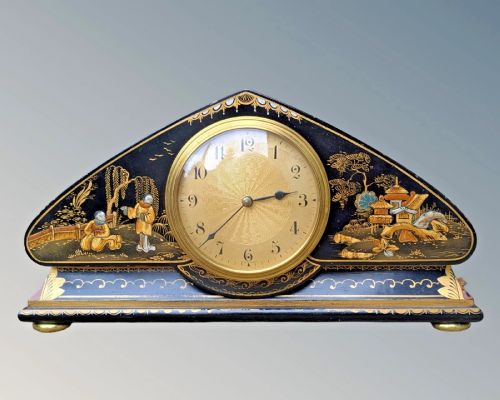
The objects span multiple centuries and stylistic traditions, including Georgian, Victorian, Chinoiserie, and Art Deco examples. Mahogany and lacquered wood feature prominently in the larger cased examples, alongside brass and gilt metal details.
Origin points vary across British, French, and Swiss workshops, with regional makers contributing distinct regional characteristics. The painted face serves as both a practical indicator and a primary decorative element across every surviving piece.
Distinctions in craftsmanship and preservation
Quality reveals itself in the crispness of the hand-painted numerals and the proportional balance between the case timber and the dial face. Superior examples maintain original dial surfaces without heavy restoration, preserving the subtle brushwork of the period.
The sophistication of the internal movement dictates the tier of the piece, where fine fusee mechanisms and signed maker plates elevate the object. Case integrity, original brass bezels, and undisturbed surface patination further separate standard examples from finer items.
Painted Dial Timepiece Retail Price Guide 2026
Typical asking prices for painted dial timepiece among the pieces listed under this phrase on Sellingantiques today, from the lower quarter to the upper quarter. They describe what is for sale here now, not the wider market.
One pocket watch hides its painted dial inside a horn back case, proving that even a quick check of the time once required shedding an outer layer.
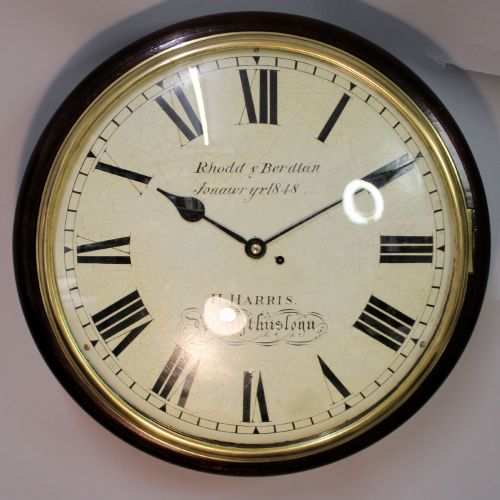
Henry Harris of Monythusloyn·Rene Lalique·Alfred Drocourt·William Long of Bristol
The Painted Dial Timepiece Glossary
- Fusee
- A conical pulley used in clock mechanisms to equalise the driving force of the mainspring as it unwinds. This device ensures more consistent timekeeping throughout the duration of the wind.
- Bezel
- The metal ring that holds the glass protecting the dial face in place. On better pieces, this is hinged and cast from solid brass.
- Chinoiserie
- A European decorative style influenced by Chinese art and design, frequently expressed through lacquered wood cases and painted motifs. It was especially popular in British clock production.
- Pair cased
- A watch construction featuring two separate fitted cases, where an inner case holds the movement and an outer protective case is covered in horn or leather. This method protected early pocket watches from dust and damage.
- Ormolu
- Gilded bronze used for decorative mounts on French mantel clocks and ornamental stands. The technique involves applying a finely ground gold-mercury amalgam to bronze.
Painted Dial Timepiece: Frequently Asked Questions
What is a fusee dial clock?
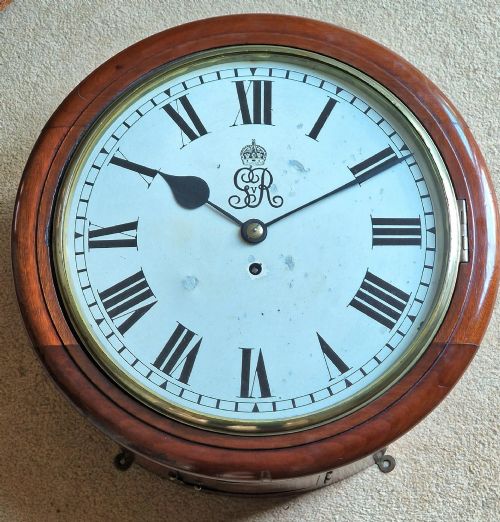
A fusee dial clock uses a special conical pulley system to maintain even tension on the movement, ensuring accurate timekeeping as the spring runs down. These pieces typically feature a prominent wall-mounted wooden case with a clear, easy-to-read painted face.
They were designed for practical spaces like offices, railway stations, and schools where reliable timekeeping was essential. The straightforward layout prioritises legibility above ornate decoration.
Where were carriage clocks used?
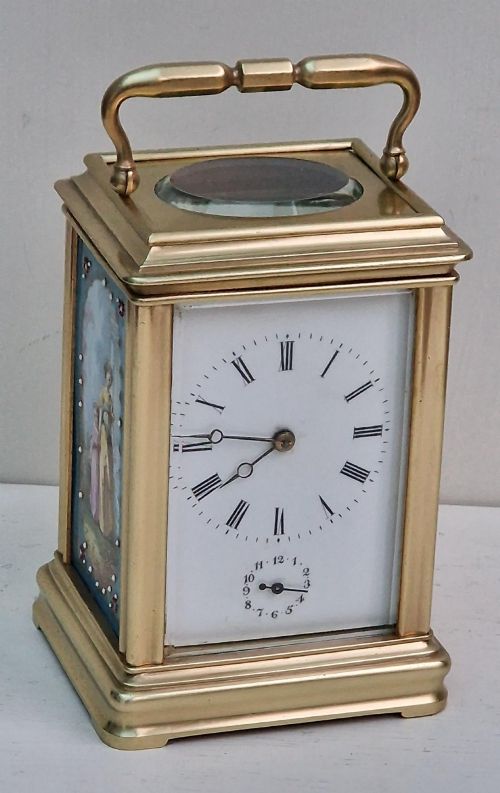
Carriage clocks were originally portable timepieces built for travellers during the nineteenth century, housed in brass and glass cases for protection on journeys. Their compact size allowed them to sit securely on small tables or desks.
Over time, they transitioned into stationary decorative items for domestic interiors. Many feature painted enamel panels that reflect the aesthetic tastes of their period of origin.
How do I date a painted dial?
Dating relies on examining the style of the numerals, the shape of the hands, and the materials used in the surrounding case. Georgian and Victorian examples often display distinct hand-painted lettering styles and timber choices.
Signatures or maker marks inscribed on the movement plate or dial provide more precise historical context. Comparing the construction methods with documented regional makers helps narrow the decade of production.