





Railway Fusee Wall Clock
When you search for a railway fusee wall clock, you are looking at timepieces built to keep precision in busy stations.
Railway Fusee Wall Clock
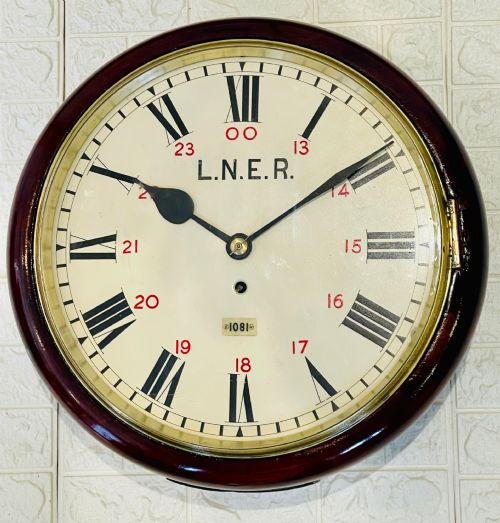
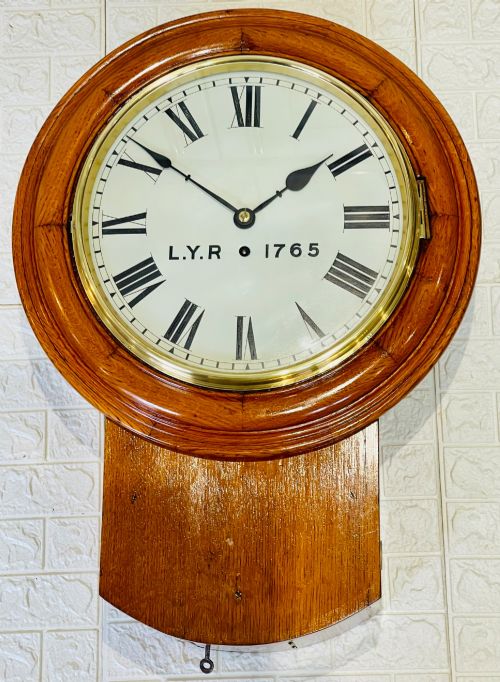
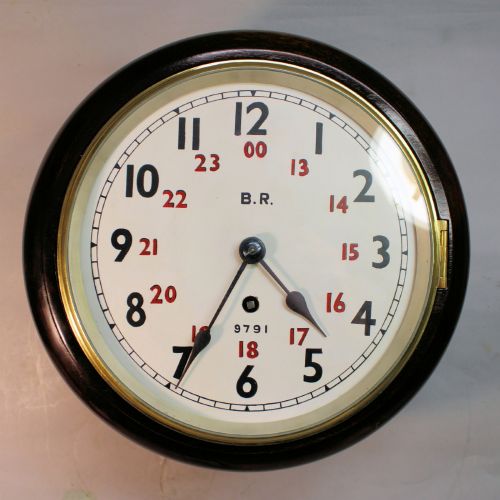
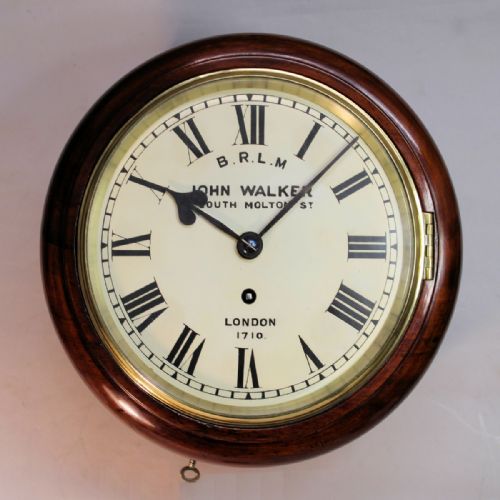
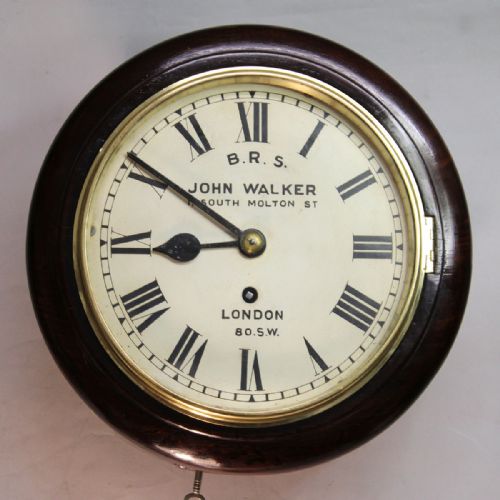
A railway fusee wall clock is a timepiece designed for operational timing on networks such as the Great Western Railway, London and North Eastern Railway, and London Midland and Scottish Railway. These items appear in formats including standard circular dials and drop-dial cases associated with station masters' offices and platforms.
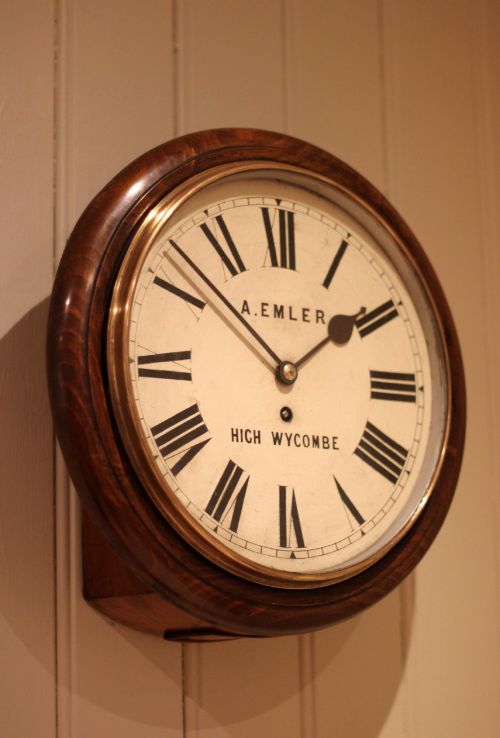
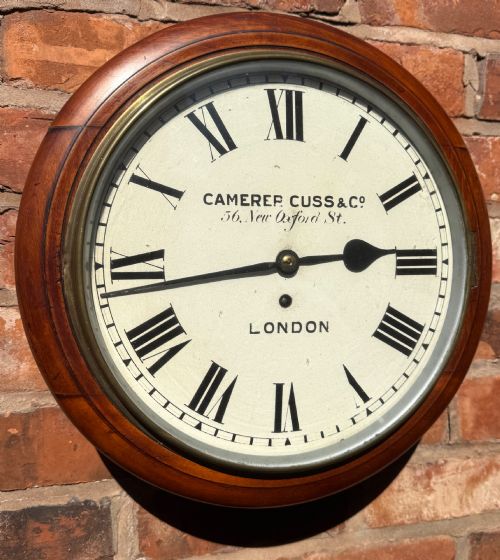
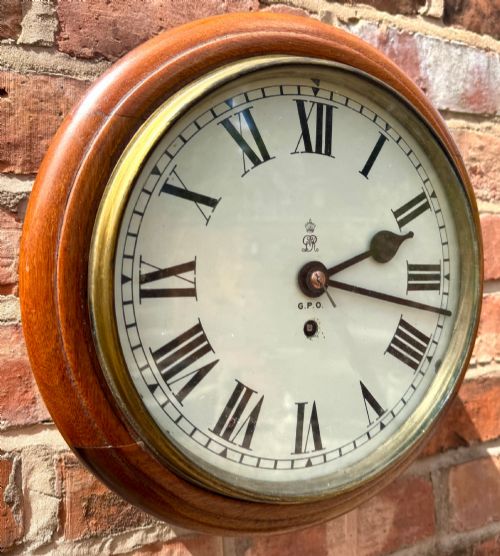
The pieces on this page span the Victorian era through the Edwardian period and into the mid-twentieth century under British Railways. Makers such as John Walker and Camerer Cuss supplied these sturdy instruments to stations across the country, alongside examples marked for the General Post Office.
Materials and construction
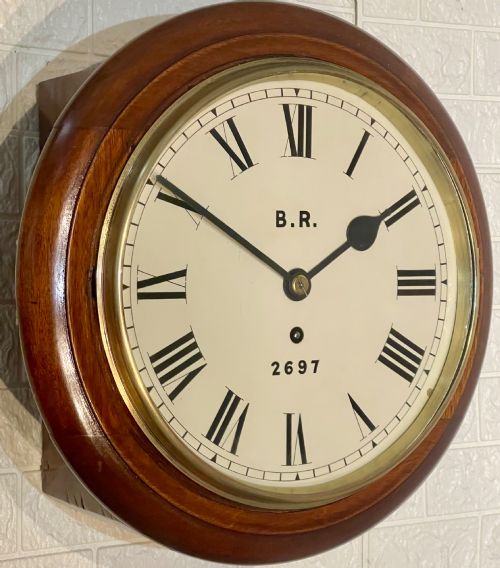
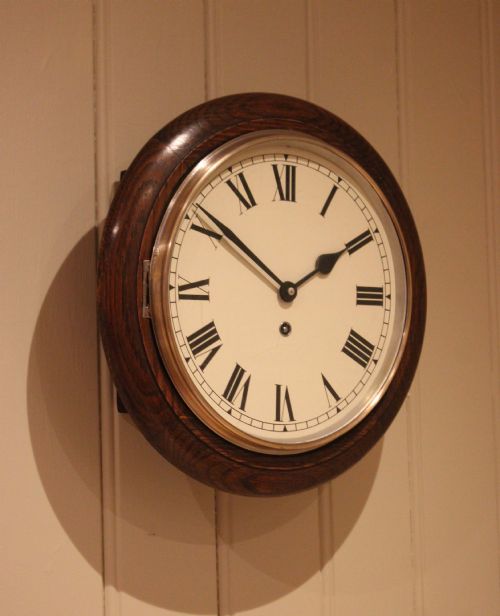
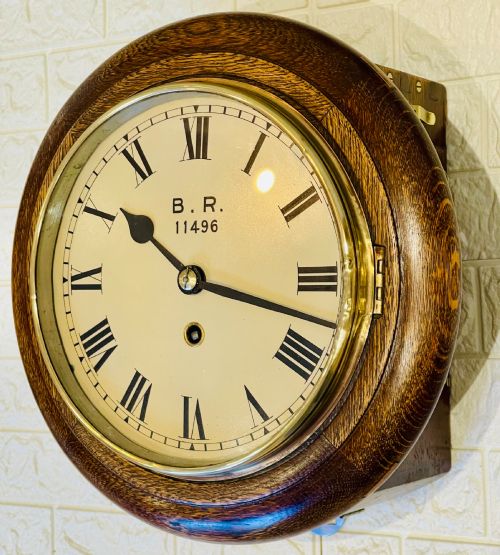
Cases on these clocks are predominantly built from solid mahogany or oak, providing the heavy housing needed to protect the movement from station vibrations and temperature shifts. Beech and other timbers also appear in regional variants, fitted with brass bezels and heavy glass doors.
The mechanical heart is a single chain fusee movement, designed to equalise the declining pull of the mainspring as it unwinds. This mechanism ensures constant torque and accurate timekeeping over an eight-day period between winds.
The archive demonstrates regional railway diversity, including pieces marked for the North Eastern Railway and the Great Western Railway.
Quality and proportion
Quality in these timepieces rests on the crispness of the dial markings and the integrity of the timber housing. Original painted iron dials bearing authentic station lettering or company initials hold greater distinction than later replacements.
The craftsmanship of the movement itself distinguishes standard office variants from premier railway regulators. Untouched plates, clean tooth engagement, and matching serial numbers on the case and movement elevate an individual piece.
Camerer Cuss And Co·John Walker·Thomas Gibbs·Bennetts Cheapside London
The Railway Fusee Wall Clock Glossary
- Fusee
- A conical pulley used in mechanical clocks to maintain even power delivery from the mainspring as it unwinds. This device is essential for the precise timekeeping required by railway timetables.
- Drop-dial clock
- A wall clock featuring an extended wooden case below the circular dial, often housing a pendulum window. This specific silhouette accommodated the longer drop required for certain weight or spring configurations.
- Dial clock
- A round-faced timepiece designed to be hung high on a wall for easy visibility by staff and passengers. The face is typically protected by a brass bezel and a hinged glass door.
- Chain fusee
- A fusee movement utilising a fine steel chain rather than a gut cord to connect the barrel to the conical pulley. This upgrade provides greater strength and durability in heavy-use environments.
- Bezel
- The metal ring, usually made of brass, that holds the glass protecting the clock face. It often swings open on a hinge to allow hand-setting and winding.
Railway Fusee Wall Clock: Frequently Asked Questions
How do I wind a fusee wall clock?
Opening the brass bezel allows access to the dial, where a key fits onto the winding square. Turn the key gently until the mechanism resists further tension.
Care must be taken not to overwind the spring, ensuring the chain remains correctly seated on the conical fusee pulley.
Why do some clocks have company initials?
Railway companies marked their assets to denote ownership and maintain accountability across vast transport networks. Stencilled or painted lettering such as GWR or LNER identified the specific region or station.
Numbered cases further helped administrators track the deployment of timepieces in offices and platform spaces.
Were these clocks used only on railways?
While heavily associated with transport networks, similar dial and drop-dial designs served in post offices, schools, and municipal offices. The robust construction suited any large room requiring clear visibility.
Railway examples often carry specific company stamps on the dial or movement that differentiate them from domestic or institutional variants.
How can I tell the age of the clock?
Dating relies on timber selection, dial construction, and railway company nomenclature. Victorian examples in rich mahogany give way to early twentieth-century oak cases and later British Railways markings.
Maker signatures on the dial face and engraved numbers on the movement plates offer further chronological markers.