



British Railways Clock
A british railways clock is a sturdy timepiece built for stations and offices, offering dependable mechanics and classic industrial design.
British Railways Clock
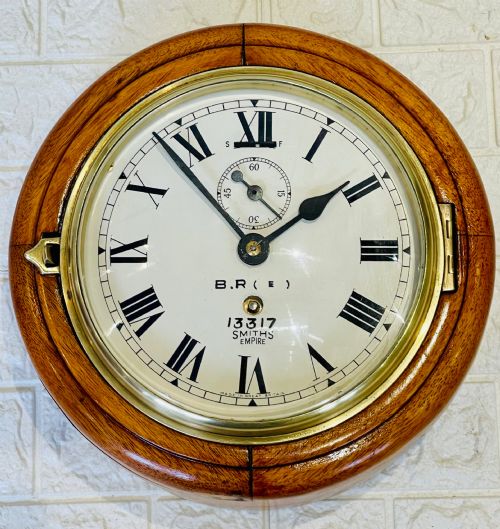
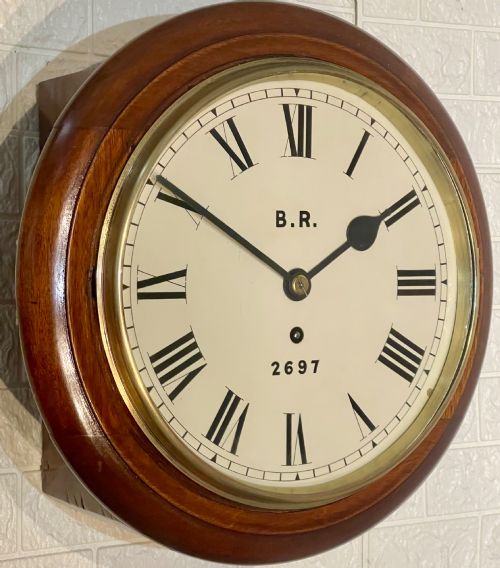
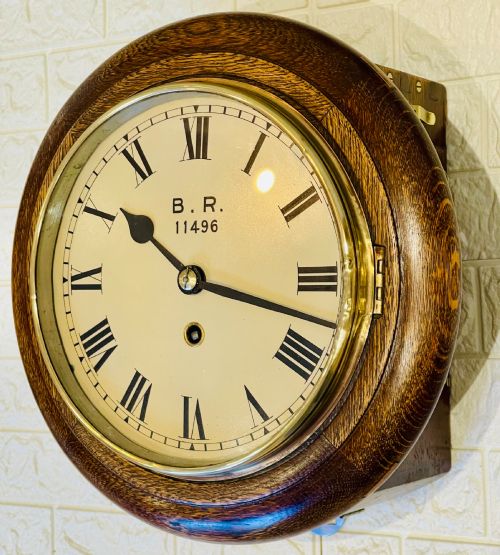
Every british railways clock represents a piece of operational history, originally hung in booking halls, signal boxes, and platform offices across the network. These heavy wall clocks were built to withstand constant vibration, coal smoke, and the general grime of Victorian and mid-century railway stations.
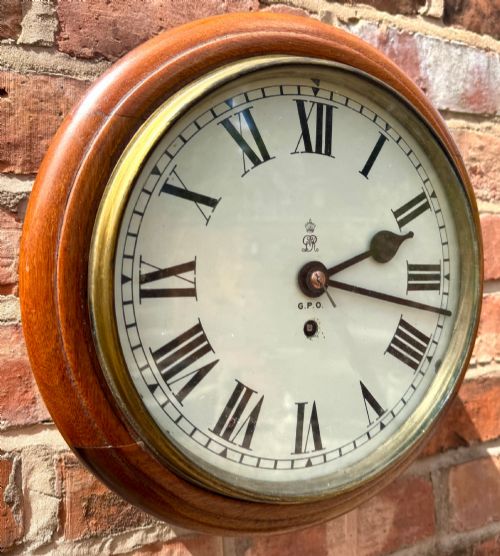
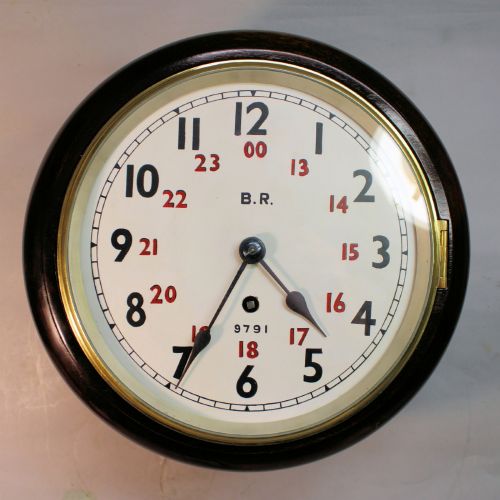
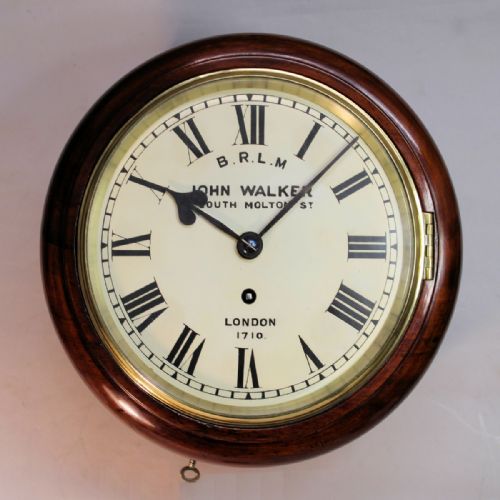
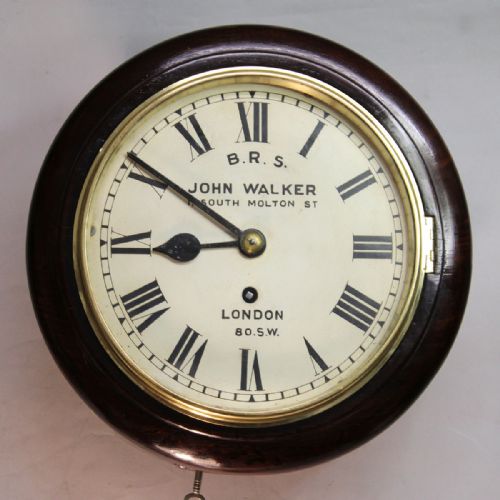
The version you are most likely to meet on this page is the fusee wall clock, typically housed in a round mahogany or oak case with a white painted dial and black roman numerals. Many examples bear regional lettering or stamped case numbers denoting their specific deployment, from southern region lines up to northern company routes.
How they were made
Clockmakers housed these movements in robust timber cases turned from solid blocks of mahogany or oak, fitted with hinged side doors for easy winding and setting. The heavy glass front protected the dial from dust and accidental impacts in busy working environments.
Mechanically, these pieces relied on fusee movements driven by a chain or gut line connected to a conical pulley, which ensured even force was delivered to the gear train as the mainspring unwound.
British Railways Clock Retail Price Guide 2026
Typical asking prices for british railways clock among the pieces listed under this phrase on Sellingantiques today, from the lower quarter to the upper quarter. They describe what is for sale here now, not the wider market.
Listings feature brass, mahogany, oak, and iron materials across Victorian, Edwardian, and mid-century industrial periods.
What varies in quality
Quality rests upon the maker and the original destination of the timepiece, with signed dials from renowned London firms commanding particular respect among collectors. Clocks supplied to major termini or specific junction stations often display superior movement finishing compared to standard utility office pieces.
The integrity of the timber case and the crispness of the original painted dial lettering heavily influence the appeal of any specimen. Untouched dials with legible company ciphers and matching numbered components sit firmly at the upper end of the scale.
John Walker·Smith·Gents of Leicester·Camerer Cuss And Co
The British Railways Clock Glossary
- Fusee
- A conical pulley connected to the mainspring by a chain or cord, designed to equalise the torque as the spring unwinds. This mechanism is essential for maintaining consistent timekeeping over the duration of the wind.
- Dial
- The visible face of the clock where the hours are marked. Railway dials were traditionally painted iron or wood, featuring bold Roman numerals for quick reading from a distance.
- Bezel
- The brass or wooden ring that holds the glass front in place over the dial. On these pieces, the bezel is frequently hinged to allow access for adjustment.
- Case
- The outer housing enclosing the movement and dial, constructed from dense hardwoods like mahogany or oak to protect the internal mechanics from atmospheric moisture.
British Railways Clock: Frequently Asked Questions
How do I wind a fusee railway clock?
You insert the winding key into the small hole on the dial face and turn it gently clockwise until the mechanism comes to a natural stop. Care must be taken not to overwind the spring.
Most traditional fusee movements require attention once every eight days, making a weekly routine ideal for keeping the piece running accurately.
Were these clocks used on trains?
These timepieces were engineered strictly for static environments such as station offices, waiting rooms, and signal boxes rather than rolling stock. Their heavy timber frames and glass faces needed a stable wall mounting to remain accurate.
Station masters relied on these exact dials to coordinate train departures and maintain the rigid timetables required by the network.
How can I identify the railway region?
Many dials and cases feature painted initials or engraved brass plaques denoting specific companies like the Great Western Railway or the London and North Eastern Railway. Stamped numbers inside the wooden case often correspond to railway property registers.
Studying these markings helps pinpoint the exact geographical branch or station where the timepiece once hung.
Where should I hang a heavy wall clock?
Choose a solid interior wall capable of supporting the substantial weight of a hardwood case and brass movement. Secure the fixing directly into a stud or use heavy-duty wall anchors.
Keep the piece away from direct sunlight, damp areas, and constant drafts to preserve the timber and ensure the pendulum swings freely.