


Industrial Wall Clock
An industrial wall clock brings utility into the room, spanning robust factory dials and railway timepieces.
Industrial Wall Clock
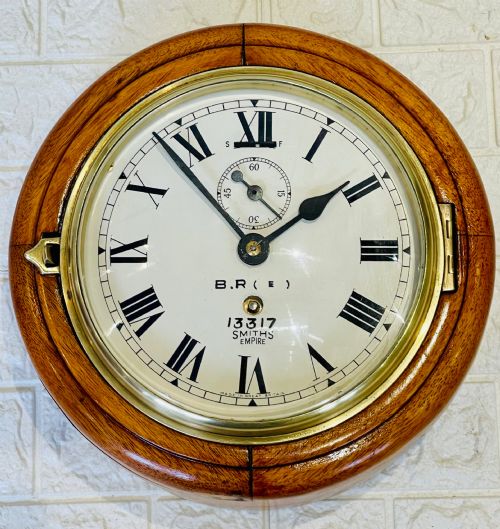
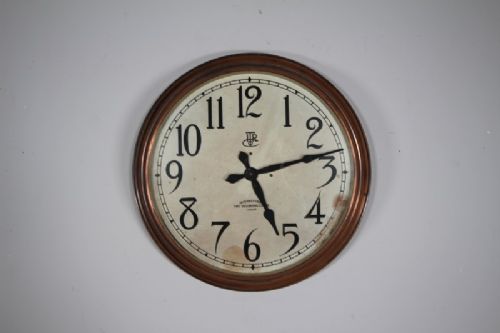
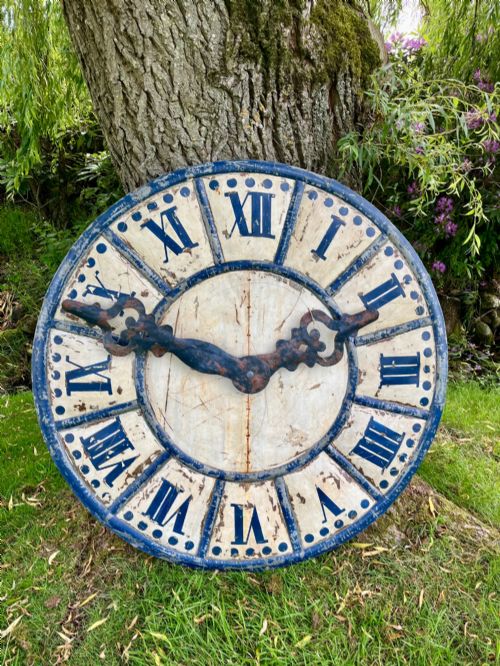
When you search for an industrial wall clock, you are looking at robust timepieces designed for factories, railways, offices, and institutions from the nineteenth century through to the mid-twentieth century. These utility pieces range from heavy railway fusee dials and hospital clocks to large French tower clock faces and workshop time recorders.
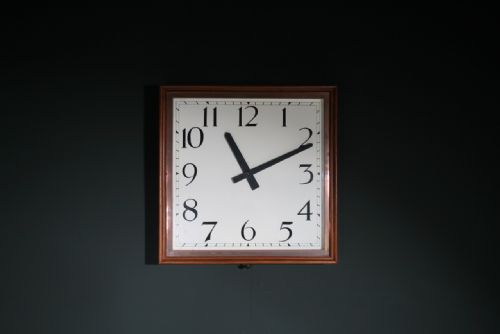
The versions you are most likely to meet on this page hail from the Edwardian era, the 1920s, 1930s, and 1940s, frequently bearing the names of railway networks or institutional operators like British Rail and Smiths. Styles encompass straightforward British industrial designs, French industrial items, Art Deco electric movements, and architectural salvage.
These clocks combine utilitarian function with striking visual scale, often featuring large dials made for distant viewing in bustling environments. Whether housed in oak, bakelite, metal, or iron, each piece carries the distinct character of its working past.
Materials and Construction
These clocks rely on sturdy metals and dense woods selected for durability in demanding working environments, utilising iron, brass, copper, and steel alongside robust oak and walnut cases. Dial faces frequently employ glass protection over enamelled metal or painted iron, designed to withstand dust and heavy daily use.
Movements span traditional mechanical fusee systems and spring-driven mechanisms to early electrical systems, including electric master clocks and synchronous movements by makers such as Smiths. Bakelite emerges in later twentieth-century models, marking a shift towards moulded synthetic materials in institutional settings.
Industrial Wall Clock Retail Price Guide 2026
Typical asking prices for industrial wall clock among the pieces listed under this phrase on Sellingantiques today, from the lower quarter to the upper quarter. They describe what is for sale here now, not the wider market.
The inventory records pieces from the nineteenth century alongside Edwardian, Art Deco, and 1950s eras.
Judging Quality
Quality in these pieces rests upon the integrity of the original dial, the presence of authentic institutional markings, and the preservation of casing materials. Original enamel or painted metal dials that retain crisp lettering and uncompromised numerals carry greater authenticity than restored faces.
The sophistication of the internal movement also dictates standing, distinguishing standard mechanical timepieces from specialised electric master clocks, railway fusee movements, or large architectural dial faces salvaged from towers and stations.
Charvet·Gledhill Brook·John Walker·Joyce Whitchurch·Smiths
The Industrial Wall Clock Glossary
- Fusee dial
- A clock movement featuring a fusee cone to maintain even force as the mainspring unwinds. This mechanism ensures accurate timekeeping and is commonly found on railway and post office wall clocks.
- Turret clock
- A large clock designed for placement in a tower or exterior wall of a building. These dials are oversized for long-distance legibility.
- Bakelite
- An early form of thermosetting plastic used for clock casings from the 1930s onwards. It offers a smooth, dark finish typical of mid-century industrial utility.
- Bulkhead clock
- A rugged timepiece originally built for ships or industrial walls, constructed to withstand moisture and vibration. They usually feature heavy metal bezels and secure fastening points.
Industrial Wall Clock: Frequently Asked Questions
What is an industrial wall clock?
An industrial wall clock is a heavy-duty timepiece originally built for factories, railway stations, offices, and public buildings rather than domestic use.
These pieces emphasise clear legibility and robust construction, utilising materials like iron, brass, oak, and enamel.
How do I date a railway clock?
Dating typically relies on company lettering, stylistic cues, and movement types associated with specific railway regions or historical eras.
Many examples carry markings from network predecessors or post-grouping British Railways designations that pinpoint their decade of issue.
Were these clocks mechanical or electric?
Early examples relied on mechanical key-wound movements, including fusee designs that ensured steady tension for accurate timekeeping.
As technology progressed into the 1930s and 1950s, electric master clocks and synchronous movements became common in large institutions.
How should I hang a heavy factory clock?
Due to substantial iron bezels, thick timber cases, and heavy glass covers, these clocks require secure masonry or stud fixings.
Weight distribution varies significantly between deep wooden fusee cases and large metal dial faces, demanding appropriate wall anchors.