


Commercial Wall Clock
A commercial wall clock brings robust timekeeping from railways, factories, and offices into domestic spaces.
Commercial Wall Clock
A commercial wall clock encompasses functional timepieces built for rigorous public spaces like railway stations, post offices, schools, and factories. These utility pieces span from the mid-nineteenth century through the 1940s, reflecting changing industrial and institutional needs across Victorian, Edwardian, and mid-century eras.
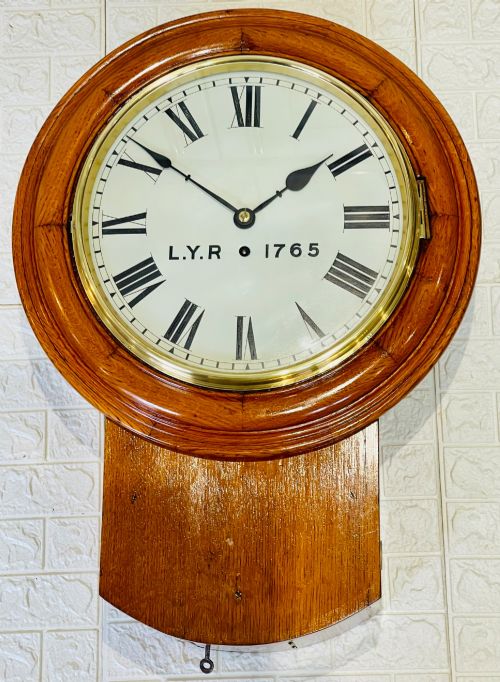
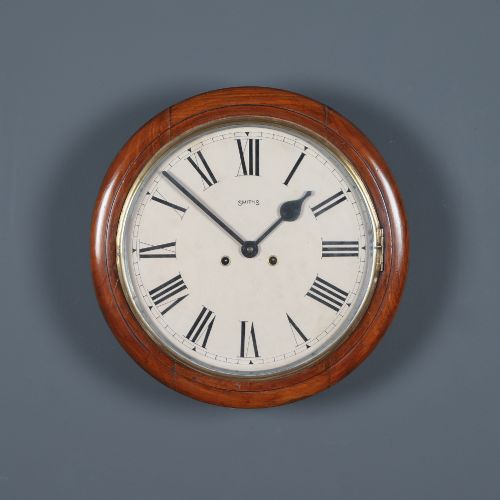
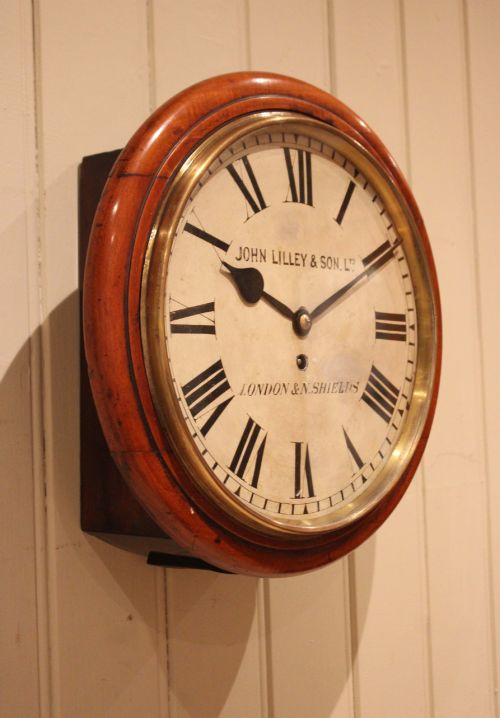
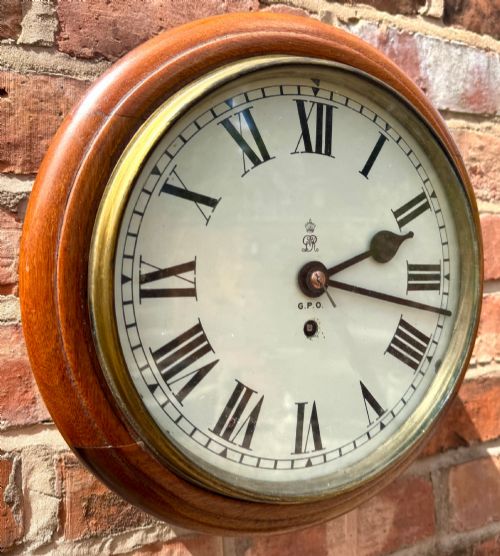
The most common examples on this page are round dial clocks housed in timber surrounds, alongside specialised items like double-sided factory clocks and advertising pieces. Makers range from prominent names like Smiths and John Walker to utilitarian railway and GPO examples stamped with official numbers.
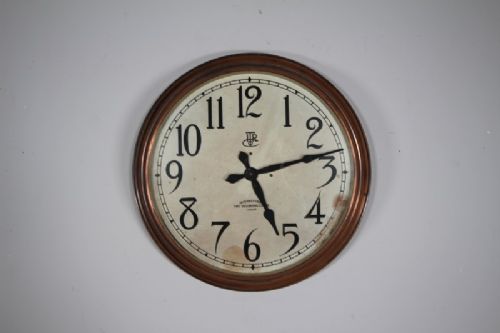
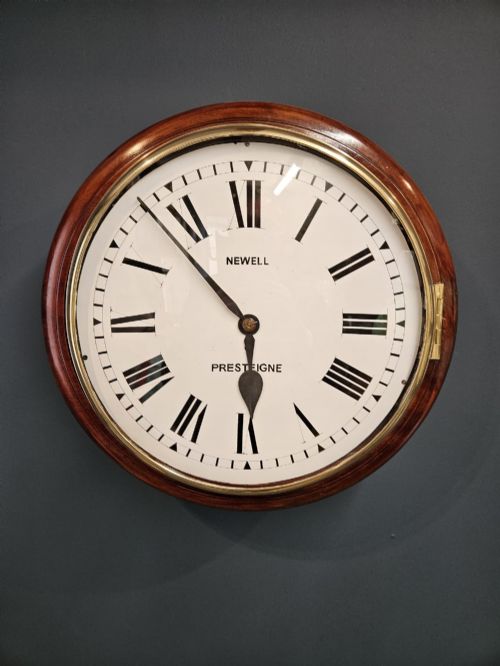
Forms vary from traditional drop-dial fusee clocks in mahogany and oak to octagonal and oversized metal wall clocks. Buyers seek these pieces for their clear, legible dials and robust mechanical movements that once regulated public schedules.
Materials and Construction
Cases rely on durable timbers such as mahogany, oak, and occasionally iron, metal, chrome, or bakelite for industrial environments. Dials are protected by heavy glass covers set within brass or painted metal bezels designed to withstand public wear.
Movements incorporate fusee mechanisms to maintain even tension as the mainspring unwinds, ensuring reliable timekeeping over long operational periods. Railway and station examples often feature robust chain or wire fusee movements paired with sturdy timber cases.
Later twentieth-century pieces introduce green metal casings and specialised advertising faces alongside traditional painted wooden dials. Structural integrity remains paramount, utilising stamped numbered cases and heavy-duty fixings suitable for continuous wall mounting.
Commercial Wall Clock Retail Price Guide 2026
Typical asking prices for commercial wall clock among the pieces listed under this phrase on Sellingantiques today, from the lower quarter to the upper quarter. They describe what is for sale here now, not the wider market.
Listings feature clocks spanning the Victorian period through the 1940s, utilising mahogany, oak, brass, and bakelite.
Distinctions in Quality
Quality rests upon the sophistication of the movement, particularly the presence of a reliable fusee mechanism rather than standard spring-driven alternatives. Finer examples display crisp dial lettering, original hands, and high-grade timber cases with stamped official provenance.
Maker attribution elevates certain pieces, with recognised firms like Smiths, John Walker, or Camerer Cuss commanding attention for their precision engineering. The clarity of railway company markings, such as B.R or GPO stamps, adds historical depth and desirable authenticity.
Smiths of London·John Walker·Josef Herzog·Camerer Cuss·Gledhill Brook
The Commercial Wall Clock Glossary
- Fusee
- A conical pulley used in clock movements to equalize the declining power of the mainspring. This device ensures consistent torque is delivered to the gear train for accurate timekeeping.
- Drop dial
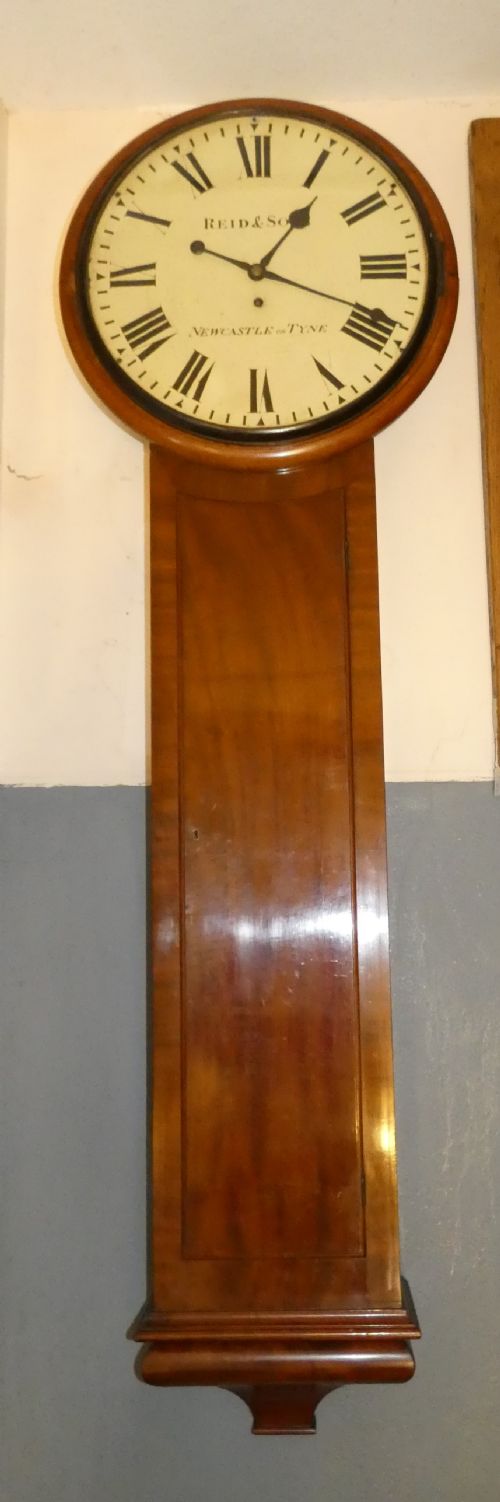
- A clock case featuring a circular dial head above a lower wooden trunk that encloses the pendulum. This configuration accommodates the weight drop or pendulum swing in a compact wall-mounted format.
- GPO
- General Post Office. These stamps indicate official government postal service provenance on British wall clocks.
- Dial
- The face of the clock where numerals and markers indicate the hours and minutes. Commercial examples prioritize bold, legible typography for distant reading.
Commercial Wall Clock: Frequently Asked Questions
Where were these clocks used?
These clocks hung in railway stations, post offices, factories, and schools to keep workers and travellers on schedule.
Their robust design suited high-traffic public areas that required reliable timekeeping.
How do fusee movements work?
A fusee uses a conical gear to equalize the power output of the mainspring as it unwinds.
This mechanical refinement helps the clock maintain consistent accuracy over the duration of its run.
What timber cases are typical?
Mahogany and oak predominate in Victorian and Edwardian examples, offering sturdy housing for heavy movements.
Later pieces transition to metal and chrome as industrial aesthetics evolved.
How do I identify railway clocks?
Railway pieces often feature painted station dials and stamped company initials on the case or dial.
Official markings link the clock directly to its transport network origins.