
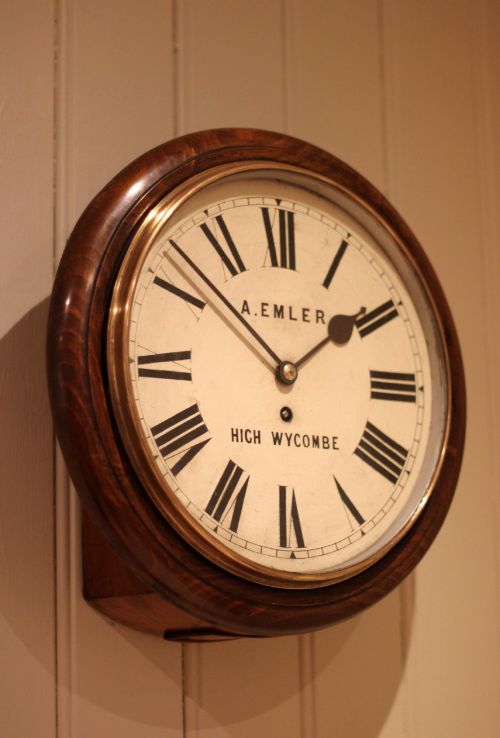

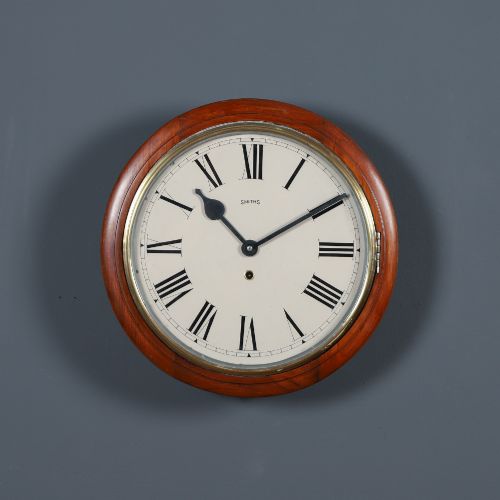
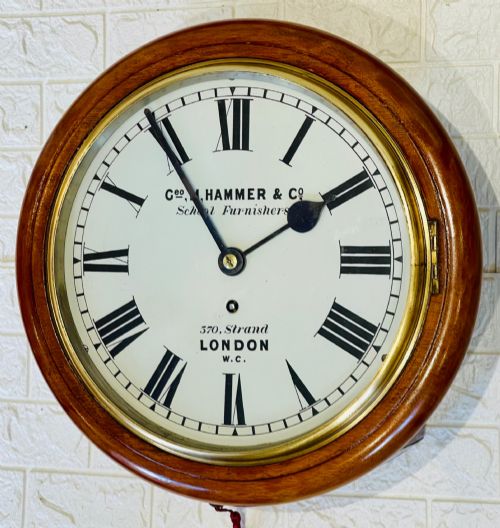
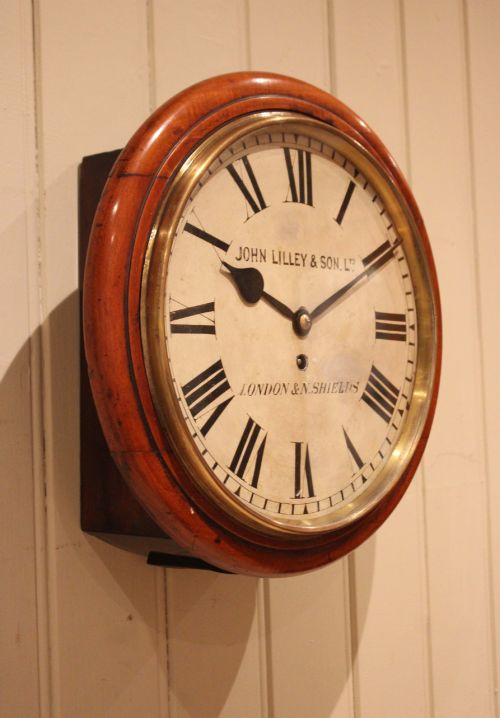
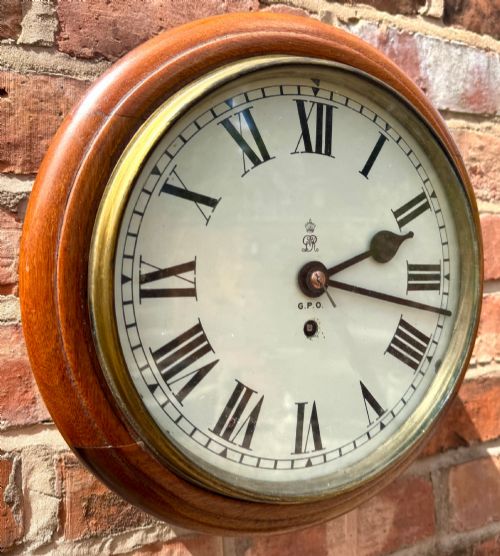
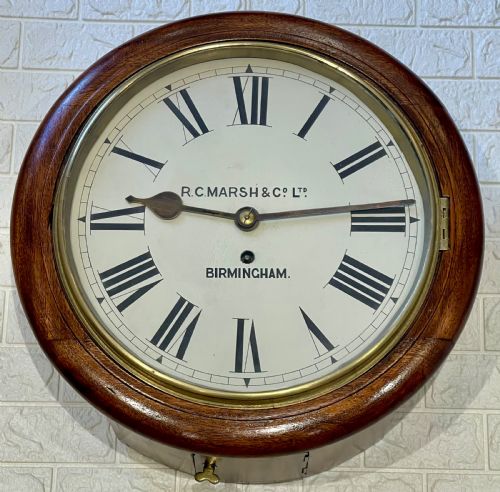
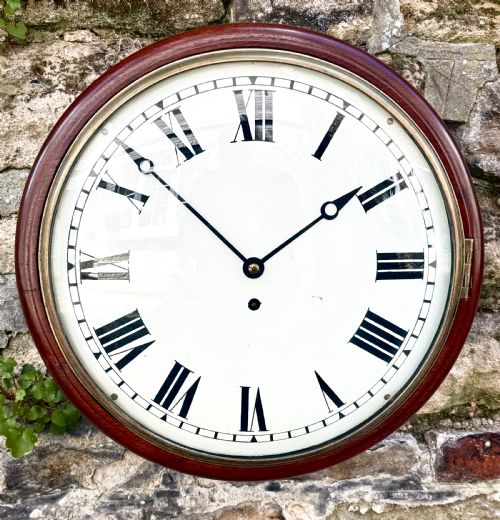
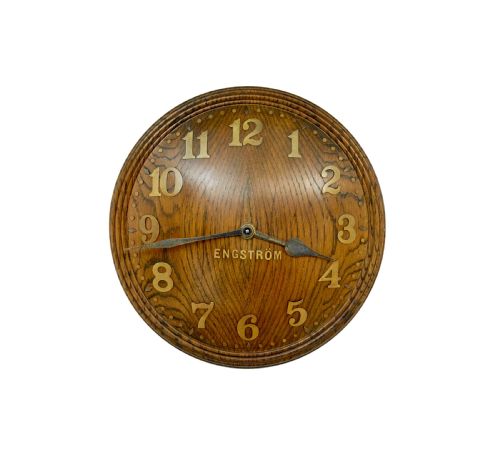

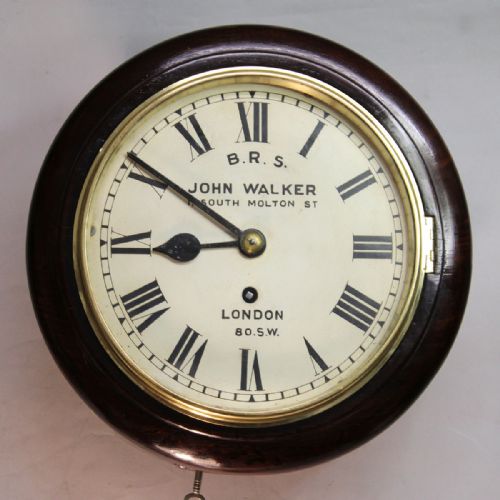

Circular Wooden Clock
These circular wooden clock examples are wall-mounted timepieces housed in timber surrounds, prized for reliable fusee movements and clean historical utility.
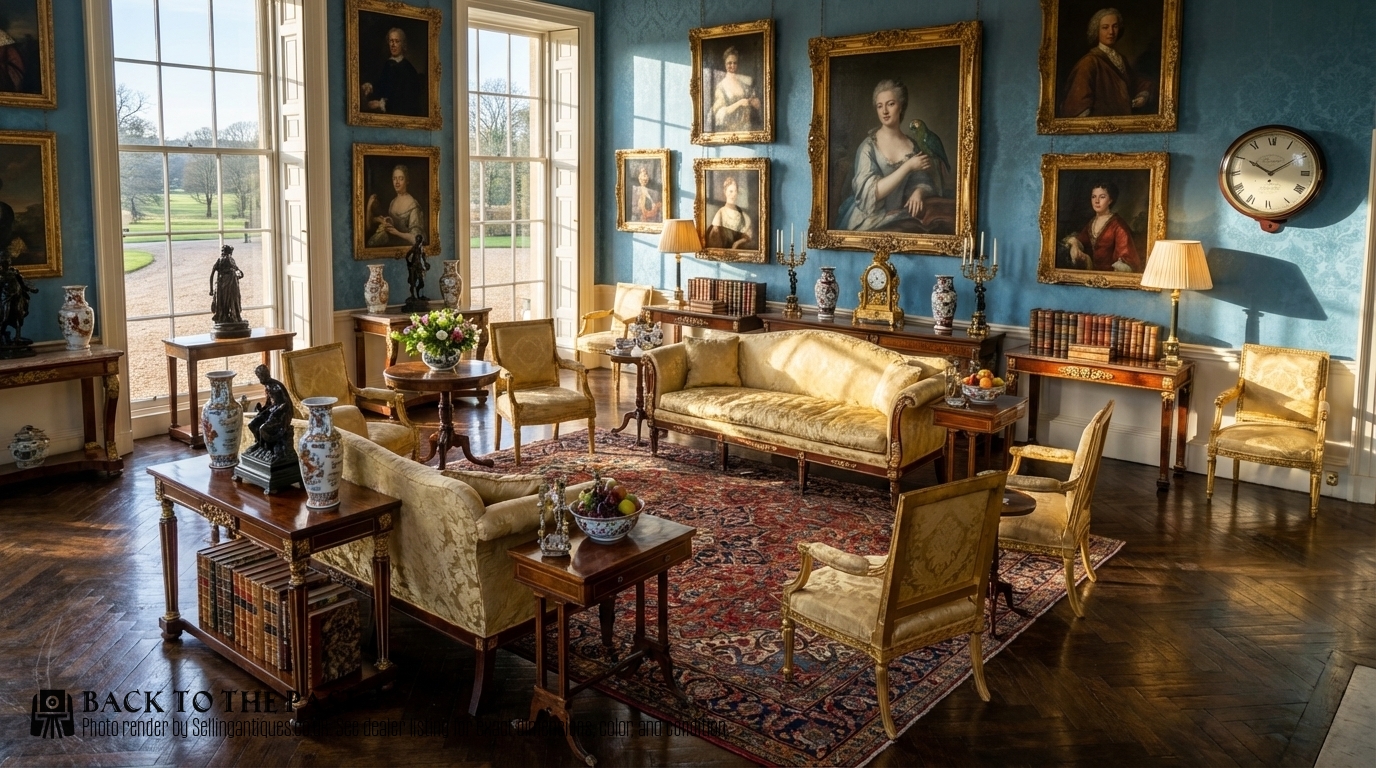
What a circular wooden clock is
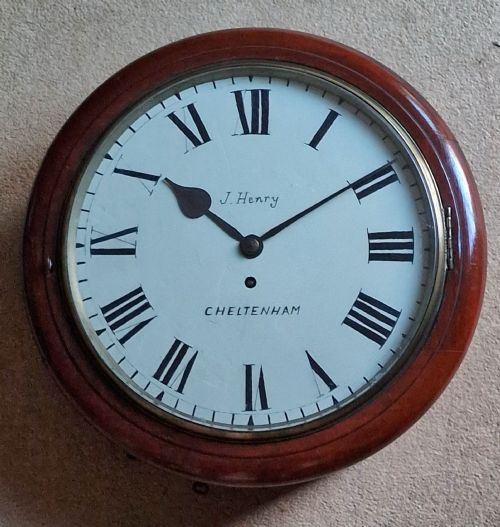
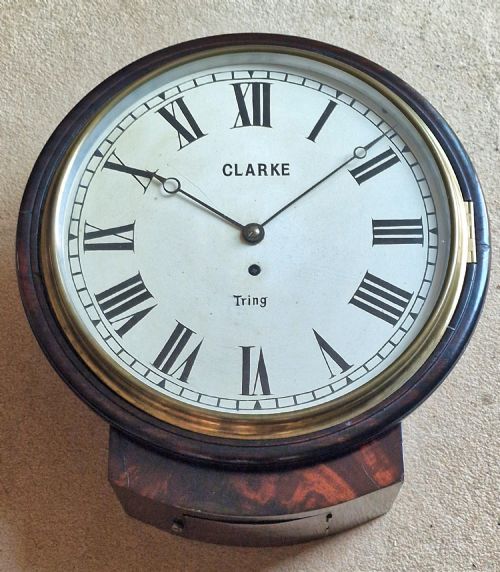
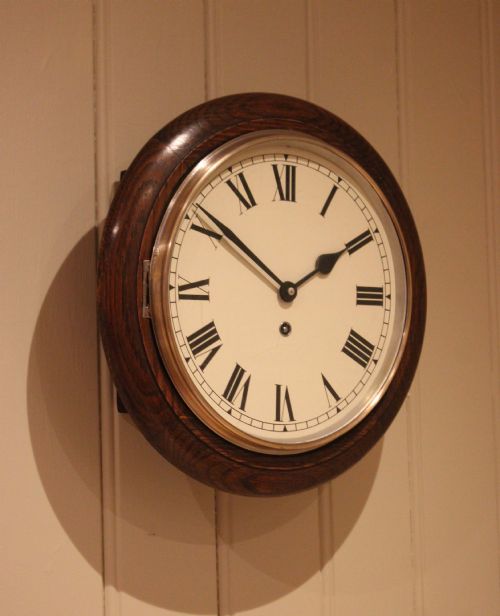
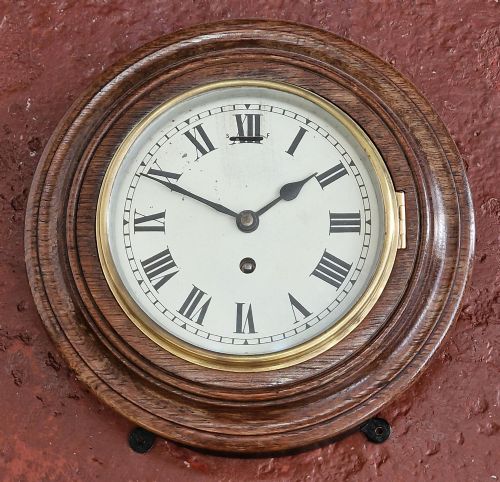
A circular wooden clock takes the form of a wall-mounted timepiece featuring a round dial enclosed by a timber frame. The selection available spans the nineteenth and early twentieth centuries, encompassing periods from the Georgian era through to Art Deco designs.
Most pieces on display are British station and dial clocks intended for commercial, railway, or domestic interiors. Common regional origins include English makers operating in London, provincial towns, and High Wycombe workshops.
How they were made
Frames are constructed from solid timbers including mahogany, beech, oak, elm, and occasionally birch, shaped into sturdy circular housings. Brass bezels and glazed doors protect the painted paper or metal dials within.
Movements rely on fusee mechanisms designed to maintain even tension as the mainspring unwinds, paired with traditional pendulum regulation. Makers mounted these mechanical assemblies securely behind robust wooden backboxes designed for wall hanging.
Retail Price Guide 2026
Typical UK retail prices for circular wooden clock, calculated from the Sellingantiques database of over a million retail prices indexed since 2003. This retail price guide relies exclusively on Sellingantiques data; no external sources or auction records are used, so the figures do not describe the wider market.
What varies in quality
Quality rests in the crispness of the timber turning, the integrity of the fusee movement, and the legibility of the original dial markings. Master dial signwriters and reputable makers command higher regard than anonymous provincial workshop output.
The choice of cabinet timber shifts the visual weight, with dense figured mahogany and well-patinated oak sitting above simpler beech or elm structures. Retaining original glass, hands, and signed dial movements preserves the historical integrity of the piece.
John Walker·J C Ralls·Osborn of Kingsbridge·J Beckett of London·Zenith
The Circular Wooden Clock Glossary
- Fusee
- A conical pulley device inside the clock movement that equalises the driving force of the mainspring as it runs down. This mechanism ensures consistent timekeeping throughout the duration of the wind.
- Dial clock
- A wall timepiece featuring a prominent circular face designed for easy reading in public spaces, offices, and railway stations. These clocks typically feature a hinged wooden bezel and a side or bottom access door.
- Bezel
- The ring of brass or wood that holds the protective glass pane in place over the dial. It often hinges open to allow for hand setting and escapement adjustment.
- Backbox
- The wooden housing attached to the rear of the dial frame that encloses the pendulum and movement plates. It provides a secure mounting point for hanging the clock flat against a wall.
Frequently Asked Questions
How do I hang a circular wooden clock?
These wall clocks require a secure fixing directly into a wall stud or masonry using a heavy-duty screw or bracket. The weight of the timber frame and movement demands proper support to prevent shifting.
Ensure the clock hangs completely plumb so the pendulum swings evenly without catching on the interior backbox. Adjust the beat of the escapement once mounted to achieve steady timekeeping.
What is a fusee movement?
A fusee is a conical gear connected to the mainspring by a fine chain or cord. As the spring unwinds, the chain moves to a wider part of the cone, compensating for the dropping tension.
This clever mechanical invention ensures the force delivered to the gear train remains constant from the first hour to the last. It marks higher grade timepieces from the eighteenth and nineteenth centuries.
How do I wind a dial clock?
Winding involves inserting a matching key into the winding hole on the dial face and turning it gently clockwise until resistance is felt. Care should be taken not to overwind the mainspring.
Most fusee wall clocks require winding once a week to maintain accurate time. Keeping a regular schedule helps preserve the tension of the vintage spring.
How do I date a wooden wall clock?
Dating relies on examining the construction of the timber frame, the style of the dial lettering, and the signature of the maker. Georgian and early nineteenth-century models often feature heavy mahogany surrounds and hand-painted iron dials.
Later Victorian, Edwardian, and 1930s examples introduce alternative timbers like beech, elm, or oak alongside standardised railway markings. Maker signatures provide direct reference to historical trade directories.