



John Walker Clock
When you search for a john walker clock, you are looking at precision timepieces built for railways, ships, and drawing rooms by a renowned maker.
John Walker Clock
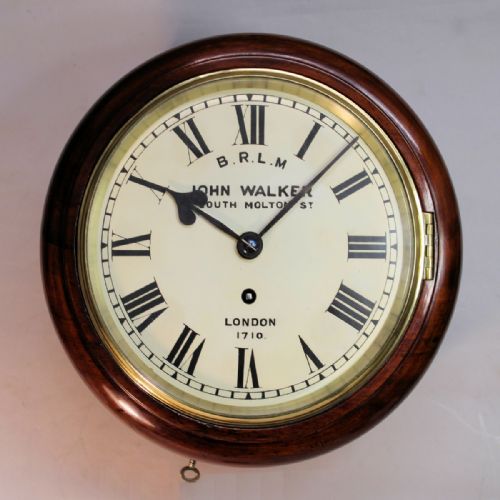
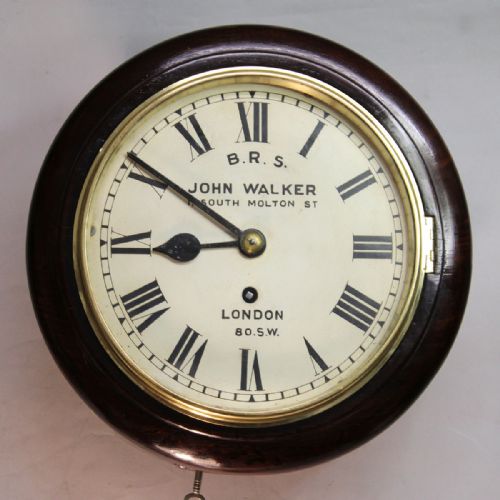
Railway pieces dominate the available forms, particularly fusee wall clocks with eight-inch dials originally stationed at locations such as Lymington Town and operated by networks like the LMS and British Railways. Alongside these utilitarian instruments, domestic examples appear in the form of French gilt bronze carriage clocks, four glass library clocks, and traditional mahogany grandfather clocks.
Materials and Construction
The construction of these pieces relies heavily on dense hardwoods such as mahogany for cases and dial surrounds, paired with robust brass movements. Fusee movements form the mechanical core of many pieces, ensuring steady tension on the mainspring for accurate timekeeping.
Dials incorporate silvered metal, enamel, and brass often featuring distinct black numerals, protected behind bevelled glass. Finer mantel and carriage versions utilise gilt bronze cases, polished glass panels, and intricate bell strike mechanisms.
John Walker Clock Retail Price Guide 2026
Typical asking prices for john walker clock among the pieces listed under this phrase on Sellingantiques today, from the lower quarter to the upper quarter. They describe what is for sale here now, not the wider market.
Quality and Distinction
The distinction between a standard utility clock and a premier piece lies in the complexity of the movement and the standard of the cabinetry. Railway dials prioritised stark legibility and dependable fusee movements, whereas domestic examples exhibited decorative refinement such as four glass panels or quarter-striking capability.
Provenance and original railway company markings elevate the historical significance of utility clocks, whereas material richness, such as gilt bronze cases or carved mahogany longcases, separates standard domestic items from high-end examples.
John Walker
The John Walker Clock Glossary
- Fusee
- A conical pulley used in mechanical clocks to equalise the torque of the mainspring as it runs down. This mechanism ensures consistent power delivery to the escapement for greater accuracy.
- Dial clock
- A wall-mounted timepiece featuring a prominent circular face, historically utilised in offices, stations, and public buildings for clear time reading. They usually possess a wooden surround and a side or bottom access door.
- Carriage clock
- A small, spring-driven clock designed for travel, typically featuring a brass or gilt bronze case with glass panels that display the internal movement. Many include repeating mechanisms to chime the last hour and quarter on demand.
- Grandfather clock
- A tall freestanding pendulum clock enclosed in a wooden case, also known as a longcase clock. They generally house eight-day movements with brass arched dials.
John Walker Clock: Frequently Asked Questions
Where were John Walker railway clocks used?
Railway clocks by this maker served in station offices, ticket halls, and operational rooms across various British railway networks. They provided reliable timekeeping essential for train scheduling and daily station management.
Specific examples originated from locations like Lymington Town station and companies such as the London and North Western Railway and Southern Railway.
How do fusee movements work?
A fusee movement uses a conical pulley connected to the mainspring via a fine chain or cord. As the spring unwinds, the chain pulls on a wider part of the cone, compensating for the declining tension of the spring.
This clever engineering maintains even force on the gear train, which helps the clock keep more accurate time throughout its running period.
What is the difference between a wall clock and a mantel clock?
Wall clocks in this selection are typically dial clocks designed to be mounted securely at eye level in public or working spaces. Their robust mahogany surrounds and clear faces prioritised visibility and durability.
Mantel clocks, including four glass library clocks and carriage clocks, were built smaller to sit upon fireplace mantels or desks, often showcasing finer decorative metals and more intricate striking mechanisms.
How do I date a John Walker clock?
Dating these timepieces involves examining the style of the case, the materials used, and any specific railway company lettering on the dial. Nineteenth-century Victorian examples often feature simple mahogany surrounds and fusee movements.
Later pieces from the Edwardian period or nineteen-twenty bear markers from grouped railway networks, while eighteenth-century longcase versions display traditional brass arched dials and distinct cabinet proportions.