
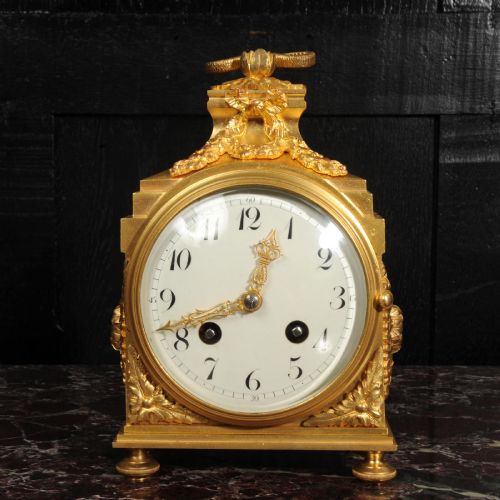
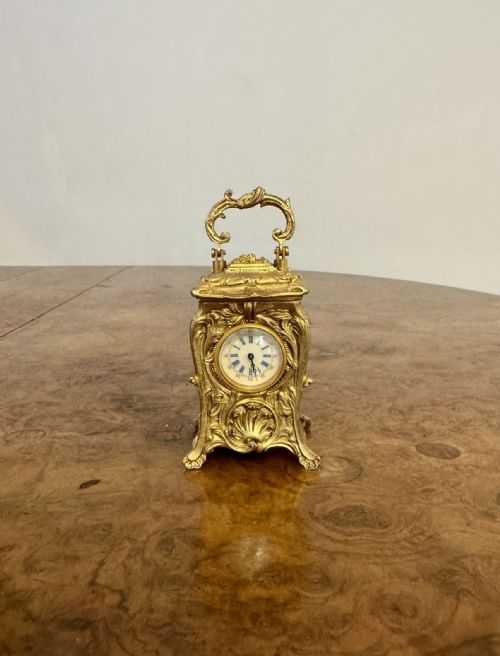
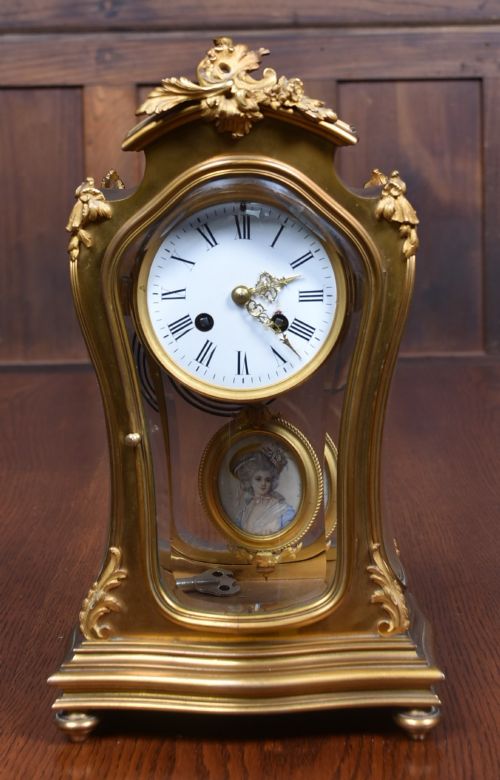


Gilt Bronze Carriage Clock
These gilt bronze carriage clocks combine mechanical precision with heavy metal cases designed for travel.
What a gilt bronze carriage clock is
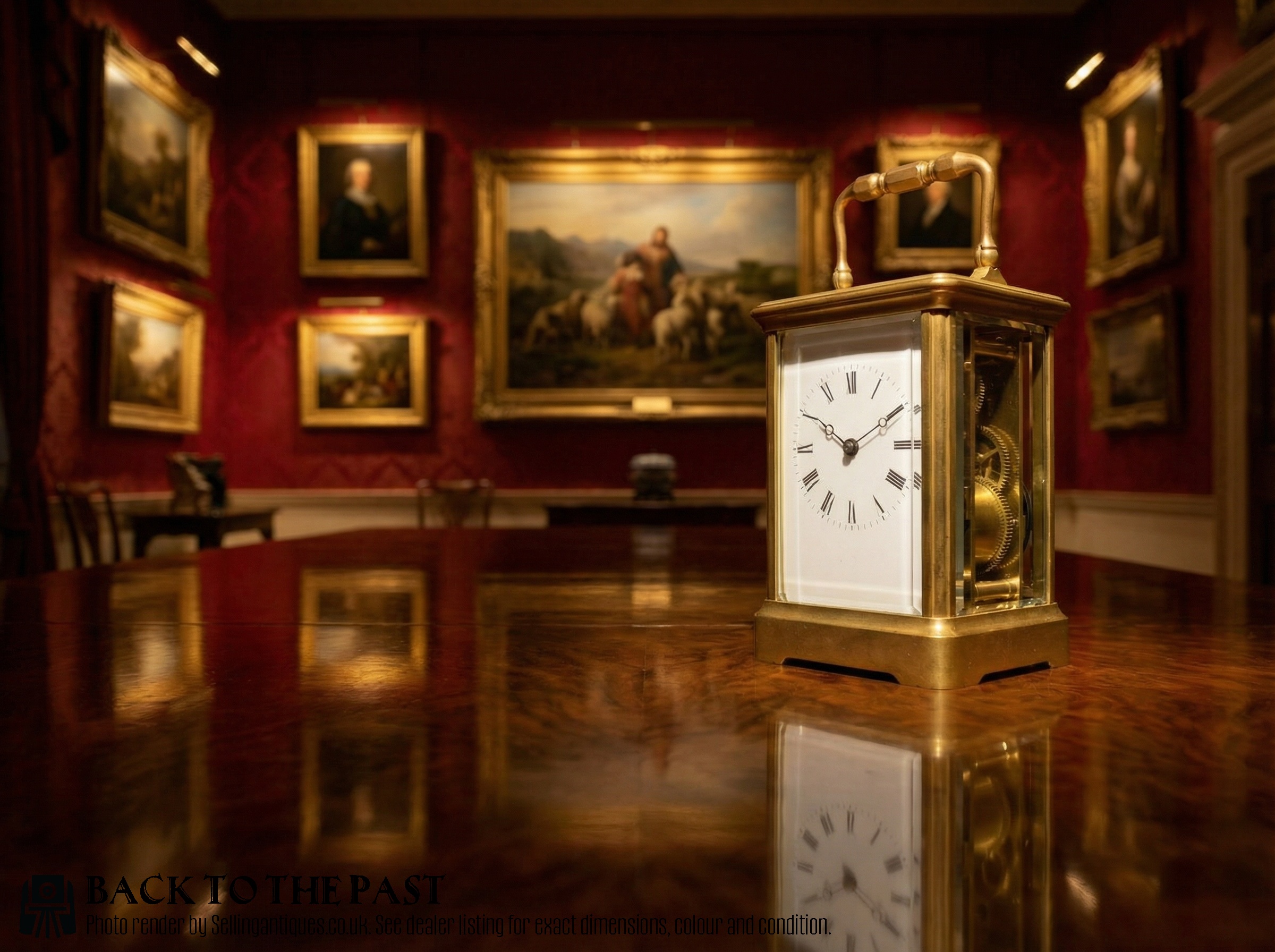
A gilt bronze carriage clock is a portable timepiece housed in a heavy metal case often fitted with glass panels to reveal the movement within. These portable timepieces range from simple travel clocks to complicated examples with repeating mechanisms and alarms.
The versions met most frequently on this page belong to the nineteenth century, including pieces styled as French Empire, Classical Revival, Edwardian, and Victorian designs. Makers and retailers such as John Walker produced various formats, from corniche cased striking models to petite-sonnerie quarter-striking variations and architectural forms.
How they were made
These clocks combine heavy cast metal cases with intricate brass gear trains and exposed glass windows. The outer metal surfaces receive a gold-coloured finish through gilt bronze, ormolu, or gilt brass techniques.
Dials frequently incorporate enamel work for the chapter rings and numerals. Complex complications such as alarms and repeating mechanisms require careful hand assembly by skilled horologists.
Retail Price Guide 2026
Typical UK retail prices for gilt bronze carriage clock, calculated from the Sellingantiques database of over a million retail prices indexed since 2003. This retail price guide relies exclusively on Sellingantiques data; no external sources or auction records are used, so the figures do not describe the wider market.
Napoleon reportedly commissioned military officers to carry portable timepieces so troops synchronized their movements on campaign.
What varies in quality
Quality differences lie in the complexity of the movement and the weight and finish of the case. A top-tier example often includes multiple complications such as petite-sonnerie quarter-striking, repeating functions, and alarms, housed in substantial architectural or corniche cases.
Simpler models rely on basic timekeeping without extra mechanical trains, housed in standard brass or gilt brass frames. The crispness of the cast decoration and the integration of enamel components further separate superior pieces from standard production.
John Walker
The Gilt Bronze Carriage Clock Glossary
- Gilt Bronze
- Metal cast and finished with a gold-coloured surface layer. This material provides the structural weight and decorative sheen characteristic of these travel timepieces.
- Corniche Case
- A classic rectangular brass or gilt bronze case style with rounded columns at the corners and a flat top. It represents a standard housing shape for nineteenth century French examples.
- Petite-Sonnerie
- A quarter-striking mechanism that sounds the hours and the quarters automatically as they pass. It is a desirable complication found in advanced horological pieces.
- Repeating
- A mechanism that sounds the last hour or quarter again when a button or lever is pressed. This allows the user to check the time in the dark.
- Enamel
- A fused glass coating applied to metal dials to create smooth, white surfaces for painted numerals. It offers a durable and clear readout for the moving hands.
Frequently Asked Questions
How do I wind a carriage clock?
Most of these mechanical clocks require a key inserted into winding arbors located on the underside or back plate of the movement. Turn the key gently until resistance indicates the mainspring is fully tensioned.
Take care not to overwind the springs, as this can cause damage to the internal gear train. Different trains control the timekeeping, striking, and alarm functions independently.
Why do some carriage clocks repeat?
The repeating function allows the owner to hear the current time chimed in the dark by pressing a button on the top of the case. This mechanical feature was particularly useful during the nineteenth century before bedside electric lighting.
Advanced models repeat both hours and quarters using nested gongs or bells. Simpler versions lack this mechanism entirely and only show the time visually.
What is a petite-sonnerie movement?
A petite-sonnerie is a striking train that automatically chimes the hours and the current quarter-hours as time progresses. It represents a high level of nineteenth-century horological skill.
These complicated pieces often work alongside alarm functions and repeating levers. They require careful handling and professional servicing to maintain accurate synchronization.