





Antique Portable Clock
These antique portable clock pieces are mechanical timekeepers built for travel, offering dependable movement and brass or gilt brass housing.
What an antique portable clock is
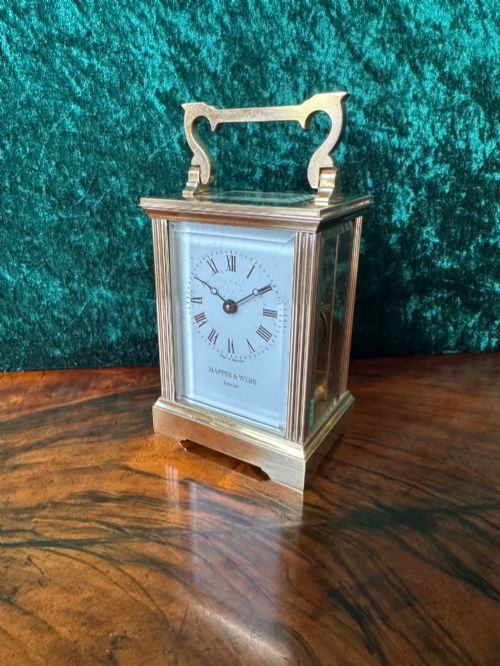
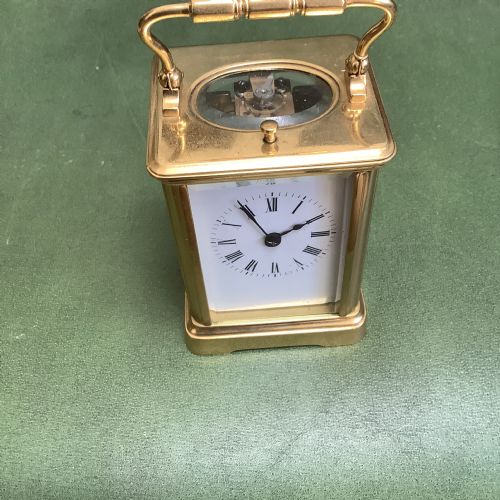
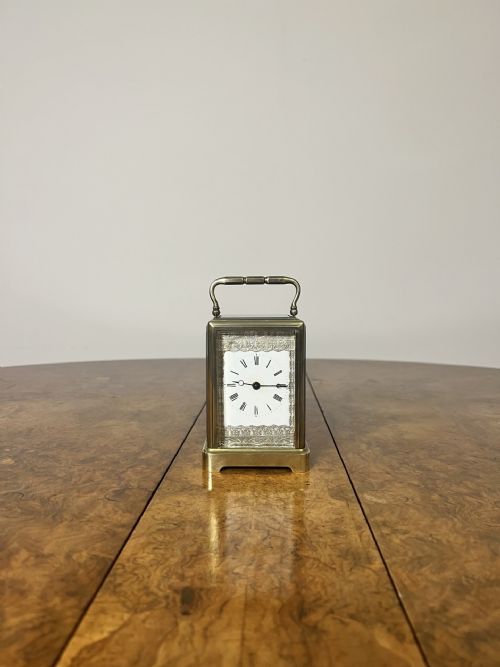
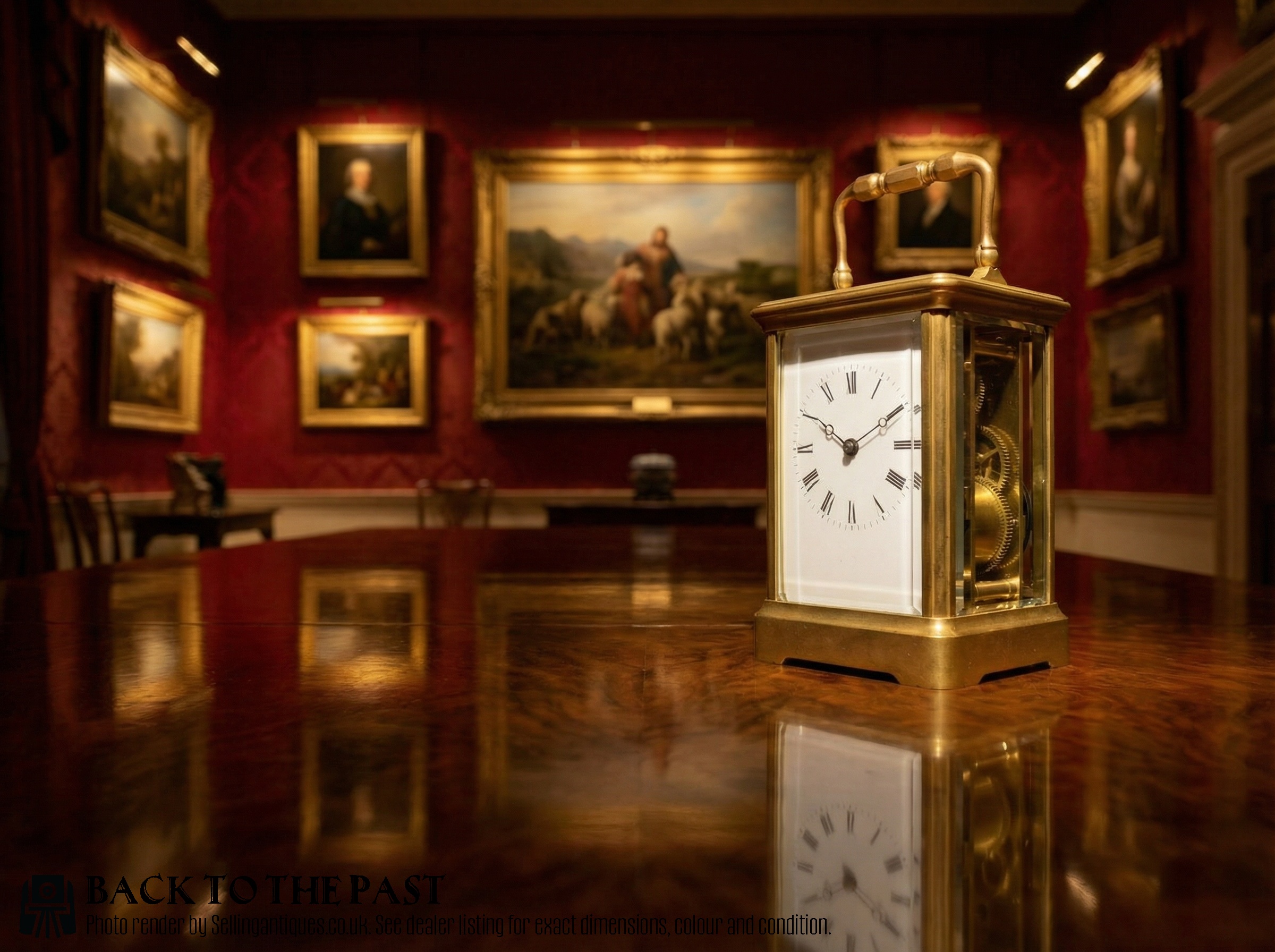
An antique portable clock principally takes the form of a carriage clock, designed for travel during the nineteenth century. These pieces combine mechanical timekeeping with protective brass or gilt brass housing, often paired with glass panels to reveal the movement within.
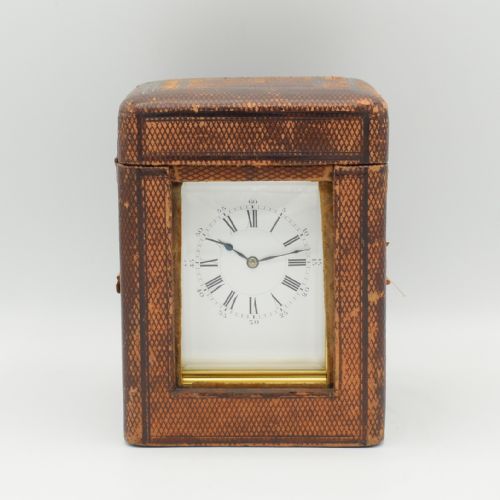
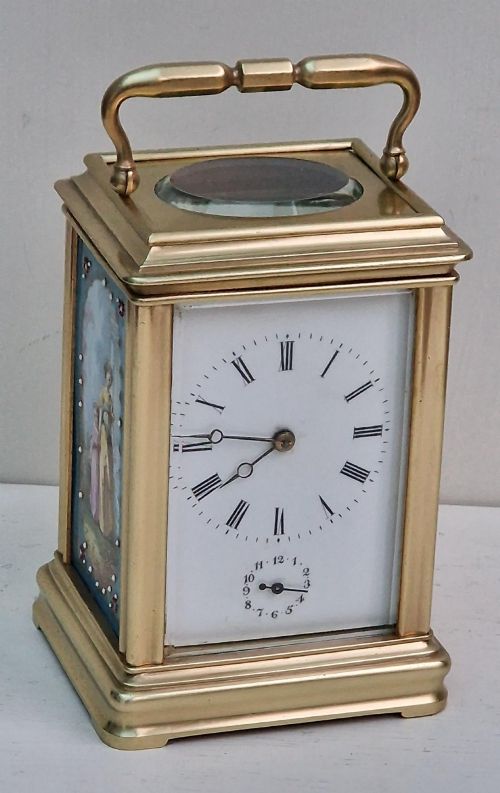
The pieces on this page span the Victorian era and nineteenth century French production. Formats range from plain brass cases to decorative examples featuring enamel panels and fitted carrying cases.
Materials and construction
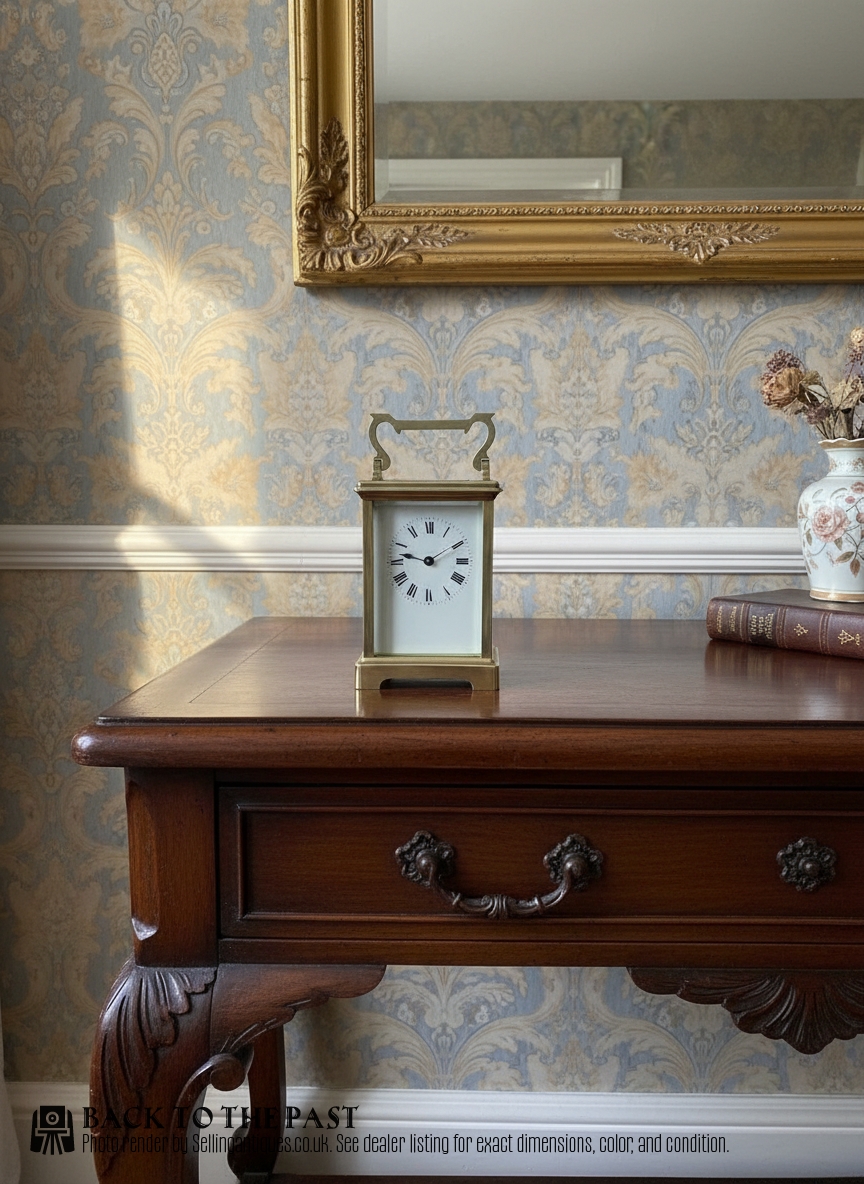
Makers utilised durable metals including brass and gilt brass for the structural frames and handles, complemented by glass windows and delicate enamel components. Some enclosures incorporate fruitwood or satinwood elements.
Movements incorporate silvered metal dials and precise mechanical gearing designed to maintain accuracy while enduring the motion of travel.
Retail Price Guide 2026
Typical UK retail prices for portable clock, calculated from the Sellingantiques database of over a million retail prices indexed since 2003. This retail price guide relies exclusively on Sellingantiques data; no external sources or auction records are used, so the figures do not describe the wider market.
Travel clocks often spent decades packed inside custom wooden travel boxes, emerging decades later with their gilt surfaces completely preserved.
Judging quality
Quality separates simple brass timekeepers from elaborate exhibition pieces through the refinement of the movement and the intricacy of the casing. Finer examples display detailed enamel work and signed dial components.
The presence of original fitted cases and complex mechanisms, such as repeater functions, elevates the standing of a piece within the nineteenth century production range.
Paul Garnier
The Antique Portable Clock Glossary
- Carriage clock
- A small, spring-driven clock designed for travel during the nineteenth century. These pieces usually feature a rectangular brass case with glass panels and a handle on top.
- Gilt brass
- Brass coated with a thin layer of gold to improve appearance and resist tarnishing. This finish appears frequently on finer nineteenth century French examples.
- Repeater
- A mechanical complication that chimes the hours and quarters on demand when a lever or button is pressed. This feature adds complexity to the movement.
- Silvered metal
- A metal dial surface treated with a silver finish to provide a clear background for numerals and hands. It offers high legibility against darker brass frames.
Frequently Asked Questions
What is an antique portable clock?
An antique portable clock is a mechanical timekeeper housed in a robust metal case, designed to be carried during travel. They typically feature glass panels and a sturdy handle.
Most examples date from the nineteenth century and originate from French or Victorian workshops, combining practical utility with decorative appeal.
How do I wind a carriage clock?
Winding requires a dedicated key inserted into the winding arbours located on the backplate or base of the movement. Care must be taken not to over-wind the mainspring.
Turn the key gently until resistance increases, ensuring the movement is kept on a stable, level surface during the process.
Are these clocks suitable for daily use?
These clocks are mechanical antiques that require gentle handling and regular professional maintenance to function reliably. While built for travel originally, modern owners generally keep them stationary.
Placing the clock in a stable environment away from direct sunlight and draughts helps preserve the delicate internal gears and enamel dials.
How do I identify a French carriage clock?
French carriage clocks from the nineteenth century often feature distinctive escapements visible through glass panels and refined brass frames. Many incorporate repeater mechanisms or enamel dial details.
Maker signatures on the backplate or dial can also confirm French origin, alongside stylistic markers common to the period.