
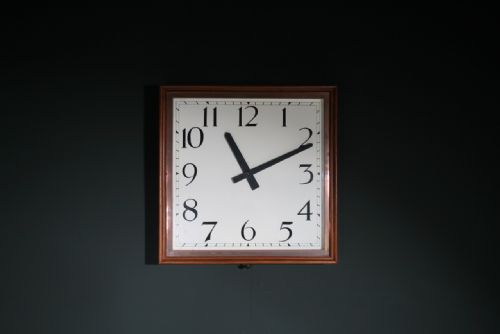


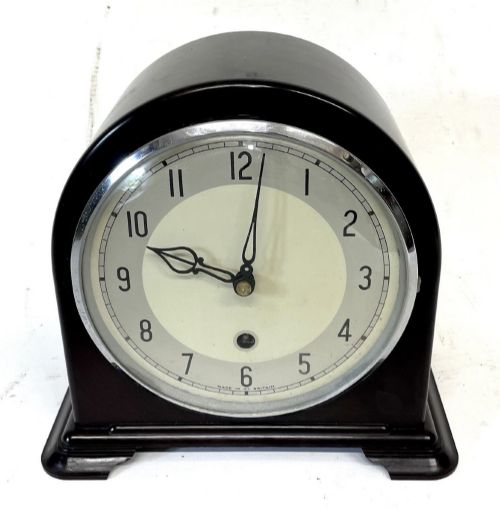

Antique Office Clock
An antique office clock brings functional British timekeeping into a room, offering the clean dial work of utility and railway spaces.
Antique Office Clock
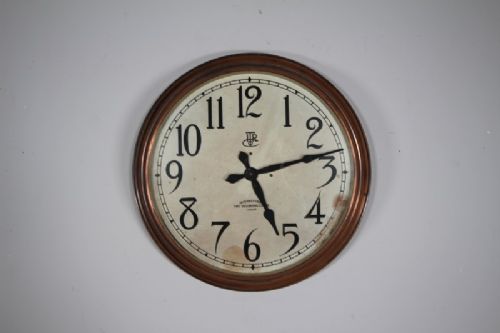
When you search for an antique office clock, you encounter timepieces designed for public and administrative spaces, most frequently taking the form of wall clocks and desk clocks. The selections on this page span the Victorian era, the Edwardian period, and the twentieth century up to the nineteen-sixties.
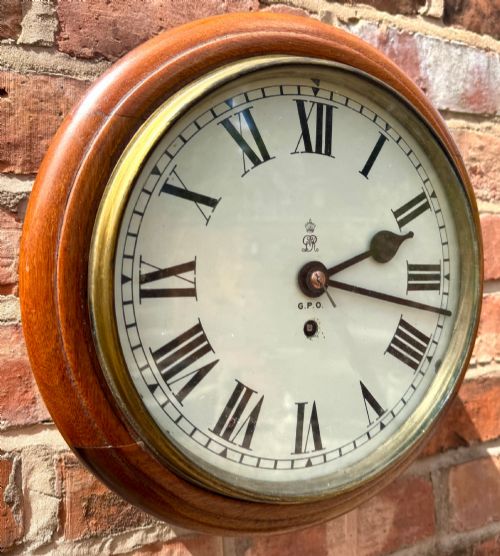
You meet wall clocks housed in mahogany, oak, or ebonised wood alongside desk clocks finished in chrome, brass, and gilt. Many examples reflect specific institutional roles, originating from railways, government departments, post offices, and council offices.
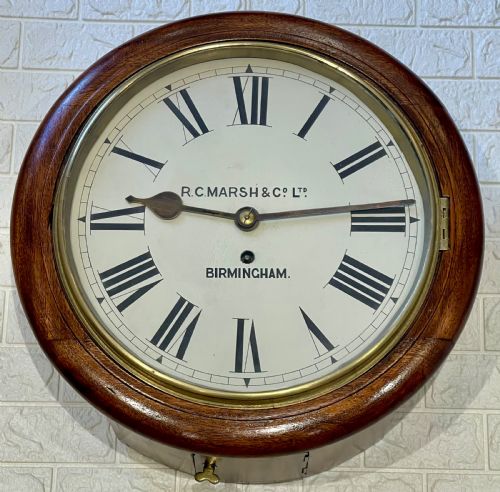
The format ranges from large octagonal factory wall clocks to compact eight-day desk movements and fusee dial wall clocks. The Victorian and Edwardian examples sit alongside Art Deco and Mid-Century Modern iterations.
Materials and construction
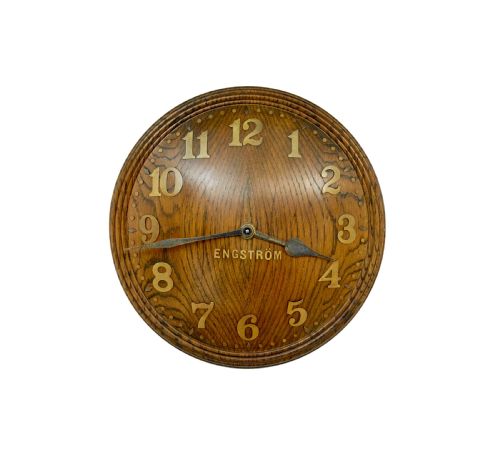
The housings rely on traditional timber framing, utilising mahogany, oak, and walnut, often shaped into round or octagonal surrounds to house the dial. Metal elements appear in brass, copper, and chrome-plated surrounds, particularly on desk models.
Movements incorporate mechanical systems such as single chain fusee mechanisms and eight-day movements with jewel counts. Glass covers protect the paper or painted dials, while stamped numbered cases identify government and railway issues.
Antique Office Clock Retail Price Guide 2026
Typical asking prices for office clock among the pieces listed under this phrase on Sellingantiques today, from the lower quarter to the upper quarter. They describe what is for sale here now, not the wider market.
Some office clocks carry mysterious stamped government numbers, reminding us they once timed telegrams and train departures.
Judging the range
The distinction across the range lies in the crispness of the dial markings and the integrity of the timber case. Superior examples retain original stamped numbers and unpolished timber grain.
The refinement of the movement, from standard timepieces to complex fusee mechanisms or multi-jewel desk movements, marks the upper tier of quality.
Engström by Zenith·Mappin & Webb·Imhof·John Walker·Joseph Jessner
The Antique Office Clock Glossary
- Fusee dial
- A clock dial paired with a cone-shaped pulley that equalises the driving force of the mainspring as it runs down.
- Drop dial
- A wall clock featuring an extended wooden trunk below the dial, allowing room for a longer pendulum swing.
- School clock
- A simply styled wall clock with a clean dial, commonly utilised in classrooms and administrative offices.
- G.V.R.
- The royal cipher denoting the reign of King George V, frequently stamped on government-issued timepieces.
- Eight-day movement
- A clock mechanism designed to run for eight days on a single winding.
Antique Office Clock: Frequently Asked Questions
How do I wind an antique fusee wall clock?
A fusee clock requires a key inserted into the winding hole on the dial face, turned gently until resistance indicates the mainspring is fully tensioned.
Care must be taken not to overwind the mechanism, ensuring the chain sits correctly on the fusee cone during the process.
Where were these office clocks originally used?
These timepieces served in railway stations, post offices, government departments, and municipal council buildings across Britain.
Their clear dials and robust movements ensured workers could read the time accurately from across a busy room.
What is the difference between a wall clock and a desk clock?
Wall clocks are larger timepieces housed in wooden surrounds intended to be hung securely at eye level.
Desk clocks feature compact, portable designs in metal or gilt brass, built to sit directly upon a flat surface.
How do I identify a post office clock?
Post office clocks typically feature a fusee movement inside a mahogany or oak case bearing institutional markings or stamped serial numbers.
Many carry specific cyphers on the dial or case corresponding to the reigning monarch at the time of government issue.