


19th Century Repeating Clock
A 19th century repeating clock brings mechanical precision and portable luxury into any room through its ability to chime the hours and quarters on demand.
19th Century Repeating Clock
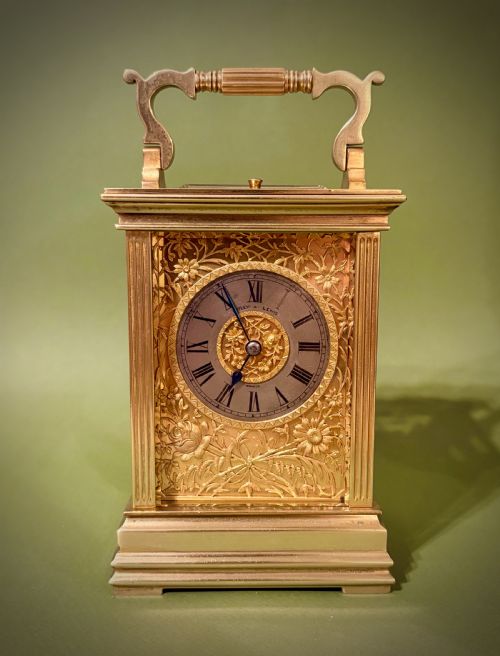
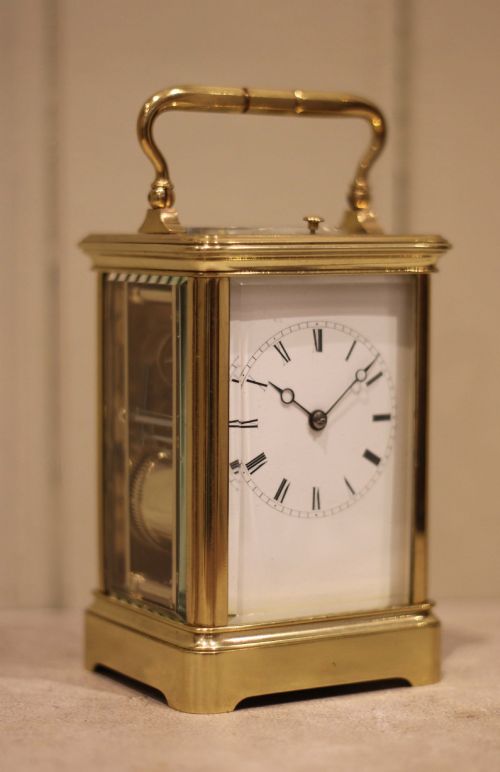
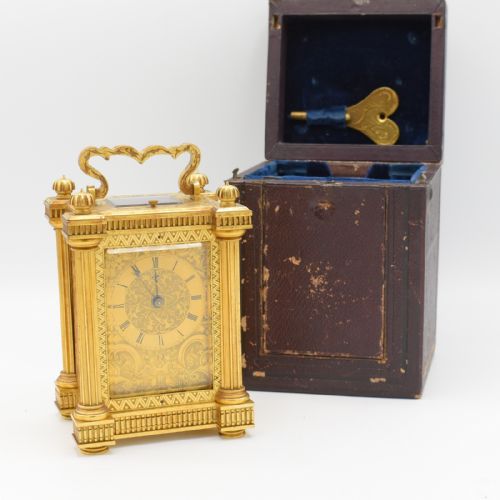
A 19th century repeating clock principally takes the form of a portable carriage clock housed in brass and glass, designed for travel or domestic placement. Most pieces originate from French workshops, dating from the mid to late 19th century through the early 20th century.
The defining mechanical attribute of these objects is the repeater mechanism, which sounds the last hour or quarter-hour when a button or pendant on the case is pressed. Buyers seek out these instruments for their intricate gear trains, visible escapements, and striking capabilities.
The selection ranges from simple brass framed carriage clocks to ornate gorge cases adorned with enamel paintings or floral panels. Alongside these portable designs, occasional bracket clocks appear from the period, expanding the variety of striking movements available.
Materials and construction
Brass forms the structural backbone of these pieces, frequently finished with gilding or polished to a bright shine, while steel components drive the intricate spring-driven movements. Heavy bevelled glass panels enclose the clock, allowing a clear view of the escapement and gear trains working within.
Enamel provides the face for the dials and frequently surfaces in painted floral designs or decorative panels set into the sides of the case. Skilled artisans engraved the brass framing with geometric or foliate patterns to enhance the visual weight of the housing.
Listings span the Victorian era alongside specific years from the 1850s through 1900, using brass, glass, enamel, and steel.
Distinctions in quality
The refinement of the movement dictates the standing of a piece, with grand sonnerie and petite-sonnerie systems requiring far greater mechanical complexity than standard hour-striking mechanisms. The presence of additional complications like alarms or multi-train gearworks elevates the standard of craftsmanship.
Case execution separates ordinary examples from exceptional ones, particularly when frames feature deep hand engraving, heavy gilt bronze castings, or intricate enamel panel work. The retention of original gilding and fully restored, operational movements define the upper tier of surviving pieces.
Howell And James·Drocourt·Dwerrihouse And Bell·Captain Henry·Hunt And Roskell·Dent·Henri Jacot·Francois Arsene Margaine
The 19th Century Repeating Clock Glossary
- Gorge case
- A distinct rectangular carriage clock case style featuring a stepped top plate and curved pillars.
- Repeating movement
- A mechanism that sounds the time on a bell or gong when a plunger is pressed by hand.
- Grand Sonnerie
- A striking system that automatically chimes both the hours and the passing quarters.
- Escapement
- The internal assembly that controls the release of power to regulate the timekeeping of the clock.
- Carriage clock
- A portable spring-driven timepiece developed for travel with a handle on top and glazed panels.
19th Century Repeating Clock: Frequently Asked Questions
How do I operate the repeater mechanism?
Press the button or plunger located on the top of the case to activate the strike train.
The clock will immediately sound the most recent hour or the corresponding quarters depending on the specific movement built into the piece.
What is the difference between striking and repeating?
A striking clock sounds the hours automatically as time passes without any intervention from the owner.
A repeating clock includes an extra mechanism that sounds the time on demand whenever a button is pressed.
Where were these clocks made?
The vast majority of these portable timepieces originate from French workshops, particularly in Paris, during the Victorian era.
A smaller number of bracket clocks and retail pieces were produced or retailed by British watchmakers in London.
How should I care for a repeating clock?
Wind the mainsprings carefully using the proper key and avoid forcing any mechanical stops.
Keep the instrument away from direct sunlight and extreme temperature shifts to protect the delicate oils and enamel dials.