

Station Dial Clock
When you search for a station dial clock, you are looking at utilitarian timepieces built for visibility in public offices, railway platforms, and boardrooms.

Station Dial Clock
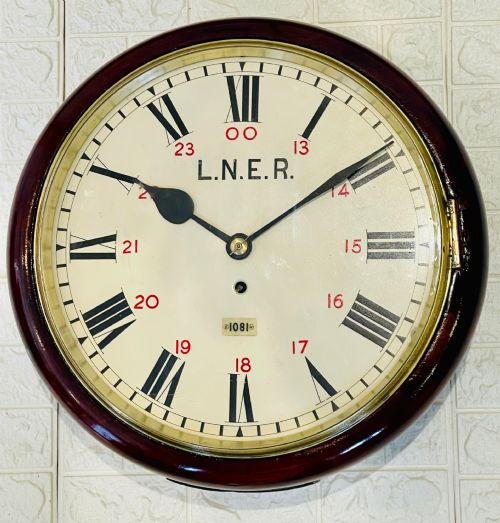
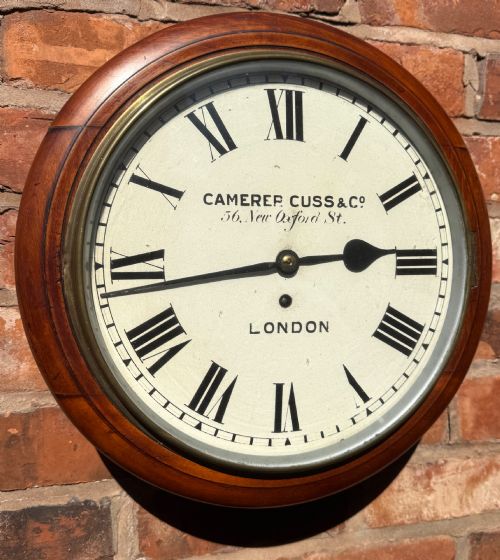
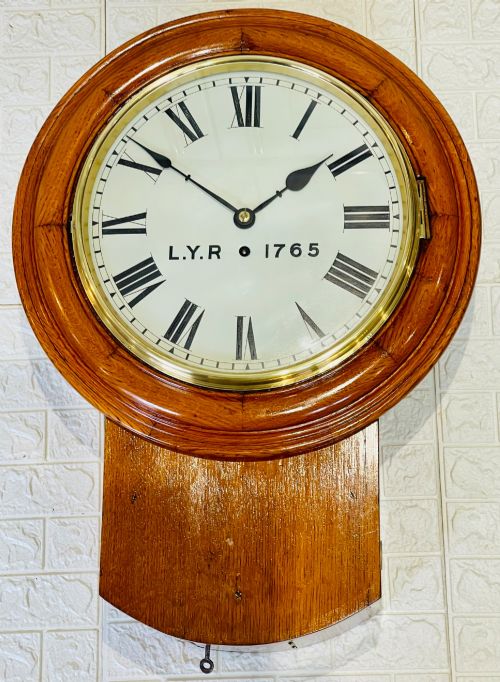
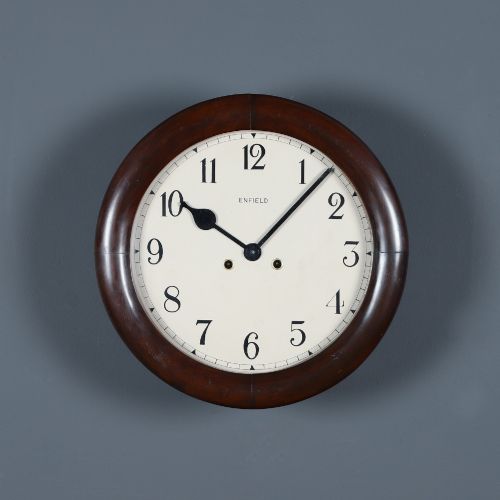
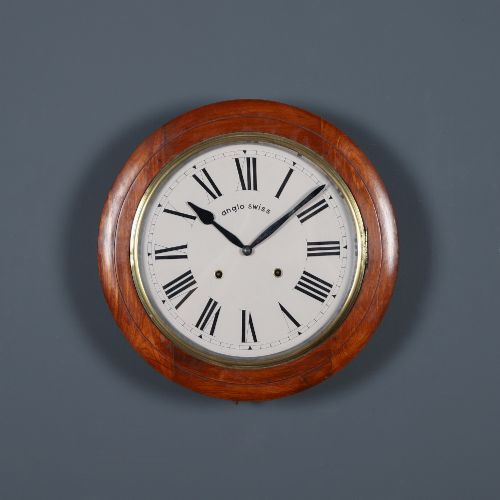
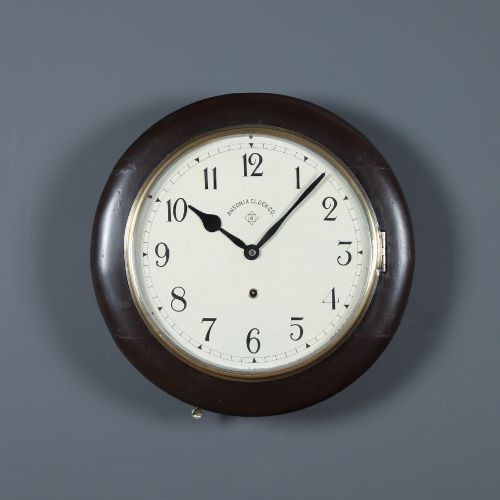
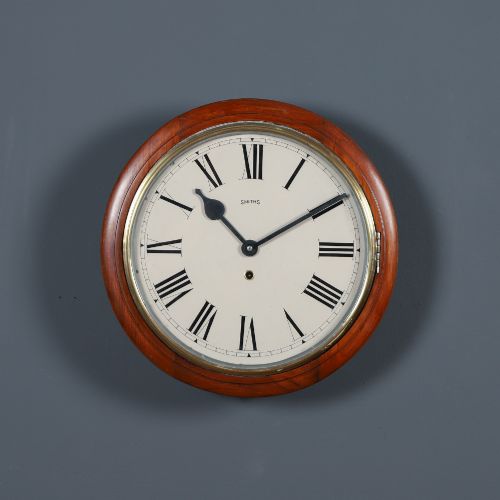
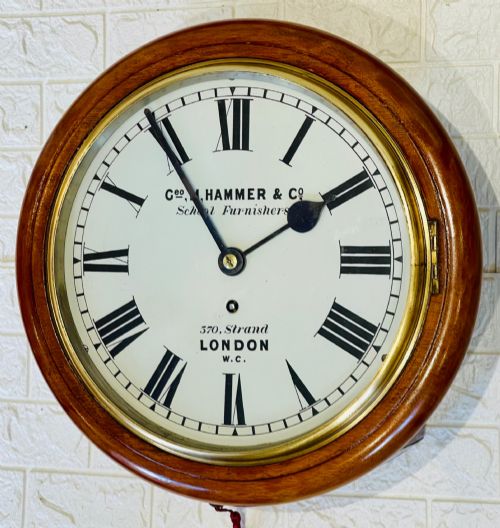
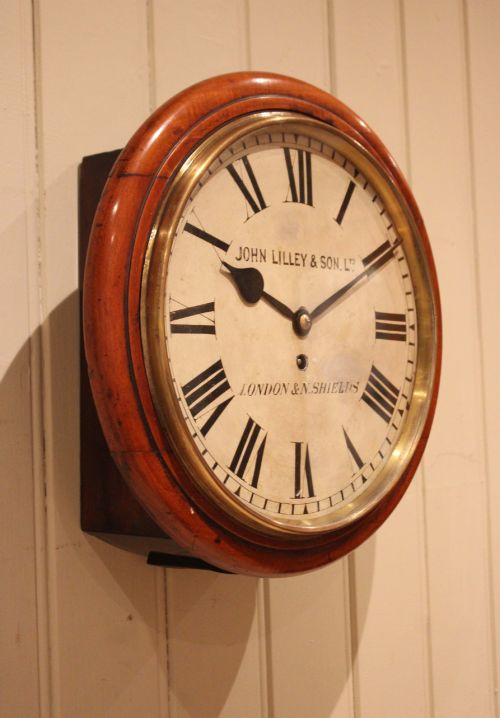
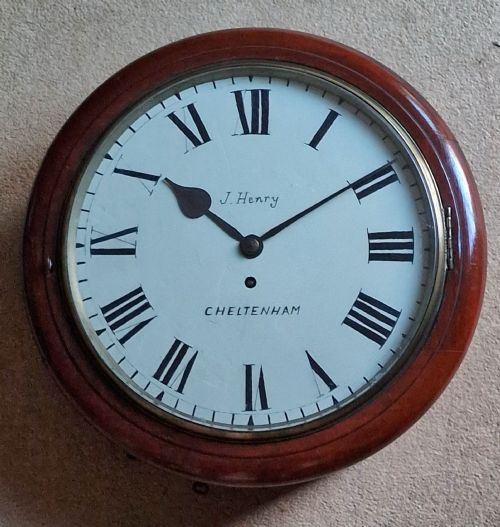
A station dial clock is a heavy-duty wall timekeeper designed for immediate legibility from a distance, featuring a circular face protected by glass and enclosed within a robust timber housing. These items frequently display regional or national railway company initials on the dial face, linking them directly to transport history.
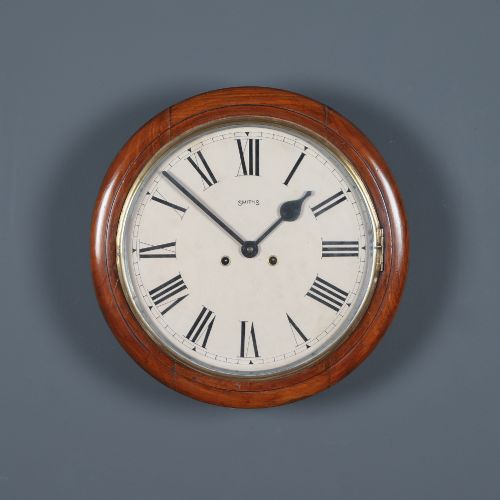
The version most commonly met on this page is the fusee wall clock enclosed in a mahogany or oak case, dating from the Victorian or Edwardian eras. Specimens range from compact eight-inch examples to large fifteen-inch models originally mounted in prominent public spaces.
Beyond the classic railway variants, the selection includes pieces stamped for specific military departments, municipal offices, and industrial factories. These wall clocks share the same fundamental layout of a bold numeral ring paired with sturdy hands.
Materials and construction
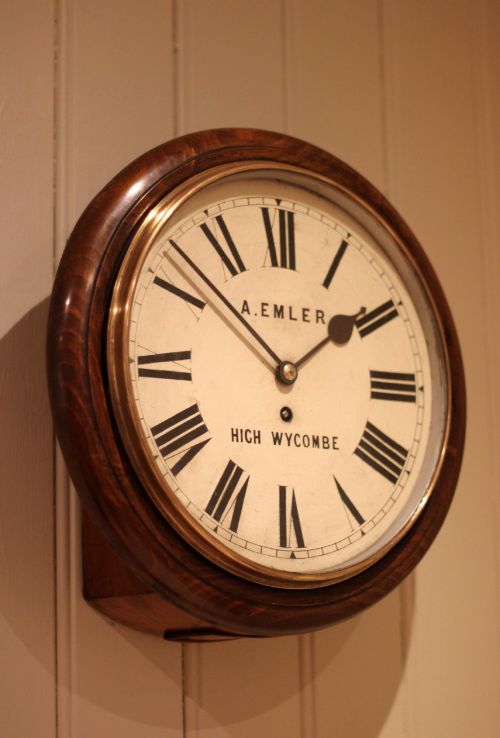
Cases are predominantly fashioned from solid mahogany, oak, or beech, shaped into round or drop-dial configurations with side access doors for winding and regulation. Timber surrounds are selected for structural stability to protect the delicate movement from environmental shifts.
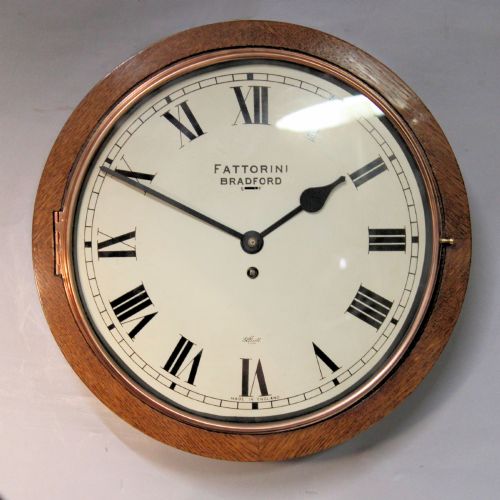
Dials are constructed from painted iron, enamel, or brass, featuring crisp black Roman or Arabic numerals designed to remain readable under poor lighting conditions. Heavy glass panes in brass bezels protect the face from dust and damage.
Movements rely on brass gear trains driven by fusee or chain mechanisms, sometimes incorporating lever escapements or anchor setups for precise timekeeping. Maker signatures and station designations are frequently painted directly onto the dial surface or engraved onto the movement backplate.
Station Dial Clock Retail Price Guide 2026
Typical asking prices for station dial clock among the pieces listed under this phrase on Sellingantiques today, from the lower quarter to the upper quarter. They describe what is for sale here now, not the wider market.
Listings feature timber cases in mahogany, oak, and beech, housing brass fusee movements spanning the Victorian, Edwardian, and mid-twentieth-century periods.
Distinctions in quality
The caliber of a station dial clock rests largely on the precision of its mechanical movement and the reputation of the maker inscribed on the dial. Signed examples originating from established London retailers or regional clockmakers command greater interest than unmarked pieces.
Originality of components dictates the standing of a specimen, particularly the survival of the matching pendulum, winding key, and dial paint. Timbers that retain their deep patination without excessive restoration represent a higher grade of preservation.
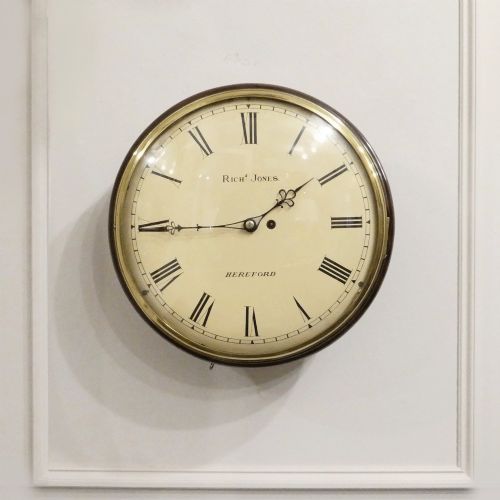
Richard Jones of Hereford·Elliott·Camerer Cuss and Co London·Smiths·Enfield·Ansonia·J Henry Cheltenham·George Clarke Tring·Henry Harris of Monythuslwyn·W and H Sch·Joseph Bird of Stroud·John Walker·Mapin and Webb·GW Barker Chiswick·Clarke York
The Station Dial Clock Glossary
- Fusee
- A conical pulley connected to the mainspring by a chain or gut line, designed to equalise the torque as the spring unwinds. This mechanism ensures consistent force is delivered to the gear train throughout the winding cycle.
- Drop dial
- A clock case featuring a circular dial section at the top attached to a lower trunk or box that houses a swinging pendulum. This elongated design accommodates the drop of the weight or pendulum safely.
- Chain fusee
- A specific fusee movement variation that utilises a miniature metal chain rather than a gut cord to connect the spring barrel to the conical pulley. It provides exceptional durability and longevity in heavy wall clocks.
- Lever escapement
- A mechanical linkage that controls the release of power from the gear train to the pendulum or balance wheel. It allows the timepiece to maintain accuracy even if mounted on a vibrating wall.
- Convex dial
- A clock face that curves outward toward the viewer rather than sitting completely flat. This shape reduces glare from overhead light sources and improves legibility from wide viewing angles.
Station Dial Clock: Frequently Asked Questions
How do fusee movements work?
A fusee movement uses a conical pulley connected to a chain that winds around the mainspring barrel. As the spring loses tension, the chain moves to a wider section of the cone, maintaining steady power.
This clever mechanical compensation prevents the clock from losing speed as the power diminishes between windings.
Where were these clocks originally used?
These timepieces were mounted in railway stations, telegraph offices, schools, and military installations where keeping accurate time was critical for operations. Their bold dials ensured staff and passengers could check the time quickly from across a busy platform.
Railway examples often bear company lettering on the dial face to denote the specific network they served.
How do I wind a wall clock?
Most fusee wall clocks require a specialised key inserted into a small hole in the dial face to tension the mainspring via the chain and pulley system. Care must be taken not to overwind the mechanism.
Routine maintenance involves regular checks of the suspension spring and occasional professional cleaning of the brass gear train.
How do I identify the railway company marks?
Railway company inscriptions such as initials or full names are painted directly onto the dial surface or stamped into the timber case. These markings indicate the specific transport network that once owned and maintained the timepiece.
Matching the numbers on the back of the case to railway logs can reveal further operational history.