
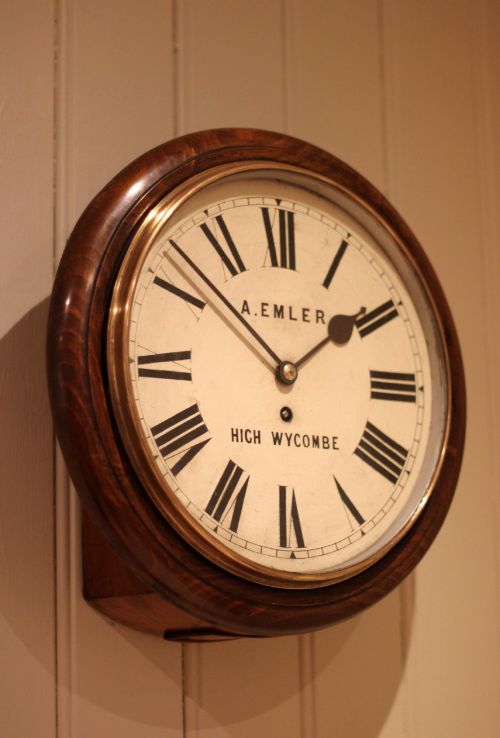
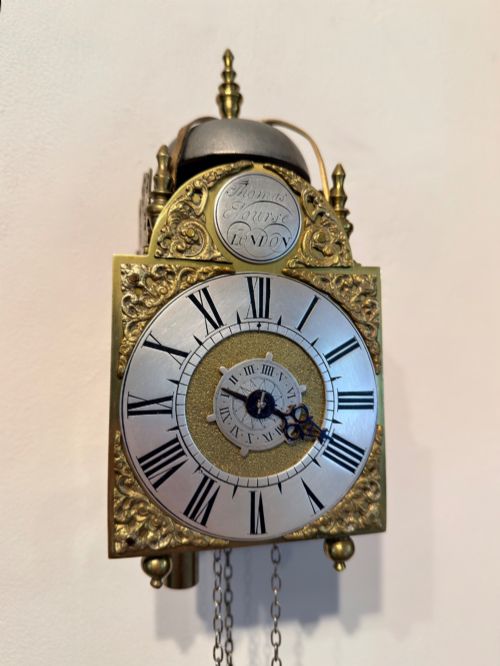
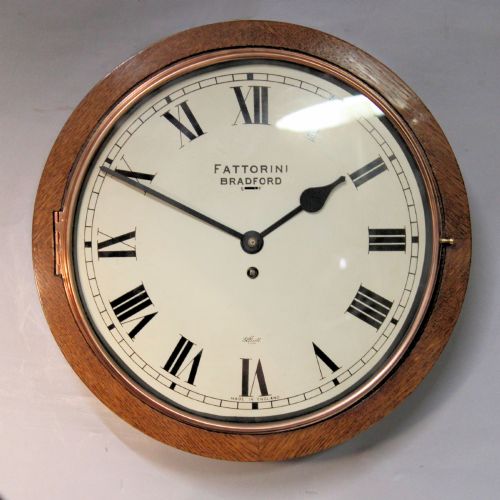
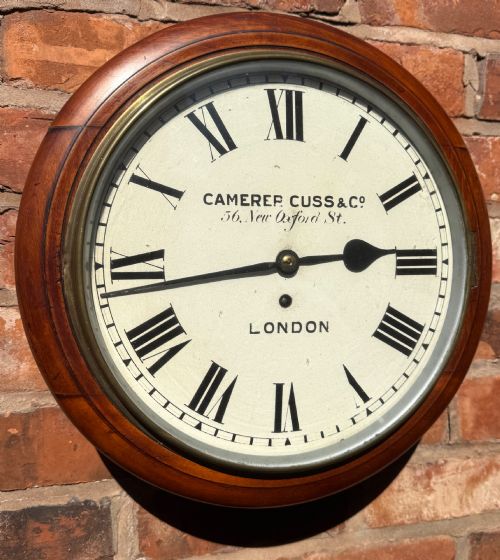

English Dial Wall Clock
An english dial wall clock combines dependable timekeeping with traditional craftsmanship, bringing functional history to any room.
What They Are
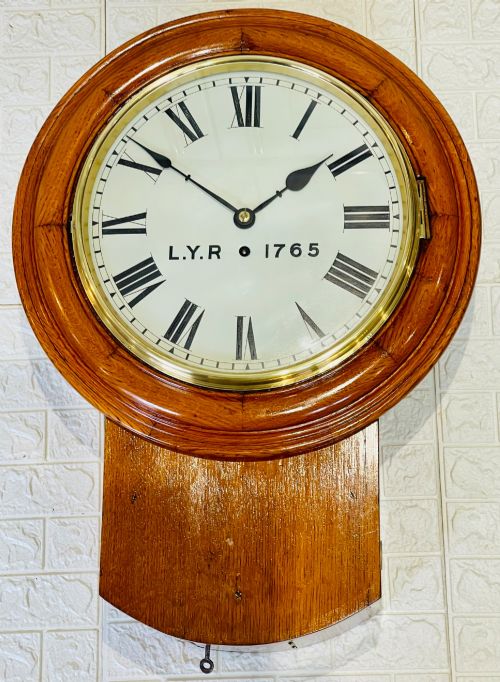
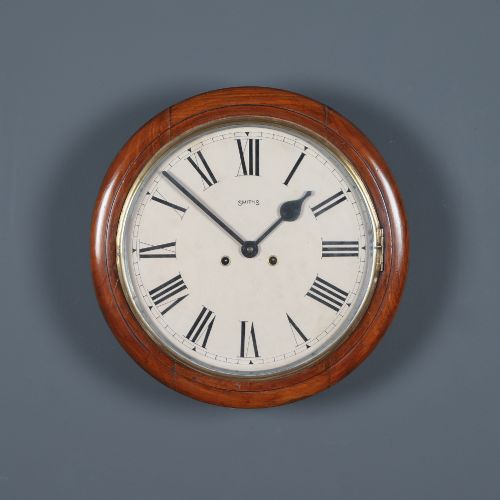
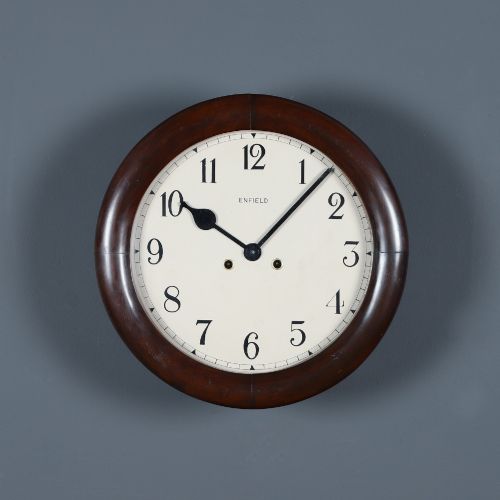
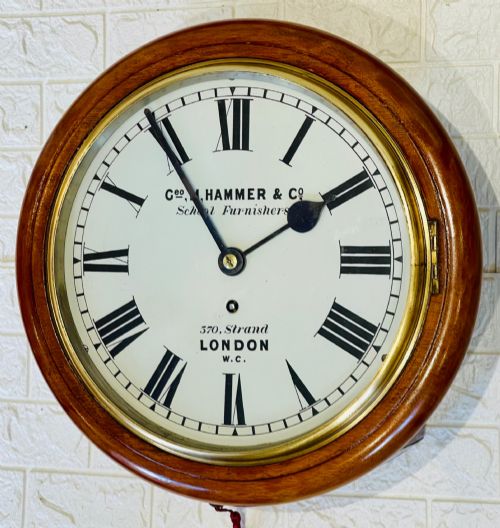
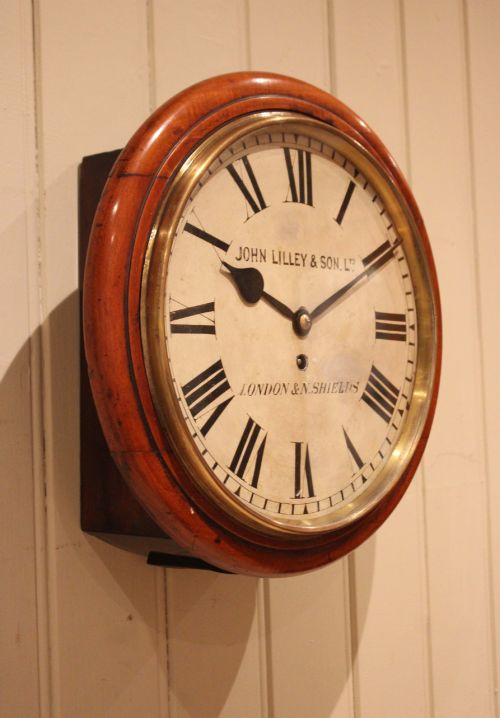
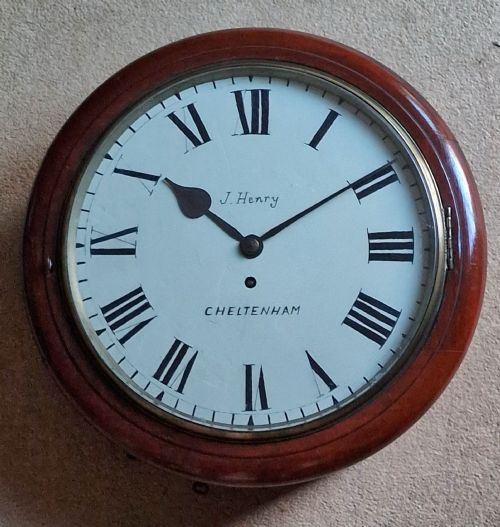
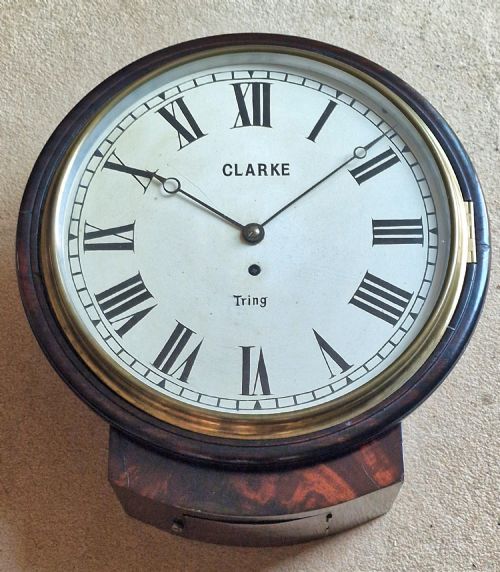
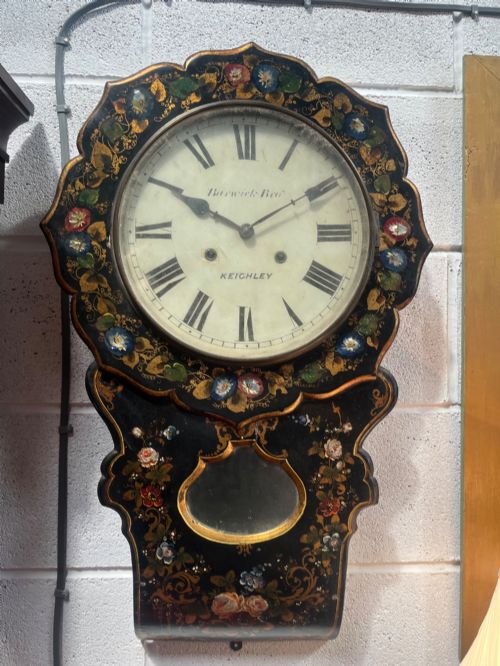
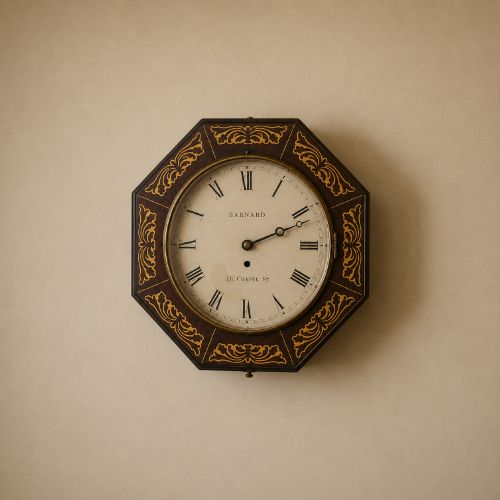
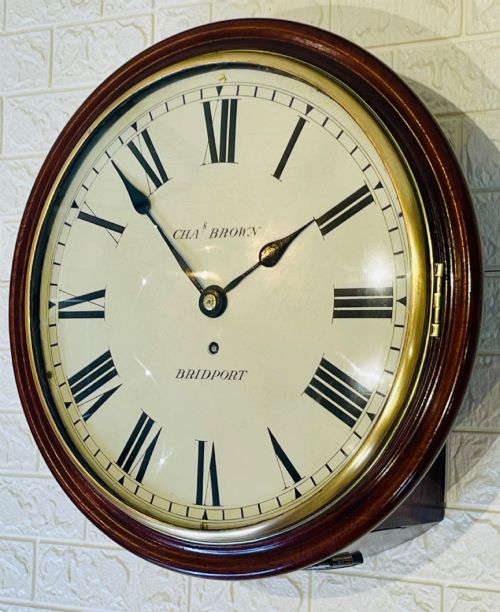
An english dial wall clock is a timepiece designed for mounting on a wall, typically featuring a prominent circular face. These clocks appear in various forms, including standard dial variants, trunk dials, and drop-dial versions.
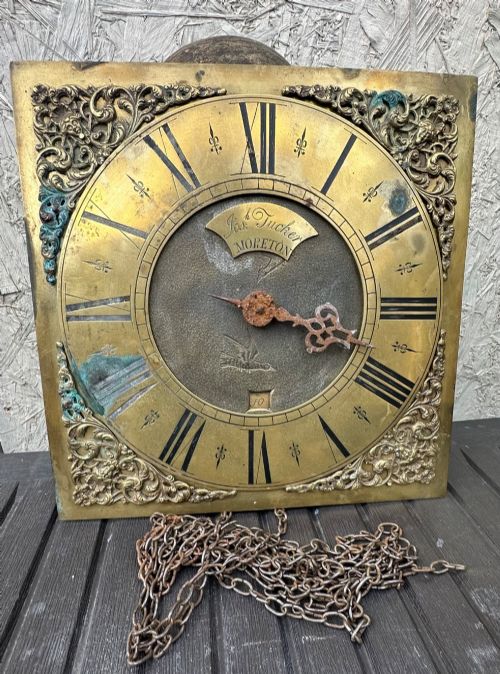
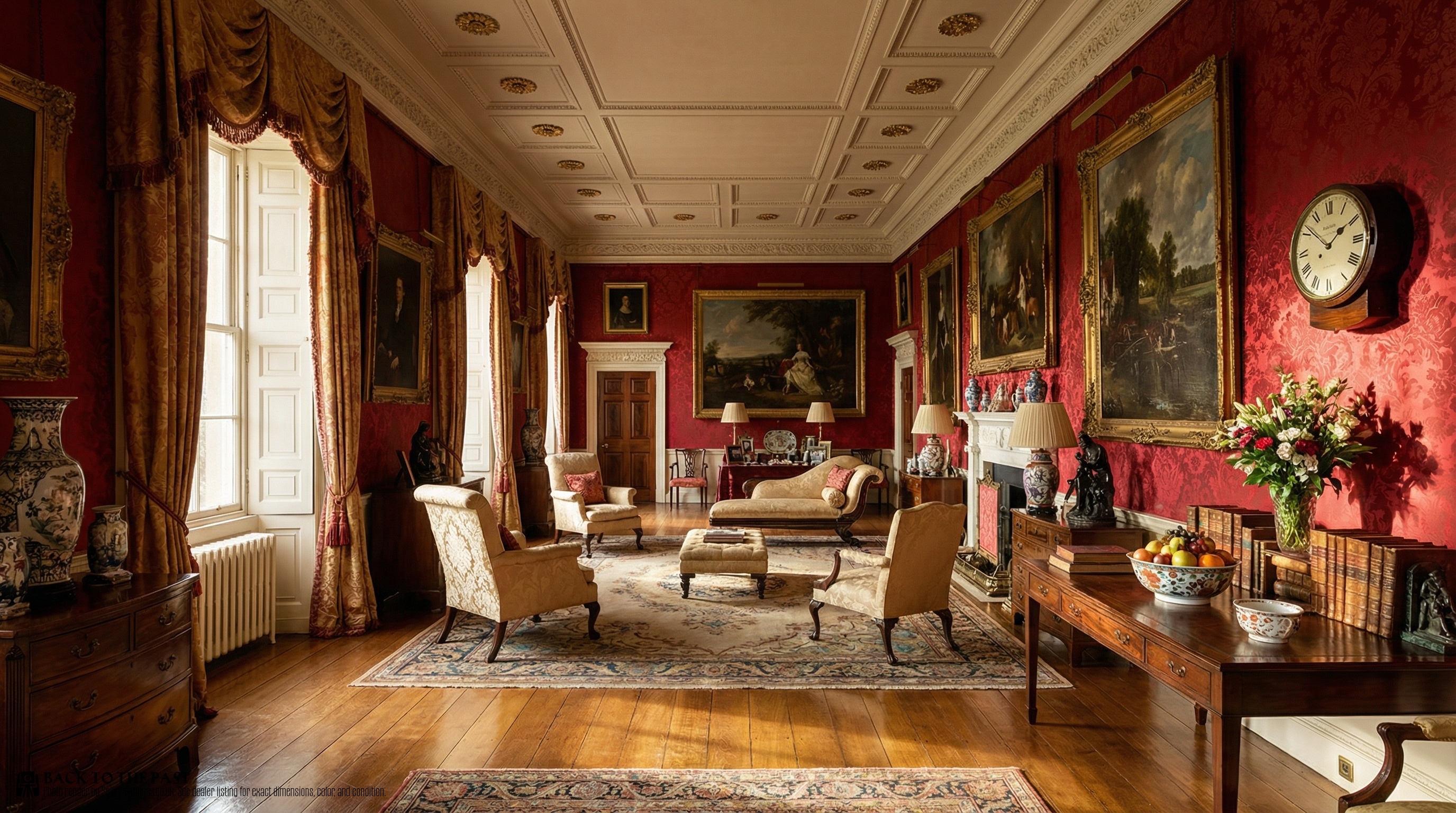
The pieces on this page span several periods, originating from the Georgian, Regency, Victorian, and Edwardian eras. Buyers frequently encounter mahogany cases paired with brass, glass, and enamel elements.
Dial sizes range from small eight-inch formats to extra large variants suitable for substantial spaces. Many examples originate from provincial makers as well as London workshops.
How They Were Made
Casework relies heavily on mahogany and oak timber, sometimes finished with inlay or brass detailing. Dials utilise materials such as wood, metal, and enamel, often shaped in convex or bowed profiles.
Mechanisms typically employ fusee movements, which regulate the pull of the mainspring for consistent timekeeping. Some examples incorporate striking functions, bell strikes, or verge escapements.
Retail Price Guide 2026
Typical UK retail prices for english dial wall clock, calculated from the Sellingantiques database of over a million retail prices indexed since 2003. This retail price guide relies exclusively on Sellingantiques data; no external sources or auction records are used, so the figures do not describe the wider market.
Some provincial clocks retain faint pencil marks left inside the case by nineteenth-century jobbing watchmakers during routine service calls.
What Varies in Quality
The distinction between different tiers of quality lies in the execution of the movement and the finesse of the case construction. Clocks featuring signed dials from notable makers or complex double fusee striking mechanisms represent higher levels of horological ambition.
Case materials and secondary decorative choices, such as brass inlay or carefully selected mahogany grain, separate standard utility pieces from more finished examples. The proportion between the dial face and the trunk housing also dictates visual balance.
Joseph Bird of Stroud·Sansom·Dent·Thwaites and Reed·Pyott Lewes·Barrauds Cornhill London·William Stevens of Cirencester·James Tupman London·Wild·Burlington London·Thomas Lindey of Bristol·Anthony Furnace of Keswick·Thomas Harrison of London·H Williamson Ltd Coventry·James Hargraves of Bawtry·Edward Tulet London·J Matthews Bristol
The English Dial Wall Clock Glossary
- Fusee
- A conical pulley used in clock movements to maintain an equalized pull from the mainspring as it unwinds. This mechanism ensures consistent power delivery for accurate timekeeping.
- Drop-dial
- A clock case design where the circular dial sits above a lower trunk extension that houses the pendulum. This configuration accommodates the pendulum swing within a compact wall-mounted profile.
- Convex dial
- A clock face that curves outward toward the viewer. This shape helps reduce glare from windows and ambient light.
- Trunk dial
- Another term for a drop-dial wall clock, referencing the extended lower portion of the wooden case. It provides housing for a longer pendulum.
- Verge escapement
- An early type of escapement mechanism that controls the release of gear train power using a crown wheel and pallets. It is commonly found in eighteenth-century examples.
Frequently Asked Questions
What is a fusee movement?
A fusee movement uses a conical pulley connected to the mainspring by a cord or chain. This design equalizes the diminishing force of the spring as it runs down.
Such movements are prized for helping clocks maintain steady accuracy over an eight-day period between winds.
How do I date an english dial wall clock?
Dating relies on stylistic clues in the mahogany case, the shape of the dial, and signature details on the face. Georgian and Regency examples often feature distinct wood grain and maker signatures.
Victorian and Edwardian pieces introduce variations in dial materials and proportions that help narrow their era of manufacture.
Where were these clocks originally hung?
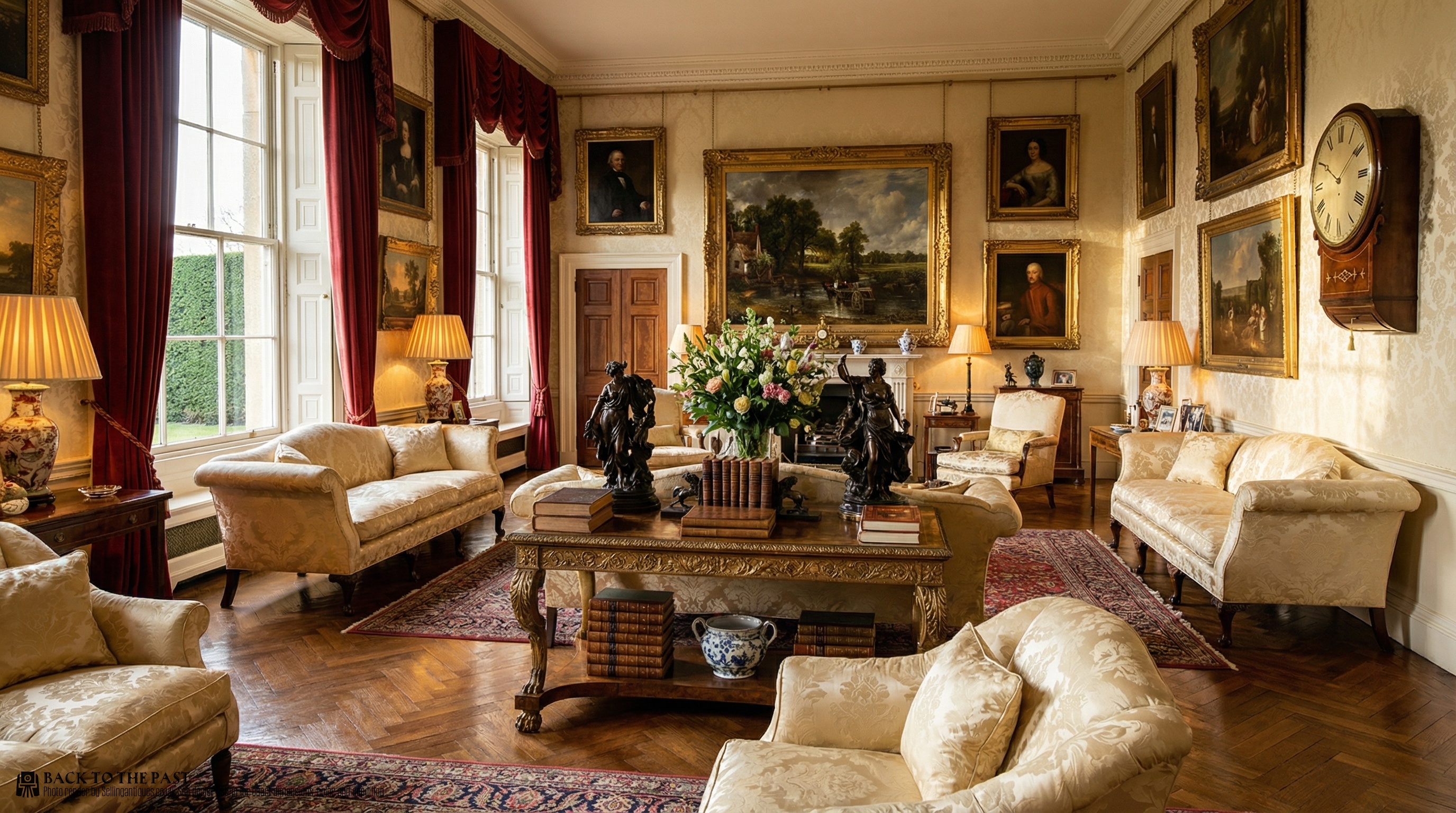
These timepieces were historically placed in public spaces, offices, railway stations, and domestic hallways. Their clear dials allowed people to check the time quickly from across a room.
Drop-dial and trunk configurations suited spaces where wall depth or vertical mounting required a balanced proportion.
Are wooden dials authentic?
Wooden dials appear on certain eighteenth and early nineteenth-century English wall clocks. Craftsmen painted and numbered these wooden faces directly before the widespread adoption of enamel.
Examples with wooden dials demonstrate traditional regional craftsmanship from provincial makers.