


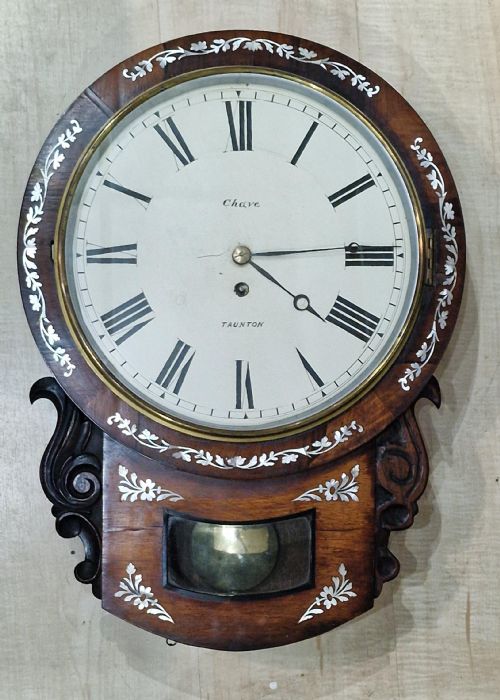


Brass Inlaid Wall Clock
A brass inlaid wall clock brings crisp metalwork and rich timber together to keep time with quiet, domestic elegance.
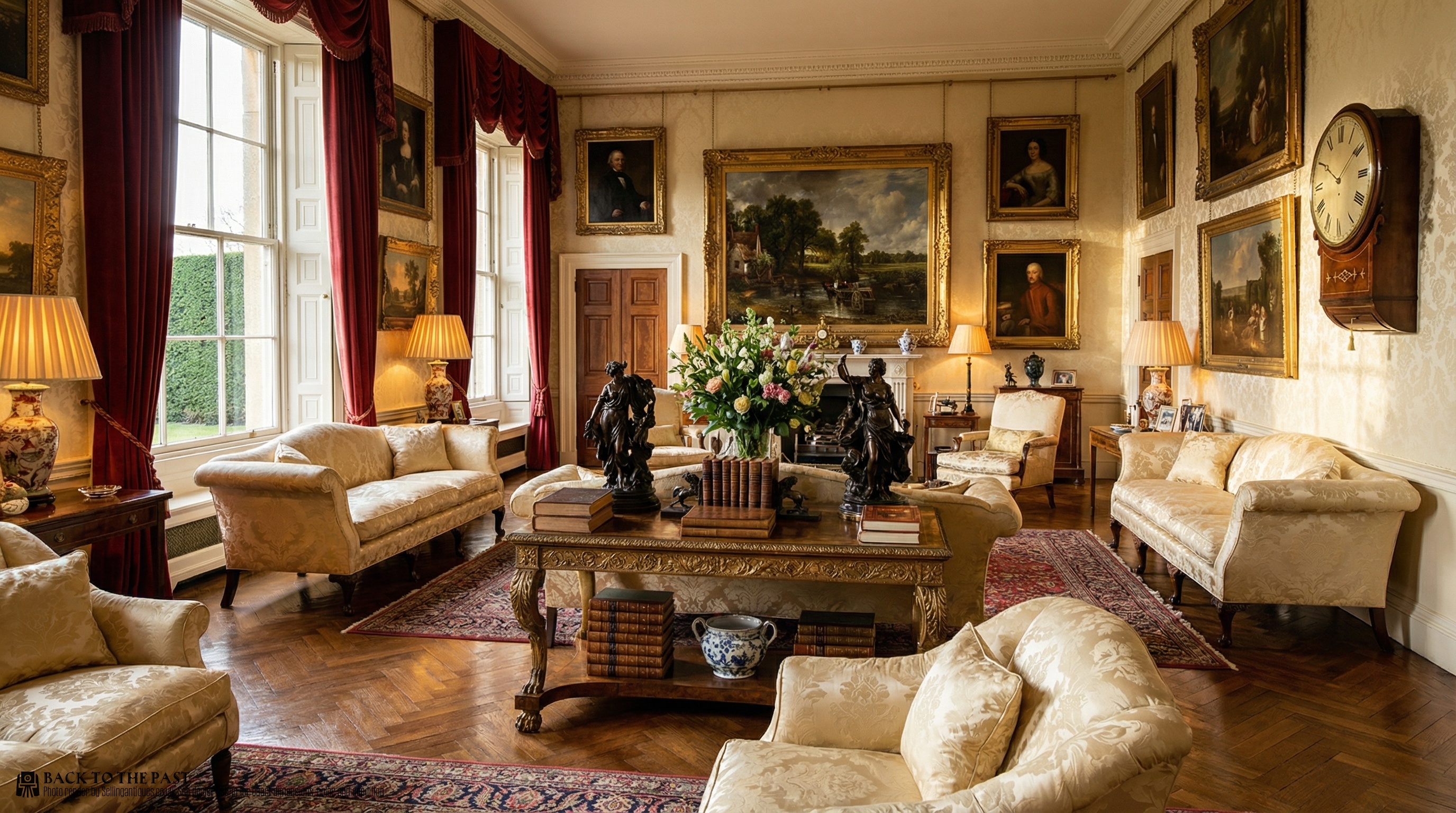
What a brass inlaid wall clock is
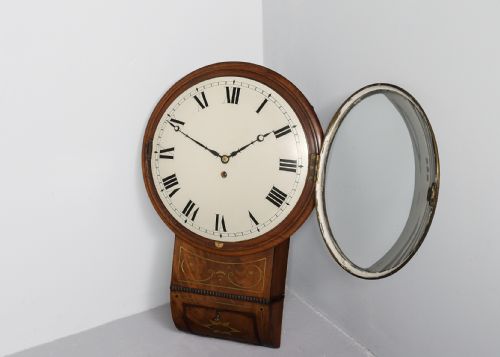
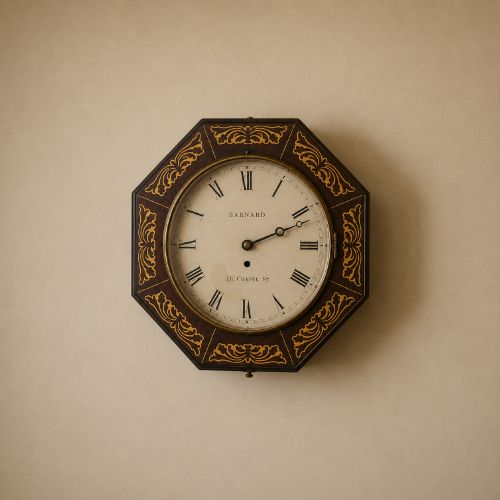
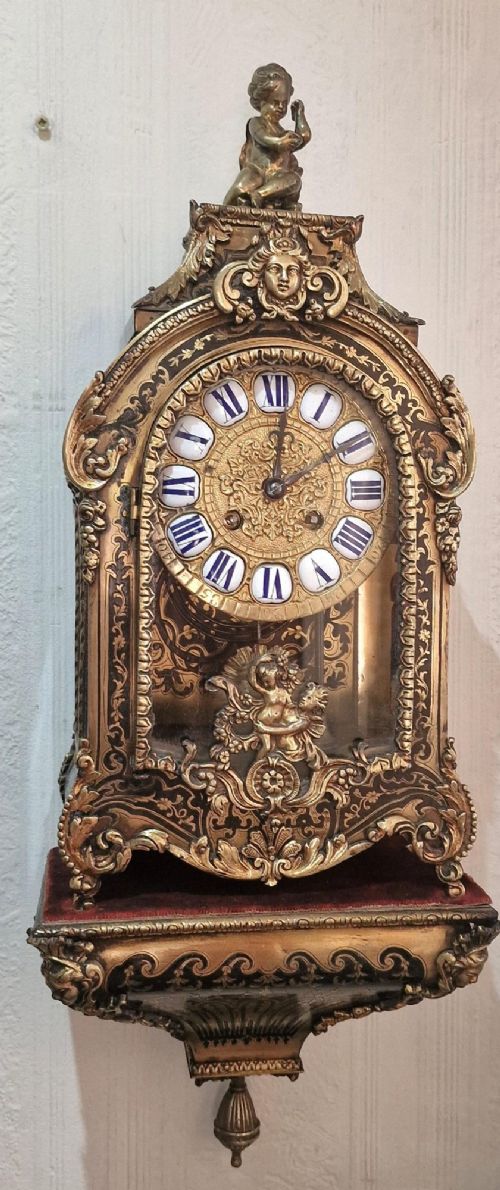
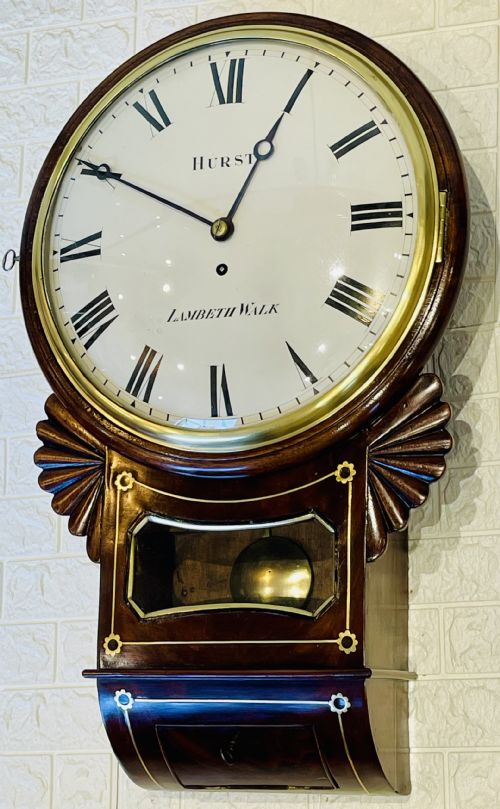
A brass inlaid wall clock combines traditional timekeeping with decorative metal scrollwork and banding set into the timber case. These pieces typically take the form of drop dials, trunk dials, or library clocks designed to hang securely on a wall. Most examples found here belong to the Regency, Victorian, and William IV periods, spanning the nineteenth century.
The timber cases predominantly feature dark, figured woods such as mahogany and rosewood, occasionally appearing in oak. The dials range from standard convex surfaces to bowed faces, often paired with glass protection. Makers from regional centres like Bristol and London signed several notable pieces recorded in the archive.
How they were made
Cabinetmakers constructed the wooden cases from mahogany or rosewood, cutting precise channels into the grain to receive thin strips of yellow brass inlay. This metalwork often forms geometric patterns, floral motifs, or scrolling borders around the dial frame and trunk door.
Movements rely on fusee mechanisms or eight-day gear systems to maintain steady tension and accurate timekeeping. Dials are finished in white enamel with black painted numerals, protected behind hinged glass doors set within brass bezels.
Retail Price Guide 2026
Typical UK retail prices for brass inlaid wall clock, calculated from the Sellingantiques database of over a million retail prices indexed since 2003. This retail price guide relies exclusively on Sellingantiques data; no external sources or auction records are used, so the figures do not describe the wider market.
These clocks spent centuries listening to family arguments while pretending they were keeping everyone on schedule.
What varies in quality
The refinement of the brass inlay work separates standard utility timepieces from superior examples. Finely cut metal sits completely flush with the surrounding rosewood or mahogany, showing no gaps or filler in the timber joints.
Case architecture also dictates the grade of the piece, with well-proportioned drop dials and signed movements by known makers commanding greater attention. The clarity of the enamel dial and the crispness of the original movement components complete the standard of execution.
Mark Bartley·Sansom·Thomas Lindey
The Brass Inlaid Wall Clock Glossary
- Fusee
- A conical pulley used in clock movements to maintain even power as the mainspring unwinds. This mechanical device ensures consistent timekeeping throughout the duration of the wind.
- Drop dial
- A wall clock featuring a circular dial mounted above an extended wooden trunk or case. This shape allows room for a longer pendulum swing.
- Convex dial
- A clock face that curves outward toward the viewer. This shape catches ambient room light effectively and prevents glare on the glass.
- Trunk dial
- A wall clock design where the case extends downward in a distinct vertical trunk to house the pendulum. It shares similarities in form with the drop dial.
- Rosewood
- A dense, heavily grained exotic timber prized for its deep reddish-brown colour and dark figuring. It provides a striking dark background for brass inlay.
Frequently Asked Questions
How do I wind a fusee wall clock?
A small key fits onto the winding square on the enamel dial face to tension the internal spring. Turn it steadily clockwise until resistance indicates the movement is fully wound.
Take care not to overwind the mechanism, as this can strain the internal fusee chain and spring. Regular maintenance keeps the gear train running smoothly over its eight-day cycle.
Where should I hang a wall clock?
Choose a sturdy interior wall away from direct sunlight, heating vents, and damp areas. Solid masonry or well-located wall studs provide the necessary support for the weight of mahogany and rosewood cases.
Hang the clock at a comfortable eye level so the convex dial is easily visible. A level surface ensures the pendulum swings evenly and the movement keeps accurate time.
How do I tell a Regency clock from a Victorian one?
Regency timepieces often utilise rich rosewood cases with refined brass scrollwork and sharper architectural lines. They frequently date from the early decades of the nineteenth century.
Victorian examples tend to employ mahogany cases with bolder proportions and sometimes simpler inlay patterns. Movement signatures and regional attribution stamps also help determine the exact period of manufacture.
Why does the dial curve outward?
The curved or bowed surface of the enamel dial helps deflect reflections from windows and lamps. This design choice ensures the painted numerals remain legible from various angles across the room.
Convex faces also allowed clockmakers to accommodate deeper movement components behind the dial plate. It remains a hallmark of better quality English wall timepieces from the nineteenth century.