
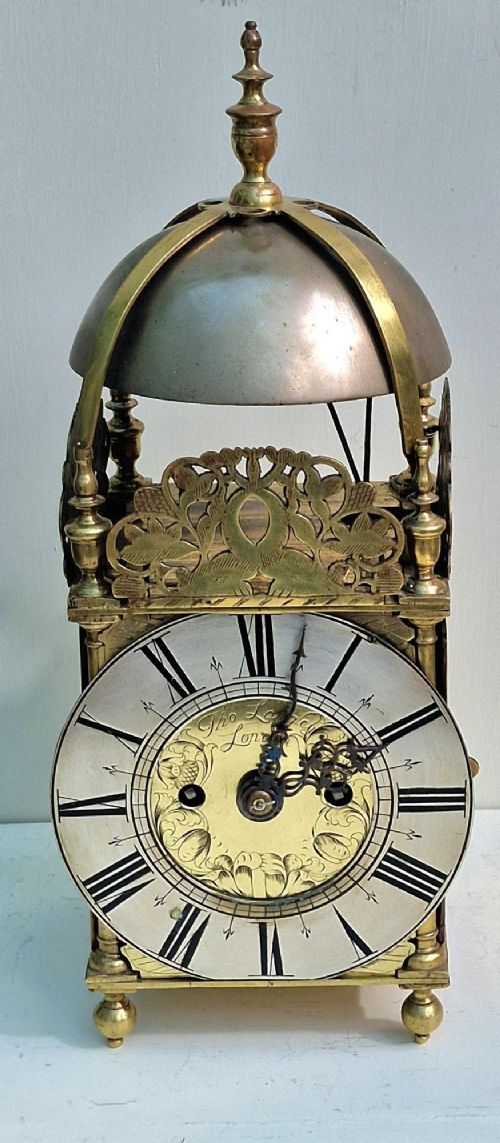

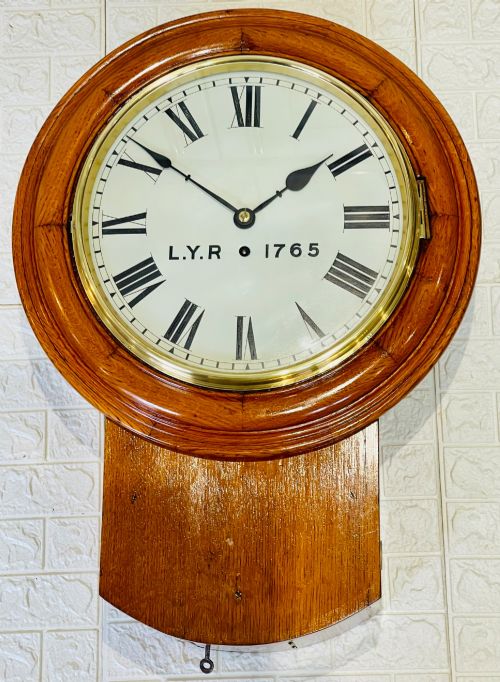
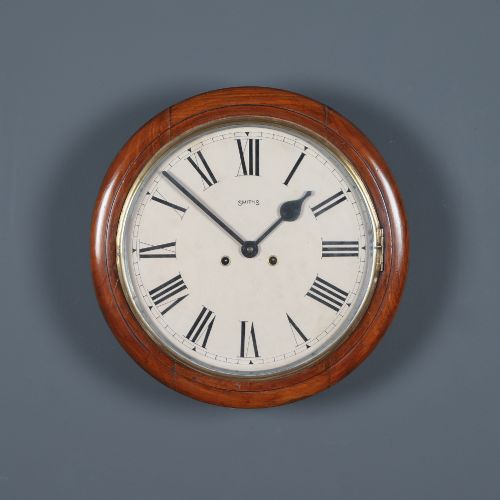
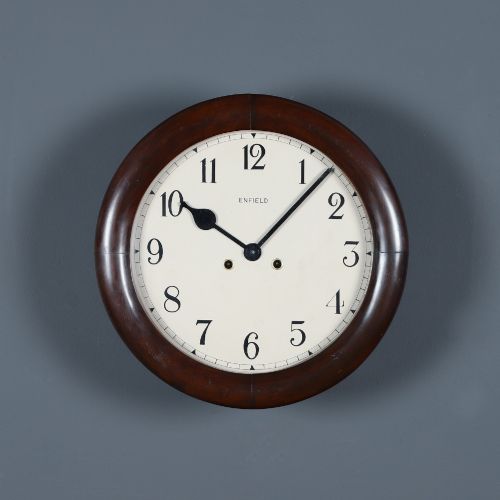
Antique English Wall Clock
An antique english wall clock brings practical timekeeping and architectural presence to a room, ranging from mahogany drop dials to walnut Art Deco pieces.
What an antique english wall clock is
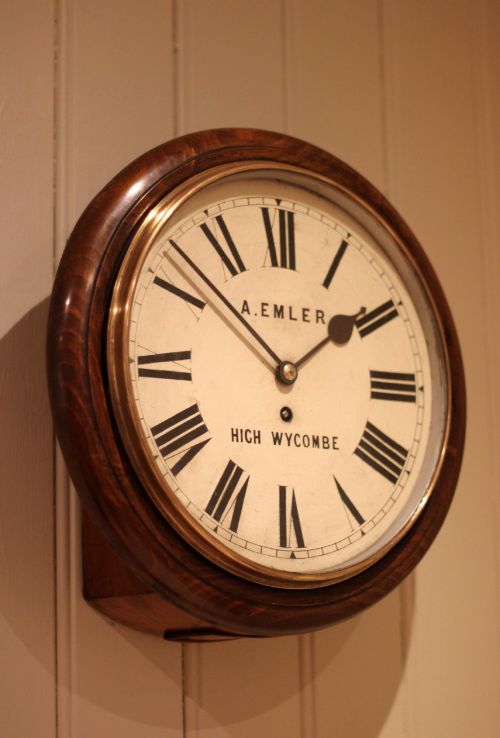
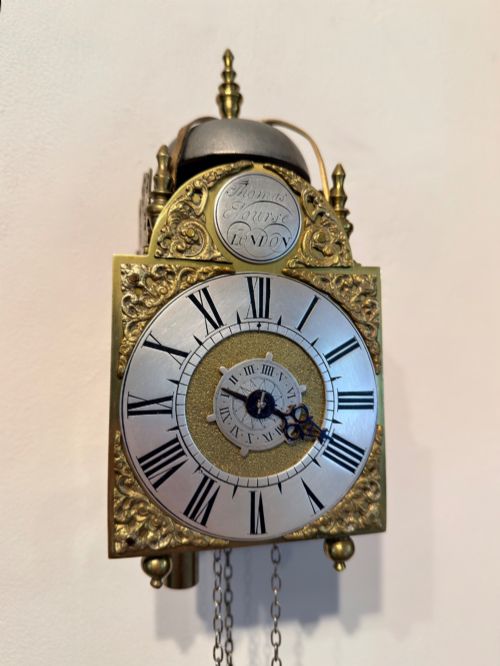
An antique english wall clock encompasses timepieces designed to hang on domestic, commercial, or industrial walls. The selection draws together pieces from the nineteenth century, the Victorian era, and the nineteen-thirties, showing both domestic refinement and functional utility.
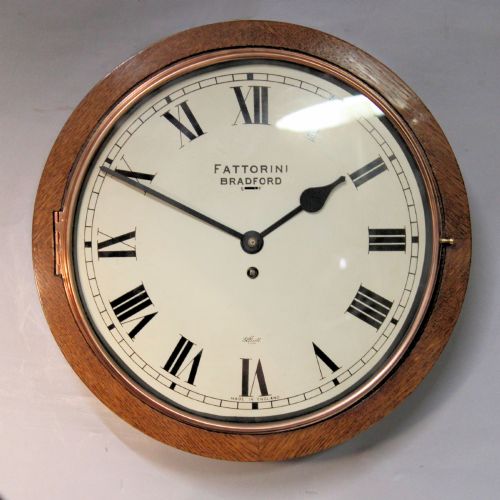
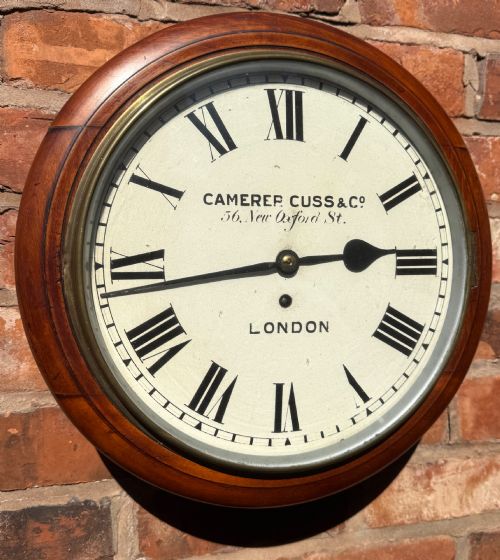
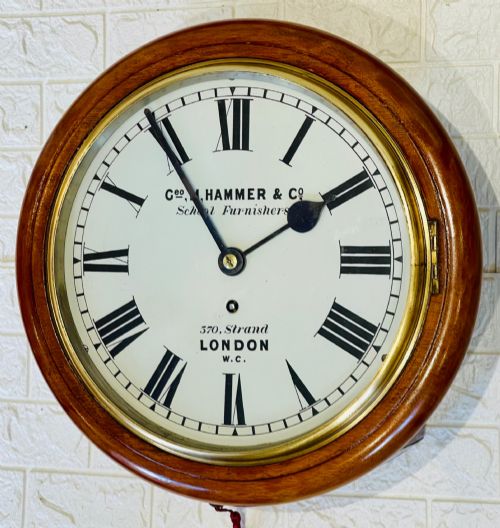
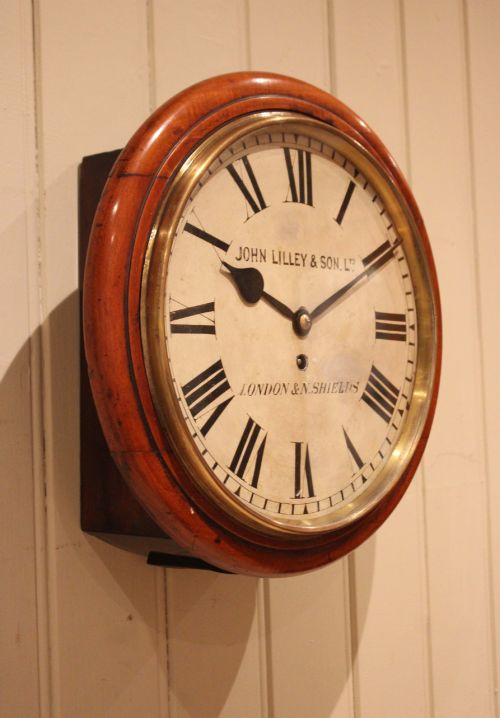
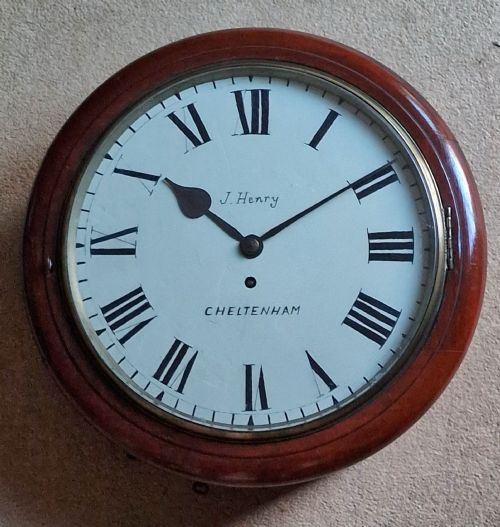
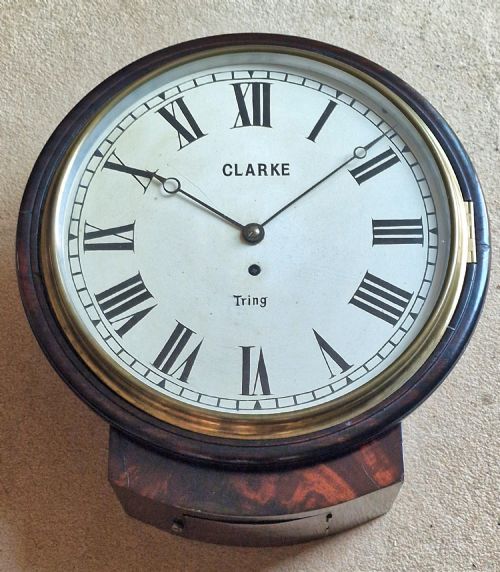
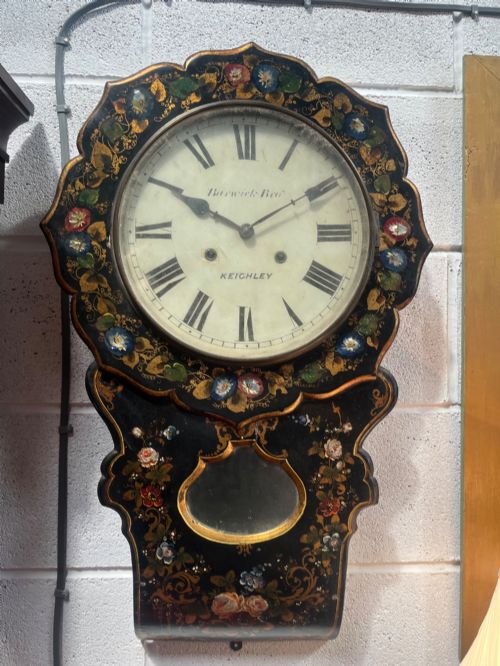
Drop dial wall clocks dominate the types encountered here, featuring prominent circular faces above lower wooden cases. These items emerge in materials such as mahogany, rosewood, walnut, and oak, reflecting the prevailing interior tastes of their respective periods.
Origins range from London makers to provincial workshops, spanning standard timepieces and fusee movements. Buyers encounter diverse scales, from compact eight-inch dials to larger factory variants designed for utilitarian spaces.
How they were made
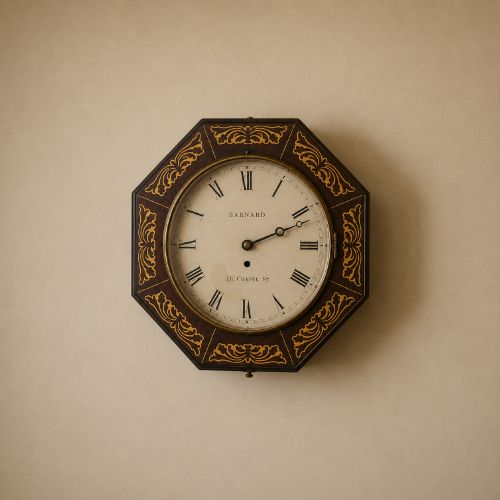
Construction relies on traditional cabinet timbers, including mahogany, walnut, rosewood, and oak, frequently shaped into circular bezels and hanging trunk cases. Inlaid decoration and mother-of-pearl accents appear on nineteenth-century rosewood surfaces, demonstrating skilled joinery and decorative veneering.
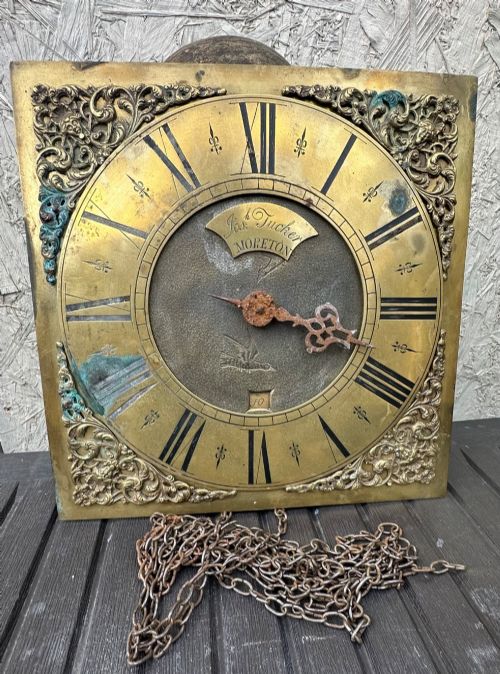
Movements utilise brass components and fusee mechanisms designed to maintain even tension across the power reserve. Glass protects the dial face, held within hinged bezels of brass or polished wood, while iron and copper appear in heavier industrial and factory contexts.
Retail Price Guide 2026
Typical UK retail prices for english wall clock, calculated from the Sellingantiques database of over a million retail prices indexed since 2003. This retail price guide relies exclusively on Sellingantiques data; no external sources or auction records are used, so the figures do not describe the wider market.
Listings span the nineteenth century through the nineteen-thirties, featuring mahogany, rosewood, walnut, and oak.
What varies in quality
Quality differentiates through the crispness of dial execution, the selection of timber veneers such as burr walnut or figured mahogany, and the refinement of subsidiary brasswork. Finer examples display meticulous marquetry or mother-of-pearl inlay integrated cleanly into the surrounding wood.
The sophistication of the movement dictates the upper tier of the range, particularly with fusee mechanisms that regulate power delivery more steadily than standard spring drives. Originality of components and casework integrity separate exceptional survivals from heavily altered specimens.
John Walker·Haley and Milner·James Bell
The Antique English Wall Clock Glossary
- Drop dial
- A clock design featuring a circular dial mounted above a lower wooden case that houses the pendulum. This form became standard for nineteenth-century English wall timepieces.
- Fusee
- A conical pulley connected to the mainspring by a cord or chain, designed to equalise the torque as the spring unwinds. This mechanism improves timekeeping consistency.
- Dial clock
- A timepiece dominated by its visible face, typically mounted in a wall-hung case with a side or bottom door for access. These were common in offices, stations, and homes.
- Synchronome
- An electromechanical clock system developed in the early twentieth century for synchronising multiple timepieces across a building. These units represent industrial automation.
- Bezel
- The ring of brass or wood that holds the protective glass over the clock face. It is frequently hinged to allow hand adjustment.
Frequently Asked Questions
What is a fusee movement?
A fusee movement uses a conical pulley and chain to equalise the declining power of the mainspring.
This mechanical arrangement ensures the clock maintains steady force and accurate timekeeping as the spring runs down.
Where were drop dial clocks used?
Drop dial clocks served in domestic hallways, offices, and public spaces where reliable timekeeping was essential.
Their wall-mounted format kept floors clear while remaining visible to occupants.
How do I date a wall clock?
Dating relies on stylistic clues, timber choice, dial signatures, and the evolution of mechanical components.
Nineteenth-century pieces often feature mahogany or rosewood cases, whereas nineteen-thirties examples display distinct Art Deco geometric styling in walnut.
What woods were used for cases?
Cabinetmakers utilised dense hardwoods including mahogany, walnut, rosewood, and oak for durability and appearance.
Finer models frequently incorporated burr veneers or mother-of-pearl inlay to enhance visual depth.