


Commercial Dial Clock
A commercial dial clock is a reliable timekeeper built for stations, offices, and factories, prized for its honest face and dependable movement.
Commercial Dial Clock
A commercial dial clock serves as a sturdy timekeeper designed for public spaces, offices, and transport networks rather than domestic mantelpieces. These round wall timepieces appear in formats ranging from nineteenth-century railway examples to early twentieth-century factory and municipal models.
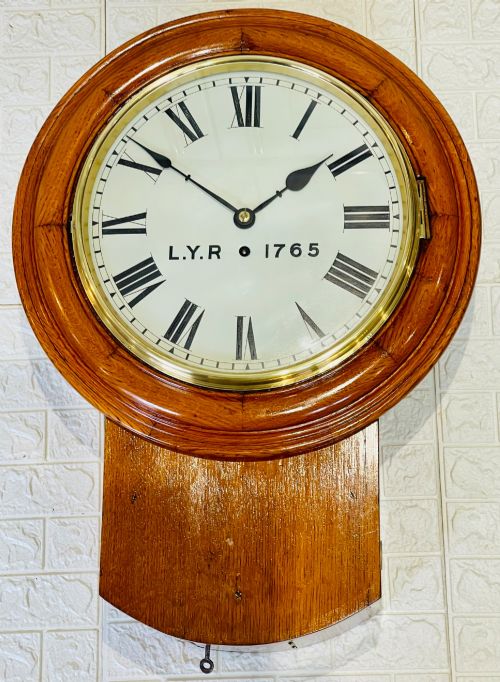
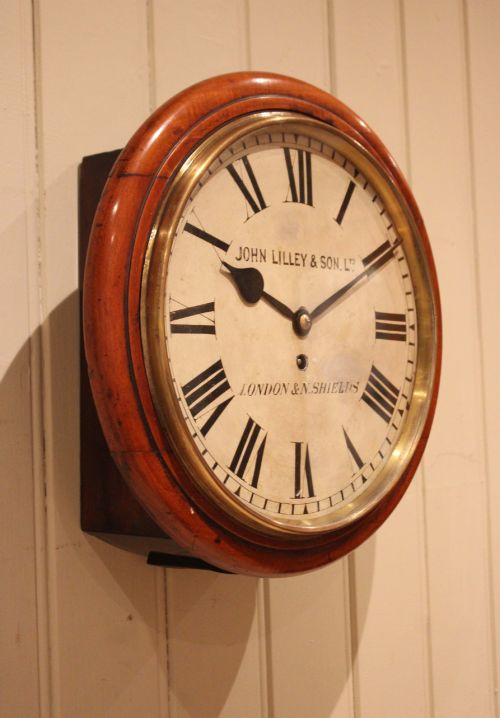
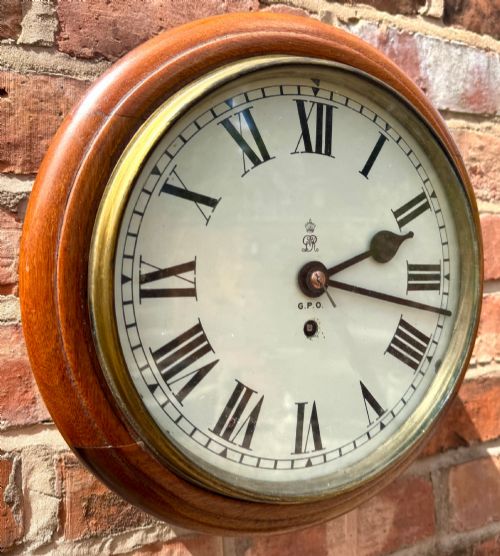
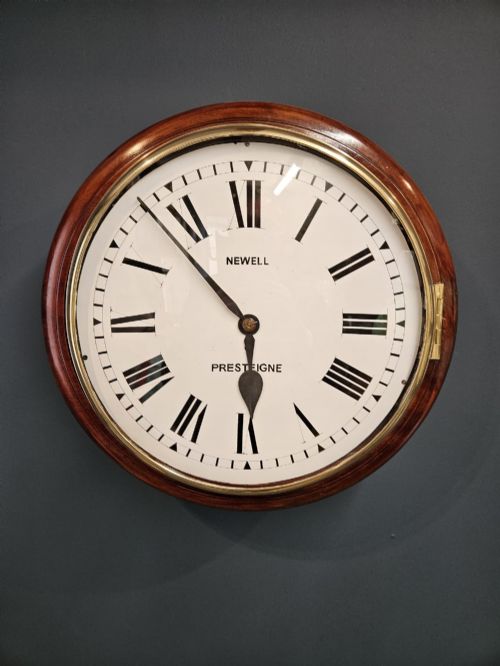
The version most commonly met on this page is the fusee dial wall clock housed in a mahogany or oak case. Such pieces often bear the stamps of railway companies, the General Post Office, or prominent retailers on their painted faces.
Materials and construction
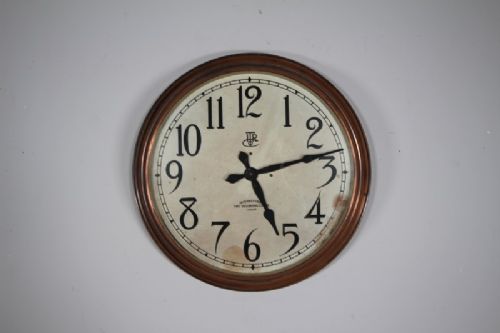
Movements utilise fusee mechanisms to maintain even tension across the spring power as it unwinds, ensuring steady accuracy over long periods. Heavy cast iron, copper, and steel components appear in later industrial and transport models to withstand continuous daily service.
Several clocks wear the scars of the rails, bearing stamps from railway companies and transport boards that once kept Britain moving on time.
Judging quality in dial clocks
Quality rests fundamentally on the integrity and originality of the movement and dial face rather than minor cosmetic repairs. A superior piece retains its original chain fusee movement, clean dial lettering, and matching numbered case components.
The distinction between ordinary and exceptional specimens lies in the provenance marked upon the wood or dial, such as specific railway regions or named makers. Heavier timber bezels and well-figured mahogany housings further elevate a timepiece above standard utility issues.
John Walker·Camerer Cuss·Anglo Swiss Watch Co·Smiths London
The Commercial Dial Clock Glossary
- Fusee
- A conical pulley used with a cord, chain, or gut line to equalize the torque of the mainspring as it unwinds. This clever device ensures the clock maintains an even driving force for better timekeeping.
- Dial
- The visible face of the clock where the numerals and minute markers are painted or applied. On commercial clocks, these are typically protected by a brass bezel and a heavy glass cover.
- Bezel
- The ring of brass, wood, or metal that holds the glass over the dial. In wall clocks, the bezel is frequently hinged to allow easy access for setting the hands.
- Drop dial
- A clock case featuring a circular dial at the top and a short wooden trunk or box below to house the pendulum or weight drop. This layout is typical of many railway and office timepieces.
Commercial Dial Clock: Frequently Asked Questions
What is a fusee movement?
A fusee movement uses a conical drum paired with a chain or cord to regulate the pull of the mainspring. This mechanism ensures consistent power is delivered to the gears as the spring unwinds.
Clocks with this system generally offer superior timekeeping reliability compared to standard spring-driven alternatives.
Why do these have plain faces?
Commercial dial clocks were designed for clarity in busy environments like railway stations, offices, and factories. Large, bold numerals and simple hands allowed workers or passengers to read the time at a glance from across a room.
Decoration was kept to a minimum in favour of legibility and robust mechanical performance.
How do I hang a heavy wall clock?
These clocks often weigh a considerable amount due to solid timber cases, heavy glass, and brass bezels. They require a secure fixing directly into brickwork or a substantial wall stud using appropriate fixings.
Hanging them securely prevents vibration from affecting the pendulum beat and protects the historical case from accidental damage.
How can I tell the age of a dial clock?
Dating relies on examining case timber, door construction, dial materials, and any stamped railway or government cyphers. Fusee movements and mahogany cases often point toward the nineteenth century, while later models incorporate metal dials and simpler oak housings.
Maker signatures and transport board reference numbers stamped on the case timber or dial provide further clues to the exact period of manufacture.