


Large Wooden Dial Clock
A large wooden dial clock brings heavy timber bezels and clear numerals into any room, offering the reliable weight of traditional timekeeping.
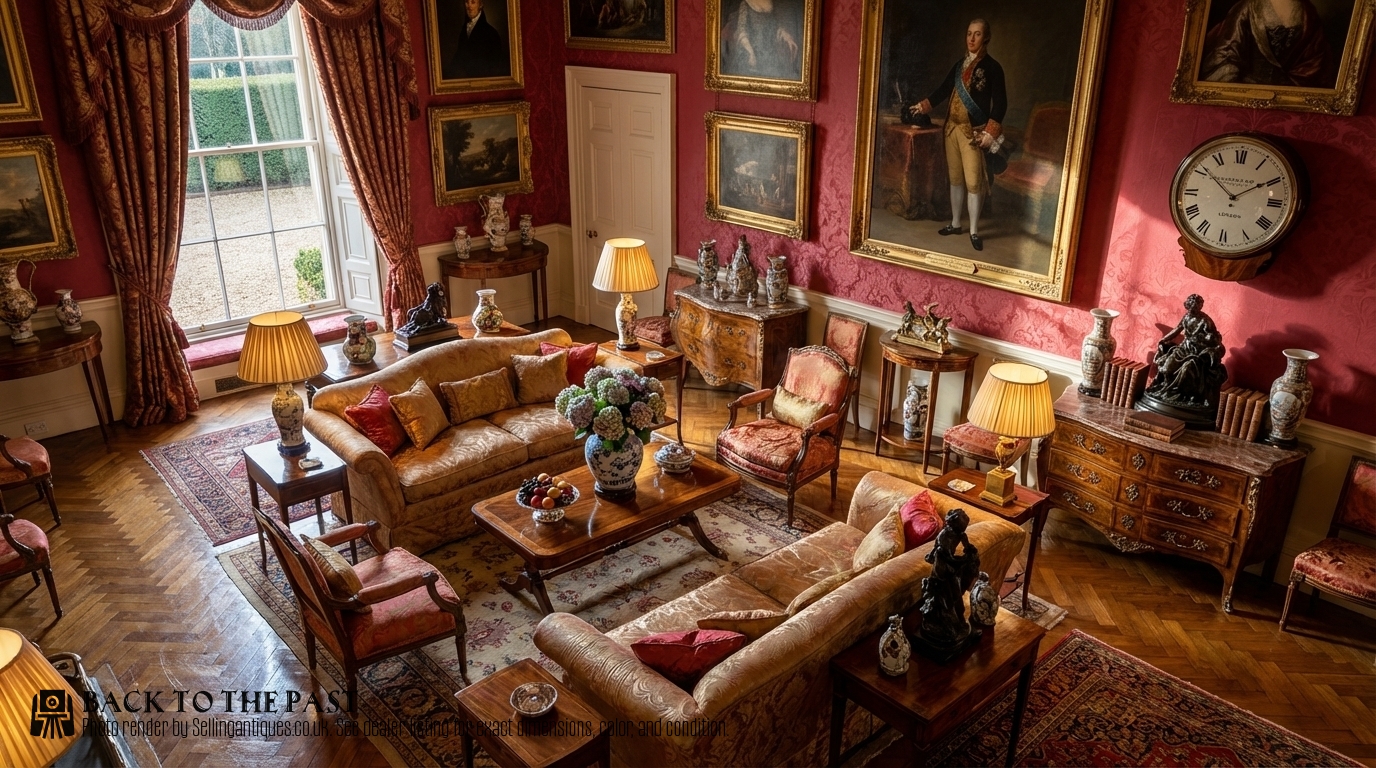
Large Wooden Dial Clock
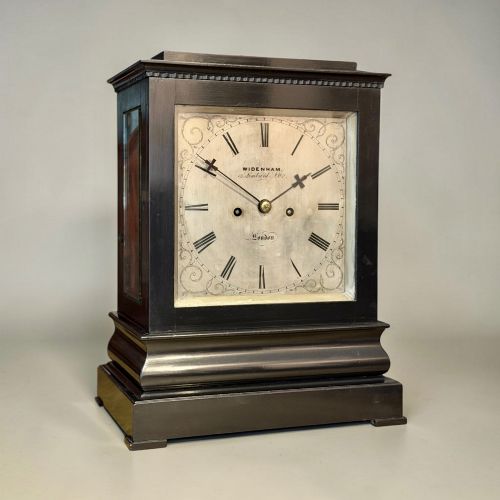
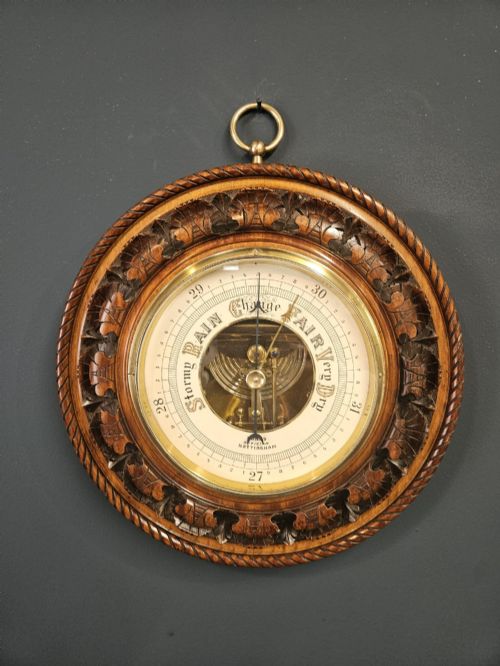
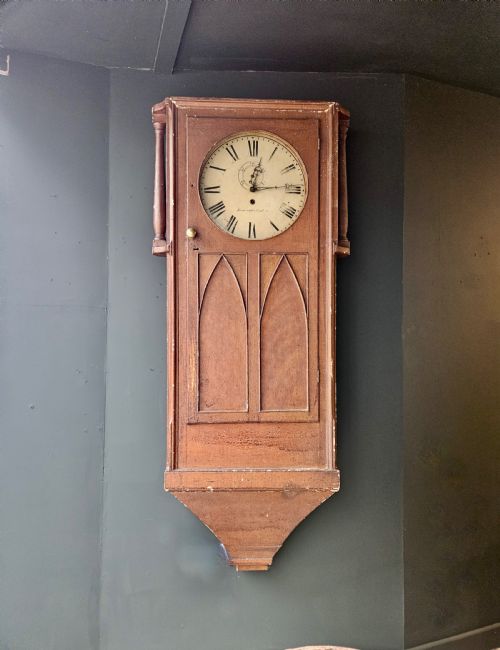
When you search for a large wooden dial clock, you are looking at substantial wall timepieces encased in mahogany, walnut, oak, and pine. These pieces served public houses, railway offices, and grand domestic spaces where readability at a distance mattered most.
On this page, you are most likely to meet Victorian and 19th-century examples featuring fusee movements and painted wooden faces. These wall clocks combine functional engineering with robust timber cabinetry spanning Georgian, Regency, and Edwardian styles.
How they were made
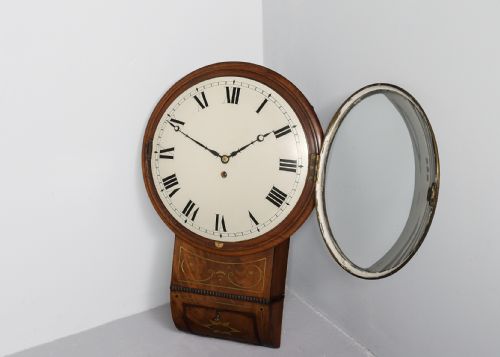
Cabinetmakers constructed the main surrounds from solid timbers like mahogany and walnut, often housing the mechanism behind a hinged wooden bezel fitted with glass. Brass inlay and carved oak detailing frequently augmented the primary wood structure to add decorative weight.
Dials were typically painted wood or silvered metal, marked with clear numerals designed to be read from across a large room. Fusee movements, driven by a chain and fusee cone, regulated the pull to maintain steady tension as the clock ran down.
Listings feature wall clocks spanning the Georgian, Regency, Victorian, and Edwardian periods, constructed in mahogany, walnut, oak, and pine.
What varies in quality
The standard of a large wooden dial clock rests upon the crispness of the timber carving and the original integrity of the dial face. Finer pieces retain their untouched painted numbers and rich grain without excessive repainting or heavy modern replacement parts.
Movement sophistication also divides the range, with fusee mechanisms representing a higher grade of clockmaking compared to standard spring-driven alternatives. The weight and selection of the timber bezel further determine the overall heft and presence of the piece on the wall.
Widenham of London·Palmer & Co.·Camerer Cuss
The Large Wooden Dial Clock Glossary
- Fusee
- A conical pulley used in a clock movement to equalize the declining power of the mainspring as it unwinds. This mechanical addition helps the timepiece maintain a consistent rate.
- Dial
- The visible face of the clock where the numbers are painted or applied. On these pieces, dials are frequently constructed from wood or silvered metal.
- Bezel
- The ring of wood, brass, or metal that holds the glass protecting the dial face. It often swings open on a hinge to allow hand-setting.
- Bracket clock
- A portable timekeeper originally designed to sit on a bracket or shelf. These pieces often feature substantial carved wooden cases.
- Tavern clock
- A large wall timepiece with a prominent dial and an extended trunk, historically used in public houses and commercial spaces.
Large Wooden Dial Clock: Frequently Asked Questions
How do I hang a large wooden dial clock safely?
These clocks carry considerable weight due to their solid timber bezels and mechanical movements, requiring secure wall fixings directly into masonry or heavy studs.
Ensure the mounting bracket or screw supports the full load of the case before placing the clock on the wall.
What is a fusee movement?
A fusee movement uses a conical drum and a cord or chain to regulate the power delivered from the mainspring as it loses tension.
This system ensures the drive force remains even throughout the running cycle, improving timekeeping accuracy.
How do I tell Victorian clocks from earlier pieces?
Victorian examples often display heavier carved walnut or oak cases, whilst earlier Regency and Georgian pieces tend to favour clean mahogany surfaces with subtle brass inlay.
Examining the style of the timberwork and the lettering on the dial helps identify the period of manufacture.
Where were these clocks originally used?
Large dial clocks were standard fixtures in railway stations, public houses, municipal buildings, and large domestic halls where many people needed to read the time quickly.
Their robust construction and clear wooden or metal faces suited busy, public environments.